
André Brink (1935–2015)
Author of A Dry White Season
About the Author
André Brink was born on May 29, 1935 in Vrede, South Africa. He studied English and Afrikaans at the University in Potchefstroom and comparative literature in Paris. He was a South African writer and educator. He became a part of a group of writers known as Die Sestigers upon returning to South show more Africa in the 1960s. The group aimed to broaden Afrikaner fiction by writing about sexual and moral matters and the failings of the traditional political system. His books included Rumors of Rain, Looking on Darkness, A Dry White Season, and States of Emergency. Some of his books were banned in South Africa. He became a professor of Afrikaans and Dutch literature at Rhodes University and professor of English at the University of Cape Town. He has received the 1980 Martin Luther King Prize, the 1980 French Prix Medicis Etranger, and the 1982 Chevalier of the Legion d'Honneur. He was shortlisted for the Booker Prize twice and nominated for the Nobel Prize for literature on several occasions. He died on February 6, 2015 at the age of 79. (Bowker Author Biography) show less
Image credit: André Brink at The International Forum on the Novel, Lyon, France. Photo by Seamus Kearney / Wikimedia Commons.
Series
Works by André Brink
Pot-Pourri 3 copies
Olé: Reisboek oor Spanje 2 copies
Die Poësie van Breyten Breytenbach 2 copies
Fado 2 copies
Inteendeel 2 copies
Midi 2 copies
De Scherpe Randen van het Mozaïek 2 copies
Destabilizing Shakespeare 1 copy
Houd-den-bek 1 copy
Parys-Parys: Retoer 1 copy
DIE MEUL TEEN DIE HANG 1 copy
Το δικαίωμα του πόθου 1 copy
Brink Andrè 1 copy
Destabilising Shakespeare 1 copy
Associated Works
Windroos: Verhale deur 10 Sestigers — Contributor — 2 copies
Over X-jes, de zandloper en de herenbobbel. Een handleiding tot de kunsten voor Maarten Asscher (1998) — Contributor — 1 copy
Tagged
Common Knowledge
- Canonical name
- Brink, André
- Legal name
- Brink, André Philippus
- Birthdate
- 1935-05-29
- Date of death
- 2015-02-06
- Gender
- male
- Education
- Potchefstroom University
Sorbonne University
Lydenburg High School - Occupations
- emeritus professor
novelist - Organizations
- University of Cape Town
Sestiger movement - Awards and honors
- Monismanien Prize (1992)
Order of Ikhamanga
South African Literary Award Lifetime Achievement (2006) - Agent
- Liepman Agency
- Relationships
- Brink, Elsabe (sister)
- Short biography
- André Brink, a major South African writer whose work has shaken conscience and culture in Afrikanerdom, contributed significantly to the cause against apartheid. With democracy, he now sees no further need to be overtly political in his writing and feels a new freedom to write whatever he feels like.
- Nationality
- South Africa
- Birthplace
- Vrede, South Africa
- Places of residence
- Vrede, South Africa
Cape Town, South Africa
Jagersfontein, South Africa
Brits, South Africa
Douglas, South Africa
Sabie, South Africa (show all 7)
Lydenburg, South Africa - Place of death
- in flight (Amsterdam to Cape Town)
- Associated Place (for map)
- South Africa
Members
Discussions
Philida by André Brink in Booker Prize (August 2012)
Reviews

A Dry White Season is the story of an ordinary man who gets caught up fighting for justice in South Africa in the 1970s. Ben Du Toit is an Afrikaner teacher who forms a friendly relationship with the black gardener at his school, Gordon Ngubene. Gordon's son Jonathan gets into trouble fighting Apartheid, and dies in highly suspicious circumstances while in custody. Gordon then gets into trouble with the Special Branch (South Africa's secret police) for trying to find out the truth about show more Jonathan's death.
Throughout it all, Ben is convinced that it's all just a misunderstanding, that if only the truth were told people would understand and justice would be served. His faith is sadly misplaced, and when he sees that the truth is being ignored by the justice system, he starts his own fight to find out the truth.
The story is told through an old University friend of Ben's, a writer of popular fiction, who is given Ben's papers after Ben's sudden death in a hit and run accident. He pieces together what happened through Ben's diaries and newspaper clippings, forming a compelling story.
I liked the fact that Ben is just an ordinary bloke who was pushed too far. He's not upstanding, or brilliant, or a fighter. He's just an ordinary man who has noticed what's going on around him, and it's offended his sense of justice. It's hard not to like the idea that it can be ordinary people who do extraordinary things.
And the whole political situation in South Africa was terrifying. It was all falling apart when I was a teenager, so it was interesting revisiting that era, although I'm extremely glad we've moved on.
A Dry White Season was a great account of an ordinary man trying to seek justice in a corrupt society. I'm still pondering it, it didn't offer any easy solutions or resolution. Matter of fact, the very ending sent shivers down my spine and I hope I never forget the terror it raised. show less
Throughout it all, Ben is convinced that it's all just a misunderstanding, that if only the truth were told people would understand and justice would be served. His faith is sadly misplaced, and when he sees that the truth is being ignored by the justice system, he starts his own fight to find out the truth.
The story is told through an old University friend of Ben's, a writer of popular fiction, who is given Ben's papers after Ben's sudden death in a hit and run accident. He pieces together what happened through Ben's diaries and newspaper clippings, forming a compelling story.
I liked the fact that Ben is just an ordinary bloke who was pushed too far. He's not upstanding, or brilliant, or a fighter. He's just an ordinary man who has noticed what's going on around him, and it's offended his sense of justice. It's hard not to like the idea that it can be ordinary people who do extraordinary things.
And the whole political situation in South Africa was terrifying. It was all falling apart when I was a teenager, so it was interesting revisiting that era, although I'm extremely glad we've moved on.
A Dry White Season was a great account of an ordinary man trying to seek justice in a corrupt society. I'm still pondering it, it didn't offer any easy solutions or resolution. Matter of fact, the very ending sent shivers down my spine and I hope I never forget the terror it raised. show less

The last André Brink book I read was the apartheid-era protest novel A dry white season. By contrast, this one is set against the background of the New South Africa, amidst the criminality and failing public services of Cape Town at the end of the twentieth century, with an underlying feeling that it's a lot easier to protest against abuses and injustices than it is to see a way forward for fixing a broken society, particularly if you happen to be an ageing white liberal.
The widowed Ruben show more Olivier, 65 years old (the same age as the author), lives in a big old house on the fringes of the city. His sons see no future in South Africa and are emigrating, his best friend has been murdered, and Ruben is left alone with his elderly housekeeper Magrieta and the house ghost, the 18th-century slave Antje of Bengal. The sons, having failed to persuade him to come to Australia or Canada, suggest that he take in some lodgers to provide a bit of company and security: they are thinking of a nice, middle-aged couple, but what turns up to answer the advertisement is Tessa, a thoroughly modern young woman. She and Ruben could hardly be more different, but he both likes her and (covertly) fancies her sexually, she seems to like his company (but doesn't especially want to have sex with him). When she also wins the approval of the cats, Antje and — more grudgingly — Magrieta, it's obvious that she's in.
This gives Brink the framework for a sensitive but rather complex and tenuous exploration of the interplay of love, sexual desire, history, violence and death, and the way that stories, whether fictional or derived from memories or historical documents, are never more than partial representations of the truth. We dig into Antje's story of passion, exploitation and murder two hundred years ago, into Magrieta's life as a coloured person displaced from District Six in the 1970s and now the victim of mob violence in Cape Flats, into the real story of Ruben's "happy" marriage, into Tessa's searching for a substitute for her absent father and finding only men to exploit her, and are shown the way all of these things are bound to end badly, when seen from Ruben's pessimistic (and permanently horny) perspective.
There's a lot of very interesting and perceptive writing here. There's also obviously something rather uncomfortable about spending 300 pages with Ruben's sexual obsession, but Brink knows how we are likely to react (after all, he had a long history of marrying younger women himself...), and he makes sure that Ruben is never trying to justify himself with the reader, and that Tessa's modern instinct to talk everything through prevents his obsession with her from building up into a destructive secret. (Tessa, although born in 1970, often seems to belong more to Brink's generation than her own — even the shocking modern music she listens to turns out to be The Velvet Underground...) show less
The widowed Ruben show more Olivier, 65 years old (the same age as the author), lives in a big old house on the fringes of the city. His sons see no future in South Africa and are emigrating, his best friend has been murdered, and Ruben is left alone with his elderly housekeeper Magrieta and the house ghost, the 18th-century slave Antje of Bengal. The sons, having failed to persuade him to come to Australia or Canada, suggest that he take in some lodgers to provide a bit of company and security: they are thinking of a nice, middle-aged couple, but what turns up to answer the advertisement is Tessa, a thoroughly modern young woman. She and Ruben could hardly be more different, but he both likes her and (covertly) fancies her sexually, she seems to like his company (but doesn't especially want to have sex with him). When she also wins the approval of the cats, Antje and — more grudgingly — Magrieta, it's obvious that she's in.
This gives Brink the framework for a sensitive but rather complex and tenuous exploration of the interplay of love, sexual desire, history, violence and death, and the way that stories, whether fictional or derived from memories or historical documents, are never more than partial representations of the truth. We dig into Antje's story of passion, exploitation and murder two hundred years ago, into Magrieta's life as a coloured person displaced from District Six in the 1970s and now the victim of mob violence in Cape Flats, into the real story of Ruben's "happy" marriage, into Tessa's searching for a substitute for her absent father and finding only men to exploit her, and are shown the way all of these things are bound to end badly, when seen from Ruben's pessimistic (and permanently horny) perspective.
There's a lot of very interesting and perceptive writing here. There's also obviously something rather uncomfortable about spending 300 pages with Ruben's sexual obsession, but Brink knows how we are likely to react (after all, he had a long history of marrying younger women himself...), and he makes sure that Ruben is never trying to justify himself with the reader, and that Tessa's modern instinct to talk everything through prevents his obsession with her from building up into a destructive secret. (Tessa, although born in 1970, often seems to belong more to Brink's generation than her own — even the shocking modern music she listens to turns out to be The Velvet Underground...) show less
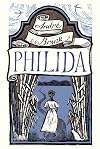
Philida by Andre P. Brink is a novel steeped in historical events that follows the journey of Philida, a slave in Cape Town from the time she decides to make a stand for herself until the year of emancipation of the slaves.
This is not a book for the faint of heart. Philida has no "filter," she documents everything done to her in a detached way that still manages to infuse the account with deep, painful emotions. She gave birth to four children, two who still live, and struggles to deal with show more the idea that her master and lover will not hold true to his promise to her.
Brink lays it all out there with this book. From stories of escaped slaves, to those who were caught during an uprising, tales of the auction block to comparisons to kittens being drowned, there is nothing that is left untouched in this book. The brutal, horrible, degrading way in which the slaves were treated is presented to the reader in its raw form and it's only the beauty of Brink's writing and the infusion of the culture into the book that keeps it from being too hard to read.
One of the things I love about reading is being taken to places I never knew about. This is one of those cases. This is a part of history I knew nothing about, a place I knew nothing about, and a story that should be remembered as a warning to humankind. The story of Philida is one of strength and determination, a young woman standing up against immense odds to take what is her right - to find strength through her own religious beliefs and to learn to live as a human being and not a possession. show less
This is not a book for the faint of heart. Philida has no "filter," she documents everything done to her in a detached way that still manages to infuse the account with deep, painful emotions. She gave birth to four children, two who still live, and struggles to deal with show more the idea that her master and lover will not hold true to his promise to her.
Brink lays it all out there with this book. From stories of escaped slaves, to those who were caught during an uprising, tales of the auction block to comparisons to kittens being drowned, there is nothing that is left untouched in this book. The brutal, horrible, degrading way in which the slaves were treated is presented to the reader in its raw form and it's only the beauty of Brink's writing and the infusion of the culture into the book that keeps it from being too hard to read.
One of the things I love about reading is being taken to places I never knew about. This is one of those cases. This is a part of history I knew nothing about, a place I knew nothing about, and a story that should be remembered as a warning to humankind. The story of Philida is one of strength and determination, a young woman standing up against immense odds to take what is her right - to find strength through her own religious beliefs and to learn to live as a human being and not a possession. show less
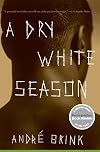
It's important to put Brink's book in its historical context, but having done that it's a rewarding, powerful book.
Ben Du Toit is a white South African school teacher whose life undergoes a hellish transformation when he investigates the death of the school's (black) janitor. From a cloistered, privileged existence, Ben discovers the daily terror that permeates South Africa's black population, and becomes a recipient of it.
From the comfortable vantage of Australia in 2012, A Dry White show more Season may seem an exercise in preachy obviousness. A whole book explaining to a white man what privations the black population of apartheid-era South Africa had to endure. Yet another white story explaining a black history. However, when taken in context - the book was published during some of the worst years of apartheid; the intended audience was white South Africans who most assuredly didn't understand what was going on; and Brink paid quite dearly for writing this book, let alone something more incendiary - it gives the novel a very powerful heft that it might not have possessed otherwise.
Further complicating this narrative is a clever framing device. Whilst the book is ostensibly written from Ben's perspective, in actuality it comes from and is filtered by an exemplar of Brink's audience - a bourgeois, apathetic South African. It's a simple enough device, but it works quite slyly; as Ben unearths more of the pervasive terror of the era, you can feel the narrator's own repulsion and disbelief creeping in.
The book is not exactly unpredictable, and the descent of Ben's fortunes is almost Grecian. An added love interest is also on the cliched side and very much a product of the time the book was written in.
And yet ultimately A Dry White Season surmounts these pedestrian concerns because of the enormity of its subject matter. The brutality, the insanity, of apartheid soaks the pages like lighter fluid, and even thirty years later the urgency of Brink's prose is stirring.
The novel is inseparable from its concerns and the realities of its times. For more context, see below for an interview with Brink talking about the book.
http://www.bbc.co.uk/mediaselector/ondemand/worldservice/meta/dps/2008/01/080128... show less
Ben Du Toit is a white South African school teacher whose life undergoes a hellish transformation when he investigates the death of the school's (black) janitor. From a cloistered, privileged existence, Ben discovers the daily terror that permeates South Africa's black population, and becomes a recipient of it.
From the comfortable vantage of Australia in 2012, A Dry White show more Season may seem an exercise in preachy obviousness. A whole book explaining to a white man what privations the black population of apartheid-era South Africa had to endure. Yet another white story explaining a black history. However, when taken in context - the book was published during some of the worst years of apartheid; the intended audience was white South Africans who most assuredly didn't understand what was going on; and Brink paid quite dearly for writing this book, let alone something more incendiary - it gives the novel a very powerful heft that it might not have possessed otherwise.
Further complicating this narrative is a clever framing device. Whilst the book is ostensibly written from Ben's perspective, in actuality it comes from and is filtered by an exemplar of Brink's audience - a bourgeois, apathetic South African. It's a simple enough device, but it works quite slyly; as Ben unearths more of the pervasive terror of the era, you can feel the narrator's own repulsion and disbelief creeping in.
The book is not exactly unpredictable, and the descent of Ben's fortunes is almost Grecian. An added love interest is also on the cliched side and very much a product of the time the book was written in.
And yet ultimately A Dry White Season surmounts these pedestrian concerns because of the enormity of its subject matter. The brutality, the insanity, of apartheid soaks the pages like lighter fluid, and even thirty years later the urgency of Brink's prose is stirring.
The novel is inseparable from its concerns and the realities of its times. For more context, see below for an interview with Brink talking about the book.
http://www.bbc.co.uk/mediaselector/ondemand/worldservice/meta/dps/2008/01/080128... show less
Lists
Awards


You May Also Like


Associated Authors
Statistics
- Works
- 94
- Also by
- 7
- Members
- 4,920
- Popularity
- #5,100
- Rating
- 4.2
- Reviews
- 120
- ISBNs
- 476
- Languages
- 16
- Favorited
- 16