
Etienne van Heerden
Author of Ancestral Voices
About the Author
Etienne Van Heerden teaches at the University of Cape Town.
Image credit: http://www.stellenboschwriters.com/vheerden.html
Works by Etienne van Heerden
Associated Works
Tagged
Common Knowledge
- Canonical name
- Heerden, Etienne van
- Birthdate
- 1954-12-03
- Gender
- male
- Education
- University of Zululand
- Occupations
- deputy sheriff
- Awards and honors
- W.A Hofmeyr-prys
- Nationality
- South Africa
- Birthplace
- Johannesburg, South Africa
- Places of residence
- Stellenbosch, South Africa
- Associated Place (for map)
- South Africa
Members
Reviews

This is an excellent novel from South Africa, originally written in Afrikaans, that tells the story of a family by exploring the tragic event of one young child falling down a well. The Moolman family has lived in the South African countryside for generations, carving out a farm and searching for water sources. At the same time, they "civilize" the area by pushing out the native people. Their neighbors are the Skaamfamilie (shame family, in translation) who have mixed with the native groups show more and also the Moolman line. They are not welcome in the Moolman clan, though they are direct relatives in several generations. These two families are tied up together, even though they are not equals.
A year after Trickle's death in the bore hole, a magistrate comes to the area to look into the death, stirring up all the feelings about the incident. The complicated family histories come into play. This is one of those brilliant novels where the living and the dead are both present seamlessly.
Hugely present in this novel is the different societal classes of the day. On the Skaamfamilie side, Oneday is a pastor who is fighting for equality for the black population. South Africa has a complex and confusing amount of racial groups. This book uses some older terms that I think are currently out of date, but there are Malay, Bushmen, Hottentots, Afrikaners, white Dutch ancestry, and white British. Confusing!
I really enjoyed this. It works really well as simply a novel with interesting plot and characters, and it has the added bonus of introducing me to a complex culture and country that I know too little about. show less
A year after Trickle's death in the bore hole, a magistrate comes to the area to look into the death, stirring up all the feelings about the incident. The complicated family histories come into play. This is one of those brilliant novels where the living and the dead are both present seamlessly.
Hugely present in this novel is the different societal classes of the day. On the Skaamfamilie side, Oneday is a pastor who is fighting for equality for the black population. South Africa has a complex and confusing amount of racial groups. This book uses some older terms that I think are currently out of date, but there are Malay, Bushmen, Hottentots, Afrikaners, white Dutch ancestry, and white British. Confusing!
I really enjoyed this. It works really well as simply a novel with interesting plot and characters, and it has the added bonus of introducing me to a complex culture and country that I know too little about. show less
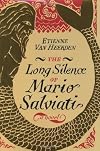
This book started out as a straightforward tale. Ingi Friedlander wanted to make a name for herself in the art world. She was a fairly new curator at the National Gallery in Cape Town. Word had come in of a spectacular new sculpture, The Staggering Merman, to be found in the farthest reaches of the Karoo region in the yard of one Jonty Jack, a sculptor. Found, that is, as Jonty insisted he had nothing to do with its creation, insisted that it just appeared there one day fully formed.
Ingi was show more determined to acquire this work for the gallery and persuaded the senior people of its merit, sight unseen."Museums almost always bought works on hearsay, desperate to capture the new spirit of now, desperate to remain relevant in the context of merciless cuts in government culture budgets". When she arrived in Yearsonend though, trailer firmly attached to Peugeot in full blown anticipation of attaining her goal, Jonty turned her offer down flat, not even allowing her a glimpse of the merman. Determined not to return to Cape Town without the sculpture, Ingi decided to stay in Yearsonend until she could persuade Jonty to change his mind.
This is where the novel veers away from narration and into a world of magic realism. Bit by bit Ingi learns what makes Yearsonenders tick, staying first in the Stonecutter's Cottage, then in the Drostdy with its turrets, gables and secrets. Bit by bit she becomes attuned to the spirit world of the town, a town where the dead continue their lives unseen beside the living townspeople. Unseen, but not unnoticed. These spirits are some of the strongest characters in the novel.
Van Heerden has created a tandem universe of townspeople going about their daily lives and vivid ghosts still going about theirs, still shaping and guiding the town, still splitting the town along the old family loyalty lines in the never ending search for the gold of the doomed President Kruger, the gold brought to Yearsonend in 1901 and hidden. The only person untouched by all this is the other outsider, Mario Salviati the stonecutter. Mario had arrived in the town with a convoy of Italian prisoners of war in 1940, prisoners sent to work the hinterlands. Mario was deaf and dumb then; by the time Ingi met him he was blind as well.
Fact, speculation, myth: lust, love, longing... Ingi patiently worked through the layers as the townspeople, left with nothing but the past, became more and more possessed by the thought of the lost gold and the search for its hiding place. For them, there was no other future. Despite what she managed to learn "...Ingi knew she couldn't intervene; that events took their course and that stories completed themselves in their own time. Life went on its tragic way; irrevocably, forcefully, as water flows along a channel. You couldn't stop it."
My only difficulty with this book was that the ending fell somewhat flat. Seeing that was almost a month ago, I have had time to reconsider and realize that it made complete sense. I suspect I just wanted to stay in other worlds a bit longer. show less
Ingi was show more determined to acquire this work for the gallery and persuaded the senior people of its merit, sight unseen."Museums almost always bought works on hearsay, desperate to capture the new spirit of now, desperate to remain relevant in the context of merciless cuts in government culture budgets". When she arrived in Yearsonend though, trailer firmly attached to Peugeot in full blown anticipation of attaining her goal, Jonty turned her offer down flat, not even allowing her a glimpse of the merman. Determined not to return to Cape Town without the sculpture, Ingi decided to stay in Yearsonend until she could persuade Jonty to change his mind.
This is where the novel veers away from narration and into a world of magic realism. Bit by bit Ingi learns what makes Yearsonenders tick, staying first in the Stonecutter's Cottage, then in the Drostdy with its turrets, gables and secrets. Bit by bit she becomes attuned to the spirit world of the town, a town where the dead continue their lives unseen beside the living townspeople. Unseen, but not unnoticed. These spirits are some of the strongest characters in the novel.
Van Heerden has created a tandem universe of townspeople going about their daily lives and vivid ghosts still going about theirs, still shaping and guiding the town, still splitting the town along the old family loyalty lines in the never ending search for the gold of the doomed President Kruger, the gold brought to Yearsonend in 1901 and hidden. The only person untouched by all this is the other outsider, Mario Salviati the stonecutter. Mario had arrived in the town with a convoy of Italian prisoners of war in 1940, prisoners sent to work the hinterlands. Mario was deaf and dumb then; by the time Ingi met him he was blind as well.
Fact, speculation, myth: lust, love, longing... Ingi patiently worked through the layers as the townspeople, left with nothing but the past, became more and more possessed by the thought of the lost gold and the search for its hiding place. For them, there was no other future. Despite what she managed to learn "...Ingi knew she couldn't intervene; that events took their course and that stories completed themselves in their own time. Life went on its tragic way; irrevocably, forcefully, as water flows along a channel. You couldn't stop it."
My only difficulty with this book was that the ending fell somewhat flat. Seeing that was almost a month ago, I have had time to reconsider and realize that it made complete sense. I suspect I just wanted to stay in other worlds a bit longer. show less
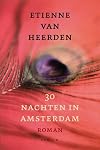
Een blanke Zuid-Afrikaanse museumbewaarder wordt voor een erfenis naar Amsterdm gesommeerd en wordt daar geconfronteerd met het onverwerkte verleden van zijn familie waardoor de apartheidspolitiek en de bevrijdingsbeweging een bloedig spoor getrokken hebben. Met name in de hoofdstukken over de excentrieke en epileptische tante Zan vertoont de auteur een duizelingwekkend meesterschap over de taal.
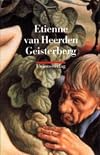
The Magistrate comes to the farm in a remote area of South Africa to investigate the death of a young boy that fell into a drilling hole. As he investigates and learns about the past and current generations of farmers, from the farms founder to the current inhabitants of the land, both in the core family and the illegitimate or scorned family branches, he paints a picture of life in rural South Africa at the time and how parental expectations and individual characters clashed and resulted in show more a complex environment full of resentment, racial and social separations.
I liked the way the past generations were present in the story by way of their spirits. Each of them in turn was present at the site of the young boy's death and in showing up, lets us in on some of his history. As we learn what happened that day, the event is put into the context of the family history. show less
I liked the way the past generations were present in the story by way of their spirits. Each of them in turn was present at the site of the young boy's death and in showing up, lets us in on some of his history. As we learn what happened that day, the event is put into the context of the family history. show less
Awards


You May Also Like


Associated Authors
Statistics
- Works
- 25
- Also by
- 1
- Members
- 544
- Popularity
- #45,826
- Rating
- 3.9
- Reviews
- 19
- ISBNs
- 74
- Languages
- 6
- Favorited
- 2