
About the Author
Image credit: Antjie Krog - Photo: © Karina Turok
Works by Antjie Krog
Country of My Skull: Guilt, Sorrow, and the Limits of Forgiveness in the New South Africa (1998) 559 copies, 9 reviews
The Stars Say 'Tsau': /Xam Poetry of Dia!kwain, Kweiten-ta-//ken, /A!kunta, Han#kass'o, and //Kabbo (2004) 21 copies
There Was This Goat: Investigating the Truth Commission Testimony of Notrose Nobomvu Konile (2009) 9 copies
Waar ik jou word 25 gedichten van Antjie Krog die iedereen gelezen moet hebben (2017) 8 copies, 1 review
Nederlands buitengaats; een taalreünie — Contributor — 3 copies
Vetplant Fairies 2 copies
Conditional Tense: Memory and Vocabulary after the South African Truth and Reconciliation Commission (2013) 2 copies
Otters In Bronslaai 1 copy
Januarie-suite 1 copy
Die Rottevanger van Hameln 1 copy
Associated Works
Literary Responses to Mass Violence — Contributor — 4 copies
Even een moment voor uzelf - zeven gedichten — Contributor — 1 copy
Tagged
Common Knowledge
- Canonical name
- Krog, Antjie
- Legal name
- Krog, Anna Elizabeth
- Birthdate
- 1952-10-23
- Gender
- female
- Education
- University of the Orange Free State
University of Pretoria
University of South Africa - Occupations
- writer
poet
Extraordinary Professor at the University of the Western Cape - Awards and honors
- Olive Schreiner Prize (2000)
Hiroshima Peace Culture Foundation Award
South African Literary Award Lifetime Achievement (2015) - Relationships
- Serfontein, Dot (Mother)
- Nationality
- South Africa
- Birthplace
- Kroonstad, South Africa
- Places of residence
- Kroonstad, South Africa
- Associated Place (for map)
- Kroonstad, South Africa
Members
Reviews
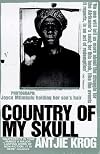
1995, South Africa. Barely a year after the first free elections, which saw the victory of Mandela's ANC, a commission for 'Truth and Reconciliation' (TRC) was created in order to, not only investigate the crimes which had been committed under the Apartheid regime, but, also, facilitate the transition of the country towards democracy. Here was a sort of a national therapy, then, when after waking up from a long nightmare South Africa tried and turn itself towards a new future with a key show more concept in mind: reconciliation.
In 'Country of my Skull', we witness both some of the victims bringing up their testimonies about how horrendous was such racist Apartheid regime, and, some of the perpetrators, invited to explain themselves (some voicing their remorse -are they sincere?) so as to get an amnesty -a process then judged necessary to permit the reconstruction of the country, without falling back into hatred and murderous resent.
From unknown figures to the most mediatic cases (e.g. Steve Biko's murder, the Bisho massacre, Winnie Mandela's 'football team'...), from ordinary citizens to some of the most emblematic figures (Frederik de Klerk, P.W. Botha, Thabo Mbeki...), rich and poor, Whites and Blacks, the Apartheid is here exposed over a process which lasted about two years, and, through more than 20,000 voices, 2,000 public auditions, encompassing more than 8,000 submitted demands for amnesty. It was a major endeavour, that Antjie Krog, journalist, had then followed for a local radio.
'Country of my Skull', of course, retells the history behind such Commission (its creation, the debates about its legitimacy, its members, his process...). It goes, in fact, beyond a mere journalistic story-telling, since the author also makes such Commission her own, put it back into perspective in order to question the new country whose rebirth can be traced back here, like a tabula rasa to better start all over again. White Afrikaner whose political representatives were the ones in charge of such atrocities, she, indeed, faces herself and her identity, while raising questions about culpability and responsibility -political, criminal, moral. She also extrapolates her reflexions to this new South African society in becoming, facing this hard process involving as much understanding as attempts at forgiving.
Here are deep and serious ethical questioning, reflecting an exhausting work both physically and mentally (a dedicated psychological crisis cell was implemented for those involved) but, in the end, such insight from a critical and intelligent woman, fully engaged herself with the process, makes this part of history more relatable. Here's a book all in all moving, gripping, horrible, sensible, violent, revolting at times, but which, despite it all, constitutes a spark of hope too: even with hate as heritage, living together still remains possible. show less
In 'Country of my Skull', we witness both some of the victims bringing up their testimonies about how horrendous was such racist Apartheid regime, and, some of the perpetrators, invited to explain themselves (some voicing their remorse -are they sincere?) so as to get an amnesty -a process then judged necessary to permit the reconstruction of the country, without falling back into hatred and murderous resent.
From unknown figures to the most mediatic cases (e.g. Steve Biko's murder, the Bisho massacre, Winnie Mandela's 'football team'...), from ordinary citizens to some of the most emblematic figures (Frederik de Klerk, P.W. Botha, Thabo Mbeki...), rich and poor, Whites and Blacks, the Apartheid is here exposed over a process which lasted about two years, and, through more than 20,000 voices, 2,000 public auditions, encompassing more than 8,000 submitted demands for amnesty. It was a major endeavour, that Antjie Krog, journalist, had then followed for a local radio.
'Country of my Skull', of course, retells the history behind such Commission (its creation, the debates about its legitimacy, its members, his process...). It goes, in fact, beyond a mere journalistic story-telling, since the author also makes such Commission her own, put it back into perspective in order to question the new country whose rebirth can be traced back here, like a tabula rasa to better start all over again. White Afrikaner whose political representatives were the ones in charge of such atrocities, she, indeed, faces herself and her identity, while raising questions about culpability and responsibility -political, criminal, moral. She also extrapolates her reflexions to this new South African society in becoming, facing this hard process involving as much understanding as attempts at forgiving.
Here are deep and serious ethical questioning, reflecting an exhausting work both physically and mentally (a dedicated psychological crisis cell was implemented for those involved) but, in the end, such insight from a critical and intelligent woman, fully engaged herself with the process, makes this part of history more relatable. Here's a book all in all moving, gripping, horrible, sensible, violent, revolting at times, but which, despite it all, constitutes a spark of hope too: even with hate as heritage, living together still remains possible. show less
Country of My Skull is an astonishing book. Krog's attempt to embrace, explicate, and bear witness to South Africa's Truth and Reconciliation Commission is complicated, creative, flawed, distressing, inspiring. A supremely human book that doesn't resile from its truths, emotional and otherwise.
Krog is a radio journalist assigned to cover the 'make-or-break' Truth and Reconciliation Commission in the larval, apartheid-free South African state. But she is also a poet, an Afrikaner, a show more left-wing journalist, a woman, and more. As a microcosm of South African society passes through the commission, which lens will she view them with? How can one do justice to these people? - a question no less pressing for Krog than the Commission itself.
The answer to both questions varies a lot. Some parts of Country of My Skull are simply transcripts of the testimonies, followed by Krog's analysis or reaction. Others are hypothetical conversations with different facets of the South Africans she engages with about the Commission. Others still are internal monologues or prose poems. The tone overall is troubled, vulnerable, and also afraid of what the failure of the Commission might mean.
I really admired Krog's willingness to think about her own emotions, reactions and ultimately culpability as a white South African. This is not a book that shies away from much, and I feel like it really captures the confusion, incomprehension, and in some ways insanity, that apartheid engendered and has gifted the country with.
It doesn't have any easy answers - the answers it provides are woefully inadequate for everyone. There's no real arc or narrative, and it's hard to say whether the book ends on a high note or not - there's an inescapable sense of fragility throughout that undermines any idea of closure. Country of My Skull is a big book, and it's demanding, emotionally and mentally.
But this is perhaps the best way - the only way? - to write about the enormity of Apartheid, what it wrought and what that means in the "new" South Africa. Highly recommended. show less
Krog is a radio journalist assigned to cover the 'make-or-break' Truth and Reconciliation Commission in the larval, apartheid-free South African state. But she is also a poet, an Afrikaner, a show more left-wing journalist, a woman, and more. As a microcosm of South African society passes through the commission, which lens will she view them with? How can one do justice to these people? - a question no less pressing for Krog than the Commission itself.
The answer to both questions varies a lot. Some parts of Country of My Skull are simply transcripts of the testimonies, followed by Krog's analysis or reaction. Others are hypothetical conversations with different facets of the South Africans she engages with about the Commission. Others still are internal monologues or prose poems. The tone overall is troubled, vulnerable, and also afraid of what the failure of the Commission might mean.
I really admired Krog's willingness to think about her own emotions, reactions and ultimately culpability as a white South African. This is not a book that shies away from much, and I feel like it really captures the confusion, incomprehension, and in some ways insanity, that apartheid engendered and has gifted the country with.
It doesn't have any easy answers - the answers it provides are woefully inadequate for everyone. There's no real arc or narrative, and it's hard to say whether the book ends on a high note or not - there's an inescapable sense of fragility throughout that undermines any idea of closure. Country of My Skull is a big book, and it's demanding, emotionally and mentally.
But this is perhaps the best way - the only way? - to write about the enormity of Apartheid, what it wrought and what that means in the "new" South Africa. Highly recommended. show less
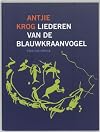
Deze bundel bevat geen poëzie van de Zuid-Afrikaanse dichteres zelf, maar haar keuze uit vertellingen en gedichten die zij maakte uit overgeleverde literatuur die is geschreven in het /Xam, de taal van de Kaapse Bosjesmannen (de / staat voor een van de klikgeluiden van deze taal). Dankzij het archief van de Engelsman Wilhelm Bleek bleven de teksten bewaard. Krog vertaalde ze eerder in het Zuid-Afrikaans samen met meer verzen in andere inheemse talen: alles terug te vinden in de bundel 'Met show more woorde soos met kerse'. Dorsman vertaalde daaruit alleen de /Xam-gedichten in het Nederlands en vulde die aan met enkele andere, tot dusver nog niet gepubliceerde gedichten. Daarmee is deze bundel een kleine aanvulling op de literatuurgeschiedenis geworden, mede dankzij de verhelderende inleiding, waarin de geschiedenis geschetst wordt van de verloren gegane cultuur van de /Xam. Sommige gedichten getuigen ook van die bedreiging van de /Xam-cultuur. De teksten bieden een intieme kijk in die cultuur. Tweetalige uitgave in het Zuid-Afrikaans en Nederlands. Met afbeeldingen van rotstekeningen.nJ.A.M. van den Broek show less
Country of My Skull: Guilt, Sorrow, and the Limits of Forgiveness in the New South Africa by Antjie Krog
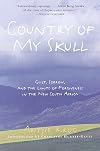
Rounding up. A mix of a journalistic and personal story-telling about the Truth and Reconciliation Commission in South Africa, the writing in this debut can be dense and sometimes the narrative is disjointed (in fairness, I felt the same about another book on the same topic - maybe these events defy sense-making.) Nevertheless, this is an important accounting of the TRC, a reflection on its limits, and the toll it took on the participants, commissioners and journalists. An essential read if show more you are interested in past/present South Africa. show less
Lists
Awards


You May Also Like


Associated Authors
Statistics
- Works
- 50
- Also by
- 6
- Members
- 1,006
- Popularity
- #25,630
- Rating
- 4.0
- Reviews
- 15
- ISBNs
- 92
- Languages
- 7
- Favorited
- 3
