
Zakes Mda
Author of The Heart of Redness: A Novel
About the Author
Born Zakes Mda in 1948 in South Africa in the Eastern Cape, Mda spent his early childhood in Soweto, and finished his school education in Lesotho, where he had joined his father in exile. As a poet, he published in magazines such as Staffrider, The Voice, and Oduma, and in the anthologies New South show more African Writing in 1977, Summer Fires in 1982 and Soho Square in 1992. His first volume of poems, Bits of Debris, came out in 1986. In 1978 Mda's play We Shall Sing for the Fatherland, written in 1973, won the first Amstel Playwright of the Year Award. The following year he won this award again with The Hill, a play written in 1978. The publication of We Shall Sing for the Fatherland and Other Plays in 1980 enabled him to gain admission to Ohio University for a three-year Master's degree in theatre. His play The Road, written in 1982, won the Christina Crawford Award of American Theatre Association in 1984, by which time his plays were being performed in the USSR, the USA, and Scotland as well as in various parts of southern Africa. Mda returned from the USA in 1984, joining the University of Lesotho as lecturer in the Department of English in 1985. In 1989 he was awarded a Ph.D. by the University of Cape Town and his dissertation was later published as When People Play People in 1993, the same year as a collection of four plays, And the Girls in Their Sunday Dresses. In 1991 Mda was writer-in-residence at the University of Durham, where he wrote The Nun's Romantic Story; in 1992 as research fellow at Yale University he wrote The Dying Screams of the Moon, another play, and his first novel, Ways of Dying in 1995. By 1994 he was back in South Africa from exile in America, as visiting professor at the University of the Witwatersrand. He has since given up teaching African literature to write novels. (Bowker Author Biography) show less
Image credit: via Macmillan Publishers
Series
Works by Zakes Mda
Tagged
Common Knowledge
- Legal name
- Mda, Zanemvula Kizito Gatyeni
- Birthdate
- 1948
- Gender
- male
- Occupations
- Professor of Creative Writing, Ohio University
beekeeper
dramaturge
Director of the Southern African Multimedia AIDS Trust - Awards and honors
- South African Literary Award Lifetime Achievement (2010)
- Nationality
- South Africa
- Birthplace
- Herschel, South Africa
- Places of residence
- Athens, Ohio, USA
Johannesburg, South Africa - Associated Place (for map)
- South Africa
Members
Reviews
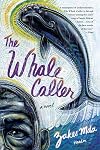
Mda's The Whale Caller is so rich that it's difficult for a reader to distinguish between fantasy and reality. The characters are so flawed and distinctive, and their story so sweet, that the world becomes something almost idyllic, despite its downfalls and poverty. Centered in off-kilter romances and fantasy, the book is something of a lovesong to what imagination can accomplish for its characters, and of course for the reader.
Yet, for me, I have to admit that the ending very nearly ruined show more the book for me, and certainly ruined the world of the book. Having read it, and been so shocked by it, I couldn't really recommend the book to other readers unless they could commit to neglecting those last few pages. I adore Mda's writing, but that ending... well, it would be enough to put me off of his work if I weren't already a fan, not for the believability, but for the too-easy horror, that is all to believable, just as much as the rest of the story is surprisingly believable.
I don't know what to say beyond the fact that Mda's writing and world-building an character creation are marvelous. And that I now hate him, just a bit, for writing this ending. show less
Yet, for me, I have to admit that the ending very nearly ruined show more the book for me, and certainly ruined the world of the book. Having read it, and been so shocked by it, I couldn't really recommend the book to other readers unless they could commit to neglecting those last few pages. I adore Mda's writing, but that ending... well, it would be enough to put me off of his work if I weren't already a fan, not for the believability, but for the too-easy horror, that is all to believable, just as much as the rest of the story is surprisingly believable.
I don't know what to say beyond the fact that Mda's writing and world-building an character creation are marvelous. And that I now hate him, just a bit, for writing this ending. show less

Mda examines the complicated relationship between Afrikaners and black South Africans in a small town in the Free State platteland, where, as usual in small towns, politics has much more to do with individuals and what happened between them a few decades ago than with big national issues. In Excelsior, the defining event in recent history has been the arrest of five white men and fourteen black women from the town under the Immorality Acts in 1971. The white men were all prominent figures in show more the Afrikaner community, and their activities lead to the birth of a surprising number of mixed-race babies.
We follow one of the women, Nikki, and her daughter Popi, through the declining years of apartheid and the first decade of democracy: the optimistic coming to power of the ANC, the lofty socialist ideals that gradually slide off into corruption and capitalist "enterprise schemes", the disenchantment of the Afrikaners who feel they aren't being given a chance to contribute to the new society, and so on. Underlying it all is the comfortable notion that, at a personal level, Afrikaner farmers and rural black people have far more in common than they think they do, and it's only those nasty middle-class ideas from the city that are driving them apart. Much the same reasoning that you find in nostalgic rural fiction from Attlee-era Britain. Which, oddly enough, is almost always written either by nasty middle-class people from the cities or by (former) aristocratic landowners, never by actual peasants.
Still, politically dubious though it might be, it's an attractive story, with strong, funny characters, interwoven with luscious descriptions of Van-Gogh-esque paintings of rural life by a local artist.
Narrator Robin Miles obviously isn't South African, but she does a pretty convincing job with the strongly-defined Sotho and Afrikaner voices, only breaking the illusion slightly with some odd pronunciations of Afrikaans placenames. show less
We follow one of the women, Nikki, and her daughter Popi, through the declining years of apartheid and the first decade of democracy: the optimistic coming to power of the ANC, the lofty socialist ideals that gradually slide off into corruption and capitalist "enterprise schemes", the disenchantment of the Afrikaners who feel they aren't being given a chance to contribute to the new society, and so on. Underlying it all is the comfortable notion that, at a personal level, Afrikaner farmers and rural black people have far more in common than they think they do, and it's only those nasty middle-class ideas from the city that are driving them apart. Much the same reasoning that you find in nostalgic rural fiction from Attlee-era Britain. Which, oddly enough, is almost always written either by nasty middle-class people from the cities or by (former) aristocratic landowners, never by actual peasants.
Still, politically dubious though it might be, it's an attractive story, with strong, funny characters, interwoven with luscious descriptions of Van-Gogh-esque paintings of rural life by a local artist.
Narrator Robin Miles obviously isn't South African, but she does a pretty convincing job with the strongly-defined Sotho and Afrikaner voices, only breaking the illusion slightly with some odd pronunciations of Afrikaans placenames. show less
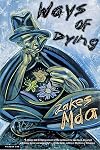
Told in the collective voice of "we," Ways of Dying unfolds the story of Toloki and Noria. The community owns the story, but keeps an emotionally safe distance. Toloki makes his living as a professional mourner. What an interesting vocation. Toloki will be there if you need someone to help carry a casket; he will wail as if he just lost his own best friend, or he can rescue a body from the morgue before officials dump it into a mass grave. Toloki's most important task is to attend funerals show more to comfort the mourners. It is at one such funeral that he reconnects with someone from his childhood. As children, Toloki was always jealous of the beautiful and mysterious Noria. No matter how hard he tried to please his father, Noria was the only one his father had eyes for. Noria acted as Toloki's father's artistic muse. Now, years later, Noria is a changed woman after suffering so much heartache and loss. Together, they forge a new friendship.
Confession: there was so much misery in Ways of Dying that I could not trust a happy ending. show less
Confession: there was so much misery in Ways of Dying that I could not trust a happy ending. show less
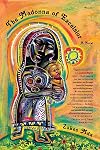
Mda does a spectacular job of portraying the complexities of the relationships between the Africans and the Afrikaners. Niki’s involvement with Cronje is, for instance, clearly voluntary, and yet equally clearly born of a larger oppression. Mda traces how quickly the idealism of the Movement lapses into self-serving corruption, how the black community after its liberation the cohesion and pride that characterized it before, and even portrays with some sympathy the anguish of the younger show more generation of Afrikaners, who were sent to fight a losing war against the Movement which now costs them their livelihoods. A seething anger pulsates throughout the book as it must have pulsated throughout these years of South African history. Ultimately, the novel’s characters, black, white, and in-between, must let their anger seep away, anger at the way they were treated before or the way they are treated now. Particularly moving is the scene in which a seriously ill Tjaart Cronje, a fiery young Afrikaner certain that he will be restored to power when the blacks make a mess of everything, acknowledges Popi as his sister and as a lady, and she receives his acknowledgement with dignity even as she rejects his attempt to define her. show less
Lists
Awards


You May Also Like


Associated Authors
Statistics
- Works
- 26
- Members
- 1,241
- Popularity
- #20,683
- Rating
- 3.5
- Reviews
- 25
- ISBNs
- 91
- Languages
- 11
- Favorited
- 2