
Hisham Matar
Author of In the Country of Men
About the Author
Hisham Matar was born in New York City in 1970 to Libyan parents. He grew up in Tripoli, Libya, and Cairo, Egypt. His novels include In the Country of Men and Anatomy of a Disappearance. His memoir, The Return: Fathers, Sons and the Land In Between, won the Pulitzer Prize for show more biography/autobiography in 2017. He also won the 2017 PEN America Literary Awards/Jean Stein Award for The Return: Fathers, Sons and the Land In Between. (Bowker Author Biography) show less
Works by Hisham Matar
Naima 1 copy
Matar Hisham 1 copy
Um mês em Siena 1 copy
Moi przyjaciele (Powieść) 1 copy
في بلد الرجال 1 copy
David Austen- The Drowned 1 copy
Associated Works
Lunatics, Lovers and Poets: Twelve Stories after Cervantes and Shakespeare (2016) — Contributor — 37 copies
Tagged
Common Knowledge
- Canonical name
- Matar, Hisham
- Birthdate
- 1970
- Gender
- male
- Education
- Goldsmiths College, University of London (MA)
- Occupations
- college professor
poet
essayist
novelist - Organizations
- Barnard College
- Awards and honors
- Royal Society of Literature (Fellow, 2013)
Flaiano Prize (2007)
Pulitzer Prize for Biography (2017)
PEN/Jean Stein Book Award (2017)
Rathbones Folio Prize (2017)
National Book Critics Circle Award for Autobiography (2017) (show all 7)
Premio Libro Del Año, Gremio de Libreros de Madrid (2017) - Nationality
- USA
Libya
UK - Birthplace
- New York, New York, USA
- Places of residence
- New York, New York, USA
Tripoli, Libya
Cairo, Egypt
London, England, UK - Map Location
- Libya
Members
Reviews
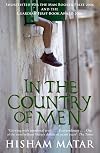
Suleiman, a nine-year-old boy in Libya is ignorant of the threat brought about by the new regime of Muammar Gaddafi. He unwittingly supplies information to the secret police who are watching his home for the father they suspect of being a subversive. Matar has created an outstanding story from a difficult, brutal era in Libya, an era to which he was personally exposed. His writing is beautiful, as is apparent in the scene where the boy is feasting on mulberries, as well as the execution show more scene that is televised and with every minute detail noticed by the audience. This is a profound story that the reader will remember long after closing the book. show less
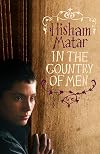
"Children aren't supposed to know these things", 2 Aug. 2015
This review is from: In the Country of Men by Matar, Hisham (2006) Hardcover (Hardcover)
Tense and gripping narrative by a Libyan man as he recalls his nine-year old self in Tripoli, 1979, "that last summer before I was sent away." He vividly conjures up a sense of place: the heat, the Mediterranean, the street he lives in. But this is the era of repression under Gadaafi, and young Suleiman's wealthy businessman father is involved show more in the resistance.
He is aware - but not fully comprehending - of people being 'taken away', tapped phone calls, televised interrogations and hangings, the home being under constant surveillance; and of the effect this is having on his mother, who mysteriously becomes 'ill' whenever his father is away (we soon learn this is thanks to alcohol which she procures illegally.)
The world around him, the half-truths with which adults try to shield him from the reality, starts to brutalize the child too...
A powerful read. show less
This review is from: In the Country of Men by Matar, Hisham (2006) Hardcover (Hardcover)
Tense and gripping narrative by a Libyan man as he recalls his nine-year old self in Tripoli, 1979, "that last summer before I was sent away." He vividly conjures up a sense of place: the heat, the Mediterranean, the street he lives in. But this is the era of repression under Gadaafi, and young Suleiman's wealthy businessman father is involved show more in the resistance.
He is aware - but not fully comprehending - of people being 'taken away', tapped phone calls, televised interrogations and hangings, the home being under constant surveillance; and of the effect this is having on his mother, who mysteriously becomes 'ill' whenever his father is away (we soon learn this is thanks to alcohol which she procures illegally.)
The world around him, the half-truths with which adults try to shield him from the reality, starts to brutalize the child too...
A powerful read. show less
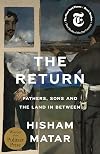
A short, heartfelt, and beautifully executed book. Hisham Matar is the son of a former Libyan diplomat who became a major figure in the anti-Qaddafi resistance movement. Betrayed by Hosni Mubarak's government and imprisoned for years in Libya's most notorious prison, he hadn't been heard from for years when the Arab Spring toppled Qaddafi's government. It's evident that the author loved and respected his father: the memories of him he recounts here fairly teem with emotion. But this is show more mostly a book about absence and uncertainty. It's clear from fairly early on that, when Qaddafi's government fell, the chances of finding Jaballa Matar alive were extraordinarily slim. Still, the author clings to the hope that he might be reunited with his father someday. Even so, the author -- whose capacity for analyzing his own emotions and motives is truly extraordinary -- senses that hope can become its own kind of punishment, and that holding on to his father's memory limits his own life in many ways. Hisham Matar was, after all, about ten when his father disappeared -- he is aware that he has lived with his father's absence longer than he actually lived with his dad. It is a real credit to Matar as a writer that he can so fully articulate the way that his father's absence has shaped his experience of the world. Loss is, I suppose, a universal human experience, but I can honestly say that this is one of the best books I've ever read about it.
There are a few other reasons to read "The Return". The author's interactions with Saif Qaddafi -- the dictator's "reformist" son -- and his lackeys provide a fine portrayal of a sort of evil that comes off simultaneously bland and unnervingly unapologetic. This book also provides a wonderful portrait of the geography, culture, and social dynamics of the Arab world. His descriptions of Libya are nothing short of painterly, and his love for the country's landscape and architecture comes through very clearly. His description of the Libya's Mediterranean seacoast and its ocean made me wonder how much a ticket to Tripoli might cost me at this time of year. My experience of the Arab world is relatively limited, but Matar's descriptions of the way that people in Libya -- and especially those in his enormous family -- communicate, argue, and show affection for each other is both wonderfully detailed and extremely accessible to the Western reader. Matar describes, for example, the gatherings of his enormous family or meetings with his neighbors in a way that makes you feel like you are not just present but also understand what every social cue and expression really means, and this makes for an extraordinarily intimate reading experience. Likewise, Matar's descriptions of his interactions with his neighbors gives you an idea of how small and isolated a place Libya can really be. It seems that it's the kind of country where everyone knows everyone.
And this gets at the heart of something else that makes "The Return" a really special book. It's clear that even though it was written in English, that this is a fundamentally Libyan story told by a Libyan. Matar's family is from Benghazi, a city that is synonymous, in the West, for the attack on an American consulate that killed four Americans and caused a major political scandal in the United States. We don't hear a word about that in "The Return", though, because actual Libyans had other things to worry about and deal with at the time. This is pretty refreshing, and an important reminder that the rest of the world keeps existing even after headlines in the United States have shifted their attention elsewhere. "The Return" is a short book, but the emotions it contains are so vivid -- and so well-articulated -- that it took me a while to read. It's hardly an easy read, but I recommend this one highly. show less
There are a few other reasons to read "The Return". The author's interactions with Saif Qaddafi -- the dictator's "reformist" son -- and his lackeys provide a fine portrayal of a sort of evil that comes off simultaneously bland and unnervingly unapologetic. This book also provides a wonderful portrait of the geography, culture, and social dynamics of the Arab world. His descriptions of Libya are nothing short of painterly, and his love for the country's landscape and architecture comes through very clearly. His description of the Libya's Mediterranean seacoast and its ocean made me wonder how much a ticket to Tripoli might cost me at this time of year. My experience of the Arab world is relatively limited, but Matar's descriptions of the way that people in Libya -- and especially those in his enormous family -- communicate, argue, and show affection for each other is both wonderfully detailed and extremely accessible to the Western reader. Matar describes, for example, the gatherings of his enormous family or meetings with his neighbors in a way that makes you feel like you are not just present but also understand what every social cue and expression really means, and this makes for an extraordinarily intimate reading experience. Likewise, Matar's descriptions of his interactions with his neighbors gives you an idea of how small and isolated a place Libya can really be. It seems that it's the kind of country where everyone knows everyone.
And this gets at the heart of something else that makes "The Return" a really special book. It's clear that even though it was written in English, that this is a fundamentally Libyan story told by a Libyan. Matar's family is from Benghazi, a city that is synonymous, in the West, for the attack on an American consulate that killed four Americans and caused a major political scandal in the United States. We don't hear a word about that in "The Return", though, because actual Libyans had other things to worry about and deal with at the time. This is pretty refreshing, and an important reminder that the rest of the world keeps existing even after headlines in the United States have shifted their attention elsewhere. "The Return" is a short book, but the emotions it contains are so vivid -- and so well-articulated -- that it took me a while to read. It's hardly an easy read, but I recommend this one highly. show less
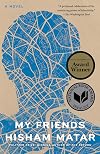
Main character Khaled, originally from Benghazi, attends university in Edinburgh, where he meets Mustafa. Later, in London in 1984, he and Mustafa get involved in a demonstration against the Qaddafi regime outside the Libyan Embassy, which changes their lives forever. Hosam is a writer of a short story that Khaled had heard over the radio. They later meet and become friends. The narrative explores his friendship with fellow Libyans, Mustafa and Hosam, over the course of three decades. It show more also includes family, relationships, and the close bonds of the three friends with their home in Libya. At this time, the Qaddafi regime was tracking down and dealing harshly with any resistance.
This book combines beautiful writing, narrative arc, character, emotion, and socially relevant themes. The storyline covers the personal lives of the three friends and the events leading up to and including Arab Spring. The emotional heart of the story is the need for Khaled, as a teen, to forge an independent life apart from his family, while keeping the secret of the reason he cannot come home. I found it mesmerizing and read it straight through in one sitting. It is a wonderful blend of friendship, family, love, identity, exile, literature, and the downfall of a dictator. It will make my short list of best books of the year. I am adding it to my shelf of all-time favorites. show less
This book combines beautiful writing, narrative arc, character, emotion, and socially relevant themes. The storyline covers the personal lives of the three friends and the events leading up to and including Arab Spring. The emotional heart of the story is the need for Khaled, as a teen, to forge an independent life apart from his family, while keeping the secret of the reason he cannot come home. I found it mesmerizing and read it straight through in one sitting. It is a wonderful blend of friendship, family, love, identity, exile, literature, and the downfall of a dictator. It will make my short list of best books of the year. I am adding it to my shelf of all-time favorites. show less
Lists
Booker Prize (1)
Tour of Africa (1)
A Novel Cure (1)
Awards


You May Also Like


Associated Authors
Statistics
- Works
- 15
- Also by
- 7
- Members
- 3,446
- Popularity
- #7,371
- Rating
- 3.9
- Reviews
- 159
- ISBNs
- 158
- Languages
- 16
- Favorited
- 3


