
Tahmima Anam
Author of A Golden Age
About the Author
Series
Works by Tahmima Anam
Garments 1 copy
Associated Works
The O. Henry Prize Stories 2017 (The O. Henry Prize Collection) (2017) — Contributor — 55 copies, 1 review
Tagged
Common Knowledge
- Birthdate
- 1975
- Gender
- female
- Education
- Mount Holyoke College
- Awards and honors
- Granta's Best of Young British Novelists (2013)
- Nationality
- Bangladesh
- Birthplace
- Dhaka, Bangladesh
- Associated Place (for map)
- Dhaka, Bangladesh
Members
Reviews

Asha Ray had a huge crush on Cyrus Jones in high school, and when they meet again while she's in grad school, everything seems to fall into place. Cyrus creates rituals, particularly for people who don't follow any particular kind of faith but want to have something meaningful in their life. When Asha and Cyrus's friend Jules create an app that does the same - first asking questions of the users to see what's important to them, and then suggestion a ritual for a special event be it a show more funeral, a wedding, or something else - they have to convince a reluctant Cyrus to go along with it. But as they become more and more successful, it's Asha who starts wondering if all this was really worth it.
There is a lot to unpack in this story. I kept thinking about the title, "The Startup Wife", whose meaning seems to shift was Asha and Cyrus's roles change during the life of their startup. It makes you question whether something started with the right intentions can ever stay "pure" as it becomes more successful - and is that because of our society, because of individual's choices, or something in between? What was inevitable and what wasn't? And ultimately, I was cheering for Asha as she grows and changes, grappling with her role and culpability. This would make an excellent book club choice. show less
There is a lot to unpack in this story. I kept thinking about the title, "The Startup Wife", whose meaning seems to shift was Asha and Cyrus's roles change during the life of their startup. It makes you question whether something started with the right intentions can ever stay "pure" as it becomes more successful - and is that because of our society, because of individual's choices, or something in between? What was inevitable and what wasn't? And ultimately, I was cheering for Asha as she grows and changes, grappling with her role and culpability. This would make an excellent book club choice. show less
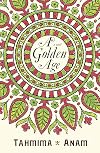
As the story opens, Rehana Haque is a widow living in Dhaka. Her husband’s death has left her unmoored. Unable to care for her two young children, the court orders her to send them to West Pakistan, where her brother-in-law and his wife take them in. Ten years later, in 1971, she is financially able to retrieve her children and bring them back to East Pakistan. Just after the children return, the family is embroiled in the Bangladesh War of Liberation. This is a character-driven narrative show more focused on the conflict between West and East Pakistan, and the impact of war on ordinary people.
It is mostly set in 1971 and told from the perspective of Rehana, a Muslim mother of two – seventeen-year-old Sohail and nineteen-year-old Maya. Sohail becomes involved in the resistance, and Maya observes and documents the war from a female perspective. Rehana’s main motivation is to protect her children, but as the war progresses, she transforms from a passive observer to an active participant in the independence movement. Themes include roles of women in wartime, identity (personal, cultural, and national), sacrifice, and survival.
Anam has done a nice job of combining personal drama with historic events. She provides insight into the independence movement and highlights the role of civilians in the liberation struggle. The storyline includes a variety of Bengali culture and traditions, including food, music, poetry, and language. It examines the role of religion and politics in the origination and progression of the conflict, including the violence perpetrated against Hindus. It provides details of daily life in Dhaka during the war.
For me, the primary strengths include complex character development and vivid sensory descriptions. Within the storyline, Anam provides some background of the war, but I think the book will be more enjoyable if the reader comes to it with at least a basic level of knowledge. I am impressed by the author’s ability to humanize a larger political situation, which helped me feel what it was like to live through such an awful time. I understand the second book in the series goes back to events leading up to Partition (1947). I am not normally a reader of books in a series, but this one is so well done that I will be seeking out the other two. show less
It is mostly set in 1971 and told from the perspective of Rehana, a Muslim mother of two – seventeen-year-old Sohail and nineteen-year-old Maya. Sohail becomes involved in the resistance, and Maya observes and documents the war from a female perspective. Rehana’s main motivation is to protect her children, but as the war progresses, she transforms from a passive observer to an active participant in the independence movement. Themes include roles of women in wartime, identity (personal, cultural, and national), sacrifice, and survival.
Anam has done a nice job of combining personal drama with historic events. She provides insight into the independence movement and highlights the role of civilians in the liberation struggle. The storyline includes a variety of Bengali culture and traditions, including food, music, poetry, and language. It examines the role of religion and politics in the origination and progression of the conflict, including the violence perpetrated against Hindus. It provides details of daily life in Dhaka during the war.
For me, the primary strengths include complex character development and vivid sensory descriptions. Within the storyline, Anam provides some background of the war, but I think the book will be more enjoyable if the reader comes to it with at least a basic level of knowledge. I am impressed by the author’s ability to humanize a larger political situation, which helped me feel what it was like to live through such an awful time. I understand the second book in the series goes back to events leading up to Partition (1947). I am not normally a reader of books in a series, but this one is so well done that I will be seeking out the other two. show less

Tahmima Anam's fourth novel is an intriguing mix. It's a love story wrapped up in a cautionary story about tech start-ups, with a side theme of dealing with sexism mixed in. All this, along with warm vignettes about the main character's immigrant family. It's a witty, observant, infuriating, and eye-opening novel.
The main character is Asha, a young computer scientist who has worked hard to build a future. Halfway through her PhD and dreaming of running her own lab, she runs into her old show more high-school crush, Cyrus, a long-haired, free thinking genius who didn't even notice her in high school. But he does now, and a hot, whirlwind romance-marriage ensues.
They form a tight trio with their friend Jules, living in Cambridge in his house. Cyrus is a self-taught, world religion-ritual guru and he creates meaningful life event ceremonies for people. Asha thinks up an ingenious idea: to build a social networking app that could give life meaning, offer personal rituals, and create connection for millions of people. With Asha as the algorithm wizard, Jules as the creative entrepreneur, and with Cyrus' charisma and drive, they move to New York and succeed big.
Asha should be happy - running a company, married to the love of her life, right? Well, there are prices to this kind of success.
I enjoyed the interludes with her Bengali family in New York a lot. There are a lot of inside glimpses about start-ups and finding investors and some scathing depictions about who has the power in the boardrooms. It's a good book - kind of sobering that the novel ends right when the Covid pandemic has started. I wonder how the pandemic will be described in fiction in upcoming years. show less
The main character is Asha, a young computer scientist who has worked hard to build a future. Halfway through her PhD and dreaming of running her own lab, she runs into her old show more high-school crush, Cyrus, a long-haired, free thinking genius who didn't even notice her in high school. But he does now, and a hot, whirlwind romance-marriage ensues.
They form a tight trio with their friend Jules, living in Cambridge in his house. Cyrus is a self-taught, world religion-ritual guru and he creates meaningful life event ceremonies for people. Asha thinks up an ingenious idea: to build a social networking app that could give life meaning, offer personal rituals, and create connection for millions of people. With Asha as the algorithm wizard, Jules as the creative entrepreneur, and with Cyrus' charisma and drive, they move to New York and succeed big.
Asha should be happy - running a company, married to the love of her life, right? Well, there are prices to this kind of success.
I enjoyed the interludes with her Bengali family in New York a lot. There are a lot of inside glimpses about start-ups and finding investors and some scathing depictions about who has the power in the boardrooms. It's a good book - kind of sobering that the novel ends right when the Covid pandemic has started. I wonder how the pandemic will be described in fiction in upcoming years. show less
 This review was written for LibraryThing Early Reviewers.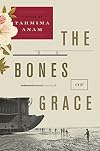
Bones of Grace by Tahmima Anam succeeds on the most objective level in that it made me want to read Anam’s other books, The Golden Age and The Good Muslim. It is a narrated by Zubaidah Haque, a Bangladeshi woman who grew up with relative privilege. She attended college in the US, studied paleontology and when the book opens, is about to leave for a dig in Baluchistan, Pakistan, to search for ambulocetus, the walking whale, a transitional creature of the land and sea. The symbolism is show more obvious, as she is a transitional woman, both Bangladeshi and Western. She is also torn between her passionate love for Elijah whom she met just as she was preparing to leave Harvard for the dig and her comfortable and expected love for Rashid, her childhood friend and sweetheart to whom she is engaged.
Although Zubaidah chooses duty and family, she also feels alienated and alone, obsessed with the knowledge that she was adopted. That she has no one of her own blood. She wants to find her mother, but no one will tell her anything. She is unhappy and takes a job translating and helping a documentarian who is doing a film about the shipbreaking industry in Bangladesh. This got me looking into the National Geographic article that Gabriela, the documentarian read and was inspired by. This was fascinating and, of course, was a vehicle to advance the story, bringing together Zubaidah, Rashid, Elijah and the secrets of her past.
3paws
I liked Bones of Grace, but I did not love it. I thought her love for Elijah was sort of unreal. Sure, people do fall in love at first sight and it can be passionate and heartfelt, but the love story felt sort of false, a construct necessary to create a conflict. While I loved that they wrote each other texts in Nina Simone song titles, Elijah was too much of a counterpoint to Rashid, I think. Anam was much more believable writing about the marriage to Rashid and their relationship. I appreciated that she resisted the impulse to make him a bad husband.
The real villain, if there is one, is Zubaidah herself. She is type of character who drives me nuts, who decides by not deciding, who goes along to get along, and then wallows in misery. Of course, if she had been honest, true to herself, she would have acted differently and there would have been no story. That’s the problem for readers like me, the characters we like, the ones who talk to people and say what they think and speak up for themselves just don’t end up in these travails of being married to someone they like while pining for someone they love.
However, the story has many fascinating elements. For example, Zee’s parents were freedom fighters whose nostalgia for their glory days frustrates her a bit. It reminds me of people of my generation and how we get tired of hearing about people from the Sixties waxing nostalgic for their activism. That is so realistic and human, the faint envy of missing out on greatness, of the opportunity to be challenged to greatness.
I also appreciate that Bones of Grace presents a complex Bangladesh. Yes, there is extreme poverty. Yes, life is hard for the poor and even harder for poor women. But there is a middle class, an entrepreneurial class, women who are educated. They are not wearing burkas and they are working. Zee’s mother is working to prosecute war criminals. Her mother’s friend is working for labor rights for workers. Because Anam is Bangladeshi, she is capable of capturing the contradictions and complexity of her country. She loves Bangladesh and it, perhaps more than anything else, is the real rival for her love, not Rashid.
I received an advance copy for review from publishers via the GoodReads Giveaways program.
My review is here: https://tonstantweaderreviews.wordpress.com/2016/06/28/bones-of-grace-by-tahmima... show less
Although Zubaidah chooses duty and family, she also feels alienated and alone, obsessed with the knowledge that she was adopted. That she has no one of her own blood. She wants to find her mother, but no one will tell her anything. She is unhappy and takes a job translating and helping a documentarian who is doing a film about the shipbreaking industry in Bangladesh. This got me looking into the National Geographic article that Gabriela, the documentarian read and was inspired by. This was fascinating and, of course, was a vehicle to advance the story, bringing together Zubaidah, Rashid, Elijah and the secrets of her past.
3paws
I liked Bones of Grace, but I did not love it. I thought her love for Elijah was sort of unreal. Sure, people do fall in love at first sight and it can be passionate and heartfelt, but the love story felt sort of false, a construct necessary to create a conflict. While I loved that they wrote each other texts in Nina Simone song titles, Elijah was too much of a counterpoint to Rashid, I think. Anam was much more believable writing about the marriage to Rashid and their relationship. I appreciated that she resisted the impulse to make him a bad husband.
The real villain, if there is one, is Zubaidah herself. She is type of character who drives me nuts, who decides by not deciding, who goes along to get along, and then wallows in misery. Of course, if she had been honest, true to herself, she would have acted differently and there would have been no story. That’s the problem for readers like me, the characters we like, the ones who talk to people and say what they think and speak up for themselves just don’t end up in these travails of being married to someone they like while pining for someone they love.
However, the story has many fascinating elements. For example, Zee’s parents were freedom fighters whose nostalgia for their glory days frustrates her a bit. It reminds me of people of my generation and how we get tired of hearing about people from the Sixties waxing nostalgic for their activism. That is so realistic and human, the faint envy of missing out on greatness, of the opportunity to be challenged to greatness.
I also appreciate that Bones of Grace presents a complex Bangladesh. Yes, there is extreme poverty. Yes, life is hard for the poor and even harder for poor women. But there is a middle class, an entrepreneurial class, women who are educated. They are not wearing burkas and they are working. Zee’s mother is working to prosecute war criminals. Her mother’s friend is working for labor rights for workers. Because Anam is Bangladeshi, she is capable of capturing the contradictions and complexity of her country. She loves Bangladesh and it, perhaps more than anything else, is the real rival for her love, not Rashid.
I received an advance copy for review from publishers via the GoodReads Giveaways program.
My review is here: https://tonstantweaderreviews.wordpress.com/2016/06/28/bones-of-grace-by-tahmima... show less
Lists
Awards


You May Also Like


Associated Authors
Statistics
- Works
- 8
- Also by
- 5
- Members
- 1,545
- Popularity
- #16,669
- Rating
- 3.7
- Reviews
- 84
- ISBNs
- 101
- Languages
- 11
- Favorited
- 4
