
Amit Majmudar
Author of Partitions
About the Author
Image credit: 32 Poems
Works by Amit Majmudar
The Book of Discoveries 1 copy
The Book of Killings 1 copy
Associated Works
Short, Vigorous Roots: A Contemporary Flash Fiction Collection of Migrant Voices (2022) — Contributor — 84 copies, 50 reviews
The O. Henry Prize Stories 2017 (The O. Henry Prize Collection) (2017) — Contributor — 55 copies, 1 review
Tagged
Common Knowledge
- Birthdate
- 1979
- Gender
- male
- Education
- Northeast Ohio Medical University (MD)
University of Akron (BS) - Occupations
- diagnostic nuclear radiologist
poet
novelist - Awards and honors
- Poet Laureate of Ohio
- Nationality
- USA
- Birthplace
- New York, USA
- Places of residence
- Columbus, Ohio, USA
- Map Location
- Ohio, USA
Members
Reviews
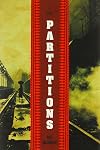
On August 15, 1947, British India became partitioned into two states: the Dominion of Pakistan (which then included modern day Bangladesh) and the Union of India. The birth pangs of these two nation states were violent and sectarian, displacing 12-14 million people, and killing hundreds of thousands. As Muslims headed one way across the new border into Pakistani territory, Hindus and Sikhs fled in the opposite direction. Atrocities were committed on all sides, and even neighbors and friends show more grew suspicious, if not outright hostile. The effects of this volatile partition are still felt today in the hostility between the two countries.
In this, his first novel, Amit Majmudar seeks to personalize this enormous tragedy by focusing on the fates of a few: Shankar and Keshav, two Hindu twins, who become separated from their mother while trying to cross the border; a young Sikh girl named Simran, whose father would rather see her dead than dishonored; and a Muslim pediatrician, Ibrahim Masud, who quietly continues to treat the needy without reference to their religion. It is a novel of great beauty and power. Majmudar is a poet, and the images he creates with his words are at once sad and hopeful, sweet and brutal. Although a difficult book to read, it is an important one for giving insight into the mindset that creates revenge and generational conflict.
…for all his personal loyalty to Dr. Masud, there is a part of Gul Singh, too, that believes what is happening is necessary. Some killing must be done. It is a form of communication, the only kind that can cross the partitions between this country and its neighbor, between this world and the next. Their enemies must hear the deaths and know fear; their dead must hear the deaths and know rest.
Highly recommended. show less
In this, his first novel, Amit Majmudar seeks to personalize this enormous tragedy by focusing on the fates of a few: Shankar and Keshav, two Hindu twins, who become separated from their mother while trying to cross the border; a young Sikh girl named Simran, whose father would rather see her dead than dishonored; and a Muslim pediatrician, Ibrahim Masud, who quietly continues to treat the needy without reference to their religion. It is a novel of great beauty and power. Majmudar is a poet, and the images he creates with his words are at once sad and hopeful, sweet and brutal. Although a difficult book to read, it is an important one for giving insight into the mindset that creates revenge and generational conflict.
…for all his personal loyalty to Dr. Masud, there is a part of Gul Singh, too, that believes what is happening is necessary. Some killing must be done. It is a form of communication, the only kind that can cross the partitions between this country and its neighbor, between this world and the next. Their enemies must hear the deaths and know fear; their dead must hear the deaths and know rest.
Highly recommended. show less
 This review was written for LibraryThing Early Reviewers.
Incredibly powerful and emotionally charged debut novel from Amit Majmudar. Beautiful prose. A story full of grief, the theme being the partition of India and creation of Pakistan and the horrors that the process involved. The book's lyricism betrays a poet behind the lines, and I detect on the cover that the author was an award-winning poet before he became a writer, which, in its turn, is not his primary career either - he is a diagnostic nuclear radiologist, believe it or not... His show more writing style in this novel strongly reminds me of another favorite author, Andrei Makine.
There are books after reading which you wholeheartedly give them 5 stars, no doubts or hesitation or weighing pros and cons. This is such a book. I got introduced to this author by Librarything Early Reviewers - by reviewing his second novel, "The Abundance", which was also excellent (looking back - what a lucky chance I had spotted it!), but "Partitions" surpasses it, it simply shines. show less
There are books after reading which you wholeheartedly give them 5 stars, no doubts or hesitation or weighing pros and cons. This is such a book. I got introduced to this author by Librarything Early Reviewers - by reviewing his second novel, "The Abundance", which was also excellent (looking back - what a lucky chance I had spotted it!), but "Partitions" surpasses it, it simply shines. show less
"If there is one thing dangerously abundant right now, it is certainty. Certainty makes possible in men the most extreme good and the most extreme evil. A land like the Punjab, five rivers and three faiths, could do with a little less certainty." (page 159)
This is a fascinating book about a subject I don’t know very much about – the partition of India in 1947 and the creation of Pakistan. Majmudar tells three stories which parallel the story of Partition and its attendant displacement, show more fear, violence and loss. There are the twin Hindu boys who are separated from their mother while fleeing what has become the Muslim state of Pakistan; a young Sikh girl who escapes the death planned for her by her own family to prevent her being shamed by the marauding gangs; and an old Muslim doctor who sees his clinic destroyed by Hindu gangs and starts the trek to Pakistan on foot to start anew. As these tales unwind, we are also provided some back-story which provided insight into different kinds of partition within these lives and their families, faiths and communities.
"How little we know each other, though for centuries our homes had shared walls. How little we will learn, now that all we share is a border." (page 97)
This is a harrowing read, with a lot of implicit and explicit violence. It’s also suspenseful, as the reader senses that these three narratives are going to converge, and hopeful in its resolution. It does suffer, in parts, from over-writing (especially in the beginning), but it still grabbed me right away. Overall, a strong debut novel; I hope to see more in the future from Majmudar. show less
This is a fascinating book about a subject I don’t know very much about – the partition of India in 1947 and the creation of Pakistan. Majmudar tells three stories which parallel the story of Partition and its attendant displacement, show more fear, violence and loss. There are the twin Hindu boys who are separated from their mother while fleeing what has become the Muslim state of Pakistan; a young Sikh girl who escapes the death planned for her by her own family to prevent her being shamed by the marauding gangs; and an old Muslim doctor who sees his clinic destroyed by Hindu gangs and starts the trek to Pakistan on foot to start anew. As these tales unwind, we are also provided some back-story which provided insight into different kinds of partition within these lives and their families, faiths and communities.
"How little we know each other, though for centuries our homes had shared walls. How little we will learn, now that all we share is a border." (page 97)
This is a harrowing read, with a lot of implicit and explicit violence. It’s also suspenseful, as the reader senses that these three narratives are going to converge, and hopeful in its resolution. It does suffer, in parts, from over-writing (especially in the beginning), but it still grabbed me right away. Overall, a strong debut novel; I hope to see more in the future from Majmudar. show less
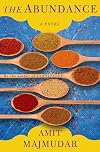
I really enjoyed this—Majmudar isn't a flashy writer, but his prose is smooth, his dialogue realistic, and the novel as a whole does an excellent job at exploring familial dynamics. The unnamed narrator is an older Indian-American immigrant, slowly dying of cancer; she has a tense relationship with her overachieving daughter; her son holds himself apart, trying to be 'Ron' instead of 'Ronak'; her husband loves her but has never had to think about stepping outside the gender roles to which show more he is accustomed. I was especially impressed with how Majmudar—who is male—managed to capture a mother-daughter relationship, with all its guilts and fights about things big and small, so effectively. I also liked how The Abundance avoids both cloying reconciliations or jarring angst; it makes it seem that much more realistic because of it. show less
This review was written for LibraryThing Early Reviewers.Lists
Awards


You May Also Like


Associated Authors
Statistics
- Works
- 19
- Also by
- 9
- Members
- 444
- Popularity
- #55,178
- Rating
- 4.0
- Reviews
- 49
- ISBNs
- 36
- Languages
- 1
