
Thrity Umrigar
Author of The Space Between Us
About the Author
Thrity Umrigar is an Indian-American writer, who was born in Mumbai. She received her Bachelors of Science from Bombay University. She immigrated to the United States when she was 21.She then went on to earn her M.A. From Ohio State and her Phd from Kent State University. She is a journalist and show more the author of the novels Bombay Time, The Space Between Us and The Weight of Heaven. She has written for the Washington Post, Cleveland Plain Dealer, among other newspapers, and regularly writes for The Boston Globe 's book pages. She is currently assistant professor of English at Case Western Reserve University where she teaches creative writing and literature. She was a winner of the Nieman Fellowship to Harvard University. She has a Ph.D. in English and lives in Cleveland, Ohio. Her title Space Between Us made The New York Times Best Seller List for 2011. (Bowker Author Biography) show less
Series
Works by Thrity Umrigar
Associated Works
Tagged
Common Knowledge
- Canonical name
- Umrigar, Thrity
- Birthdate
- 1963
- Gender
- female
- Education
- Ohio State University
Harvard University - Occupations
- author
journalist
professor (English) - Organizations
- Case Western Reserve University (Professor of English)
- Awards and honors
- Neiman Fellowship, Harvard University
Cleveland Arts Prize (2009)
Seth Rosenberg Prise - Nationality
- India
- Birthplace
- Mumbai, India
- Places of residence
- Mumbai, India
Cleveland, Ohio, USA - Associated Place (for map)
- India
Members
Reviews
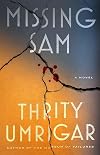
Rating: 4* of five
The Publisher Says: From bestselling author Thrity Umrigar, a thrilling and haunting story of an Indian-American woman who becomes the prime suspect when her wife goes missing.
When Aliya and Samantha have a fight one night, Samantha goes for a run early the next morning—and doesn’t come back.
Aliya reports her wife Samantha as missing, but as a gay and Muslim daughter of immigrants, she’s immediately suspected by her neighbors in Samantha's disappearance. Scared and show more furious and feeling isolated as everyone around her doubts her innocence, Aliya makes one wrong choice after another. All the while, Samantha is being held captive, strategizing how to escape before things escalate even more. Meanwhile, Aliya must fight to prove her innocence in the public eye and save her wife. But is safety ever truly possible for these women even after Samantha is rescued?
A provocative examination of suburban mores, Missing Sam captures the terror manifested in today’s political climate, and the real dangers, both physical and psychological, of being Brown and queer in America.
I RECEIVED A DRC FROM THE PUBLISHER VIA NETGALLEY. THANK YOU.
My Review: I was leery of reading this expansion on the "be careful of your words, you do not which will be your last" aphorism. I took the DRC because I like stories by and about my lesbian siblings in Otherhood, and because I'm pretty damned sure we're going to see this kind of horror again in the future so I wanted to get it out there.
Sam and Ali are well-drawn, fully realized people. We see each one's PoV, so we know what Ali doesn't, that Sam is alive. It should diminish the stakes, yet Author Umrigar uses the technique well enough that it did not.
I was, for the most part, glad to keep reading the story though as parents and social media and investigators kept becoming more toxic by the page I wanted to say, "Thrity! enough already!" When piling on the trouble the story begins to feel like the artificial construct it is. Never mind that reality does this ad more to people...fiction is different, plays by different rules. When COVID hit, I hit the wall. It took some time for me to come back.
After Sam is rescued, the true horror (for me) began: How do you put yourself...your wife...you entire life...back together after the sheer awfulness of what each of you has been through? What alchemy do you need to work in order to remake bonds that have been, without either one's volition, shattered? This horror was very well, very believably, explored. The ending was the culmination of multiple strands of un/making and remodeling.
What kept me from making a bigger fuss about the book was the dropped and abandoned threads, eg Kabir's development. I loved the challenged queer marriage that had to sustain or fail the spouses...it's the way reality is when you're in a committed relationship. The resolution Author Umrigar presents is pitch-perfect. I think the story of an immigrant, a Muslim, a queer woman, interacting with the power structures that see her as enemy Other, is one we should all reckon with.
It's not like the world is waiting for us to wake up to injustice on our own. It is ringing alarm bells and sounding klaxons and stories like this one are the easy way to see why waking up to it is so important. show less
The Publisher Says: From bestselling author Thrity Umrigar, a thrilling and haunting story of an Indian-American woman who becomes the prime suspect when her wife goes missing.
When Aliya and Samantha have a fight one night, Samantha goes for a run early the next morning—and doesn’t come back.
Aliya reports her wife Samantha as missing, but as a gay and Muslim daughter of immigrants, she’s immediately suspected by her neighbors in Samantha's disappearance. Scared and show more furious and feeling isolated as everyone around her doubts her innocence, Aliya makes one wrong choice after another. All the while, Samantha is being held captive, strategizing how to escape before things escalate even more. Meanwhile, Aliya must fight to prove her innocence in the public eye and save her wife. But is safety ever truly possible for these women even after Samantha is rescued?
A provocative examination of suburban mores, Missing Sam captures the terror manifested in today’s political climate, and the real dangers, both physical and psychological, of being Brown and queer in America.
I RECEIVED A DRC FROM THE PUBLISHER VIA NETGALLEY. THANK YOU.
My Review: I was leery of reading this expansion on the "be careful of your words, you do not which will be your last" aphorism. I took the DRC because I like stories by and about my lesbian siblings in Otherhood, and because I'm pretty damned sure we're going to see this kind of horror again in the future so I wanted to get it out there.
Sam and Ali are well-drawn, fully realized people. We see each one's PoV, so we know what Ali doesn't, that Sam is alive. It should diminish the stakes, yet Author Umrigar uses the technique well enough that it did not.
I was, for the most part, glad to keep reading the story though as parents and social media and investigators kept becoming more toxic by the page I wanted to say, "Thrity! enough already!" When piling on the trouble the story begins to feel like the artificial construct it is. Never mind that reality does this ad more to people...fiction is different, plays by different rules. When COVID hit, I hit the wall. It took some time for me to come back.
After Sam is rescued, the true horror (for me) began: How do you put yourself...your wife...you entire life...back together after the sheer awfulness of what each of you has been through? What alchemy do you need to work in order to remake bonds that have been, without either one's volition, shattered? This horror was very well, very believably, explored. The ending was the culmination of multiple strands of un/making and remodeling.
What kept me from making a bigger fuss about the book was the dropped and abandoned threads, eg Kabir's development. I loved the challenged queer marriage that had to sustain or fail the spouses...it's the way reality is when you're in a committed relationship. The resolution Author Umrigar presents is pitch-perfect. I think the story of an immigrant, a Muslim, a queer woman, interacting with the power structures that see her as enemy Other, is one we should all reckon with.
It's not like the world is waiting for us to wake up to injustice on our own. It is ringing alarm bells and sounding klaxons and stories like this one are the easy way to see why waking up to it is so important. show less
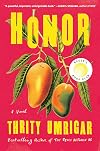
This book grabbed me from the very beginning. The writing is superb, the story heartbreaking and haunting. If you loved Khalid Hosseini’s “A Thousand Splendid Suns”, then you must read this book.
A powerful quote from it:
"Everywhere she went, it seemed, it was open season on women. Rape, female genital mutilation, bride burnings, domestic abuse - everywhere, in every country, women were abused, isolated, silenced, imprisoned, controlled, punished, and killed. Sometimes, it seemed to show more Smita that the history of the world was written in female blood."
Smita, a young American Indian journalist, returns to India to cover a story about the murder and attempted murder of a couple in a village in a rural part of India. Abdul, a Muslim, and Meena, a Hindu, dared to fall in love and marry. Meena’s family has been dishonored and must pay. Her brothers kill Abdul and try to kill Meena. But Meena and their daughter survive.
Smita is plagued with the memories of the night her family fled India with no intention to ever return. While she has very negative views of India, her driver Mohan gracefully listens to her and expresses his love for and pride in his home country. Together, they confront the brutality against Abdul and Meena and the corrupt leadership that allows it to happen. Smita and Mohan both will have their views of India challenged.
This is a story of love, hope, cultural and religious clashes, sacrifice, and promises kept. The bravery of Meena, the callousness of Ammi (Meena’s mother-in-law) and the kind heart of Mohan will linger with me for some time.
I highly recommend this phenomenal book. show less
A powerful quote from it:
"Everywhere she went, it seemed, it was open season on women. Rape, female genital mutilation, bride burnings, domestic abuse - everywhere, in every country, women were abused, isolated, silenced, imprisoned, controlled, punished, and killed. Sometimes, it seemed to show more Smita that the history of the world was written in female blood."
Smita, a young American Indian journalist, returns to India to cover a story about the murder and attempted murder of a couple in a village in a rural part of India. Abdul, a Muslim, and Meena, a Hindu, dared to fall in love and marry. Meena’s family has been dishonored and must pay. Her brothers kill Abdul and try to kill Meena. But Meena and their daughter survive.
Smita is plagued with the memories of the night her family fled India with no intention to ever return. While she has very negative views of India, her driver Mohan gracefully listens to her and expresses his love for and pride in his home country. Together, they confront the brutality against Abdul and Meena and the corrupt leadership that allows it to happen. Smita and Mohan both will have their views of India challenged.
This is a story of love, hope, cultural and religious clashes, sacrifice, and promises kept. The bravery of Meena, the callousness of Ammi (Meena’s mother-in-law) and the kind heart of Mohan will linger with me for some time.
I highly recommend this phenomenal book. show less

A young girl immigrates to a new country in this beautiful picture-book from Indian-American author Thrity Umrigar and Vietnamese illustrator Khoa Le, and finds herself lost in a world of loneliness. Missing her friends and family back home, she keeps to herself, until the aunt with whom she is living shares an old legend with her. In this tale, a group of people must flee ancient Persia, eventually finding themselves in India. Here, the local king at first refuses to allow them to stay, show more communicating with these foreigners who do not speak his language by showing them a cup filled to the brim with milk, symbolizing the idea that there is room for no more. The clever Persian leader adds some sugar to the cup, stirring it carefully to avoid any overflow, and handing it back to the king, thereby symbolizing that his group will live in peace with the people already in India, and that they will sweeten the life there with their presence. Convinced, the king allows the Persians to stay, and the story ends happily. The young girl, listening to this tale, sees the land to which she herself has come in a new light, and her changed attitude helps her to find friends and happiness in this new place...
Sugar in Milk is an astonishingly beautiful book, pairing a poignant, thought-provoking story from Umrigar with simply gorgeous illustrations from Le. I have read a great many stories for children about immigration, almost all of them focusing upon the difficulties of the immigrant experience - the hardship of the journey itself, the challenges of living in a foreign culture, the potential danger of intolerance and hostility from the native population. Many of these stories seek to build sympathy in the child reader/listener, for the immigrants amongst us, and they argue for tolerance toward the newcome stranger. Whilst in general sympathy with this literary/social project, I have often felt that we would also benefit from children's books that discuss the larger issue - why people immigrate, why this sometimes creates problems - in a non-emotional way, presenting the pros and cons of immigration as a whole, and avoiding the suggestion (all too often seen in children's books with this theme), that anyone who doesn't believe in open borders, and who thinks there ought to be some sort of limitation imposed upon immigration, is somehow xenophobic or problematic. We would also benefit from stories that explore, not just what the new country owes to her immigrants, but what those immigrants owe to their new country.
I do not think that I have encountered a children's book about immigrants before, that so perfectly explores this latter idea, than Sugar in Milk. The Parsi legend related to the girl by her aunt demonstrates not just that immigrants have something to contribute to their new country, but that what they contribute needs to improve that country. If the host country provides the milk - safety from persecution (as in the inset story), or economic opportunity - then the newcomer should provide the sugar. The ending of the book shows this idea in action, depicting the girl opening up to her new surroundings, and making friends. The implication seems to be that her newfound positive attitude will lead to better things. While definitely not a believer that positive attitude can address all problems - prejudice is a real thing, and can sometimes manifest itself in concrete and destructive ways, regardless of the outlook of the victim - I do think that it is a better starting point, than a fear of and a refusal to engage with the new culture in which newcome immigrants find themselves.
This is a lovely book, and I enjoyed almost everything about it, from the thoughtful, emotionally resonant framing story about the girl, to the idea of folklore as something that can give meaning to our lives, and be used to understand our present circumstances. I simply adored Khoa Le's artwork, loving the gorgeously decorative endpapers, the beautifully expressive interior scenes, the elegantly stylized figures, and the use of color and light throughout. The modern-day setting appears to be New York City, judging by the buildings depicted, and the final scenes in Central Park, which I found appealing. The illustrations here really worked with the text, and I appreciated how the inset story was made visually distinct from the framing story, through the use of decorative borders. I have encountered Khao Le's work before, both in her own books - The Cloud Princess, Sun and Moon Sisters - as well as in her illustrations for Kao Kalia Yang's The Most Beautiful Thing, but I think this may be the most beautiful book she has yet produced, at least of the titles I have myself seen. The richness of these illustrations is astonishing!
Given all of these undeniable virtues, this might have been one of my rare five-star book reviews, had it not been for one thing: namely, the lack of any afterword explaining the history behind the inset legend. This is an omission I find to be a great shame, as most American children have no idea who the Parsis are, why their ancestors had to flee Persia, and what Zoroastrianism is. Without that knowledge, the story told by the aunt here might be perceived as just a fairy-tale, rather than as something that springs from human history. The non-fiction story behind this legend - Zoroastrianism was the native religion of ancient Persia, whose adherents were persecuted and slaughtered by Arab Muslims during the 7th-century Arab conquest of that land. Rather than convert, some believers fled eastward from Persia, finding refuge in India, and eventually becoming the modern Indian ethnic group known as the Parsis - is every bit as fascinating as the legend itself, and while I can understand not incorporating it into the main narrative, the absence of any explanatory note is a real missed opportunity. Leaving that critique aside, this is one I would recommend to any picture-book reader looking for stories about immigration, and how to approach new cultures, as well as to those who appreciate gorgeous illustration.
Addendum: Those seeking a more traditional retelling of the Parsi folktale related here by the aunt, should seek out Mary Joslin's collection, The Lion Classic Wisdom Stories, in which the tale appears, under the title "A Bowl of Milk: A Parsi Tale, from Persia and India." show less
Sugar in Milk is an astonishingly beautiful book, pairing a poignant, thought-provoking story from Umrigar with simply gorgeous illustrations from Le. I have read a great many stories for children about immigration, almost all of them focusing upon the difficulties of the immigrant experience - the hardship of the journey itself, the challenges of living in a foreign culture, the potential danger of intolerance and hostility from the native population. Many of these stories seek to build sympathy in the child reader/listener, for the immigrants amongst us, and they argue for tolerance toward the newcome stranger. Whilst in general sympathy with this literary/social project, I have often felt that we would also benefit from children's books that discuss the larger issue - why people immigrate, why this sometimes creates problems - in a non-emotional way, presenting the pros and cons of immigration as a whole, and avoiding the suggestion (all too often seen in children's books with this theme), that anyone who doesn't believe in open borders, and who thinks there ought to be some sort of limitation imposed upon immigration, is somehow xenophobic or problematic. We would also benefit from stories that explore, not just what the new country owes to her immigrants, but what those immigrants owe to their new country.
I do not think that I have encountered a children's book about immigrants before, that so perfectly explores this latter idea, than Sugar in Milk. The Parsi legend related to the girl by her aunt demonstrates not just that immigrants have something to contribute to their new country, but that what they contribute needs to improve that country. If the host country provides the milk - safety from persecution (as in the inset story), or economic opportunity - then the newcomer should provide the sugar. The ending of the book shows this idea in action, depicting the girl opening up to her new surroundings, and making friends. The implication seems to be that her newfound positive attitude will lead to better things. While definitely not a believer that positive attitude can address all problems - prejudice is a real thing, and can sometimes manifest itself in concrete and destructive ways, regardless of the outlook of the victim - I do think that it is a better starting point, than a fear of and a refusal to engage with the new culture in which newcome immigrants find themselves.
This is a lovely book, and I enjoyed almost everything about it, from the thoughtful, emotionally resonant framing story about the girl, to the idea of folklore as something that can give meaning to our lives, and be used to understand our present circumstances. I simply adored Khoa Le's artwork, loving the gorgeously decorative endpapers, the beautifully expressive interior scenes, the elegantly stylized figures, and the use of color and light throughout. The modern-day setting appears to be New York City, judging by the buildings depicted, and the final scenes in Central Park, which I found appealing. The illustrations here really worked with the text, and I appreciated how the inset story was made visually distinct from the framing story, through the use of decorative borders. I have encountered Khao Le's work before, both in her own books - The Cloud Princess, Sun and Moon Sisters - as well as in her illustrations for Kao Kalia Yang's The Most Beautiful Thing, but I think this may be the most beautiful book she has yet produced, at least of the titles I have myself seen. The richness of these illustrations is astonishing!
Given all of these undeniable virtues, this might have been one of my rare five-star book reviews, had it not been for one thing: namely, the lack of any afterword explaining the history behind the inset legend. This is an omission I find to be a great shame, as most American children have no idea who the Parsis are, why their ancestors had to flee Persia, and what Zoroastrianism is. Without that knowledge, the story told by the aunt here might be perceived as just a fairy-tale, rather than as something that springs from human history. The non-fiction story behind this legend - Zoroastrianism was the native religion of ancient Persia, whose adherents were persecuted and slaughtered by Arab Muslims during the 7th-century Arab conquest of that land. Rather than convert, some believers fled eastward from Persia, finding refuge in India, and eventually becoming the modern Indian ethnic group known as the Parsis - is every bit as fascinating as the legend itself, and while I can understand not incorporating it into the main narrative, the absence of any explanatory note is a real missed opportunity. Leaving that critique aside, this is one I would recommend to any picture-book reader looking for stories about immigration, and how to approach new cultures, as well as to those who appreciate gorgeous illustration.
Addendum: Those seeking a more traditional retelling of the Parsi folktale related here by the aunt, should seek out Mary Joslin's collection, The Lion Classic Wisdom Stories, in which the tale appears, under the title "A Bowl of Milk: A Parsi Tale, from Persia and India." show less
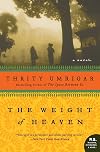
I fell in love with Thrity Umrigar's The Space Between Us when I read it several years ago and was quite excited to see that a new book of hers was being released. This is a very different story than that one was though, a look at Indian/American relations on both a global and a personal level.
Frank and Ellie, two Americans from Michigan, have moved to rural India after the unexpected and breathtaking loss of their seven year old son Benny. They hope that with Frank's acceptance of the head show more position at a progressive, liberal-minded multinational company's factory in Girbaug, India they will start to heal themselves, face their grief, and save their suffering marriage. What happens, in fact, could never have been predicted. Over the two years since Benny died, Frank becomes deeply emotionally attached to Ramesh, the young son of his and Ellie's housekeeper and cook. Ramesh is a smart child who faces no future in the small village, both because of the lack of opportunity and because his parents are a mixed marriage, Hindu and Christian, and therefore not accepted by the community. Ramesh thrives under Frank's interest and tutelage while Ellie is made terribly uncomfortable by Frank's growing obession with the boy she sees as usurping the space Benny would have occupied had he lived. Aside from Ramesh, Frank does not much like India, tolerating it as best he can. Ellie, on the other hand, is thriving in this totally foreign culture, helping out in the village by teaching and counseling the women. Her humanitarian impulses remain unchecked while Frank turns more cynical, exposed as he is to the underbelly of the business world.
Umrigar not only develops the personal angle in this story but she also focuses in on the impact of business and globalization on both the haves and the havenots. The workers at the factory are not only being paid barely subsistence wages, but the villagers are also angry that HerbalSolutions is treating the girbal trees they have come to see as their birthright as private property all because the corrupt and distant national Indian government has leased the trees to the company. When a worker, the local union man, dies after police roughing him up, things get tense. And there's no easy answer here given the general good character and responsibility of the company set against a way of life they didn't know they were disrupting. Neither the company nor the villagers are entirely in the right but there is certainly a fairly pervading sense of American might making right, even amongst the most liberal when their backs are against the wall.
Umrigar ratchets up the tension throughout the novel so that the reader knows a big explosion is coming and that nothing good can come of it. But she manages to use Frank's increasing instability to bring the novel to a shocking conclusion, one that offers no easy answers for those who live and work in the global world. Right and wrong, intrinsic morality and gross disappointment thread through both narrative arcs here. Ellie and Frank's grief for their lost son is palpable and the growing menace of life in Girbaug seems to take on a life of its own so that the reader is compelled to turn the pages faster and faster wanting to escape the desperate sadness and yet needing to slow down and keep the ending at bay for a little longer. Frank and Ellie are a bit black and white as characters but Edna and Prakash make up for that, being more multi-faceted. The business situation with all its complications, stresses, looming troubles, and cultural misunderstandings rings quite true. Umrigar has written a book that will linger in the reader's mind for a long time. Those who are as fascinated by South Asian literature as I am will definitely want to pick this one up. show less
Frank and Ellie, two Americans from Michigan, have moved to rural India after the unexpected and breathtaking loss of their seven year old son Benny. They hope that with Frank's acceptance of the head show more position at a progressive, liberal-minded multinational company's factory in Girbaug, India they will start to heal themselves, face their grief, and save their suffering marriage. What happens, in fact, could never have been predicted. Over the two years since Benny died, Frank becomes deeply emotionally attached to Ramesh, the young son of his and Ellie's housekeeper and cook. Ramesh is a smart child who faces no future in the small village, both because of the lack of opportunity and because his parents are a mixed marriage, Hindu and Christian, and therefore not accepted by the community. Ramesh thrives under Frank's interest and tutelage while Ellie is made terribly uncomfortable by Frank's growing obession with the boy she sees as usurping the space Benny would have occupied had he lived. Aside from Ramesh, Frank does not much like India, tolerating it as best he can. Ellie, on the other hand, is thriving in this totally foreign culture, helping out in the village by teaching and counseling the women. Her humanitarian impulses remain unchecked while Frank turns more cynical, exposed as he is to the underbelly of the business world.
Umrigar not only develops the personal angle in this story but she also focuses in on the impact of business and globalization on both the haves and the havenots. The workers at the factory are not only being paid barely subsistence wages, but the villagers are also angry that HerbalSolutions is treating the girbal trees they have come to see as their birthright as private property all because the corrupt and distant national Indian government has leased the trees to the company. When a worker, the local union man, dies after police roughing him up, things get tense. And there's no easy answer here given the general good character and responsibility of the company set against a way of life they didn't know they were disrupting. Neither the company nor the villagers are entirely in the right but there is certainly a fairly pervading sense of American might making right, even amongst the most liberal when their backs are against the wall.
Umrigar ratchets up the tension throughout the novel so that the reader knows a big explosion is coming and that nothing good can come of it. But she manages to use Frank's increasing instability to bring the novel to a shocking conclusion, one that offers no easy answers for those who live and work in the global world. Right and wrong, intrinsic morality and gross disappointment thread through both narrative arcs here. Ellie and Frank's grief for their lost son is palpable and the growing menace of life in Girbaug seems to take on a life of its own so that the reader is compelled to turn the pages faster and faster wanting to escape the desperate sadness and yet needing to slow down and keep the ending at bay for a little longer. Frank and Ellie are a bit black and white as characters but Edna and Prakash make up for that, being more multi-faceted. The business situation with all its complications, stresses, looming troubles, and cultural misunderstandings rings quite true. Umrigar has written a book that will linger in the reader's mind for a long time. Those who are as fascinated by South Asian literature as I am will definitely want to pick this one up. show less
Lists
All Things India (1)
To Read (1)
Five star books (1)
Youth: DEI (1)
Youth: Holidays (1)
Fiction: Asia (1)
Awards


You May Also Like


Associated Authors
Statistics
- Works
- 17
- Also by
- 2
- Members
- 6,695
- Popularity
- #3,652
- Rating
- 3.9
- Reviews
- 358
- ISBNs
- 173
- Languages
- 9
- Favorited
- 14
