
Hilary Mantel (1952–2022)
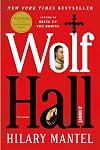
Author of Wolf Hall
About the Author
Hilary Mantel was born in Glossop, Derbyshire, England on July 6, 1952. She studied law at the London School of Economics and Sheffield University. She worked as a social worker in Botswana for five years, followed by four years in Saudi Arabia. She returned to Britain in the mid-1980s. In 1987 she show more was awarded the Shiva Naipaul Memorial Prize for an article about Jeddah. She worked as a film critic for The Spectator from 1987 to 1991. She has written numerous books including Eight Months on Ghazzah Street, A Place of Greater Safety, A Change of Climate, The Giant, O'Brien, Giving up the Ghost: A Memoir, and Beyond Black. She has won several awards for her work including the Winifred Holtby Memorial Prize, the Cheltenham Prize and the Southern Arts Literature Prize for Fludd; the 1996 Hawthornden Prize for An Experiment in Love, the 2009 Man Booker Prize for Wolf Hall, and the 2012 Man Booker Prize for Bring up the Bodies. She made The New York Times Best Seller List with her title The Assassination of Margaret Thatcher. (Bowker Author Biography) show less
Series
Works by Hilary Mantel
Wolf Hall Trilogy (The Mirror and the Light, Wolf Hall, Bring Up the Bodies) (2020) 61 copies, 1 review
The World of Wolf Hall: A Reading Guide to Hilary Mantel's Wolf Hall and Bring Up The Bodies (2019) 21 copies, 1 review
H MANTEL-WHY I BECAME AN HISTORIAN 2 copies
De tegenwoordige tijd 1 copy
Anna Bolena 1 copy
SALLA E UJQËRVE 1 copy
Mantel Hilary 1 copy
The Hilary Mantel Collection 1 copy
Wintertrip & Iemands kind 1 copy
Cinderella in Autumn 1 copy
The Right to Life 1 copy
De spiegel & en het licht 1 copy
Associated Works
Religion and the Decline of Magic : Studies in popular beliefs in sixteenth- and seventeenth-century England (1971) — Introduction, some editions — 1,556 copies, 20 reviews
Literary Genius: 25 Classic Writers Who Define English & American Literature (2007) — Contributor — 95 copies, 2 reviews
Tagged
Common Knowledge
- Canonical name
- Mantel, Hilary
- Legal name
- Mantel, Hilary Mary
- Other names
- Thompson, Hilary Mary (birth)
- Birthdate
- 1952-07-06
- Date of death
- 2022-09-22
- Gender
- female
- Education
- Harrytown Convent
London School of Economics (law)
University of Sheffield (LL.B|1973) - Occupations
- short story writer
film critic
social worker
novelist
essayist - Organizations
- The Spectator
- Awards and honors
- Royal Society of Literature (fellow | 1990)
Order of the British Empire (Commander, 2006)
Order of the British Empire (Dame Commander, 2014)
David Cohen British Literature Prize (2013)
Kenyon Review Award for Literary Achievement (2016)
Shiva Naipaul Prize (1987) (show all 11)
Cheltenham Prize (1990)
Winifred Holtby Memorial Prize (1990)
National Book Critics Circle Award (2009)
Walter Scott Prize (2010)
British Academy President's Medal (2016) - Agent
- Bill Hamilton (AM Heath)
- Relationships
- McEwen, Gerald (husband)
- Short biography
- Hilary Thompson was the eldest of three children in a Catholic English family of Irish descent. She took the surname of Mantel from her unofficial stepfather after her parents separated. After university, she worked as a social worker at a geriatric hospital and as a sales assistant in a department store. In 1972, she married Gerald McEwen, a geologist, and the couple later lived in Botswana and Saudi Arabia. She published a memoir of this time, "Someone to Disturb," in the London Review of Books. Her first novel, Every Day is Mother's Day, was published in 1985. Returning to England, Hilary Mantel became the film critic of The Spectator and a reviewer for a number of newspapers and magazines in Britain and the USA.
- Cause of death
- stroke
- Nationality
- UK
- Birthplace
- Glossop, Derbyshire, England, UK
- Places of residence
- Hadfield, Derbyshire, England, UK
Romiley, Greater Manchester, England, UK
London, Middlesex, England, UK
Botswana
Jeddah, Saudi Arabia
Surrey, England, UK (show all 7)
Budleigh Salterton, Devon, England, UK - Place of death
- Exeter, Devon, England
- Map Location
- England, UK
Members
Discussions
OT Hilary Mantel obituary in Folio Society Devotees (September 2022)
Wolf Hall and fiction vs. history in Reformation Era: History and Literature (December 2021)
Group Read: The Cromwell Trilogy: Bring Up The Bodies in Club Read 2021 (May 2021)
Group Read: The Cromwell Trilogy in Club Read 2021 (March 2021)
BRITISH AUTHOR CHALLENGE DECEMBER - MANTEL & WODEHOUSE in 75 Books Challenge for 2015 (December 2015)
The Smiler69/Chatterbox Tutored Read of "Wolf Hall": from June 1 until whenever we're done! in 75 Books Challenge for 2012 (December 2014)
Group Read: Bring Up the Bodies by Hilary Mantel (spoiler thread) in 75 Books Challenge for 2012 (November 2014)
Wolf Hall Tutored Read: Wherein Chatterbox undertakes to lead Miela through the tangled worlds of He in 75 Books Challenge for 2013 (August 2013)
GROUP READ - WOLF HALL June 2012 in The 12 in 12 Category Challenge (August 2012)
Bring Up the Bodies by Hilary Mantel in Booker Prize (July 2012)
Group Read: Bring Up the Bodies by Hilary Mantel (main thread) in 75 Books Challenge for 2012 (June 2012)
Beyond Black (no spoilers) in Orange January/July (January 2012)
WOLF HALL by Hilary Mantel in Orange January/July (October 2011)
Reviews

Weighing in at 740 pages, 4 1/2 pounds (in the Folio Society edition), this chunkster was a challenge to read on more than a literary level. The third installment of Mantel's treatment of Thomas Cromwell's life takes us right up to the moment of his execution---a denouement neither he nor the reader could fail to anticipate. Beginning in the moments after Anne Boleyn's beheading, we wade hip deep through the intrigues of Henry's quest for another wife who could finally produce a viable, show more legitimate male heir (preferably three or four), against the background of medieval Europe's power struggles. This book, dare I say, was not nearly as much "fun" to read as Wolf Hall or Bring Up the Bodies. There's no lack of wit, and the machinations of Cromwell & Co. are fascinating, if sometimes a bit hard to fathom. The recurring speculations about Henry's reproductive abilities or lack thereof are appropriately ribald. But comparisons between Henry's blame-seeking vengeful transactional style and current personalities on the world stage are impossible to ignore, difficult to contemplate. It ain't ancient history anymore, is it? Still, if you've read 1 and 2, there's no way you should pass this one up. Mantel's ability to transform mountains of mouldering documents (I'm making an assumption, reasonable to my mind) into living breathing actors in a complex drama was a gift that probably would have got her burned at the stake in the 16th century. The Folio edition is exquisite, as expected, with illustrations scattered throughout. show less

I read Wolf Hall when it came out in 2009 - I was reading anything Tudors related at the time and despite the fact that I loved it, it may have suffered a bit from all the other books about the period I was reading at the time.
Now, with the third novel finally out, a reread was in order - 11 years is a long time and Mantel tends to be very detail oriented - exactly the kind of thing that blurs and get forgotten across a decade. And I am glad I did.
The story of Thomas Cromwell is always show more going to be fascinating but Mantel's way to add flesh to the bare bones of history adds this additional piece that is always missing when you cast your eye back to the past. Not that she is inventing much - if you actually read the sources, most of the story did happen - some people were moved around, some words put in other mouths but even the most unbelievable incidents seem to have happened.
Mantel stops this novel at the height of Anne Boleyn's power, when she had achieved her goal of getting the crown (but no son...). If you know the history, you know where this is leading - that plan for stopping in Wolf Hall that Cromwell is working on is going to be the start of the fall. It is also interesting to note the name Mantel chose for this first novel - Wolf Hall looms like a treat for most of the book and the title makes you pay attention to the people of it - most of which could have been mostly ignored if not for this focus (at the reader's peril - they are important later on).
I had forgotten how masterfully Mantel foreshadows in her novel - if you pay attention, you can see the clouds starting to gather on top of Anne long before she even becomes a queen; her downfall is in there with all the companions. Paying more attention to every scene where she is there pays off in the long run.
And then there is the exquisite detail of Tudor England - the people and the households, the main figures and the ones that come from nowhere, the dress and the thoughts of people who had been often lost to the mists of time.
And none of her characters is one-toned - Thomas More is not just the saint being often portrayed, Wolsey and Cromwell are flawed men but not as cruel as most books will make you think.
Using Cromwell's voice for the story, Mantel manages to sidestep the problem of a 21st century narrator or an all-knowing entity. We know what Cromwell knows, we see and hear what he does. Which allows for rumors to leak into our consciousness and for a glimpse into a part of the story that is not told that often. It also pays off to pay attention of which form of the names is used (especially for Norfolk and Suffolk) because unlike history books where the various forms are used interchangeably, here the used form contains meaning.
Some of the story is circular, Mantel backtracks to fill in the story; some of it races ahead, some of it slows down to a crawl. And that change in pacing works better than a straight story would have.
I can spend the next few hours writing about certain aspects of the novel but the more I write, the more I want to write. So instead I will just stop here with a final note: you do not need to know anything about the Tudors to enjoy this novel but the more you know, the more you will take out of it - it is full of nods and waves towards things that are not spelled or important but which add to the tapestry of the novel. show less
Now, with the third novel finally out, a reread was in order - 11 years is a long time and Mantel tends to be very detail oriented - exactly the kind of thing that blurs and get forgotten across a decade. And I am glad I did.
The story of Thomas Cromwell is always show more going to be fascinating but Mantel's way to add flesh to the bare bones of history adds this additional piece that is always missing when you cast your eye back to the past. Not that she is inventing much - if you actually read the sources, most of the story did happen - some people were moved around, some words put in other mouths but even the most unbelievable incidents seem to have happened.
Mantel stops this novel at the height of Anne Boleyn's power, when she had achieved her goal of getting the crown (but no son...). If you know the history, you know where this is leading - that plan for stopping in Wolf Hall that Cromwell is working on is going to be the start of the fall. It is also interesting to note the name Mantel chose for this first novel - Wolf Hall looms like a treat for most of the book and the title makes you pay attention to the people of it - most of which could have been mostly ignored if not for this focus (at the reader's peril - they are important later on).
I had forgotten how masterfully Mantel foreshadows in her novel - if you pay attention, you can see the clouds starting to gather on top of Anne long before she even becomes a queen; her downfall is in there with all the companions. Paying more attention to every scene where she is there pays off in the long run.
And then there is the exquisite detail of Tudor England - the people and the households, the main figures and the ones that come from nowhere, the dress and the thoughts of people who had been often lost to the mists of time.
And none of her characters is one-toned - Thomas More is not just the saint being often portrayed, Wolsey and Cromwell are flawed men but not as cruel as most books will make you think.
Using Cromwell's voice for the story, Mantel manages to sidestep the problem of a 21st century narrator or an all-knowing entity. We know what Cromwell knows, we see and hear what he does. Which allows for rumors to leak into our consciousness and for a glimpse into a part of the story that is not told that often. It also pays off to pay attention of which form of the names is used (especially for Norfolk and Suffolk) because unlike history books where the various forms are used interchangeably, here the used form contains meaning.
Some of the story is circular, Mantel backtracks to fill in the story; some of it races ahead, some of it slows down to a crawl. And that change in pacing works better than a straight story would have.
I can spend the next few hours writing about certain aspects of the novel but the more I write, the more I want to write. So instead I will just stop here with a final note: you do not need to know anything about the Tudors to enjoy this novel but the more you know, the more you will take out of it - it is full of nods and waves towards things that are not spelled or important but which add to the tapestry of the novel. show less

This completely bizarre book about a spiritualist and clairvoyant who is trying to recover repressed memories of her very abusive childhood while she gets a stick-up-her-a## assistant out of her shell and earns her living communing with the dead is like LSD in print. It's one hallucinatory scene after another with an ending that is just right. Poor fat Alison, the reader is unsure of what to think of her but ends up rooting for her, wishing there were some way she could overcome her literal show more and figurative ghosts. And poor beige Colette, the only exotic thing about her is her name. Recommended to anyone who wants a new look at how women can make it through life. show less
It took nearly ten years for me to finally pick this book off my shelf, it only took a pandemic (thanks, coronavirus!). I'll admit, it was also because I knew there was a third book coming so I kept skipping over it.
It's the perfect read to escape the four walls of my house and the constant uncertainty. Mantel brings the Tudor Court to life and the perspective makes it truly immersive. The reader IS Cromwell - we see what he sees. It's fascinating. Granted, I don't have the British history show more lessons of those in the UK, so I had very few preconceived notions about Thomas More or Cromwell. (But they all seemed pretty scheme-y to me.) show less
It's the perfect read to escape the four walls of my house and the constant uncertainty. Mantel brings the Tudor Court to life and the perspective makes it truly immersive. The reader IS Cromwell - we see what he sees. It's fascinating. Granted, I don't have the British history show more lessons of those in the UK, so I had very few preconceived notions about Thomas More or Cromwell. (But they all seemed pretty scheme-y to me.) show less
Lists
Favorite Series (1)
Read These Too (1)
Backlisted (1)
Big Jubilee List (1)
THE WAR ROOM (1)
To Read (1)
Shelf 101 (1)
Suggestions (1)
NTS Book Channel (1)
Wishlist (1)
Five star books (2)
Unread books (2)
United Kingdom (2)
Booker Prize (4)
Female Author (4)
A Novel Cure (2)
Overdue Podcast (1)
Greatest Books (1)
. (2)
Morphy Pick! (1)
Favourite Books (1)
Awards


You May Also Like


Associated Authors
Statistics
- Works
- 62
- Also by
- 21
- Members
- 38,891
- Popularity
- #461
- Rating
- 4.0
- Reviews
- 1,621
- ISBNs
- 693
- Languages
- 27
- Favorited
- 121


