
Knud Rasmussen (1879–1933)
Author of Across Arctic America: Narrative of the Fifth Thule Expedition
About the Author
Works by Knud Rasmussen
Min rejsedagbog — Author — 5 copies
De la Groenlandia al Pacífico: Dos anos de intimidad con tribus esquimales desconocidas. (Relato de la Quinta Expedición Thule) (2014) 4 copies
The Bear in the Ice Hole 3 copies
Under Nordenvindens Svøbe 1 copy
Polarforskningens Saga 1 copy
Rejser og eventyr 1 copy
ESKIMO Folk-tales (illustrated): completed edition with classic and original illustrations (2020) 1 copy
La chasse à l'ours 1 copy
Associated Works
The Ends of the Earth: An Anthology of the Finest Writing on the Arctic and the Antarctic (2007) — Contributor — 136 copies, 8 reviews
Jordens Erobring. Alle Tiders store Opdagelsesrejser, bind 2, Opdagelsesrejser i Afrika — Author, some editions — 2 copies, 1 review
Tagged
Common Knowledge
- Legal name
- Rasmussen, Knud Johan Victor
- Birthdate
- 1879-06-07
- Date of death
- 1933-12-31
- Gender
- male
- Occupations
- polar explorer
anthropologist - Awards and honors
- Daly Medal of the American Geographical Society
- Cause of death
- pneumonia
- Nationality
- Denmark
- Birthplace
- Jakobshavn, Greenland, Denmark
- Places of residence
- Greenland
Denmark - Place of death
- Copenhagen, Denmark
- Map Location
- Greenland
Members
Reviews

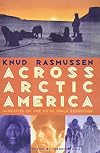
Knud Rasmussen ( http://en.wikipedia.org/wiki/Knud_Rasmussen ) was a native Greenlander who was half Inuit and half Danish. He was the first person to travel the Northwest Passage by dog-sled, around 1922, as re-told in this readable and enjoyable account first published in 1927. Known as the "Fifth Thule Expedition", it was designed to be an ethnographic expedition to answer "that great question the origins of the Eskimo race". A native speaker of Inuit, Rasmussen's insights into the show more religion and inner-life, voice and spirit of the Inuit remains a classic of polar travel literature and ethnography. The Inuit language is difficult to translate and Rasmussen's unique position of straddling both cultures proves indispensable.
Rasmussen traveled with two Inuit who had never before left Greenland. On the return trip home by plane, the group stopped in New York City and were awed by what they saw. One said while looking over the city skyline from a rooftop: "I see things more than my mind can grasp; and the only way to save myself from madness is to suppose that we have all died, and that this is part of another life." An Inuit Shaman revealed to Rasmussen "All true wisdom is only to be found far from the dwellings of men, in the great solitudes; and it can only be obtained through suffering. Suffering and privation are the only things that can open the mind of man to that which is hidden from his fellows."
An Inuit-produced film 'The Journals of Knud Rasmussen' (2006) was recently made based on the book, produced by the same people who made 'The Fast Runner' (2001), which has been called one of the 10 best Canadian films. This book is pretty rare in first editions going for $50-$100 in the used market. A re-issue was made in 1999, still in print. See also the books by Peter Freuchan for accounts of this journey and others he took with Rasmussen.
Available for free on Internet Archive ( http://www.archive.org/details/acrossarcticamer006641mbp ), the only known copy on the Internet at the moment. This scan has some problems, missing about 8 pages scattered throughout (out of 390pp), and many of the pictures are all but un-viewable - I made a report and hope they correct it; but it's free and immediately available for the armchair dog-sleder. show less
Rasmussen traveled with two Inuit who had never before left Greenland. On the return trip home by plane, the group stopped in New York City and were awed by what they saw. One said while looking over the city skyline from a rooftop: "I see things more than my mind can grasp; and the only way to save myself from madness is to suppose that we have all died, and that this is part of another life." An Inuit Shaman revealed to Rasmussen "All true wisdom is only to be found far from the dwellings of men, in the great solitudes; and it can only be obtained through suffering. Suffering and privation are the only things that can open the mind of man to that which is hidden from his fellows."
An Inuit-produced film 'The Journals of Knud Rasmussen' (2006) was recently made based on the book, produced by the same people who made 'The Fast Runner' (2001), which has been called one of the 10 best Canadian films. This book is pretty rare in first editions going for $50-$100 in the used market. A re-issue was made in 1999, still in print. See also the books by Peter Freuchan for accounts of this journey and others he took with Rasmussen.
Available for free on Internet Archive ( http://www.archive.org/details/acrossarcticamer006641mbp ), the only known copy on the Internet at the moment. This scan has some problems, missing about 8 pages scattered throughout (out of 390pp), and many of the pictures are all but un-viewable - I made a report and hope they correct it; but it's free and immediately available for the armchair dog-sleder. show less
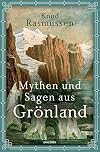
uf zahllosen Expeditionen hat der große Polarforscher Knud Rasmussen zu Beginn des 20. Jahrhunderts Grönland bereist, um die Sprache und Kultur seiner Vorfahren zu erkunden. Dabei galt sein besonderes Interesse stets auch dem Erzählgut der Grönländer, das über Jahrhunderte mündlich tradiert worden war. Dieser Band versammelt 53 Sagen aus Ostgrönland, der Region um Angmagssalik, von den Schöpfungsmythen bis zu teils wüsten, teils anrührenden Erzählungen aus der Lebenswelt der show more Grönland-Inuit. 35 Zeichnungen, Nachwort und Karte machen dieses besondere Erbe erfahrbar und zugänglich. show less
Feb 20, 2024Slovak

Knud Johan Victor Rasmussen (June 7, 1879 – December 21, 1933) was a Danish polar explorer and anthropologist. He has been called the “father of Eskimology” and was the first European to travel the entire Northwest Passage (across Greenland, Canada, Alaska) via dog sled. He remains well known in Greenland, Denmark, and among Inuit peoples across the Arctic.
Rasmussen was born in Ilulissat, Greenland, the son of a Danish missionary, the vicar Christian Rasmussen, and an Inuit- Danish show more mother, Louise Rasmussen (née Fleischer). He had two siblings, including a brother, Peter Lim.
Spending his early years in Greenland among the Kalaallit (Inuit) Rasmussen learned from an early age to speak the language (Kalaallisut), to hunt, drive dog sleds and live in harsh Arctic conditions. In the introduction to his 1927 book, Across Arctic America, Rasmussen said, “My playmates were native Greenlanders; from the earliest boyhood I played and worked with the hunters, so even the hardships of the most strenuous sledge-trips became pleasant routine for me.”
He was later educated in Lynge, North Zealand, Denmark. Between 1898 and 1900 he pursued an unsuccessful career as an actor and opera singer.
Rasmussen went on his first expedition in 1902–1904, known as The Danish Literary Expedition, with Jørgen Brønlund, Harald Moltke and Ludvig Mylius-Erichsen, to examine Inuit culture. After returning home he went on a lecture circuit and wrote The People of the Polar North (1908), a combination travel journal and scholarly account of Inuit folklore. In 1908, he married Dagmar Andersen.
In 1910, Rasmussen and friend Peter Freuchen established the Thule Trading Station at Cape York (Uummannaq), Greenland, as a trading base. The name Thule was chosen because it was the most northerly trading post in the world, literally the “Ultima Thule.” Thule Trading Station became the home base for a series of seven expeditions, known as the Thule Expeditions, between 1912 and 1933.
The First Thule Expedition (1912, Rasmussen & Freuchen) aimed to test Robert Peary’s claim that a channel divided Peary Land from Greenland. They proved this was not the case in a remarkable 1,000-km journey across the inland ice that almost killed them. Clements Markham, president of the Royal Geographic Society, called the journey the “finest ever performed by dogs.” Freuchen wrote personal accounts of this journey (and others) in Vagrant Viking (1953) and I Sailed with Rasmussen (1958).
The Second Thule Expedition (1916–1918) was larger with a team of seven men, which set out to map a little known area of Greenland’s north coast. This journey was documented in Rasmussen’s account Greenland by the Polar Sea (1921). The trip was beset with two fatalities, the only in Rasmussen’s career, namely Thorild Wulff and Hendrik Olsen.
The Third Thule Expedition (1919) was depot-laying for Roald Amundsen’s polar drift in Maud.
The Fourth Thule Expedition (1919–1920) was in east Greenland where Rasmussen spent several months collecting ethnographic data near Angmagssalik.
Rasmussen’s “greatest achievement” was the massive Fifth Thule Expedition (1921–1924) which was designed to “attack the great primary problem of the origin of the Eskimo race.”
The Fifth Thule Expedition team of seven traveled 18,000 miles from Greenland to the Pacific, first to eastern Arctic Canada where they began collecting specimens, taking interviews and excavations. Rasmussen left the team and traveled for 16 months with two Inuit hunters by dog-sled across North America to Nome, Alaska – he tried to continue to Russia but his visa was refused.
1921–1924 Fifth Thule Expedition route (click to enlarge)
He became the first European to cross the Northwest Passage via dog sled and his journey is recounted in Across Arctic America (1927), considered today a classic of polar expedition literature. This trip has also been called the “Great Sled Journey” and was dramatized in the Canadian film The Journals of Knud Rasmussen (2006).
A ten volume account The Fifth Thule Expedition 1921-1924 documented the Eskimos’ spiritual development and culture. Rasmussen managed to gather and bring home more than 15,000 ethnographic, biological data specimens, and archaeological objects, many of which are still on display in museums in Denmark.
For the next seven years Rasmussen traveled between Greenland and Denmark giving lectures and writing. In 1931, he went on the Sixth Thule Expedition, designed to consolidate Denmark’s claim on a portion of eastern Greenland that was contested by Norway.
The Seventh Thule Expedition (1933) was meant to continue the work of the sixth, but Rasmussen became seriously ill from food poisoning and had to leave the expedition to receive medical treatment in Qaqortoq. The illness was so severe that the doctor chose to send him to Denmark for treatment where he was hospitalized, but Rasmussen contracted pneumonia and died a few months later, on 21 December 1933, at the age of only 54 years.
Knud Rasmussen was laid to rest at a simple ceremony at Western Cemetery in Copenhagen.
A number of influential people in Knud Rasmussen’s circle of friends took the initiative to preserve the Rasmussen family house in Hundested as a landmark and tribute. They found it natural to put this lasting memorial to the man whose hard work was essential for the Inuit research and helped to secure the whole of Greenland as a Danish colony. It was where he prepared and completed several of his expeditions and created a substantial part of his literary output.
Rasmussen was awarded an Honorary Fellowship from the American Geographical Society in 1912, and its Daly Medal in 1924. He was made honorary doctor at the University of Copenhagen in 1924. show less
Rasmussen was born in Ilulissat, Greenland, the son of a Danish missionary, the vicar Christian Rasmussen, and an Inuit- Danish show more mother, Louise Rasmussen (née Fleischer). He had two siblings, including a brother, Peter Lim.
Spending his early years in Greenland among the Kalaallit (Inuit) Rasmussen learned from an early age to speak the language (Kalaallisut), to hunt, drive dog sleds and live in harsh Arctic conditions. In the introduction to his 1927 book, Across Arctic America, Rasmussen said, “My playmates were native Greenlanders; from the earliest boyhood I played and worked with the hunters, so even the hardships of the most strenuous sledge-trips became pleasant routine for me.”
He was later educated in Lynge, North Zealand, Denmark. Between 1898 and 1900 he pursued an unsuccessful career as an actor and opera singer.
Rasmussen went on his first expedition in 1902–1904, known as The Danish Literary Expedition, with Jørgen Brønlund, Harald Moltke and Ludvig Mylius-Erichsen, to examine Inuit culture. After returning home he went on a lecture circuit and wrote The People of the Polar North (1908), a combination travel journal and scholarly account of Inuit folklore. In 1908, he married Dagmar Andersen.
In 1910, Rasmussen and friend Peter Freuchen established the Thule Trading Station at Cape York (Uummannaq), Greenland, as a trading base. The name Thule was chosen because it was the most northerly trading post in the world, literally the “Ultima Thule.” Thule Trading Station became the home base for a series of seven expeditions, known as the Thule Expeditions, between 1912 and 1933.
The First Thule Expedition (1912, Rasmussen & Freuchen) aimed to test Robert Peary’s claim that a channel divided Peary Land from Greenland. They proved this was not the case in a remarkable 1,000-km journey across the inland ice that almost killed them. Clements Markham, president of the Royal Geographic Society, called the journey the “finest ever performed by dogs.” Freuchen wrote personal accounts of this journey (and others) in Vagrant Viking (1953) and I Sailed with Rasmussen (1958).
The Second Thule Expedition (1916–1918) was larger with a team of seven men, which set out to map a little known area of Greenland’s north coast. This journey was documented in Rasmussen’s account Greenland by the Polar Sea (1921). The trip was beset with two fatalities, the only in Rasmussen’s career, namely Thorild Wulff and Hendrik Olsen.
The Third Thule Expedition (1919) was depot-laying for Roald Amundsen’s polar drift in Maud.
The Fourth Thule Expedition (1919–1920) was in east Greenland where Rasmussen spent several months collecting ethnographic data near Angmagssalik.
Rasmussen’s “greatest achievement” was the massive Fifth Thule Expedition (1921–1924) which was designed to “attack the great primary problem of the origin of the Eskimo race.”
The Fifth Thule Expedition team of seven traveled 18,000 miles from Greenland to the Pacific, first to eastern Arctic Canada where they began collecting specimens, taking interviews and excavations. Rasmussen left the team and traveled for 16 months with two Inuit hunters by dog-sled across North America to Nome, Alaska – he tried to continue to Russia but his visa was refused.
1921–1924 Fifth Thule Expedition route (click to enlarge)
He became the first European to cross the Northwest Passage via dog sled and his journey is recounted in Across Arctic America (1927), considered today a classic of polar expedition literature. This trip has also been called the “Great Sled Journey” and was dramatized in the Canadian film The Journals of Knud Rasmussen (2006).
A ten volume account The Fifth Thule Expedition 1921-1924 documented the Eskimos’ spiritual development and culture. Rasmussen managed to gather and bring home more than 15,000 ethnographic, biological data specimens, and archaeological objects, many of which are still on display in museums in Denmark.
For the next seven years Rasmussen traveled between Greenland and Denmark giving lectures and writing. In 1931, he went on the Sixth Thule Expedition, designed to consolidate Denmark’s claim on a portion of eastern Greenland that was contested by Norway.
The Seventh Thule Expedition (1933) was meant to continue the work of the sixth, but Rasmussen became seriously ill from food poisoning and had to leave the expedition to receive medical treatment in Qaqortoq. The illness was so severe that the doctor chose to send him to Denmark for treatment where he was hospitalized, but Rasmussen contracted pneumonia and died a few months later, on 21 December 1933, at the age of only 54 years.
Knud Rasmussen was laid to rest at a simple ceremony at Western Cemetery in Copenhagen.
A number of influential people in Knud Rasmussen’s circle of friends took the initiative to preserve the Rasmussen family house in Hundested as a landmark and tribute. They found it natural to put this lasting memorial to the man whose hard work was essential for the Inuit research and helped to secure the whole of Greenland as a Danish colony. It was where he prepared and completed several of his expeditions and created a substantial part of his literary output.
Rasmussen was awarded an Honorary Fellowship from the American Geographical Society in 1912, and its Daly Medal in 1924. He was made honorary doctor at the University of Copenhagen in 1924. show less
Feb 28, 2017Dutch
Lists
Awards

You May Also Like


Associated Authors
Statistics
- Works
- 68
- Also by
- 7
- Members
- 368
- Popularity
- #65,432
- Rating
- 3.6
- Reviews
- 6
- ISBNs
- 95
- Languages
- 11