
Martin A. Hansen (1909–1955)
Author of The Liar
About the Author
As a critic of the form and content of civilization since the Middle Ages, Martin A. Hansen believed that humanity and morality deteriorated as rationalism and scientism became the guiding lights of European culture. In his childhood, Hansen personally observed the disintegration of rural folk show more culture when economic and agricultural requirements modernized country life. His participation in the Danish Underground during World War II also greatly increased his sense of the failure of modern times to provide ethical stability. His modernistic prose is highly symbolic and, at times, eludes logical interpretation, but nonetheless his writing delineates its message clearly. (Bowker Author Biography) show less
Image credit: Danish wikipedia
Works by Martin A. Hansen
Nu opgiver han 10 copies
Kolonien 8 copies
Midsommerkrans 7 copies
Rejse paa Island 6 copies
Verdensromanen 5 copies
Martin A. Hansen fortæller 4 copies
Kirkebanken : et udkast 2 copies
Skildringer - mindeudgave 1 copy
Djákninn í Sandey 1 copy
Valehtelija 1 copy
Syndin og fleiri sögur 1 copy
Island 1 copy
Heretica nr.4 - 1950 1 copy
Martsnat 1 copy
Noveller - mindeudgave 1 copy
Herman Melville og Moby-Dick 1 copy
Heretica nr.3 - 1950 1 copy
Associated Works
New World Writing: Eighth Mentor Selection - A New Adventure in Modern Reading (1955) — Contributor — 8 copies
Hævnen og andre danske mesterfortællinger, Bind 2 (1973) — Author, some editions — 6 copies, 1 review
Truslen mod vort Skriftsprog. Udsendt af en Kreds af det danske Sprogs Venner — Author, some editions — 1 copy, 1 review
Tagged
Common Knowledge
- Birthdate
- 1909-08-20
- Date of death
- 1955-06-27
- Gender
- male
- Occupations
- novelist
- Awards and honors
- De gyldne Laurbær (1949)
- Nationality
- Denmark
- Places of residence
- Stroby, Denmark (birth)
Copenhagen, Denmark (death) - Associated Place (for map)
- Denmark
Members
Reviews
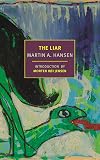
Published in 1950 and hailed as one of the great novels to come out of post-war Denmark, Martin Hansen’s The Liar chronicles a few days in the uneventful life of Johannes Lye on tiny, insignificant Sand Island. Narrated by Johannes in a series of diary entries, the novel opens (on Friday, March 13) as the pack ice that’s cut the island off from the mainland for the entire winter is starting to break up. But though the coming of spring is normally a harbinger of milder weather and better show more days ahead, Johannes sees no cause for celebration because, as he tells us, “If this really is spring, I’m afraid there’ll be a few troubled hearts here on Sand Island.” Johannes lives alone in a building that doubles as the island’s schoolhouse. In addition to his role as teacher, Johannes serves as postmaster and church deacon, so has a finger in almost everyone’s business to one degree or another. Johannes’s narrative revolves around a few central characters, the most prominent of which is Annemari, a beautiful former student for whom Johannes holds a torch. Annemari however, though betrothed to gentle giant Olaf, who’s been stranded on the mainland for the winter, is carrying on an affair with a visiting engineer named Harry. A complicating factor in this relationship is Olaf and Annemari’s young son, Tom. Johannes, approaching forty and painfully aware of his lack of physical charms, seems unable to commit emotionally to another person. Annemari makes it clear that she likes him fine but has waited long enough for him to make his move, and so as a means to escape Sand Island has attached herself to Harry. In the meantime, Johannes awaits Olaf’s return from the mainland, anticipating some sort of dramatic turmoil when Olaf discovers that Annemari’s plans for the future do not include him. In addition to Annemari, Johannes is attracted to lovely Rigmor, the lonely, neglected wife of Frederik, master of Naes Hall, wealthy landowner and the island’s most prominent citizen. But Johannes keeps himself aloof from emotional attachments, creating distance at crucial moments with sardonic quips and self-deprecating non-sequiturs. His diary (addressed to an imaginary auditor named Nathanial) records repeated instances where words fail him. The story, as such, is simply Johannes’s day to day activities, his encounters and conversations with other residents of the island, walks with his dog Pigro, his fascination with and deep appreciation of the island’s wildlife and the landscape’s stark beauty. But though his activities are not unusual, his life seems to be unraveling, a process brought into sharp relief when he freezes in church while delivering a sermon. The novel ends a year after the story’s main events. At this point, Annemari and Harry are residing somewhere on the mainland, having, with Olaf’s blessing, taken Tom with them. Johannes is living much the same life as before, except that he has invited Elna, ex-barmaid, to take up residence in the schoolhouse, where she can raise her newborn away from prying eyes, a decision that he vaguely regrets. Johannes’s story is one of emotional stasis, the melancholy tale of a man who observes others thriving (or not) in close relationships but who is unable to take the plunge himself. But we have to wonder if any of what he tells us is true. He admits that he didn’t start writing his account until a year after everything happened, so how accurate are his recollections? What are we to believe? Even the story he told Annemari, about arriving on Sand Island after being jilted by the woman he loved, is thrown into question. Intentionally or not, Hansen’s novel deftly captures the mood of post-war Europe, one of desperation and moral exhaustion. But even after reading it The Liar remains a puzzle: an engrossing and fiendishly enigmatic masterpiece of psychological realism with a protagonist whose motives are elusive to the bitter end. show less
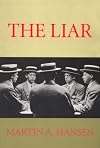
I first read this book as an exchange student in Denmark--apparently required reading there. It's a lovely novel, and while considered a psychological novel, the sense of place and nature seems to me just as important--you can feel and hear the spring thaw as you read.
Johannus is the school master on a remote Danish island, isolated by the winter ice surrounding the island. He tracks the changes of the seasons, botany, and wildlife on the island in this novel written in the form of his diary. While there is little plot--Johannus secretly loves a former student, now the unmarried mother of a small child--he beautifully depicts the daily lives of the islanders. Johannus is a quiet but remarkable character, and this book is one to be savored. I highly show more recommend this.
4 stars show less
4 stars show less

Som ung var jeg stærkt begejstret for Martin A. Hansen, og jeg læste over et par år de fleste af hans romaner. Siden gik min læsning i andre retninger, men da jeg genlæste Løgneren for et nogle år siden, var jeg ikke i tvivl om, at han stadig rørte noget i mig.
Høstgildet er en samling af tidligere trykte noveller, der blev udgivet i 1960. Det skete efter Hansens alt for tidlige død i 1955, og man får på fornemmelsen, at bogen skulle fungere som forskræp og reklame for den store show more Mindeudgave, der samtidig var på vej.
Historierne viser i hvert fald meget godt spændvidden i Martin A. Hansens forfatterskab. Her er fortællinger fra Danmarks tidligste historie, hvor vendiske pirater drev hærgende op omkring Sjælland. Her er filosofiske historier om den tvivl, der må plage alle intelligente kristne, fordi tvivlen er troens følgesvend.
Først og fremmest er der noveller fyldt med stærke naturbilleder og en indfølt skildring af det sjællandske bondeland før det blev moderne. Martin A. Hansen oplevede de to verdenskrige, der også var de to første moderne krige, udkæmpet og vundet med maskiner, men i Høstgildet er der hverken tog, biler eller bare en cykel. Det er alt sammen heste og drenge i bare fødder, der løber over de nypløjede marker.
Det gør det ikke til romantiserende billeder af livet på landet. Tværtimod hviler døden og tabet over de fleste historier, for livet på landet var også hårdt, og det var ikke spor nemmere at vende tilbage fra Napoleonskrigene end fra modstandskampen, når kæresten havde fundet en anden, mens man var væk.
Der er ingen tvivl om, at Martin A. Hansen ville riste en rune over det bondesamfund, som han var rundet af, og som allerede var under afvikling. Ganske som Tirad rister en rune i den nybyggede kirke i samlingens sidste novelle, eller, som det skrives i ’Dobbeltportræt i karvskåren ramme’: ”Tiden var gået fra dem, og de fik ingen omtale, da de selv gik bort, men her er skåret dem et mindesmærke.”
Nogle af novellerne mindede mere om essays eller forstudier end om selvstændige fortællinger, men Martin A. Hansens sans for menneskeligt drama fornægter sig ikke, og de fine naturskildringer vækker de gamle sjællandske landskaber til live igen. show less
Høstgildet er en samling af tidligere trykte noveller, der blev udgivet i 1960. Det skete efter Hansens alt for tidlige død i 1955, og man får på fornemmelsen, at bogen skulle fungere som forskræp og reklame for den store show more Mindeudgave, der samtidig var på vej.
Historierne viser i hvert fald meget godt spændvidden i Martin A. Hansens forfatterskab. Her er fortællinger fra Danmarks tidligste historie, hvor vendiske pirater drev hærgende op omkring Sjælland. Her er filosofiske historier om den tvivl, der må plage alle intelligente kristne, fordi tvivlen er troens følgesvend.
Først og fremmest er der noveller fyldt med stærke naturbilleder og en indfølt skildring af det sjællandske bondeland før det blev moderne. Martin A. Hansen oplevede de to verdenskrige, der også var de to første moderne krige, udkæmpet og vundet med maskiner, men i Høstgildet er der hverken tog, biler eller bare en cykel. Det er alt sammen heste og drenge i bare fødder, der løber over de nypløjede marker.
Det gør det ikke til romantiserende billeder af livet på landet. Tværtimod hviler døden og tabet over de fleste historier, for livet på landet var også hårdt, og det var ikke spor nemmere at vende tilbage fra Napoleonskrigene end fra modstandskampen, når kæresten havde fundet en anden, mens man var væk.
Der er ingen tvivl om, at Martin A. Hansen ville riste en rune over det bondesamfund, som han var rundet af, og som allerede var under afvikling. Ganske som Tirad rister en rune i den nybyggede kirke i samlingens sidste novelle, eller, som det skrives i ’Dobbeltportræt i karvskåren ramme’: ”Tiden var gået fra dem, og de fik ingen omtale, da de selv gik bort, men her er skåret dem et mindesmærke.”
Nogle af novellerne mindede mere om essays eller forstudier end om selvstændige fortællinger, men Martin A. Hansens sans for menneskeligt drama fornægter sig ikke, og de fine naturskildringer vækker de gamle sjællandske landskaber til live igen. show less
Lists
Awards


You May Also Like


Associated Authors
Statistics
- Works
- 49
- Also by
- 11
- Members
- 635
- Popularity
- #39,693
- Rating
- 3.5
- Reviews
- 11
- ISBNs
- 57
- Languages
- 7
- Favorited
- 1