
Peter Høeg
Author of Smilla's Sense of Snow
About the Author
Peter Hoeg, is a writer. He was born in Copenhagen, Denmark in 1957. Hoeg's first book, The History of Danish Dreams, was published in 1988. Another book, Smilla's Sense of Snow, received the Glass Key Award from the Crime Writers of Scandinavia in 1992. The book was made into a film in 1997 show more starring Julia Ormond, Gabriel Bryne, and Vanessa Redgrave. (Bowker Author Biography) show less
Image credit: Peter Hoeg, credit Ulla Montan
Works by Peter Høeg
Reis naar een donker hart 3 copies
Det er ikke bare Rushdie 1 copy
Associated Works
The Art of the Story: An International Anthology of Contemporary Short Stories (1999) — Contributor — 395 copies, 5 reviews
Tagged
Common Knowledge
- Canonical name
- Høeg, Peter
- Birthdate
- 1957-05-17
- Gender
- male
- Education
- University of Copenhagen (MA, Literature, 1984)
- Occupations
- crew member (pleasure boats)
dancer (ballet)
fencer
mountaineer
teacher (drama)
novelist - Awards and honors
- Bog & Idé-prisen (1996)
Bog & Idé-prisen (1993)
De gyldne Laurbær (1994) - Short biography
- Peter Høeg lives with his wife and his two daughters in Copenhagen, Denmark.
- Nationality
- Denmark
- Birthplace
- Copenhagen, Denmark
- Places of residence
- Copenhagen, Denmark
- Associated Place (for map)
- Copenhagen, Denmark
Members
Reviews
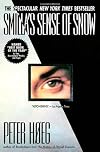
I'm not familiar with the action/thriller genre so I don't know to what extent this book's preposterous plot is par for the course. We get Nazis, heroin, mummies, a dash of random BDSM, and much much more on our way to a finale with meteorites and killer worms possibly (it wasn't clear to me) from outer space. That sounds exciting in theory, but most of the book's 469 pages are devoted to lengthy descriptions of our indestructible heroine scurrying about first the streets of Copenhagen, show more then, for what seems like aeons, the Escher-like environment of a cargo ship on its way to Greenland. Along the way Smilla has lots of fights in which each blow is described precisely — at one point she's whacking a man repeatedly with a steel ball in a sock while he whacks back with a marlin spike, then next minute they're allies, chatting amiably on deck. In general, characters absorb quantities of physical punishment beyond the norm even of action films and video games.
Other than the descriptions of Smilla moving around and trading blows that would incapacitate anyone outside this book — each action sequence prefaced by a flashback to Smilla's quirky childhood, invariably concluding with a zenlike moral —, frequent reminders of the exact temperature, and detailed descriptions of the contents of every drawer, pocket, and shelf (always turned to lethal effect by Smilla), we get dialogue, much of which is baldly expository:
"...their problem was the ice. First they built a prototype of what was supposed to be the world's largest and most solid drilling platform, the Joint Venture Warrior, a product of glasnost and Home Rule, a cooperative venture between the United States, the Soviet Union, and Denmark's largest shipping company A. P. Møller..." (continues for 400 words)
— or clipped and elliptical with a mind to the movie adaptation.
Despite all this I was quite enjoying the book at first. There's nothing inherently annoying about Hoeg's prose and the mystery was intriguing. But the more we learn, the more ridiculous it all is. I mean, why exactly does Hviid want to haul this massive meteorite back to Denmark clandestinely? What does he plan to do with it, stash it in his basement and study the space-worms? Speaking of Hviid, he's a most unimpressive final boss, the least menacing of the various antagonists faced by our unfeasibly accomplished (deep knowledge of math, chemistry, physics, etc., author of a million scientific papers, world expert in all things ice-related despite flunking out of several schools) protagonist. In the end Hviid, and my interest in the book, simply melts away like the sad remains of a snowman on the first warm day of spring. show less
Other than the descriptions of Smilla moving around and trading blows that would incapacitate anyone outside this book — each action sequence prefaced by a flashback to Smilla's quirky childhood, invariably concluding with a zenlike moral —, frequent reminders of the exact temperature, and detailed descriptions of the contents of every drawer, pocket, and shelf (always turned to lethal effect by Smilla), we get dialogue, much of which is baldly expository:
"...their problem was the ice. First they built a prototype of what was supposed to be the world's largest and most solid drilling platform, the Joint Venture Warrior, a product of glasnost and Home Rule, a cooperative venture between the United States, the Soviet Union, and Denmark's largest shipping company A. P. Møller..." (continues for 400 words)
— or clipped and elliptical with a mind to the movie adaptation.
Despite all this I was quite enjoying the book at first. There's nothing inherently annoying about Hoeg's prose and the mystery was intriguing. But the more we learn, the more ridiculous it all is. I mean, why exactly does Hviid want to haul this massive meteorite back to Denmark clandestinely? What does he plan to do with it, stash it in his basement and study the space-worms? Speaking of Hviid, he's a most unimpressive final boss, the least menacing of the various antagonists faced by our unfeasibly accomplished (deep knowledge of math, chemistry, physics, etc., author of a million scientific papers, world expert in all things ice-related despite flunking out of several schools) protagonist. In the end Hviid, and my interest in the book, simply melts away like the sad remains of a snowman on the first warm day of spring. show less
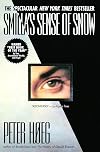
"Deep inside I know that trying to figure things out leads to blindness, that the desire to understand has a built-in brutality that erases what you seek to comprehend. Only experience is sensitive. But maybe I'm both weak and brutal. I've never been able to resist trying."
Smilla's story is a complex one. It is in part a thriller about the suspicious death of a young boy and a woman's unrelenting search to find out the truth despite the danger to her own life. But it's also a character study show more about Smilla, a half Greenlandic, half Danish woman whose years of growing up on the ice as a child has taught her and innate sense of the subtleties of snow and ice, a woman like an iceberg, whose surface hides much larger depths within.
The pace is too plodding and contemplative to be a page turner as I would expect a thriller to be, but there are moments that are gripping. I enjoyed working my way through this.
However, I have a love/hate relationship with the ending. I don't know what to do with it or how to feel. On the one hand, it's clever and suits Smilla's personality perfectly. On the other hand, it's clever instead of satisfying and that pisses me off. show less
Smilla's story is a complex one. It is in part a thriller about the suspicious death of a young boy and a woman's unrelenting search to find out the truth despite the danger to her own life. But it's also a character study show more about Smilla, a half Greenlandic, half Danish woman whose years of growing up on the ice as a child has taught her and innate sense of the subtleties of snow and ice, a woman like an iceberg, whose surface hides much larger depths within.
The pace is too plodding and contemplative to be a page turner as I would expect a thriller to be, but there are moments that are gripping. I enjoyed working my way through this.
However, I have a love/hate relationship with the ending. I don't know what to do with it or how to feel. On the one hand, it's clever and suits Smilla's personality perfectly. On the other hand, it's clever instead of satisfying and that pisses me off. show less

there were absolutely little gems throughout this book, but overall it was just too much. too confusing, too convoluted, too tenuous, too verbose. i'm pretty confused about how popular this was, considering how it really doesn't fit into the thriller/suspense category, or the mystery category easily, and with its length and density i don't see it appealing to such a large number of people. definitely there were parts that were great, but mostly this was not what i'd hoped.
i did enjoy show more learning about greenland - i found myself looking up quite a bit when reading this. and thought this bit was quite surprising:
"Some years ago they measured the light at Siorapaluk in Greenland. From December to February, when the sun is gone. People imagine eternal night. But there are stars and the moon, and now and then the northern lights. And the snow. They registered the same amount of lumens as outside a medium-sized provincial town in Denmark."
"If you consider all the unpleasantness you encounter while you're alive, it seems improbable that it would all come to an end simply because you're dead." show less
i did enjoy show more learning about greenland - i found myself looking up quite a bit when reading this. and thought this bit was quite surprising:
"Some years ago they measured the light at Siorapaluk in Greenland. From December to February, when the sun is gone. People imagine eternal night. But there are stars and the moon, and now and then the northern lights. And the snow. They registered the same amount of lumens as outside a medium-sized provincial town in Denmark."
"If you consider all the unpleasantness you encounter while you're alive, it seems improbable that it would all come to an end simply because you're dead." show less
"The body's pain is so paper-thin and insignificant compared to that of the mind."
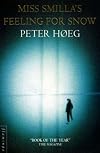
This book was initially written in Danish and then translated into English. The story follows Smilla Jaspersen, a 37-year-old Greenlander living in Copenhagen. Smilla is a loner by nature, but there is one person in her life she feels a connection to, her young neighbour, Isaiah. This is revealed through a series of flashbacks, because in the novel’s opening chapter it is revealed that Isaiah has died show more following a fall off the snowy roof of their apartment block.
Accidental death say the police but Smilla knows the boy and moreover has a feeling for snow. She reads a different story in his snowy footprints. Isaiah wasn’t playing, he was running from something. Smilla decides to investigate this untimely death and soon realises that she has stumbled onto something much bigger than a solitary death. What's more she can read the smallest changes in ice and snow.
This novel is an entertaining mystery/thriller that IMHO has enough in it for anyone who is a fan of that particular genre but for me, the best part was learning about the history and culture of Greenland. Hoeg deftly explores the many problems of the colonization of this island nation, weaving historical context into his text. I started the novel knowing absolutely nothing about the relationship between Denmark and Greenland, so it was a interesting to learn something about their uneasy history. Hoeg’s prose is densely packed, full of information, action, and on occasion, wonderfully vivid imagery.
Coincidentally I started this on a day that it had started to snow in my own neighbourhood and if nothing else, it reminded me that British winters are rather tame in comparison to those endured in the bone-chilling arctic.
"Whining is a virus, a lethal, infectious, epidemic disease." show less
This book was initially written in Danish and then translated into English. The story follows Smilla Jaspersen, a 37-year-old Greenlander living in Copenhagen. Smilla is a loner by nature, but there is one person in her life she feels a connection to, her young neighbour, Isaiah. This is revealed through a series of flashbacks, because in the novel’s opening chapter it is revealed that Isaiah has died show more following a fall off the snowy roof of their apartment block.
Accidental death say the police but Smilla knows the boy and moreover has a feeling for snow. She reads a different story in his snowy footprints. Isaiah wasn’t playing, he was running from something. Smilla decides to investigate this untimely death and soon realises that she has stumbled onto something much bigger than a solitary death. What's more she can read the smallest changes in ice and snow.
This novel is an entertaining mystery/thriller that IMHO has enough in it for anyone who is a fan of that particular genre but for me, the best part was learning about the history and culture of Greenland. Hoeg deftly explores the many problems of the colonization of this island nation, weaving historical context into his text. I started the novel knowing absolutely nothing about the relationship between Denmark and Greenland, so it was a interesting to learn something about their uneasy history. Hoeg’s prose is densely packed, full of information, action, and on occasion, wonderfully vivid imagery.
Coincidentally I started this on a day that it had started to snow in my own neighbourhood and if nothing else, it reminded me that British winters are rather tame in comparison to those endured in the bone-chilling arctic.
"Whining is a virus, a lethal, infectious, epidemic disease." show less
Lists
Page Turners (1)
A Novel Cure (1)
Arctic novels (1)
1990s (1)
Favourite Books (1)
Global Mysteries (1)
Mooie titels (1)
Read in 2007 (1)
Gen X Library (1)
Europe (1)
Winter Books (1)
Nordic Crime (1)
Read in 2011 (1)
Awards


You May Also Like


Associated Authors
Statistics
- Works
- 19
- Also by
- 4
- Members
- 13,874
- Popularity
- #1,665
- Rating
- 3.6
- Reviews
- 295
- ISBNs
- 464
- Languages
- 27
- Favorited
- 34