
Per Olov Enquist (1934–2020)
Author of The Royal Physician's Visit
About the Author
Enquist's writing is characterized by political consciousness and an interest in the past as it affects or reflects the present. During the politicized 1960s, Enquist was a principle practitioner of documentarism. He is both an important playwright and a novelist. (Bowker Author Biography) Per Olov show more Enquist is one of Sweden's most acclaimed writers; a novelist, playwright and poet with works published in 26 countries. (Bowker Author Biography) show less
Works by Per Olov Enquist
Doktor Mabuses nya testamente : en detektivroman från seklets slut (1982) — Author — 23 copies, 1 review
Kristallögat 3 copies
Sextiotalskritik : en antologi 2 copies
Para Fedra 1 copy
2005 1 copy
Tupilak 1 copy
Enquist Per Olov 1 copy
GRAND-PÈRE ET LES LOUPS 1 copy
Associated Works
Hebbes7: 10 nieuwe smaakmakers voor het najaar — Contributor — 3 copies
Tagged
Common Knowledge
- Canonical name
- Enquist, Per Olov
- Legal name
- Enquist, Per Olov
- Other names
- Enquist, P. O.
- Birthdate
- 1934-09-23
- Date of death
- 2020-04-25
- Gender
- male
- Education
- Uppsala University (History of Literature)
- Occupations
- novelist
playwright
journalist
moderator (television debate) - Organizations
- Deutsche Akademie für Sprache und Dichtung
Bayrische Akademie der schönen Künste, Abteilung Literatur, korrespondierendes Mitglied - Awards and honors
- Austrian State Prize for European Literature (2009)
- Cause of death
- cancer
- Nationality
- Sweden
- Birthplace
- Hjoggbole, Sweden
- Places of residence
- Hjoggbole, Sweden (birth)
- Place of death
- Vaxholm, Sweden
- Associated Place (for map)
- Hjoggbole, Sweden
Members
Reviews

Knut Hamsun neve fogalom*: ő volt a norvégok írófejedelme, Nobel-díjjal kipreparált eleven halhatatlanság, a nemzet bölcsessége és büszkesége egy személyben. Aztán hopp, egyszer csak benácult, és a német megszállás idején olyan publicisztikákkal támogatta meg Hitler ideológiai haláltáncát, hogy pár Magyar Időkös újságíró azóta is az ő bronz mellszobrával támasztja ki a polcon a könyveket, el ne dőljenek. Mert eldőlnének – az a három finoman show more erotikus magazin meg az egy szem Wass Albert füveskönyv ugyanis hagyományosan nem áll meg a saját lábán. Aranybánya ez egy írónak – felemelkedés és aláhullás eposzba illő története, mese arról, hogy milyen ostoba tud lenni a bölcs, ha mindig csak a távolba néz, és nem veszi észre, ami az orra előtt zajlik. Enquist ráadásul nem pusztán ezt a morális prostitúciót vizsgálja, hanem beemeli a szövegbe Hamsun feleségét és gyermekeit is, így egy kifejezetten bergmani ízű családi pokoljárást is tollhegyre tűz, ahol a mélyen meghúzódó sértettségek és dugába dőlt elvárások mérge széteszi a szeretet kötelékeit.
Filmregény – következésképpen nagyon lehet ám haladni vele. Csupa párbeszéd, a leírás csak annyi, hogy vizuális keretbe tudja helyezni az olvasó a párbeszédek résztvevőit. Szikár szöveg, olyan hatást kelt, mintha nem is könyvet, hanem egy könyv csontvázát látnánk. Akad, akit ez zavarni fog, de én szerettem, hogy a rövid jelenetek és a szereplők dialógjai tág teret hagynak nekem a regény értelmezéséhez: szerettem, hogy nekem kell húst rajzolnom a csontokra. Élénk fantáziájú olvasóknak – különösen ha odavannak a morális feladványokért – nagyon ajánlom.
* Mondjuk, ha a google-ba beírjuk, hogy „knut”, akkor az első százötven találat egy híres jegesmedvét dob fel a híres norvég helyett – legyen ez intő jel a fasizmussal pettingelő írók számára. show less

The life of the unfortunate Christian VII of Denmark (1749-1808) has long excited the curiosity of writers of all complexions, from Goethe to Dario Fo, although - despite the fact that one of the main characters was British - it doesn't seem to have been done very often in English yet (The lost queen (1969), by Norah Lofts is the only English version mentioned in the list on Wikipedia).
As Enquist tells it, the central characters are Christian himself, an intermittently lucid, show more mentally-disturbed young man who has become king at the age of 16 and been married shortly thereafter to an even younger English princess in whom he has no interest whatsoever; the queen, who is making up for a very sheltered upbringing by discovering the sexual power she can exert in her new role; Struensee, the idealistic young German physician (keen reader of Holberg and Rousseau) who accidentally finds himself in a position to deputise for the king, both in the queen's bed and in attempting to drag the backward and corrupt kingdom of Denmark kicking and screaming into the 18th century; and - naturally - an éminence grise, Guldberg, who is scheming against all of them. And equally naturally, it all ends in tears, as Enquist is clearly expecting it to.
Enquist is particularly interested in the opposition between the open, optimistic, and politically-naive Struensee and the secretive, vengeful and moralistic Guldberg, as expressed in the ways that both of them establish bonds with the confused and frightened Christian and react in their different ways to the potent sexuality (Enquist clearly insists on there being potent sexuality, even if that's not something you normally associate with Hannoverians...) of Caroline Matilda. This all gets tied in clever ways into the political currents of late 18th century Europe - the lofty ideals of the Enlightenment philosophes compromised by their association with people like Catherine of Russia and Frederick of Prussia, the cynical aristocrats who run Denmark for their own benefit and are happy to have a powerless king, the peasants whom nobody really cares about in practice...
Entertaining and well-written, but maybe a bit too predictable. show less
As Enquist tells it, the central characters are Christian himself, an intermittently lucid, show more mentally-disturbed young man who has become king at the age of 16 and been married shortly thereafter to an even younger English princess in whom he has no interest whatsoever; the queen, who is making up for a very sheltered upbringing by discovering the sexual power she can exert in her new role; Struensee, the idealistic young German physician (keen reader of Holberg and Rousseau) who accidentally finds himself in a position to deputise for the king, both in the queen's bed and in attempting to drag the backward and corrupt kingdom of Denmark kicking and screaming into the 18th century; and - naturally - an éminence grise, Guldberg, who is scheming against all of them. And equally naturally, it all ends in tears, as Enquist is clearly expecting it to.
Enquist is particularly interested in the opposition between the open, optimistic, and politically-naive Struensee and the secretive, vengeful and moralistic Guldberg, as expressed in the ways that both of them establish bonds with the confused and frightened Christian and react in their different ways to the potent sexuality (Enquist clearly insists on there being potent sexuality, even if that's not something you normally associate with Hannoverians...) of Caroline Matilda. This all gets tied in clever ways into the political currents of late 18th century Europe - the lofty ideals of the Enlightenment philosophes compromised by their association with people like Catherine of Russia and Frederick of Prussia, the cynical aristocrats who run Denmark for their own benefit and are happy to have a powerless king, the peasants whom nobody really cares about in practice...
Entertaining and well-written, but maybe a bit too predictable. show less
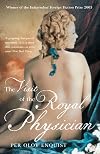
The royal physician of the title is a man called Struensee, and the visit refers to the time he spent as effective regent of Denmark in 1771 and 1772, pushing through a vast swathe of Enlightenment-inspired reforms.
I knew nothing about this period of history before reading this. But even so I could tell that this was an inspired reimagining. Enqvist takes the dry historical record, and adds the passion back in - fear, betrayal, guilt. (The book is full of madness of different kinds, from show more broken-willed feeble-mindedness to a lust for power and control.) The narrative is laced with references to contemporary records which each give us glimpses of the extreme and chaotic events, but it's the passion and madness and theatre which start to make sense of them.
This might make the book sound like a historical romp, which it isn't. It's dense with images and metaphor, yet Enqvist maintains a dry and oracular tone throughout, as if he is trying to make rational sense of what happened - even though the book as a whole suggests that nothing in history makes sense if you ignore the human emotions involved. show less
I knew nothing about this period of history before reading this. But even so I could tell that this was an inspired reimagining. Enqvist takes the dry historical record, and adds the passion back in - fear, betrayal, guilt. (The book is full of madness of different kinds, from show more broken-willed feeble-mindedness to a lust for power and control.) The narrative is laced with references to contemporary records which each give us glimpses of the extreme and chaotic events, but it's the passion and madness and theatre which start to make sense of them.
This might make the book sound like a historical romp, which it isn't. It's dense with images and metaphor, yet Enqvist maintains a dry and oracular tone throughout, as if he is trying to make rational sense of what happened - even though the book as a whole suggests that nothing in history makes sense if you ignore the human emotions involved. show less
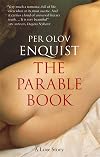
A bewildering piece of stream-of-consciousness that drifts between novel, family memories, autobiography and philosophical exploration. Prior knowledge of Enquist's work is essential to appreciate this - I strongly advise against reading this as an introduction to his writing. He's a confusing and challenging writer, and this is a very self-referential book which expects some understanding of his earlier novels. For those better acquainted with him, however, it's a moving and urgent search show more for meaning at the end of a long and rich life.
A word of advice: Don't come to this expecting a pure love story between an older woman and a younger boy. It is very far from being that simple. The narrator's sexual encounter with a much older woman is a leitmotiv in, but only a part of, a much more complex and disorientating assessment of his own life.
For a full review, please see my blog:
https://theidlewoman.net/2016/06/18/the-parable-book-per-olov-enquist/ show less
A word of advice: Don't come to this expecting a pure love story between an older woman and a younger boy. It is very far from being that simple. The narrator's sexual encounter with a much older woman is a leitmotiv in, but only a part of, a much more complex and disorientating assessment of his own life.
For a full review, please see my blog:
https://theidlewoman.net/2016/06/18/the-parable-book-per-olov-enquist/ show less
Lists
Awards


You May Also Like


Associated Authors
Statistics
- Works
- 57
- Also by
- 8
- Members
- 3,943
- Popularity
- #6,412
- Rating
- 3.7
- Reviews
- 108
- ISBNs
- 482
- Languages
- 29
- Favorited
- 23
