
Tom Kristensen (1)
Author of Havoc
For other authors named Tom Kristensen, see the disambiguation page.
About the Author
Image credit: via Goodreads
Works by Tom Kristensen
Vindrosen 20 copies
Hvad er Heta? og andre fortællinger 9 copies
Rejse i Italien 7 copies
Mod den yderste Rand 7 copies
Hvad var mit ærinde? Rejseglimt 5 copies
Kritiker eller anmelder 5 copies
Bøger, Bøger, Bøger 4 copies
Digte i Døgnet 4 copies
Fribytterdrømme 4 copies
Oplevelser med lyrik 3 copies
Min yndlingslæsning 3 copies
En Omvej til Andorra 2 copies
Det ¤skabende øje 2 copies
Bøger, bøger, bøger 1 2 copies
Bøger, bøger, bøger 2 2 copies
Den evige uro 1 copy
Dikt i utvalg 1 copy
En bogorms barndom 1 copy
Aabenhjertige fortielser 1 copy
Li Tai Pé's Død 1 copy
Den syngende busk 1 copy
Tagged
Common Knowledge
- Canonical name
- Kristensen, Tom
- Legal name
- Kristensen, Aage Tom
- Birthdate
- 1893-08-04
- Date of death
- 1974-06-02
- Gender
- male
- Education
- University of Copenhagen
- Occupations
- poet
novelist
literary critic
translator - Awards and honors
- De gyldne Laurbær (1955)
- Nationality
- Denmark
- Birthplace
- London, England, UK
- Places of residence
- Copenhagen, Denmark
- Place of death
- Thurø, Svendborg, Denmark
- Burial location
- Thurø kirkegård, Svendborg, Denmark
- Associated Place (for map)
- Denmark
Members
Reviews
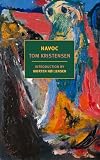
This long novel by British-born Danish writer Tom Kristensen (1893-1974) tells a sad, sometimes brutal, sometimes hilarious tale of Ole Jastrau’s wilful descent into a state of moral dissipation and physical decay. When the novel begins, Jastrau, employed as book review editor by the publication Dagbladet, is married to the beautiful Johanne and is the loving father of young Oluf. He is respectable and well-off, admired by many: a prominent and influential figure within the Copenhagen show more literary community. But Jastrau, in his mid-thirties, a poet who no longer writes poetry, chafes against the demands of a career that consumes the best of his intellectual abilities and resents the heavy financial burden and emotional obligations that come with being a husband and father and productive member of society. The trouble starts when two young Communist sympathizers and political agitators, both writers, arrive at the door of Jastrau’s flat on the eve of an election. Critic Bernhard Sanders and poet Stefan Steffensen are in trouble with the police. Jastrau reluctantly offers them refuge until after the voting is complete, when, presumably, the outcome will resolve their legal problems. Jastrau has no hesitation admitting he enjoys a drink or two, but for the two young bohemians occupying his flat only total commitment will do, in drinking as in life. Though Jastrau, at Johanne’s urging, eventually boots the two out, the downward spiral has begun. Jastrau, feeling confined in the apartment and stifled by Johanne’s glowering displeasure with his drinking, envying the nonconformist lifestyle and freedom from responsibility that Sanders and Steffensen enjoy, and sensing that he’s missing out on pleasures that every adult male is entitled to, decides to explore the after-hours Copenhagen bar scene, applying himself to the task with the single-mindedness of a true devotee. Though he often finds Steffensen’s opinions on everything from politics to aesthetics to religion questionable and even repugnant, and the two argue almost without respite, the young poet becomes Jastrau’s chief drinking companion. When Steffensen finds himself homeless, Jastrau invites him to stay at the flat for an indefinite period, and Johanne leaves in disgust, taking Oluf with her to stay with her parents. The transformation of Ole Jastrau from esteemed literary critic to hopeless drunk is gradual but gathers momentum as we get deeper into the story and by means of convoluted logic and faulty reasoning he reaches the conclusion that the only way to remain true to himself is to fully embrace self-destruction. The twisted path to ruination brings Jastrau into contact with a great many eccentric and memorable characters, some of whom encourage his plunge into the abyss, others who try to save him, and Jastrau’s drunken antics are entertaining if sometimes hard to watch. Kristensen offers no excuses for his tragically misguided protagonist, making it clear on numerous occasions that Jastrau’s rejection of respectability and retreat into an alcoholic fog results from a conscious and deliberate decision to rebel against the social structures that have made him into something he never wanted to be. For Ole Jastrau, the question of what kind of life he’s going to live is philosophical and has nothing to do with physical or psychological weakness. The reader, however, suspects otherwise. Havoc, an astonishingly modern and uninhibited work of fiction, was greeted with outrage in some circles when it was published in 1930, but has since become regarded as a 20th-century European classic. The translation by Carl Malmberg first appeared in 1968 and remains serviceable, though some of the language will seem dated to 21st-century readers. show less

This book was recommended to me, repeatedly, by a drunk Danish writer at dinner in Copenhagen. I had been asking about Danish literature, and I had mentioned Christian Jungersen's "The Exception." Another Danish scholar said Knut Hamsun was still the country's best writer, and that's when this person -- whose name I've forgotten -- launched into an embarrassingly lengthy and enthusiastic description of this book. He said to really understand the Danish character, this is the book to show more read.
It's a portrait of the mental malaise of the intelligentsia in Denmark in the 1930s. The principal character doesn't have any principles or purpose: he's a critic, but we never hear about his own interests in literature; he has no clear political allegiances; he has only fleeting thoughts about religion; and he doesn't connect well with people. He decides to do "stupid" things, and to "go to the dogs." So he lets his marriage fall apart, lets himself become an alcoholic, quits his job, and, toward the end, watches passively and with some relief as his house burns down. (I thought of the drunken man in Copenhagen several times, wondering exactly why he liked this novel.)
Kristensen was principally a poet, but he has an excellent ear for dialogue, and the book's strongest passages are its conversations. He loves the way people can miss the really important moments in conversations. Crucial explanations are deftly elided, confessions fall on deaf ears, people deflect and repress difficult thoughts. Kristensen is wonderful at describing the play of emotions on people's faces, and often the emotional rhythms of a scene move much faster than the words they speak. All that is what kept me reading. I don't care about the intellectual life of Copenhagen in the late 1920s; I didn't care what happened to the protagonist, who is on a stereotypical journey into self-destruction; I wasn't convinced by the depiction of alcoholic hallucinations, random humiliations, and blackouts (A. L. Kennedy does it so much better); and I didn't think the character's drifting was ever either well motivated or provocatively unmotivated. But the way the conversations continuously slip, their inconclusiveness, their drunken repetitions, their boredom, their opacity, their unending unrewarding lack of clarity, was very rewarding. show less
It's a portrait of the mental malaise of the intelligentsia in Denmark in the 1930s. The principal character doesn't have any principles or purpose: he's a critic, but we never hear about his own interests in literature; he has no clear political allegiances; he has only fleeting thoughts about religion; and he doesn't connect well with people. He decides to do "stupid" things, and to "go to the dogs." So he lets his marriage fall apart, lets himself become an alcoholic, quits his job, and, toward the end, watches passively and with some relief as his house burns down. (I thought of the drunken man in Copenhagen several times, wondering exactly why he liked this novel.)
Kristensen was principally a poet, but he has an excellent ear for dialogue, and the book's strongest passages are its conversations. He loves the way people can miss the really important moments in conversations. Crucial explanations are deftly elided, confessions fall on deaf ears, people deflect and repress difficult thoughts. Kristensen is wonderful at describing the play of emotions on people's faces, and often the emotional rhythms of a scene move much faster than the words they speak. All that is what kept me reading. I don't care about the intellectual life of Copenhagen in the late 1920s; I didn't care what happened to the protagonist, who is on a stereotypical journey into self-destruction; I wasn't convinced by the depiction of alcoholic hallucinations, random humiliations, and blackouts (A. L. Kennedy does it so much better); and I didn't think the character's drifting was ever either well motivated or provocatively unmotivated. But the way the conversations continuously slip, their inconclusiveness, their drunken repetitions, their boredom, their opacity, their unending unrewarding lack of clarity, was very rewarding. show less

Fabelagtigt sprog, fascinerende karakterer og interessante miljøer. Fremstår uden nogen klar pointe - andet end måske at der findes menneskeligt forfald blandt alle sociale klasser.
Couldn't help but think of two of my favorite authors, Bukowski and Celine. There is a humanity in going to the dogs.
Lists
Awards


You May Also Like


Statistics
- Works
- 38
- Members
- 494
- Popularity
- #50,037
- Rating
- 3.9
- Reviews
- 12
- ISBNs
- 123
- Languages
- 7
- Favorited
- 2