

Owen Beattie
Author of Frozen in Time: The Fate of the Franklin Expedition
About the Author
Image credit: from Simon Fraser University faculty page
Works by Owen Beattie
Tagged
Common Knowledge
- Legal name
- Beattie, Owen Beverly
- Birthdate
- 1949-06-03
- Gender
- male
- Education
- Simon Fraser University (BA, PhD | Physical Anthropology | 1981)
- Occupations
- professor (Anthropology|University of Alberta)
- Nationality
- Canada
- Birthplace
- Victoria, British Columbia, Canada
- Map Location
- Canada
Members
Reviews
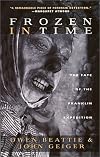
The groundbreaking archeological work of Owen Beattie almost single-handedly re-opened research and interest into the Franklin expedition. Beattie's first expedition explored King William Island, where nearly 150 years earlier Franklin's men abandoned their ships and supposedly started their long "death march" along the western coast. Strewn along the coast were the bones of dozens of European men from the mid-nineteenth century. Using modern day forensic analysis on the bones back at the show more University of Alberta, Beattie made two startling discoveries. The first confirmed what was already generally known: that the expedition survivors had indeed "been driven to the last dread alternative", cannibalism. But it was the second discovery that surprised: bone samples revealed extremely high and dangerous levels of lead. Frozen In Time then documents two subsequent trips to Beechey Island in which the bodies of the 3 found sailors were exhumed. The cadavers, frozen in the permafrost for a century and a half, confirmed the earlier results: the Franklin sailors were suffering from lead poisoning to such a degree that it was a contributing factor to their demise. The 2004 paperback edition updates their research to subsequent theories. show less
Over the years I’ve read a number of accounts about the ill-fated Franklin Expedition of 1845 and 1846. Some concentrate on the expedition itself, some on one or more of the subsequent searches for Franklin, some even on Franklin’s wife, Lady Jane. This is the first I have read that details a modern search, based on scientific evidence, for the cause of the failure. As a scientist I personally found this book fascinating.
I especially loved the role that serendipity played in the outcome show more because that so often is how scientific advances are made. In this case, Owen Beattie (who is a forensic anthropologist) expected to find evidence that would confirm that the crew suffered from scurvy. The skeletal remains that his team found in their first Arctic trip were sent for atomic absorption analysis as a matter of thoroughness, not because anything in particular was being looked for. When the results of the analysis showed the bones from the Franklin crew member had extremely high levels of lead the investigation took a new turn.
I thought the explanation of the scientific testing was very well done, something that any intelligent lay person could understand. It’s not every scientist that can write in a way that is intelligible to someone outside of the field. I presume John Geiger may have had something to do with that but I suspect that Dr. Beattie is the rare scientist who can capture an audience regardless of who composes it.
Great read. show less
I especially loved the role that serendipity played in the outcome show more because that so often is how scientific advances are made. In this case, Owen Beattie (who is a forensic anthropologist) expected to find evidence that would confirm that the crew suffered from scurvy. The skeletal remains that his team found in their first Arctic trip were sent for atomic absorption analysis as a matter of thoroughness, not because anything in particular was being looked for. When the results of the analysis showed the bones from the Franklin crew member had extremely high levels of lead the investigation took a new turn.
I thought the explanation of the scientific testing was very well done, something that any intelligent lay person could understand. It’s not every scientist that can write in a way that is intelligible to someone outside of the field. I presume John Geiger may have had something to do with that but I suspect that Dr. Beattie is the rare scientist who can capture an audience regardless of who composes it.
Great read. show less
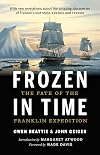
In Frozen in Time: The Fate of the Franklin Expedition, Owen Beattie and John Geiger trace the history of Captain Sir John Franklin’s lost expedition to discover the Northwest Passage aboard the HMS Erebus and HMS Terror in 1845. Beattie and Geiger place Franklin’s Expedition in the context of Arctic exploration following the Napoleonic Wars, with the search expeditions of the mid-nineteenth century deifying Franklin and cementing the expedition in the national, and international, show more consciousness. They further explore the leading theories of the day for Franklin’s loss, including scurvy and the nineteenth century ailment of “debility.” After examining the historical record, Beattie and Geiger summarize Beattie’s 1980s expeditions to to King William Island and Beechey Island, in which Beattie examined bones and the graves of three Franklin Expedition crew, discovering the presence of elevated lead levels. This evidence, coupled with historical records of lead exposure from nineteenth century canning processes, helped to explain the underlying cause for the expedition’s mortality.
Beattie and Geiger conclude, “The story of how the Royal Navy failed to achieve the Northwest Passage is really that of how the world’s greatest navy battled, and was ultimately humbled by, a simple yet gruesome disease – scurvy, allied to a menace of which they could not begin to conceive: lead poisoning. The source of their defeat was not the ice-choked seas, the deep cold, the winters of absolute night, the labyrinthine geography or the soul-destroying isolation. It was found in their food supply, most notably in their heavy reliance on tinned foods” (pg. 254). In this, Beattie and Geiger compare the Franklin Expedition’s fate to other instances in which people took technological advancements for granted, leading to systematic breakdowns.
Frozen in Time will captivate readers interested in the history of exploration or the science of archaeology. The Franklin Expedition itself continues to play a role in international politics, as Canada works to declare the locations of the Franklin Expedition graves, the final resting places of the HMS Erebus and HMS Terror, and the surrounding waterways as UNESCO World Heritage Sites in order to cement Canada’s claim to the Northwest Passage, now increasingly open as a result of climate change (pg. xviii). show less
Beattie and Geiger conclude, “The story of how the Royal Navy failed to achieve the Northwest Passage is really that of how the world’s greatest navy battled, and was ultimately humbled by, a simple yet gruesome disease – scurvy, allied to a menace of which they could not begin to conceive: lead poisoning. The source of their defeat was not the ice-choked seas, the deep cold, the winters of absolute night, the labyrinthine geography or the soul-destroying isolation. It was found in their food supply, most notably in their heavy reliance on tinned foods” (pg. 254). In this, Beattie and Geiger compare the Franklin Expedition’s fate to other instances in which people took technological advancements for granted, leading to systematic breakdowns.
Frozen in Time will captivate readers interested in the history of exploration or the science of archaeology. The Franklin Expedition itself continues to play a role in international politics, as Canada works to declare the locations of the Franklin Expedition graves, the final resting places of the HMS Erebus and HMS Terror, and the surrounding waterways as UNESCO World Heritage Sites in order to cement Canada’s claim to the Northwest Passage, now increasingly open as a result of climate change (pg. xviii). show less
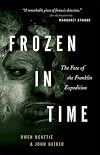
This is the account of the fate of the Franklin expedition in the frozen Arctic in 1845, almost 176 years ago. The story is told by forensic anthropologist and the coauthor, Owen Beattie. Beattie discovered that the role of lead poisoning played a large part in the disaster that struck the 1845-48 Franklin Arctic expedition. Franklin's expedition was made up of over 100 men and 2 ships. The ships vanished, bringing out dozens of search parties to take on the formidable task of searching the show more Arctic looking for an answer to what had happened. Eventually, wrecked boats, scribbled notes, human remains, and Eskimo tales all combined into a horrid tale of cold, starvation, cannibalism, and leading to the death of the entire crew. But what the exact cause of the disaster was never actually discovered or agreed upon. Along with recounting this historical account, the authors describe Beattie's two recent expeditions to Northern Canada to closely examine the recovered relics of the Franklin party. On King William Island in 1981, Beattie and his team found portions of a skeleton with knife marks that gave truth to the tales of cannibalism; also, the bone fragments contained high levels of lead and evidence of scurvy. On Beechy Island in 1984, the team exhumed the bodies of three seamen buried in makeshift graves in 1850. Exposed in a set of astonishing color plates that will nauseate some readers, these bodies--essentially well-preserved 130-year-old mummies...provided the strong supporting evidence, through autopsy and lab reports, for Owen Beattie's theory that poisoning from lead dinnerware and lead-soldered food tins contributed to the Franklin expedition's deaths. It's a strange scientific detective story, Is this all the facts and is the mystery of the Franklin Expedition's disappearance truly resolved by modern scientific methods? Some say "yes" but others say the scientific knowledge of the day may not have been enough to support the given cause at that time. I found that some threatening polar bears added a bit of suspense, and if that wasn't enough, be warned...the very graphic pictures have undeniable impact. However, this detailed account of anthropological legwork will more than likely only appeal those interested in polar regional accounts.... or folks like me that needed an Arctic book to complete a challenge:) show less
Lists
Awards


You May Also Like


Associated Authors
Statistics
- Works
- 4
- Members
- 1,230
- Popularity
- #20,871
- Rating
- 4.0
- Reviews
- 32
- ISBNs
- 41
- Languages
- 5