
Glyn Williams (1932–2022)
Author of The Prize of All the Oceans: Anson's Voyage Around the World
About the Author
Works by Glyn Williams
The Great South Sea: English Voyages and Encounters, 1570-1750 (1997) — Author — 55 copies, 1 review
The great map of mankind : British perceptions of the world in the Age of Enlightenment (1982) — Author — 17 copies
The expansion of Europe in the eighteenth century: overseas rivalry, discovery and exploitation (1966) 9 copies, 1 review
Captain Cook's Voyages: 1768-1779 2 copies
The Beaver (Vol. 63, No. 3 Autumn 1983) — Contributor — 1 copy
Associated Works
The Malaspina Expedition, 1789-1794 : Journal of the Voyage by Alejandro Malaspina. Volume I: Cádiz to Panamá (2002) — Editor, some editions — 19 copies
Tagged
Common Knowledge
- Canonical name
- Williams, Glyn
- Birthdate
- 1932-03-11
- Date of death
- 2022-01-24
- Gender
- male
- Education
- University of London (PhD|History|1959)
- Occupations
- historian
professor - Organizations
- Queen Mary, University of London
Hakluyt Society (president)
Hudson's Bay Record Society - Awards and honors
- The Caird Medal of the National Maritime Museum
- Nationality
- UK
- Associated Place (for map)
- UK
Members
Reviews
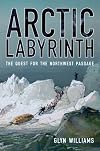
This is the second book by Glyn Williams on the Northwest Passage. The first, Voyages of Delusion, concentrated on earlier quests, mostly in the Hudson Bay area. This frankly was rather confusing: Everyone went to Hudson Bay, everyone had trouble with the weather, no one found anything, they all came home and were criticized, unless they died, which they too frequently did.
This book covers a longer period -- and, as a result, is far more interesting. The expeditions were not all the same. show more Some went to Hudson Bay, some to the Arctic Archipelago. Some were small and primitive; some large and relatively advanced. This book does a good job of comparing and contrasting and of giving a feel for the whole general history. If you are interested in a particular expedition -- the famous Franklin catastrophe, or Henry Hudson's debacle, or John Ross's amazing tale of survival -- there are better books. But I unhesitatingly recommend this volume for those interested in the history of the Passage. show less
This book covers a longer period -- and, as a result, is far more interesting. The expeditions were not all the same. show more Some went to Hudson Bay, some to the Arctic Archipelago. Some were small and primitive; some large and relatively advanced. This book does a good job of comparing and contrasting and of giving a feel for the whole general history. If you are interested in a particular expedition -- the famous Franklin catastrophe, or Henry Hudson's debacle, or John Ross's amazing tale of survival -- there are better books. But I unhesitatingly recommend this volume for those interested in the history of the Passage. show less
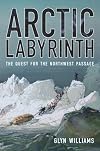
This is a very well-researched and well-written book about the many attempts to find the Northwest Passage, starting in the 1600's. I had no idea when I picked it up that there had been any other explorers than those of early to mid-1800's England, but indeed, there have been.
The maps are also an extra treat, and they fit in with the various periods of exploration. They prove to be very helpful when charting an explorer's course and many of the prominent features are there. My only gripe is show more that there is no one, single map that shows Alaska through to Greenland (it would probably take up 2 pages) that puts landmarks and features into perspective.
Franklin's expedition takes up several chapters, which makes me wonder if his 1845 search was the reason for the book. As I skimmed through the early chapters to read up to Franklin, I realized that much of his famous expedition was built on his and others' previous trials. And bodies! A lot of bodies were left there, from Hudson Bay to the Fish River.
I highly recommend this book to anyone interested in New World exploration, human folly, and even general knowledge of how we got to where we are now. show less
The maps are also an extra treat, and they fit in with the various periods of exploration. They prove to be very helpful when charting an explorer's course and many of the prominent features are there. My only gripe is show more that there is no one, single map that shows Alaska through to Greenland (it would probably take up 2 pages) that puts landmarks and features into perspective.
Franklin's expedition takes up several chapters, which makes me wonder if his 1845 search was the reason for the book. As I skimmed through the early chapters to read up to Franklin, I realized that much of his famous expedition was built on his and others' previous trials. And bodies! A lot of bodies were left there, from Hudson Bay to the Fish River.
I highly recommend this book to anyone interested in New World exploration, human folly, and even general knowledge of how we got to where we are now. show less
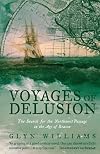
The fabled Northwest Passage that supposedly provided a sea route between the Atlantic and Pacific oceans around the top of North America intrigued Europeans for centuries. The search for a navigable route around North America was spurred by the dream of riches to be found in the unknown lands to the west and in the Orient as well as to avoid the tortuously long and hazardous route around Cape Horn at the bottom of South America or the even longer route via the Cape of Good Hope. The Spanish show more even had a name for it, Anian, but their repeated attempts to find it all failed. The French also had no success. This book provides an overview of the many failed attempts, mostly British, from James Knight of the Hudson Bay Company to Royal Navy Captains James Cook and George Vancouver, and their Spanish and French contemporaries.
The voyage of Christopher Middleton in 1741-2 demonstrated how harsh the conditions were in Hudson Bay during winter, especially as the men were ill-prepared, and the fresh food and clothing were insufficient. Many succumbed to frostbite or scurvy, for which there was no known cure at the time. When Middleton returned to England, he was accused of lying about his findings by his former sponsor, which made it difficult for him to gain further positions. But his findings were partly vindicated in a further voyage by William Moor and Francis Smith in 1746-7, which descended into enmity. And Middleton's discoveries were further verified 80 years later.
Before the 18th century, three Spanish captains claimed to have found the Strait of Anian or the Rio Los Reyes, and one of them claimed to have sailed through it to Hudson Bay. These accounts coloured the thinking and cartography throughout the 18th century. The French produced fantastic maps with a supposed sea within the western half of North America and the navigable channel suggested by the Spanish accounts. These drove the thinking of some of the English champions of the Northwest Passage. The Spanish accounts eventually proved to be false.
Cook's third voyage of discovery was brought about through a renewed interest in Britain to find the Northwest Passage from the Pacific as supposedly the Spanish had done. It appears that a large reward was put up to persuade Cook to take up this mission. Cook and his crew used Russian maps to guide them, but these proved to be utterly worthless to the exasperated master navigator. He was also led to believe that the polar sea would largely be ice free so that the crew was hugely disappointed to be confronted by an impenetrable ice barrier north of Bering Strait. Despite the disappointment and setbacks, Cook determined the shape of the Northwest coast of America that had eluded all previous attempts.
La Perouse followed Cook and attempted to find a way through, but the weather and time defeated him. This and other voyages to the Northwest coast helped to fill in some of the gaps that Cook had missed because he had assumed that some of the strings of coastal islands were the mainland. The tremendous number of islands along this coast provided a veritable maze that, combined with wishful thinking, led many people to believe that the fabled Spanish passage to Hudson Bay existed.
George Vancouver, who had twice sailed with Cook, finally put all the mythical passages beyond doubt by meticulously surveying the North West coast from the Strait of Juan de Fuca to the north of Kodiak Island, Alaska.
The illusory stories of the voyages of Juan de Fuca, Bartholomew de Fonte, and Lorenzo Ferrer Maldonado spurred European geographers and explorers into the search for a navigable passage through North America. It took more than a hundred years to show that no such passage existed despite the encouragement from land-based sponsors. This account of the exploration during the 18th century shows that the promise of riches, no matter how illusory, will drive men to follow mere suggestions. It took great navigators to finally dash those dreams but at the same time, they filled in the blanks of the North West coast of North America. Their achievements have to be admired and celebrated, not for their failure to find the impossible, but for their determination to disprove fantastic theories.
In my opinion, this is a well-researched book that demonstrates the fallibility of human nature when faced with the immense opportunities suggested by others. It took the dedicated labours of meticulous men, such as Cook, Vancouver, La Perouse, and Malaspina, to reveal the truth. I give this book 4 stars out of 5. show less
The voyage of Christopher Middleton in 1741-2 demonstrated how harsh the conditions were in Hudson Bay during winter, especially as the men were ill-prepared, and the fresh food and clothing were insufficient. Many succumbed to frostbite or scurvy, for which there was no known cure at the time. When Middleton returned to England, he was accused of lying about his findings by his former sponsor, which made it difficult for him to gain further positions. But his findings were partly vindicated in a further voyage by William Moor and Francis Smith in 1746-7, which descended into enmity. And Middleton's discoveries were further verified 80 years later.
Before the 18th century, three Spanish captains claimed to have found the Strait of Anian or the Rio Los Reyes, and one of them claimed to have sailed through it to Hudson Bay. These accounts coloured the thinking and cartography throughout the 18th century. The French produced fantastic maps with a supposed sea within the western half of North America and the navigable channel suggested by the Spanish accounts. These drove the thinking of some of the English champions of the Northwest Passage. The Spanish accounts eventually proved to be false.
Cook's third voyage of discovery was brought about through a renewed interest in Britain to find the Northwest Passage from the Pacific as supposedly the Spanish had done. It appears that a large reward was put up to persuade Cook to take up this mission. Cook and his crew used Russian maps to guide them, but these proved to be utterly worthless to the exasperated master navigator. He was also led to believe that the polar sea would largely be ice free so that the crew was hugely disappointed to be confronted by an impenetrable ice barrier north of Bering Strait. Despite the disappointment and setbacks, Cook determined the shape of the Northwest coast of America that had eluded all previous attempts.
La Perouse followed Cook and attempted to find a way through, but the weather and time defeated him. This and other voyages to the Northwest coast helped to fill in some of the gaps that Cook had missed because he had assumed that some of the strings of coastal islands were the mainland. The tremendous number of islands along this coast provided a veritable maze that, combined with wishful thinking, led many people to believe that the fabled Spanish passage to Hudson Bay existed.
George Vancouver, who had twice sailed with Cook, finally put all the mythical passages beyond doubt by meticulously surveying the North West coast from the Strait of Juan de Fuca to the north of Kodiak Island, Alaska.
The illusory stories of the voyages of Juan de Fuca, Bartholomew de Fonte, and Lorenzo Ferrer Maldonado spurred European geographers and explorers into the search for a navigable passage through North America. It took more than a hundred years to show that no such passage existed despite the encouragement from land-based sponsors. This account of the exploration during the 18th century shows that the promise of riches, no matter how illusory, will drive men to follow mere suggestions. It took great navigators to finally dash those dreams but at the same time, they filled in the blanks of the North West coast of North America. Their achievements have to be admired and celebrated, not for their failure to find the impossible, but for their determination to disprove fantastic theories.
In my opinion, this is a well-researched book that demonstrates the fallibility of human nature when faced with the immense opportunities suggested by others. It took the dedicated labours of meticulous men, such as Cook, Vancouver, La Perouse, and Malaspina, to reveal the truth. I give this book 4 stars out of 5. show less
The Prize of All the Oceans: Commodore Anson's Daring Voyage and Triumphant Capture of the Spanish Treasure Galleon by Glyn Williams
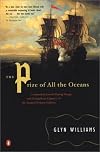
This was a much better book than I expected when I cracked the cover. It had been sitting on my "to-read" shelf for over 10 years, and I am sorry I did not get to it sooner. Anson's voyage belongs to an era before British supremacy at sea was taken for granted, and I was surprised to learn, for example, that Royal Navy officers and men in the 1740s did not have a standard uniform. This, is a very readable and informative account of an epic voyage with an equally-epic mortality rate from show more scurvy. Another account of "men of iron sailing in ships of wood". show less
Lists
Awards

You May Also Like


Associated Authors
Statistics
- Works
- 29
- Also by
- 2
- Members
- 878
- Popularity
- #29,160
- Rating
- 4.1
- Reviews
- 13
- ISBNs
- 60
- Languages
- 3