

Laurence Bergreen
Author of Over the Edge of the World: Magellan's Terrifying Circumnavigation of the Globe
About the Author
Laurence Bergreen is a bestselling author of Over the Edge of the World: Magellan's Terrifying Circumnavigation of the Globe. His other books include Columbus: The Four Voyages, 1492-1504; Marco Polo: From Venice to Xanadu; and Voyage to Mars: NASA's Search for Life Beyond Earth. A graduate of show more Harvard, Bergreen lives in Manhattan. show less
Image credit: Photo by Lilithcat
Works by Laurence Bergreen
Over the Edge of the World: Magellan's Terrifying Circumnavigation of the Globe (2003) 2,360 copies, 57 reviews
In Search of a Kingdom: Francis Drake, Elizabeth I, and the Perilous Birth of the British Empire (2021) 234 copies, 9 reviews
Associated Works
MHQ: The Quarterly Journal of Military History — Summer 1990 (1990) — Author "Oh! How He Hated to Get Up in the Morning" — 18 copies
Tagged
Common Knowledge
- Birthdate
- 1950-02-04
- Gender
- male
- Education
- Harvard University (1972)
- Agent
- Suzanne Gluck (William Morris Agency)
- Nationality
- USA
- Places of residence
- New York, New York, USA
- Associated Place (for map)
- New York, USA
Members
Reviews
Over the Edge of the World: Magellan's Terrifying Circumnavigation of the Globe by Laurence Bergreen
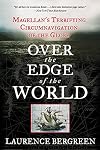
It all began with the Treaty of Tordesillas. That hubristic bit of parchment that split newly discovered lands between Spain and Portugal. Gold, silver, and slaves were the standard, but control over the world economy was through spice.
Ferdinand Magellan came from a privileged Portuguese family. Well educated, he had sailed on trading assignments to India, and did his time in the foreign service. But what he truly desired was to travel to the Spice Islands. Three times he asked for King show more Manuel's sponsorship and was denied. Finally, despite years of loyalty, he entered Spain as an emigrant and swore fealty to Charles I. Eager to prove himself, he shared all he knew of secret Portuguese sea charts.
With a 260 member crew that included his nephew, his illegitimate son, and a crucial Venetian chronicler named Pigafetta, Magellan left Seville with 5 ships: the Trinidad, the San Antonio, the Concepcion, the Victoria and the Santiago. Along the way the men would face starvation, unearthly storms and squalls, scurvy, mutiny, and the constant threat of the Portuguese. Magellan proved to be brave but instigative and foolish, leading to his death. Only one ship, the Victoria, would make it back from around the world, with a priceless hold full of cloves, and without Magellan.
Narratively, this was an enjoyable read. It was easy to follow, despite many landfalls, names and frequent changes of the guard among the ships. Bergreen certainly knows when to summarize and when to go into significant detail. But I certainly can't give it 4 or 5 stars because of how neglectful it was in regards to native peoples. Explorers' descriptions are taken at face value, sometimes quoted directly, but never expanded, clarified or corrected. Natives are called cannibals, some as submissive and hyper-sexual, esp. the women; so in that aspect it was poorly researched. show less
Ferdinand Magellan came from a privileged Portuguese family. Well educated, he had sailed on trading assignments to India, and did his time in the foreign service. But what he truly desired was to travel to the Spice Islands. Three times he asked for King show more Manuel's sponsorship and was denied. Finally, despite years of loyalty, he entered Spain as an emigrant and swore fealty to Charles I. Eager to prove himself, he shared all he knew of secret Portuguese sea charts.
With a 260 member crew that included his nephew, his illegitimate son, and a crucial Venetian chronicler named Pigafetta, Magellan left Seville with 5 ships: the Trinidad, the San Antonio, the Concepcion, the Victoria and the Santiago. Along the way the men would face starvation, unearthly storms and squalls, scurvy, mutiny, and the constant threat of the Portuguese. Magellan proved to be brave but instigative and foolish, leading to his death. Only one ship, the Victoria, would make it back from around the world, with a priceless hold full of cloves, and without Magellan.
Narratively, this was an enjoyable read. It was easy to follow, despite many landfalls, names and frequent changes of the guard among the ships. Bergreen certainly knows when to summarize and when to go into significant detail. But I certainly can't give it 4 or 5 stars because of how neglectful it was in regards to native peoples. Explorers' descriptions are taken at face value, sometimes quoted directly, but never expanded, clarified or corrected. Natives are called cannibals, some as submissive and hyper-sexual, esp. the women; so in that aspect it was poorly researched. show less
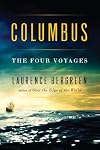
Fascinating take on the complex and frustratingly vainglorious explorer. Finding a New World, he chooses violence, theft, and slavery as standard protocol. We are probably all the poorer for it, now.
The malingering of his men, the gold-thirst of Columbus and the shocked reaction and unheeded advice of Bartolomé de las Casas along with the Colubmus family affair of his brothers and son all add to this telling of start of the Columbian Exchange, including Columbus's hyper-Christian fantasies show more such that the Earth was pear-shaped and he found the base of the nipple-stem that led to Heaven. show less
The malingering of his men, the gold-thirst of Columbus and the shocked reaction and unheeded advice of Bartolomé de las Casas along with the Colubmus family affair of his brothers and son all add to this telling of start of the Columbian Exchange, including Columbus's hyper-Christian fantasies show more such that the Earth was pear-shaped and he found the base of the nipple-stem that led to Heaven. show less
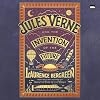
Some of my earliest movie memories were films based on Jules Verne novels, Around the World in 80 Days and Journey to the Center of the Earth. I was a science fiction fan in my preteen years, reading books I first encountered in the Classics Illustrated Comic Books, which had published many of Verne’s works.
Verne has inspired readers and writers, scientists and inventors. It is amazing to consider his fiction was informed by extensive reading in a public library, the Bibliotheque Nationale show more in Paris.
Verne memorized pages of Charles Dickens and Victor Hugo, and was a reader of Edgar Allan Poe, influencers in his writing. He found plots in his contemporary world. His buddy Nadar was enamored with hot air balloons. The world traveler William Perry Fogg inspired Around the World in 80 Days. Early, failed, submersibles inspired the Nautilus in 20,000 Leagues Under the Sea, while Captain Nemo was inspired by Herman Melville’s Ahab.
Verne lived in interesting times. He was friends with Alexander Dumas’s son. He lived through the Second Empire, the siege of Paris by Prussia, and the Paris Commune.
His editor Hertzel worked with Zola, Hugo, and Balzac, and had great influence in shaping Verne’s stories. But Verne held his ground against incorporating romance into this stories.
“Science has caught up with Verne’s fiction,” Bergreen writes. Verne imagined 20th c Paris with high-speed trains and subways, electric lighting, a form of Internet, and climate change resulting in deadly winters.
Bergreen includes pages of Verne’s work, showing both his writing skill and detailed scientific descriptions.
An entertaining and interesting biography highlighting Verne’s prophetic imagination.
Thanks to the publisher for a free book through NetGalley. show less
Verne has inspired readers and writers, scientists and inventors. It is amazing to consider his fiction was informed by extensive reading in a public library, the Bibliotheque Nationale show more in Paris.
Verne memorized pages of Charles Dickens and Victor Hugo, and was a reader of Edgar Allan Poe, influencers in his writing. He found plots in his contemporary world. His buddy Nadar was enamored with hot air balloons. The world traveler William Perry Fogg inspired Around the World in 80 Days. Early, failed, submersibles inspired the Nautilus in 20,000 Leagues Under the Sea, while Captain Nemo was inspired by Herman Melville’s Ahab.
Verne lived in interesting times. He was friends with Alexander Dumas’s son. He lived through the Second Empire, the siege of Paris by Prussia, and the Paris Commune.
His editor Hertzel worked with Zola, Hugo, and Balzac, and had great influence in shaping Verne’s stories. But Verne held his ground against incorporating romance into this stories.
“Science has caught up with Verne’s fiction,” Bergreen writes. Verne imagined 20th c Paris with high-speed trains and subways, electric lighting, a form of Internet, and climate change resulting in deadly winters.
Bergreen includes pages of Verne’s work, showing both his writing skill and detailed scientific descriptions.
An entertaining and interesting biography highlighting Verne’s prophetic imagination.
Thanks to the publisher for a free book through NetGalley. show less
In Search of a Kingdom: Francis Drake, Elizabeth I, and the Perilous Birth of the British Empire by Laurence Bergreen
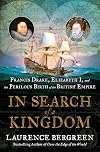
In Search of a Kingdom is a wonderfully insightful and fascinating read that offers a deep dive into the early European exploration and settlement in the Americas. The book provides a level of detail and historical depth I hadn’t encountered before, particularly regarding the British perspective on this era. The author brings to light the perilous birth of the British Empire, showing how figures like Sir Francis Drake were central to the early ambitions of England in the New World.
One of show more the most striking elements of the book is its graphic and brutal portrayal of the Spanish treatment of the native populations in the lands they explored. Through British logs, particularly those from Drake's ship, the Pelican (later known as the Golden Hinde), we gain a chilling view of the violence and exploitation carried out under the Spanish crown. Captain Drake's encounters with the Spanish provide a raw lens into how both sides viewed each other with hostility, and the brutalities inflicted on indigenous peoples are not shied away from.
However, it’s important to remember that while the Spanish are depicted as brutal, the British were by no means saints. As the book demonstrates, both sides tended to portray each other in the worst possible light, a pattern that still resonates today in how nations craft their narratives of history. The writing from both English and Spanish sources often served political agendas, creating a skewed portrayal of the enemy. This was a time of ruthless conquest, and neither empire can claim moral superiority.
What really stuck with me, though, was the vivid account of Francisco Vázquez de Coronado's famous journey through the American Southwest. Coronado, leading a Spanish expedition in 1540, was one of the first Europeans to encounter the Grand Canyon. His men, not fully understanding the vastness of the terrain, mistook the canyon for a much smaller and manageable feature. This moment serves as a reminder of how early explorers often misjudged the size and scale of the landscapes they were encountering. The book highlights this miscalculation alongside other moments of discovery and misunderstanding, adding layers of depth to the European exploration narrative in the Americas.
In conclusion, In Search of a Kingdom is a fascinating, at times disturbing, but undeniably enlightening look into the early age of European exploration in the Americas. The exploration of both the British and Spanish expeditions, along with their interactions with native populations, presents a complex picture of conquest, survival, and ambition. It’s a compelling read for anyone interested in early American history, the birth of the British Empire, or the brutal realities of colonization. show less
One of show more the most striking elements of the book is its graphic and brutal portrayal of the Spanish treatment of the native populations in the lands they explored. Through British logs, particularly those from Drake's ship, the Pelican (later known as the Golden Hinde), we gain a chilling view of the violence and exploitation carried out under the Spanish crown. Captain Drake's encounters with the Spanish provide a raw lens into how both sides viewed each other with hostility, and the brutalities inflicted on indigenous peoples are not shied away from.
However, it’s important to remember that while the Spanish are depicted as brutal, the British were by no means saints. As the book demonstrates, both sides tended to portray each other in the worst possible light, a pattern that still resonates today in how nations craft their narratives of history. The writing from both English and Spanish sources often served political agendas, creating a skewed portrayal of the enemy. This was a time of ruthless conquest, and neither empire can claim moral superiority.
What really stuck with me, though, was the vivid account of Francisco Vázquez de Coronado's famous journey through the American Southwest. Coronado, leading a Spanish expedition in 1540, was one of the first Europeans to encounter the Grand Canyon. His men, not fully understanding the vastness of the terrain, mistook the canyon for a much smaller and manageable feature. This moment serves as a reminder of how early explorers often misjudged the size and scale of the landscapes they were encountering. The book highlights this miscalculation alongside other moments of discovery and misunderstanding, adding layers of depth to the European exploration narrative in the Americas.
In conclusion, In Search of a Kingdom is a fascinating, at times disturbing, but undeniably enlightening look into the early age of European exploration in the Americas. The exploration of both the British and Spanish expeditions, along with their interactions with native populations, presents a complex picture of conquest, survival, and ambition. It’s a compelling read for anyone interested in early American history, the birth of the British Empire, or the brutal realities of colonization. show less
Lists
Awards


You May Also Like


Associated Authors
Statistics
- Works
- 14
- Also by
- 1
- Members
- 4,970
- Popularity
- #5,040
- Rating
- 3.9
- Reviews
- 98
- ISBNs
- 124
- Languages
- 15
- Favorited
- 2
