
N. A. M. Rodger
Author of The Command of the Ocean: A Naval History of Britain, 1649-1815
About the Author
N. A. M. Rodger is professor of naval history at Exeter University and a fellow of the British Academy; he was formerly Anderson Senior Research Fellow at the National Maritime Museum.
Image credit: Susan Rodger
Series
Works by N. A. M. Rodger
Associated Works
The Oxford History of the British Empire, Volume 1 : The Origins of Empire: British Overseas Enterprise to the Close of the Seventeenth Century (1998) — Contributor — 287 copies, 1 review
The Royal Navy in Eastern Waters: Linchpin of Victory 1935-1942 (2017) — Foreword — 35 copies, 1 review
Tagged
Common Knowledge
- Canonical name
- Rodger, N. A. M.
- Legal name
- Rodger, Nicholas Andrew Martin
- Birthdate
- 1949-11-12
- Gender
- male
- Education
- University of Oxford (University College)
Ampleforth College (UK) - Occupations
- professor (Naval History, University of Exeter, England)
- Organizations
- Royal Historical Society
British Academy (Fellow) - Awards and honors
- Julian Corbett Prize for Naval History (1982)
- Nationality
- UK
- Associated Place (for map)
- UK
Members
Discussions
Folio Archives 380: The Wooden World by N.A.M.Rodger 2009 in Folio Society Devotees (July 8)
N.A.M. Rodger - Command of the Ocean vol 3 (1815-1945) in Naval History and Fiction (January 2017)
Reviews

A classic piece of social history, and required reading for all fans of naval fiction. Rodger goes a long way beyond our preconceptions about "rum, sodomy and the lash" to explain how the 18th century British navy - in effect the largest and most complex industrial organisation of its time - actually functioned. What controlled relations between officers and men? Why didn't sailors desert at the first opportunity? How did an organisation that relied on professional competence operate in an show more age of patronage and influence? How did the Admiralty make sure that sailors were fed and paid? What did a bo'sun actually do? show less

The first two volumes of N A M Rodger's magisterial Naval History of Britain were published in 1997 and 2004. In his foreword, Nicholas Rodger explains that his serious ill-health was part of the reason for the long delay before part three of his trilogy was published. Those of us with an interest in the history of the Royal Navy can be grateful that Professor Rodger has survived and that we might benefit from reading this splendid 934-page book.
And what a book it is. One can understand the show more breadth of Rodger's knowledge and understanding of the UK's Senior Service when the index contains words such as airship, alcohol, artificer, barbers, barracks, bell-bottoms, boys, breech-loading guns, buttercup, canteens, carpenters, chaplains, coal, cofferdam, concert parties, cooks, copper, corruption, coxswain, dead-reckoning plotter, dhobey firms, discipline, ditty box, duff, engine room, fish-head, flogging, gambling, In Which We Serve, Alphonso Jago, ships' libraries, marriage allowance, mechanic, Nicholas Monsarrat, naval science, purser, refuelling, tiddly and venereal disease. The bibliography alone is 71 pages long!
The appendices include a Chronology of important events affecting the Royal Navy from 1815 to 1945 and, for completeness, from 1946 to 2024; a brief summary of naval strength during the 130 years this history covers (72 battleships and 122 cruisers in 1915!); fleets in key years of the 19th Century; key appointments - a list of First Lords, First Naval Lords and, from 1904, First Sea Lords; a graph showing manpower - seamen and marines (78,891 in 1815 + 406.977 at the height of the First World War + 781,000 by the end of the Second World War + some 70,000 in 1982 + 30,000 in 2025).
The text is about two-thirds of the pages. Some 15 excellent maps, 64 black and white illustrations and an English Glossary and a Foreign Glossary, as well as notes on tonnage, all serve to complete this superb book. A salute to N A M Rodger!
I know it's impossible to mention everything, even in such a large and comprehensive tome as this, but there are surprising omissions, No reference to War Memorials (such as those in the depots - Chatham, Devonport and Portsmouth) and no mention of the Royal Naval Division, deployed to Antwerp in 1914, to Gallipoli in 1915 and to the Western Front in 1916 as the 63rd (Royal Naval) Division. No mention of the only-ever action between Armed Merchant Cruisers, in 1914, between HMS Carmania and SMS Cap Trafalgar or the loss of RMS Lancastria in 1940 during Operation Aerial. No mention of the Band of HM Royal Marines or of British poets and writers who were inspired by the men and exploits of the Senior Service and, surprisingly, no mention of the NAAFI or Naval Canteen Service.
I would like to have seen mention of the start of awarding battle honours and the popularity of books about the Navy in the first half of the 20th Century as well as mention of Navy Weeks and Navy Days, visits by the public to ships, and the using of warships for diplomatic purposes ('flying the flag' - ship visits, cocktail parties and so on) and for humanitarian aid and disaster relief and also on the loss of ships in peacetime, such as the loss of HMS Valerian in a hurricane in 1926. Perhaps mention, too, of famous members of the Royal Navy and Royal Marines - royalty and others.
No mention of the White Ensign in the index (or Blue Ensign and so on) - that is a surprise. Is there mention of ships' bells, the RN Service Certificate for naval ratings, medals for campaigns, for valour and for long service? The Victoria Cross is mentioned. show less
And what a book it is. One can understand the show more breadth of Rodger's knowledge and understanding of the UK's Senior Service when the index contains words such as airship, alcohol, artificer, barbers, barracks, bell-bottoms, boys, breech-loading guns, buttercup, canteens, carpenters, chaplains, coal, cofferdam, concert parties, cooks, copper, corruption, coxswain, dead-reckoning plotter, dhobey firms, discipline, ditty box, duff, engine room, fish-head, flogging, gambling, In Which We Serve, Alphonso Jago, ships' libraries, marriage allowance, mechanic, Nicholas Monsarrat, naval science, purser, refuelling, tiddly and venereal disease. The bibliography alone is 71 pages long!
The appendices include a Chronology of important events affecting the Royal Navy from 1815 to 1945 and, for completeness, from 1946 to 2024; a brief summary of naval strength during the 130 years this history covers (72 battleships and 122 cruisers in 1915!); fleets in key years of the 19th Century; key appointments - a list of First Lords, First Naval Lords and, from 1904, First Sea Lords; a graph showing manpower - seamen and marines (78,891 in 1815 + 406.977 at the height of the First World War + 781,000 by the end of the Second World War + some 70,000 in 1982 + 30,000 in 2025).
The text is about two-thirds of the pages. Some 15 excellent maps, 64 black and white illustrations and an English Glossary and a Foreign Glossary, as well as notes on tonnage, all serve to complete this superb book. A salute to N A M Rodger!
I know it's impossible to mention everything, even in such a large and comprehensive tome as this, but there are surprising omissions, No reference to War Memorials (such as those in the depots - Chatham, Devonport and Portsmouth) and no mention of the Royal Naval Division, deployed to Antwerp in 1914, to Gallipoli in 1915 and to the Western Front in 1916 as the 63rd (Royal Naval) Division. No mention of the only-ever action between Armed Merchant Cruisers, in 1914, between HMS Carmania and SMS Cap Trafalgar or the loss of RMS Lancastria in 1940 during Operation Aerial. No mention of the Band of HM Royal Marines or of British poets and writers who were inspired by the men and exploits of the Senior Service and, surprisingly, no mention of the NAAFI or Naval Canteen Service.
I would like to have seen mention of the start of awarding battle honours and the popularity of books about the Navy in the first half of the 20th Century as well as mention of Navy Weeks and Navy Days, visits by the public to ships, and the using of warships for diplomatic purposes ('flying the flag' - ship visits, cocktail parties and so on) and for humanitarian aid and disaster relief and also on the loss of ships in peacetime, such as the loss of HMS Valerian in a hurricane in 1926. Perhaps mention, too, of famous members of the Royal Navy and Royal Marines - royalty and others.
No mention of the White Ensign in the index (or Blue Ensign and so on) - that is a surprise. Is there mention of ships' bells, the RN Service Certificate for naval ratings, medals for campaigns, for valour and for long service? The Victoria Cross is mentioned. show less
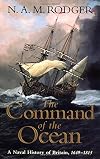
The alternative title for this work could be "The Impact of Politics and Social Change on the Royal Navy," as Rodger argues that without the need to secure religious liberty and Parliment's ultimate adoption of the fleet it is unlikely that the will would have been found to develop the service most symbolic of Britain, with additional profound results for the building of the British state and the evolution of British society. Which is to say that Protectorate and Restoration England, as show more authoritarian polities, were not unusual in creating efficient naval power on the fly, but it would seem to take a society-wide commitment to sustain such naval power. This you can learn from reading the conclusions, the rest of the work is a exhaustively detailed examination of the contingincies encountered on the way to the zenith of British naval power. show less
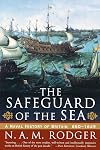
While I'm really not qualified to judge the historical content--that's why I read this book, after all--Rodger is more transparent than many authors as he weighs the available sources, deciding what evidence is actually useful. I find this fascinating and, ultimately, convincing.
The book's organized in several parallel tracks--operations, shipbuilding practice, administration, and context--in ways that some will find annoying but others will find useful. The author's also handicapped by the show more early source material, which inhibits both detailed discussion and analysis. He really comes into his own only around the middle of the book.
Overall: Well-written, admirably researched, and interesting. An excellent source. show less
The book's organized in several parallel tracks--operations, shipbuilding practice, administration, and context--in ways that some will find annoying but others will find useful. The author's also handicapped by the show more early source material, which inhibits both detailed discussion and analysis. He really comes into his own only around the middle of the book.
Overall: Well-written, admirably researched, and interesting. An excellent source. show less
Lists
Awards


You May Also Like


Associated Authors
Statistics
- Works
- 14
- Also by
- 9
- Members
- 1,764
- Popularity
- #14,590
- Rating
- 4.2
- Reviews
- 14
- ISBNs
- 39
- Favorited
- 9