
Robert K. Massie (1929–2019)
Author of Nicholas and Alexandra: An Intimate Account of the Last of the Romanovs and the Fall of Imperial Russia
About the Author
Robert Kinloch Massie III (1929-) is an American historian, author, Pulitzer Prize recipient. He has devoted much of his career to studying the House of Romanov, Russia's royal family from 1613-1917. Massie was born in Lexington, Kentucky. He spent much of his youth in Nashville, Tennessee and show more currently resides in the village of Irvington, New York. He studied United States and modern European history at Yale and Oxford University, respectively, on a Rhodes Scholarship. Massie went to work as a journalist for Newsweek from 1959 to 1962 and then took a position at the Saturday Evening Post. In 1969 he wrote and published his breakthrough book, Nicholas and Alexandra. Massie was the president of the Authors Guild from 1987 to 1991, and he still serves as a council member. While president of the Guild, he famously called on authors to boycott any store refusing to carry Salman Rushdie's The Satanic Verses. His title Catherine the Great: Portrait of a Woman made The New York Times Best Seller List for 2012. (Bowker Author Biography) show less
Series
Works by Robert K. Massie
Nicholas and Alexandra: An Intimate Account of the Last of the Romanovs and the Fall of Imperial Russia (1967) 3,774 copies, 55 reviews
Castles of Steel: Britain, Germany, and the Winning of the Great War at Sea (2003) 1,095 copies, 18 reviews
The Romanovs: 1613-1918 40 copies
Castles of Steel: Britain, Germany, and the Winning of the Great War at Sea: Book 2 (2015) — Author — 1 copy
Associated Works
Booknotes: America's Finest Authors on Reading, Writing, and the Power of Ideas (1997) — Contributor — 458 copies, 5 reviews
Reader's Digest Condensed Books 1967 v04: Christy / Life with Father / The Fox and the Hound / Nicholas and Alexandra / The Gabriel Hounds (1967) — Author — 47 copies
Reader's Digest Best Sellers 1969: Airport | Nicholas and Alexandra | The Kitchen Madonna | Vanished (1969) — Author — 20 copies
Tagged
Common Knowledge
- Canonical name
- Massie, Robert K.
- Legal name
- Massie III, Robert Kinloch
- Birthdate
- 1929-01-05
- Date of death
- 2019-12-02
- Gender
- male
- Education
- Yale University (BA|1950)
University of Oxford (BA|1952) - Occupations
- journalist
historian - Organizations
- Saturday Evening Post
Newsweek
Collier's
Authors Guild
United States Navy - Awards and honors
- Pulitzer Prize for Biography (1981)
Andrew Carnegie Medal for Excellence in Nonfiction (2012)
PEN/Jacqueline Bograd Weld Award for Biography (2012)
Golden Plate Award of the American Academy of Achievement (1983)
Christopher Award (1976)
Rhodes Scholar - Cause of death
- complications of Alzheimer's disease
- Nationality
- USA
- Birthplace
- Versailles, Kentucky, USA
- Places of residence
- Irvington, New York, USA
- Place of death
- Irvington, New York, USA
- Map Location
- New York, USA
Members
Reviews
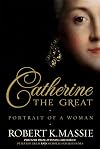
I am a sucker for stories steeped in history, memoirs, and powerful women.
"Catherine the Great" is the enthralling story of a German princess who, at the age of 14, ventured to Russia and eventually became one of history's most powerful women. Catherine, born into modest German nobility, demonstrated unwavering determination and a sharp intellect. She immersed herself in the works of Enlightenment philosophers and attempted to govern the vast and backward Russian empire on their principles show more after ascending to the throne. Voltaire, Diderot, Frederick the Great, Maria Theresa of Austria, Marie Antoinette, and John Paul Jones were among her acquaintances.
Catherine struggled with the deep-seated realities of Russian life, including the institution of serfdom, as she aspired to be the "benevolent despot" idealized by Montesquieu. During her remarkable 34-year reign, she assumed control of the government, foreign policy, cultural development, and the Russian people's well-being. She had to deal with domestic uprisings, wars, and the tumultuous political changes brought about by the French Revolution. Her reputation varied greatly depending on the speaker's point of view. While Voltaire praised her as akin to classical philosophers, her foreign opponents dubbed her "the Messalina of the north."
This story depicts Catherine's family, friends, ministers, generals, lovers, and enemies. It introduces her ambitious and cunning mother, her domineering but neglectful husband Peter, her unhappy son and heir Paul, her adored grandchildren, and her favorites—young men who provided her with companionship, the opportunity to relive her youth, and intimacy. The book also delves into her significant lover and potential husband, Gregory Potemkin, with whom she had a passionate correspondence followed by 17 years of extraordinary mutual achievements.
Robert K. Massie, the author, exhibits the same qualities that distinguished his previous works, such as "Nicholas & Alexandra" and "Peter the Great." Historical precision, a profound understanding of the subject, eloquent writing, mastery of detail, the ability to dispel myths, and a talent for revealing the human drama within historical events are among these qualities.
An endearing biography of one of Russia's greatest rulers. show less
"Catherine the Great" is the enthralling story of a German princess who, at the age of 14, ventured to Russia and eventually became one of history's most powerful women. Catherine, born into modest German nobility, demonstrated unwavering determination and a sharp intellect. She immersed herself in the works of Enlightenment philosophers and attempted to govern the vast and backward Russian empire on their principles show more after ascending to the throne. Voltaire, Diderot, Frederick the Great, Maria Theresa of Austria, Marie Antoinette, and John Paul Jones were among her acquaintances.
Catherine struggled with the deep-seated realities of Russian life, including the institution of serfdom, as she aspired to be the "benevolent despot" idealized by Montesquieu. During her remarkable 34-year reign, she assumed control of the government, foreign policy, cultural development, and the Russian people's well-being. She had to deal with domestic uprisings, wars, and the tumultuous political changes brought about by the French Revolution. Her reputation varied greatly depending on the speaker's point of view. While Voltaire praised her as akin to classical philosophers, her foreign opponents dubbed her "the Messalina of the north."
This story depicts Catherine's family, friends, ministers, generals, lovers, and enemies. It introduces her ambitious and cunning mother, her domineering but neglectful husband Peter, her unhappy son and heir Paul, her adored grandchildren, and her favorites—young men who provided her with companionship, the opportunity to relive her youth, and intimacy. The book also delves into her significant lover and potential husband, Gregory Potemkin, with whom she had a passionate correspondence followed by 17 years of extraordinary mutual achievements.
Robert K. Massie, the author, exhibits the same qualities that distinguished his previous works, such as "Nicholas & Alexandra" and "Peter the Great." Historical precision, a profound understanding of the subject, eloquent writing, mastery of detail, the ability to dispel myths, and a talent for revealing the human drama within historical events are among these qualities.
An endearing biography of one of Russia's greatest rulers. show less

Good history books are written by two types of authors - historians, that can be forgiven for some weird word choices because of their knowledge and the fact that they can connect the dots between the events, and good authors that know how to tell a story. Massie is from the second type -- he has a historical education but he is an author more than a historian. And this book shows it.
The story of Catherine the Great is one of the most fascinating stories of the 18th century. And when Massie show more decided to tackle this story he started from the beginning - from her parents and where she was coming from (which reminded me again just how many German princes had been around in the 18th and 19th century... and how interconnected the European royal families are). The first half of the book, the years before Catherine became an empress are smoothly told - with a bit too many details in a lot of places but then this is why new biographies are written for the most popular historical figures. The narrative get a bit repetitive in places (for some reason Massie decides to repeat what he had said a few pages earlier -- maybe afraid that people had forgotten already) but once you get in the flow of the story, all these can be almost forgotten.
And then Catherine becomes the empress. And the book takes a dive down. The previously linear biography now start jumping through times and places and then returning; while in the pre-throne days it was easy to follow what is going up at a certain point of time, in the days of her reign, the reader has to collect pieces and bits from the whole second half of the book in order to figure out what happens at a specific time. For example, while discussing the second Russo-Turkish war (the second one that Catherine yields anyway), the Baltic war and the French Revolution are not mentioned at all. Then a chapter or 2 later, one of the topics comes up. Then the second. Then Massie reminds us what else is happening and he already talked about. And then adds a new fact and reminds of the old ones. He tries to build this part of the book based on topics (wars, favorites and so on) but they are inseparable - and when he tries to reconcile this with the new structure of the books, Massie ends up with a somewhat disorganized mess on his hands.
Despite that, the book is highly readable - although I am not sure how many of the subtle connections will become clear to someone that does not know the history already. One thing that Massie does masterfully is to weave into his narrative seemingly unrelated stories - the French Revolution, the story of Diderot and Voltaire... Some of the details probably could have been spared but these stories do not break the book narrative (probably because it is already disjointed at this point). At the same time, some gaps are hard to be explained - we know that Catherine had 3 children but we hear nothing of Alexis and Anna once they are born. Paul is in the narrative only because he is the heir and because she needs him.
At one point, Massie claims that Catherine's story could have been a lot more like Elisabeth's (the Tudor queen of 2 centuries earlier) if things had started differently for her. I tend to disagree here - the story is so parallel that it takes your breath. Yes - they live on both sides of the continent and 2 centuries apart; Catherine has a lot of lovers while the English queen remain virgin officially (but in the way they select their favorites, the similarities shine again) but their lives and reigns are similar. Maybe this is what it takes to be a female monarch in the centuries when women were considered second rate people.
So did I like the book? The truth is that I actually quite enjoyed it. I wish some things were handled differently -- but it is the author decision to structure his book like this and at the end of the day it works... for the most part. show less
The story of Catherine the Great is one of the most fascinating stories of the 18th century. And when Massie show more decided to tackle this story he started from the beginning - from her parents and where she was coming from (which reminded me again just how many German princes had been around in the 18th and 19th century... and how interconnected the European royal families are). The first half of the book, the years before Catherine became an empress are smoothly told - with a bit too many details in a lot of places but then this is why new biographies are written for the most popular historical figures. The narrative get a bit repetitive in places (for some reason Massie decides to repeat what he had said a few pages earlier -- maybe afraid that people had forgotten already) but once you get in the flow of the story, all these can be almost forgotten.
And then Catherine becomes the empress. And the book takes a dive down. The previously linear biography now start jumping through times and places and then returning; while in the pre-throne days it was easy to follow what is going up at a certain point of time, in the days of her reign, the reader has to collect pieces and bits from the whole second half of the book in order to figure out what happens at a specific time. For example, while discussing the second Russo-Turkish war (the second one that Catherine yields anyway), the Baltic war and the French Revolution are not mentioned at all. Then a chapter or 2 later, one of the topics comes up. Then the second. Then Massie reminds us what else is happening and he already talked about. And then adds a new fact and reminds of the old ones. He tries to build this part of the book based on topics (wars, favorites and so on) but they are inseparable - and when he tries to reconcile this with the new structure of the books, Massie ends up with a somewhat disorganized mess on his hands.
Despite that, the book is highly readable - although I am not sure how many of the subtle connections will become clear to someone that does not know the history already. One thing that Massie does masterfully is to weave into his narrative seemingly unrelated stories - the French Revolution, the story of Diderot and Voltaire... Some of the details probably could have been spared but these stories do not break the book narrative (probably because it is already disjointed at this point). At the same time, some gaps are hard to be explained - we know that Catherine had 3 children but we hear nothing of Alexis and Anna once they are born. Paul is in the narrative only because he is the heir and because she needs him.
At one point, Massie claims that Catherine's story could have been a lot more like Elisabeth's (the Tudor queen of 2 centuries earlier) if things had started differently for her. I tend to disagree here - the story is so parallel that it takes your breath. Yes - they live on both sides of the continent and 2 centuries apart; Catherine has a lot of lovers while the English queen remain virgin officially (but in the way they select their favorites, the similarities shine again) but their lives and reigns are similar. Maybe this is what it takes to be a female monarch in the centuries when women were considered second rate people.
So did I like the book? The truth is that I actually quite enjoyed it. I wish some things were handled differently -- but it is the author decision to structure his book like this and at the end of the day it works... for the most part. show less
Robert Massie's written yet another winner with Catherine the Great: Portrait of a Woman (Random House, 2011) a thorough but lively account of the empress' long life and career.
Massie's prodigious knowledge of Russian history serves him well here, but it's his ability to tell a good story that makes this book. He's able to blend healthy doses of diplomatic and military history with the larger-than-life personal tale of a powerful woman who rises to rule one of the largest countries on show more earth.
The most interesting sections for me were those concerning the bloodless coup that brought Catherine to power, her long-running correspondence with various Enlightenment figures, like Diderot and d'Alembert, and the fascinating samples from her correspondence and memoirs.
Clocking in at almost 600 pages this is, like most of Massie's previous works, not an insubstantial read. But he's paced it well, and I had a difficult time putting it down once I got started. With the minor criticism that the last few chapters felt a bit too rushed, this is by any measure a very well done biography.
http://philobiblos.blogspot.com/2011/10/book-review-catherine-great.html show less
Massie's prodigious knowledge of Russian history serves him well here, but it's his ability to tell a good story that makes this book. He's able to blend healthy doses of diplomatic and military history with the larger-than-life personal tale of a powerful woman who rises to rule one of the largest countries on show more earth.
The most interesting sections for me were those concerning the bloodless coup that brought Catherine to power, her long-running correspondence with various Enlightenment figures, like Diderot and d'Alembert, and the fascinating samples from her correspondence and memoirs.
Clocking in at almost 600 pages this is, like most of Massie's previous works, not an insubstantial read. But he's paced it well, and I had a difficult time putting it down once I got started. With the minor criticism that the last few chapters felt a bit too rushed, this is by any measure a very well done biography.
http://philobiblos.blogspot.com/2011/10/book-review-catherine-great.html show less
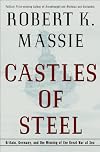
Scrupulous, comprehensive history of the Great War told through the lens of naval history. It comes to the conclusion that it was the naval blockade which strangled Germany, completely preventing it from importing anything and starving the German people into submission. However, German unrestricted U-boat warfare almost did the same thing to Great Britain, before the sinking of American ships finally obliged the neutral USA to come into the war, in the end putting more than a million men show more into the war in France and extinguishing hope for Germany.
The book comes down strongly on the side of Admiral John Jellicoe, Admiral of the Fleet, and responsible for the English navy at sea for most of the war. His successor, Admiral David Beatty does not come out so well, much less disciplined, less successful in fleet actions and a shameless self promoter. Winston Churchill, First Lord of the Admiralty for the first years of the war, also received a very mixed opinion, often micromanaging naval matters he didn’t have knowledge or experience of, and largely responsible for the fiasco in Gallipoli. show less
The book comes down strongly on the side of Admiral John Jellicoe, Admiral of the Fleet, and responsible for the English navy at sea for most of the war. His successor, Admiral David Beatty does not come out so well, much less disciplined, less successful in fleet actions and a shameless self promoter. Winston Churchill, First Lord of the Admiralty for the first years of the war, also received a very mixed opinion, often micromanaging naval matters he didn’t have knowledge or experience of, and largely responsible for the fiasco in Gallipoli. show less
Lists
Awards


You May Also Like
Associated Authors
Statistics
- Works
- 18
- Also by
- 10
- Members
- 14,985
- Popularity
- #1,529
- Rating
- 4.2
- Reviews
- 317
- ISBNs
- 182
- Languages
- 13
- Favorited
- 33


