
Roland Huntford (1927–2026)
Author of The Last Place on Earth
About the Author
Roland Huntford is the world's foremost authority on the polar expeditions and their protagonists. The biographer of Shackleton and Nansen, his other books include Scott and Amundsen: The Last Place on Earth. He was the Scandinavian correspondent on The Observer for many years.
Works by Roland Huntford
The Shackleton Voyages: A Pictorial Anthology of the Polar Explorer and Edwardian Hero (2002) — Introduction — 63 copies
Associated Works
Tagged
Common Knowledge
- Canonical name
- Huntford, Roland
- Other names
- Horwitch, Roland (birth name)
- Birthdate
- 1927-09-04
- Date of death
- 2026-01-23
- Gender
- male
- Nationality
- UK
- Birthplace
- Cape Town, South Africa
- Places of residence
- Cambridge, England, UK
- Associated Place (for map)
- Cambridge, England, UK
Members
Reviews
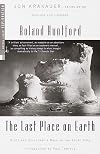
Csúcskategóriás párhuzamos életrajz, ami a felfedezések történetének talán legdrámaibb végkifejletébe torkollik. Amundsen és Scott sarkvidéki küzdelmeit Huntford képes úgy tálalni, hogy még a júniusi hőségben is megcsap tőle az Antarktisz jéghideg szele. Igazi mítosztalanító szöveg: lépésről lépésre bontja le a Scott köré épített hőskultuszt, míg végül szerencsétlen angol ott áll előttünk csupaszon. Közben pedig – természetesen – show more visszahelyezi jogaiba a méltatlanul hanyagolt Amundsent. Van ugye az a mondás, hogy halottról jót, vagy semmit – nos, Scott talán ennek is köszönheti, hogy heroikus pusztulása a jégmezőn igazi brit nemzeti szimbólumot csinált belőle, és senki sem firtatta, hogy ha annyira jó felfedező volt, akkor ugyan miért is előzte meg őt végül norvég vetélytársa. Huntford viszont úgy van vele, hogy azóta a felek kábé egyformán halottak, úgyhogy ideje tiszta vizet önteni a pohárba.
Erről a könyvről az előttem értékelők szinte minden érdemlegeset elmondtak, magam csak azt emelném ki, ami engem megragadott: hogy ez a könyv legalább annyira vezetéselméleti kézikönyv, mint amennyire felfedező-életrajz. Amundsen bemutatásakor feltűnő, hogy Huntford milyen lelkesedéssel formálja meg a „jó vezető” szobrát: a demokratikus, nyitott és innovatív irányítóért, aki felelősnek érzi magát az embereiért, szorgalmasan tanulmányozza elődei és a saját hibáit, lelkiismeretesen átgondolja újra és újra az előtte álló lehetőségeket, és erőn felül törekszik a veszély minimalizálására. Tökéletesen ismeri a sarkvidéket, öltözködésre, táplálkozásra, szállítóeszközökre rigorózus figyelmet fordít, ellátmányát nagy biztonsági ráhagyással állítja össze – ha nem is hibátlan vezető, de mindenképpen arra törekszik, hogy az legyen. Számára a sarkvidéki út nem kaland, hanem feladat, amit zökkenőmentesen (és a szükségesnél nagyobb áldozatok nélkül) kell megoldani.
Ezzel szemben Scott jellemének felrajzolásakor az író már-már kényszeresen szedi össze mindazon rossztulajdonságokat, amikkel az Isten megverhet egy irányítót. Labilis személyiség, aki informális tekintélyének hiányát merev, formális szabályok mögé rejti. Szinte tükörképe a brit birodalmi mentalitásnak: annak, hogy mi angolok vagyunk a föld krémje, mi úgyis megoldunk minden felmerülő problémát, elég rögtönöznünk a válságos pillanatokban. Nem hajlandó tanulni senkitől, felületesen vizsgálja meg a problémákat, arra számít, hogy úgyis szerencséje lesz – és ha nem lesz, hát panaszkodik a sorsra. Huntford dühe helyenként tapintható, hisz kimondva-kimondatlanul gyilkossággal vádolja Scott-ot, aki nem pusztán önmagát, de társait is felelőtlenül halálba vitte. Leginkább pedig az a mentalitás piszkálja a csőrét, hogy az angolnak szemmel láthatóan fontosabb volt az, hogy tetteit a hősiesség mázával vonja be, mint hogy szakszerűen végrehajtson egy feladatot. Sőt: erre még büszke is volt.
Amúgy meg Scott többet kapott, mint szimpla hősiességet: mártír lett belőle, és ezzel aratott posztumusz diadalt szegény Amundsenen. Visszaemlékezései az önigazolás mesterművei, és mellesleg lángoló, kalandoktól hemzsegő*, irodalmilag is izgalmas szövegek – ellentétben a norvég irományaival, amik száraz és szerény művek. Azt sugallják, hogy a sarkot meghódítani nem volt nagy ügy mondjuk ahhoz képest, hogy milyen agybaj Budakesziről hétköznap reggel nyolckor bejutni a Moszkváig. Ugyan miért is érdekelné ez az olvasókat? Ám szerencsére itt van nekünk Huntford, aki közbeveti magát, ha kell, és helyre teszi a dolgokat. Úgyhogy: gia, gia, Norvégia. Hajrá Amundsen!
(Megj.: azért a kutyák lelövéséért haragudtam. De hát nyilván nem lenne ilyen nagy a pofám, ha én kínlódtam volna ott az Antarktiszon.)
* „A kaland – mint Vilhjalmur Stefansson amerikai felfedező szokta mondogatni – csupán a hozzá nem értés jele.” show less
Erről a könyvről az előttem értékelők szinte minden érdemlegeset elmondtak, magam csak azt emelném ki, ami engem megragadott: hogy ez a könyv legalább annyira vezetéselméleti kézikönyv, mint amennyire felfedező-életrajz. Amundsen bemutatásakor feltűnő, hogy Huntford milyen lelkesedéssel formálja meg a „jó vezető” szobrát: a demokratikus, nyitott és innovatív irányítóért, aki felelősnek érzi magát az embereiért, szorgalmasan tanulmányozza elődei és a saját hibáit, lelkiismeretesen átgondolja újra és újra az előtte álló lehetőségeket, és erőn felül törekszik a veszély minimalizálására. Tökéletesen ismeri a sarkvidéket, öltözködésre, táplálkozásra, szállítóeszközökre rigorózus figyelmet fordít, ellátmányát nagy biztonsági ráhagyással állítja össze – ha nem is hibátlan vezető, de mindenképpen arra törekszik, hogy az legyen. Számára a sarkvidéki út nem kaland, hanem feladat, amit zökkenőmentesen (és a szükségesnél nagyobb áldozatok nélkül) kell megoldani.
Ezzel szemben Scott jellemének felrajzolásakor az író már-már kényszeresen szedi össze mindazon rossztulajdonságokat, amikkel az Isten megverhet egy irányítót. Labilis személyiség, aki informális tekintélyének hiányát merev, formális szabályok mögé rejti. Szinte tükörképe a brit birodalmi mentalitásnak: annak, hogy mi angolok vagyunk a föld krémje, mi úgyis megoldunk minden felmerülő problémát, elég rögtönöznünk a válságos pillanatokban. Nem hajlandó tanulni senkitől, felületesen vizsgálja meg a problémákat, arra számít, hogy úgyis szerencséje lesz – és ha nem lesz, hát panaszkodik a sorsra. Huntford dühe helyenként tapintható, hisz kimondva-kimondatlanul gyilkossággal vádolja Scott-ot, aki nem pusztán önmagát, de társait is felelőtlenül halálba vitte. Leginkább pedig az a mentalitás piszkálja a csőrét, hogy az angolnak szemmel láthatóan fontosabb volt az, hogy tetteit a hősiesség mázával vonja be, mint hogy szakszerűen végrehajtson egy feladatot. Sőt: erre még büszke is volt.
Amúgy meg Scott többet kapott, mint szimpla hősiességet: mártír lett belőle, és ezzel aratott posztumusz diadalt szegény Amundsenen. Visszaemlékezései az önigazolás mesterművei, és mellesleg lángoló, kalandoktól hemzsegő*, irodalmilag is izgalmas szövegek – ellentétben a norvég irományaival, amik száraz és szerény művek. Azt sugallják, hogy a sarkot meghódítani nem volt nagy ügy mondjuk ahhoz képest, hogy milyen agybaj Budakesziről hétköznap reggel nyolckor bejutni a Moszkváig. Ugyan miért is érdekelné ez az olvasókat? Ám szerencsére itt van nekünk Huntford, aki közbeveti magát, ha kell, és helyre teszi a dolgokat. Úgyhogy: gia, gia, Norvégia. Hajrá Amundsen!
(Megj.: azért a kutyák lelövéséért haragudtam. De hát nyilván nem lenne ilyen nagy a pofám, ha én kínlódtam volna ott az Antarktiszon.)
* „A kaland – mint Vilhjalmur Stefansson amerikai felfedező szokta mondogatni – csupán a hozzá nem értés jele.” show less
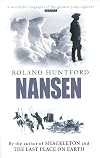
I picked this biography up in the Fram Museum in Oslo, Norway. I knew quite a bit already about Roald Amundsen, who was first to the South Pole, and had read and loved [[Roland Huntford]]'s account of Amundsen's race to the South Pole. Nansen is a fascinating person, who did much more than explore the North polar region, and I really enjoyed this biography.
Nansen had a varied life. His career was actually as a scientist, and he began his research on sea creatures, discovering some of the show more first insights into the neuron system in the 1880s. While doing this research in Bergen, he honed his interest in skiing, which was just taking off in Norway. He was one of the first to ski across Norway and really helped to popularize skiing (both cross country and downhill) in Norway. His love of adventure and exploration led him to take a break from his scientific endeavors to set up a voyage to Greenland. He ended up being the first to ski across the interior of Greenland, and he proved that travel on skis and with sled dogs was the key to polar travel.
His next endeavor was an attempt to get to the North Pole. He sailed on the Fram, a boat specially developed to withstand the crushing polar ice. Though Nansen did not reach the North Pole, he got the farthest north of any recorded attempt, and everyone got back safely, including the Fram. The Fram had dropped off Nansen and one other man, Johansen, to travel to the North Pole while the Fram used a suspected current to drift them through the ice back to open water and to Norway.
After these adventures, it took Nansen a while to find a new path. He was already married, but the marriage was never easy. Nansen continued to travel, giving lectures about his explorations. He also returned to his scientific studies, focusing on ocean currents. His popularity led him to become a statesman. Norway was under Swedish rule and Nansen was pivotal in the peaceful separation of the countries. He also was pivotal in convincing Prince Edward of Denmark to accept the Norwegian throne (he changed his name to King Haakon). After WWI, Nansen continued his forays into international relations. He was heavily involved in the League of Nations. He also worked hard to help emigres from Russia, where the Communists were taking over. The refugees' status of being country-less led Nansen to suggest a passport not tied to a specific country. This is still called the Nansen passport. He won a Nobel Peace Prize for all of his work in these areas.
This is a long and detailed biography of an incredibly interesting person. I really enjoyed it. It was interesting because Nansen's life was very tied up in Norwegian history as well. Happy to have spent the time on this book. show less
Nansen had a varied life. His career was actually as a scientist, and he began his research on sea creatures, discovering some of the show more first insights into the neuron system in the 1880s. While doing this research in Bergen, he honed his interest in skiing, which was just taking off in Norway. He was one of the first to ski across Norway and really helped to popularize skiing (both cross country and downhill) in Norway. His love of adventure and exploration led him to take a break from his scientific endeavors to set up a voyage to Greenland. He ended up being the first to ski across the interior of Greenland, and he proved that travel on skis and with sled dogs was the key to polar travel.
His next endeavor was an attempt to get to the North Pole. He sailed on the Fram, a boat specially developed to withstand the crushing polar ice. Though Nansen did not reach the North Pole, he got the farthest north of any recorded attempt, and everyone got back safely, including the Fram. The Fram had dropped off Nansen and one other man, Johansen, to travel to the North Pole while the Fram used a suspected current to drift them through the ice back to open water and to Norway.
After these adventures, it took Nansen a while to find a new path. He was already married, but the marriage was never easy. Nansen continued to travel, giving lectures about his explorations. He also returned to his scientific studies, focusing on ocean currents. His popularity led him to become a statesman. Norway was under Swedish rule and Nansen was pivotal in the peaceful separation of the countries. He also was pivotal in convincing Prince Edward of Denmark to accept the Norwegian throne (he changed his name to King Haakon). After WWI, Nansen continued his forays into international relations. He was heavily involved in the League of Nations. He also worked hard to help emigres from Russia, where the Communists were taking over. The refugees' status of being country-less led Nansen to suggest a passport not tied to a specific country. This is still called the Nansen passport. He won a Nobel Peace Prize for all of his work in these areas.
This is a long and detailed biography of an incredibly interesting person. I really enjoyed it. It was interesting because Nansen's life was very tied up in Norwegian history as well. Happy to have spent the time on this book. show less
A different world
The world was so different one hundred years ago. In 1911, there were no more major landmasses to discover, and technology wasn't quite advanced enough yet to dream about going to the bottom of the ocean, or landing on the moon, but the honor of being first to reach the South Pole was still open for the taking. Nobody had ever set foot on the South Pole before, and two very different men set out to claim the prize. This book compares their experiences.
The Favorite
When the show more British navy resolved to claim the South Pole, officer Robert F. Scott volunteered for the mission. His career to that point had been unimpressive. By merit alone, it did not look like he would ever advance to the Admiralty. As a status-conscious aristocrat, this weighed heavily in his mind. He hoped that a quick jaunt down to the South Pole to plant the Union Jack would make him a worldwide celebrity, and they would just have to make him a Sea Lord after that!
Unfortunately (for all involved) Scott failed to adequately plan for the journey. Despite having been to the Antarctic before, he demonstrated either careless disregard or shameful ignorance of the challenges his men would face, arrogantly filling a ship with haphazardly-chosen provisions, most notably ponies he intended to use to haul provisions overland in Antarctica. The ponies fared poorly in -40F weather, and struggled with their footing in deep snow, so Scott's expedition had to abandon them, and ended up trekking on foot, pulling hundreds of pounds of provisions behind them on sleds. The food Scott packed did not fully meet the nutritional requirements of their backbreaking labor in such a harsh environment. Consequently, Scott's party was not first to the Pole. They did reach the Pole eventually, but did not survive the trip back to their ship. They died, frozen and starved in a tent, just a few miles from their next food depot.
The Dark Horse
In extraordinary contrast, Raoul Amundsen grew up in Norway, where as an adolescent he would go out alone into the wilderness hunting, skiing, and fishing for days at a time. His formative years were spent learning the skills of cold weather survival, and he had a love of the outdoors which Scott did not seem to share. When he became determined to make a run for the Pole, he undertook the project with an enormous humility towards nature, augmenting the cold weather skills he aquired in childhood by spending several months amongst Eskimos, studying their traditional foods and clothing, hoping to gleen any insights he could. His open-minded approach served him well: Eskimo winter gear (animal skins lined with fur, sewn tight, and waterproofed with repeated applications of fat), was far superior to what the industrialized world was producing at the time. Centuries of experience had taught the Eskimos that keeping dry was the greater part in the battle to keep warm. Amundsen's study of the Eskimo diet was also beneficial. The fat and protein-rich diet, with generous portions of oil-rich fish, supported the increased caloric requirements of the polar climate. Most importantly: Amundsen came to appreciate the special role of dogs in the far North. He carefully studied the care and training of huskies to pull pack sleighs over great distances. Successful application of this knowlegde allowed the Amundsen expedition to comfortably cover over twenty miles per day in the severe cold, while Scott et al trudged along at less than half that pace. As an added efficiency, Amundsen learned to employ his dogs for dual purposes: the weight his expedition needed to carry was dramatically reduced when he devised a schedule whereby one dog per night would be sacrificed to feed the other dogs. Antarctica is a land of extremes, and not for the faint of heart.
The court of public opinion
Scott announced to the world that he intended to be the first man to set foot on the Pole, sparking global interest. His ship set sail with the well-wishes of the world. In contrast, Amundsen was not primarily seeking publicity when he left on his mission, although he did hope to glorify his homeland. Publicity surrounding his departure was comparatively muted. While underway, Scott got news of Amundsen's intent, and took offense. He sent the Norwegian a message, asking him to withdraw. When Amundsen declined, and eventually aquired the Pole, much of the world felt Scott had somehow been wronged. This may be the oddest eccentricity in the history of exploration: a large fraction of the population now villifies the man whose determination, skill and meticulous planning not only won him first place at the Pole, but also delivered his entire entourage home safely. That's disgraceful. Announcing your intent to set first foot on the South Pole isn't the same a a kid "calling shotgun" to ride in the front seat. Scott didn't have "dibs" on the Pole. Nobody had been to the South Pole before, and Scott told the world he was going to be the first. Amundsen made no announcements, but HE DID IT. HE DID IT! So what's so unfair? Actions are stronger than words. Shame on Scott for being such a blowhard and embarrassing himself with all that fanfare before he had achieved anything.
Somehow that's not how many people see it. In a perversion of perspective I will never understand, Scott is romanticized as a hero tragically denied his rightful claim. Never mind that he catastrophically bungled every aspect of the expedition, from the planning stage before he even left home, to his icy death in a frozen wasteland. His arrogantly lacadasical assessment of the expedition's challenges cost him his life, the lives of his men, and Britain's claim on the Pole. Yet this ignominious demise has somehow been spun into a "victory of the spirit". Some victory... a social-climbing aristocrat's stunt to get promoted kills six people, and suddenly he's a role model?
The victory bell tolls for thee
How did Amundsen lose this PR fight? I think the answer lies in the historical circumstances. An English naval officer, in an age when the British Empire was at its peak, gets publically humiliated by a little-known Norwegian, just three years after that nation was granted independence from Sweden. I don't think the Anglo-American establishment was mentally equipped to handle that. They couldn't accept that they had been so roundly beaten by a weaker nation, so they found refuge in a concocted tale of deceits. It is a sad instance when our tribal instincts sullied a milestone event which by all rights should have been univerally celebrated as a human accomplishment. Cold War politics would have a similar, albeit less pronounced, effect on the moon landing fifty-eight years later. show less
The world was so different one hundred years ago. In 1911, there were no more major landmasses to discover, and technology wasn't quite advanced enough yet to dream about going to the bottom of the ocean, or landing on the moon, but the honor of being first to reach the South Pole was still open for the taking. Nobody had ever set foot on the South Pole before, and two very different men set out to claim the prize. This book compares their experiences.
The Favorite
When the show more British navy resolved to claim the South Pole, officer Robert F. Scott volunteered for the mission. His career to that point had been unimpressive. By merit alone, it did not look like he would ever advance to the Admiralty. As a status-conscious aristocrat, this weighed heavily in his mind. He hoped that a quick jaunt down to the South Pole to plant the Union Jack would make him a worldwide celebrity, and they would just have to make him a Sea Lord after that!
Unfortunately (for all involved) Scott failed to adequately plan for the journey. Despite having been to the Antarctic before, he demonstrated either careless disregard or shameful ignorance of the challenges his men would face, arrogantly filling a ship with haphazardly-chosen provisions, most notably ponies he intended to use to haul provisions overland in Antarctica. The ponies fared poorly in -40F weather, and struggled with their footing in deep snow, so Scott's expedition had to abandon them, and ended up trekking on foot, pulling hundreds of pounds of provisions behind them on sleds. The food Scott packed did not fully meet the nutritional requirements of their backbreaking labor in such a harsh environment. Consequently, Scott's party was not first to the Pole. They did reach the Pole eventually, but did not survive the trip back to their ship. They died, frozen and starved in a tent, just a few miles from their next food depot.
The Dark Horse
In extraordinary contrast, Raoul Amundsen grew up in Norway, where as an adolescent he would go out alone into the wilderness hunting, skiing, and fishing for days at a time. His formative years were spent learning the skills of cold weather survival, and he had a love of the outdoors which Scott did not seem to share. When he became determined to make a run for the Pole, he undertook the project with an enormous humility towards nature, augmenting the cold weather skills he aquired in childhood by spending several months amongst Eskimos, studying their traditional foods and clothing, hoping to gleen any insights he could. His open-minded approach served him well: Eskimo winter gear (animal skins lined with fur, sewn tight, and waterproofed with repeated applications of fat), was far superior to what the industrialized world was producing at the time. Centuries of experience had taught the Eskimos that keeping dry was the greater part in the battle to keep warm. Amundsen's study of the Eskimo diet was also beneficial. The fat and protein-rich diet, with generous portions of oil-rich fish, supported the increased caloric requirements of the polar climate. Most importantly: Amundsen came to appreciate the special role of dogs in the far North. He carefully studied the care and training of huskies to pull pack sleighs over great distances. Successful application of this knowlegde allowed the Amundsen expedition to comfortably cover over twenty miles per day in the severe cold, while Scott et al trudged along at less than half that pace. As an added efficiency, Amundsen learned to employ his dogs for dual purposes: the weight his expedition needed to carry was dramatically reduced when he devised a schedule whereby one dog per night would be sacrificed to feed the other dogs. Antarctica is a land of extremes, and not for the faint of heart.
The court of public opinion
Scott announced to the world that he intended to be the first man to set foot on the Pole, sparking global interest. His ship set sail with the well-wishes of the world. In contrast, Amundsen was not primarily seeking publicity when he left on his mission, although he did hope to glorify his homeland. Publicity surrounding his departure was comparatively muted. While underway, Scott got news of Amundsen's intent, and took offense. He sent the Norwegian a message, asking him to withdraw. When Amundsen declined, and eventually aquired the Pole, much of the world felt Scott had somehow been wronged. This may be the oddest eccentricity in the history of exploration: a large fraction of the population now villifies the man whose determination, skill and meticulous planning not only won him first place at the Pole, but also delivered his entire entourage home safely. That's disgraceful. Announcing your intent to set first foot on the South Pole isn't the same a a kid "calling shotgun" to ride in the front seat. Scott didn't have "dibs" on the Pole. Nobody had been to the South Pole before, and Scott told the world he was going to be the first. Amundsen made no announcements, but HE DID IT. HE DID IT! So what's so unfair? Actions are stronger than words. Shame on Scott for being such a blowhard and embarrassing himself with all that fanfare before he had achieved anything.
Somehow that's not how many people see it. In a perversion of perspective I will never understand, Scott is romanticized as a hero tragically denied his rightful claim. Never mind that he catastrophically bungled every aspect of the expedition, from the planning stage before he even left home, to his icy death in a frozen wasteland. His arrogantly lacadasical assessment of the expedition's challenges cost him his life, the lives of his men, and Britain's claim on the Pole. Yet this ignominious demise has somehow been spun into a "victory of the spirit". Some victory... a social-climbing aristocrat's stunt to get promoted kills six people, and suddenly he's a role model?
The victory bell tolls for thee
How did Amundsen lose this PR fight? I think the answer lies in the historical circumstances. An English naval officer, in an age when the British Empire was at its peak, gets publically humiliated by a little-known Norwegian, just three years after that nation was granted independence from Sweden. I don't think the Anglo-American establishment was mentally equipped to handle that. They couldn't accept that they had been so roundly beaten by a weaker nation, so they found refuge in a concocted tale of deceits. It is a sad instance when our tribal instincts sullied a milestone event which by all rights should have been univerally celebrated as a human accomplishment. Cold War politics would have a similar, albeit less pronounced, effect on the moon landing fifty-eight years later. show less
The Last Place on Earth: Scott and Amundsen's Race to the South Pole, Revised and Updated (Modern Library Exploration) by Roland Huntford
One of my favorite genres is non-fiction, exploration accounts. From Stephen Ambrose’s Undaunted Courage (Lewis and Clark) to Jon Krakauer’s Into Thin Air and Alan Morehead’s White Nile and Blue Nile, accounts of the travails faced by explorers have always fascinated me.
One subset of this genre is polar exploration. I’ve read several works whose subject was the Northwest Passage and the Franklin Expedition. I’ve read of the journeys of Ernest Shackleton and the Endurance. This show more book focuses on the race to the South Pole, and the two protagonists who participated in that race, Norwegian Roald Amundsen and Englishman Robert Falcon Scott.
Both of these explorers had spent time in the south polar region before setting their sights on a 1911 expedition whose aim was to be first to the pole, with national pride on the line. History reveals that Amundsen was the victor and Scott has been mythologized as the hard luck loser, who, along with four companions died on the return trip after reaching the pole five weeks after Amundsen.
This book, when first published in 1979 blew the Scott mythology to smithereens and was greeted with great outrage in Britain. Scott’s expedition was converted from a star-crossed, superhuman and heroic effort, to a completely bungled, poorly planned and even more poorly executed travesty, led by a man wholly unsuited for the task.
The author closely examines both expedition leaders, along with the steps taken to prepare for and execute the many steps necessary to successfully accomplish the task of reaching the pole. In each instance, Amundsen was tireless and laser focused on the research and implementation, whereas Scott was negligent and seemingly uninterested, even many times categorically wrong in his assessments (such as the idea that dogs could not perform under Arctic conditions and that skis were a hindrance rather than a benefit).
In fact, it is difficult to believe that Amundsen was the absolutely perfect expedition leader painted by the author, while Scott was a bumbling idiot, making the wrong decision and painfully obvious errors, every single time his leadership skills were needed. It is almost as if the author had an agenda to elevate Amundsen and denigrate Scott and took every opportunity to do so.
Certainly, it cannot be argued that Amundsen reached and returned from the pole first, whereas Scott and his companions died in the effort. However, hindsight is 20/20 and many of the methods utilized by Scott were state of the art for the period. Amundsen incorporated many new and revolutionary methods in his expedition and proved to be correct. He was rewarded with success, at a relatively modest cost. That does not, however, mean that Scott was necessarily an utter fool. He was not exceptional, whereas Amundsen was. Scott was a man of his time and behaved as such. Perhaps he was even not up to the standards of his countryman, Ernest Shackleton, but it is worth noting that Scott at least reached the pole, whereas Shackleton did not. There is certainly an easily recognized difference in the philosophy of the Norwegians, who were almost clinical in their analysis of how to achieve the ultimate goal as efficiently as possible, and the Englishmen, in whose mind the method of attaining the goal was of equal importance (no pain, no glory).
Maybe Scott was every bit as bad as painted by the author. Or perhaps the author knew that a contrarian viewpoint, trashing a heretofore national hero, would generate the kind of interest and notoriety needed to gain interest for his work. In any event, the account of both expeditions was fascinating and well presented with a number of very helpful maps. I can highly recommend this book for anyone that enjoys history in general and accounts of exploration in particular. show less
One subset of this genre is polar exploration. I’ve read several works whose subject was the Northwest Passage and the Franklin Expedition. I’ve read of the journeys of Ernest Shackleton and the Endurance. This show more book focuses on the race to the South Pole, and the two protagonists who participated in that race, Norwegian Roald Amundsen and Englishman Robert Falcon Scott.
Both of these explorers had spent time in the south polar region before setting their sights on a 1911 expedition whose aim was to be first to the pole, with national pride on the line. History reveals that Amundsen was the victor and Scott has been mythologized as the hard luck loser, who, along with four companions died on the return trip after reaching the pole five weeks after Amundsen.
This book, when first published in 1979 blew the Scott mythology to smithereens and was greeted with great outrage in Britain. Scott’s expedition was converted from a star-crossed, superhuman and heroic effort, to a completely bungled, poorly planned and even more poorly executed travesty, led by a man wholly unsuited for the task.
The author closely examines both expedition leaders, along with the steps taken to prepare for and execute the many steps necessary to successfully accomplish the task of reaching the pole. In each instance, Amundsen was tireless and laser focused on the research and implementation, whereas Scott was negligent and seemingly uninterested, even many times categorically wrong in his assessments (such as the idea that dogs could not perform under Arctic conditions and that skis were a hindrance rather than a benefit).
In fact, it is difficult to believe that Amundsen was the absolutely perfect expedition leader painted by the author, while Scott was a bumbling idiot, making the wrong decision and painfully obvious errors, every single time his leadership skills were needed. It is almost as if the author had an agenda to elevate Amundsen and denigrate Scott and took every opportunity to do so.
Certainly, it cannot be argued that Amundsen reached and returned from the pole first, whereas Scott and his companions died in the effort. However, hindsight is 20/20 and many of the methods utilized by Scott were state of the art for the period. Amundsen incorporated many new and revolutionary methods in his expedition and proved to be correct. He was rewarded with success, at a relatively modest cost. That does not, however, mean that Scott was necessarily an utter fool. He was not exceptional, whereas Amundsen was. Scott was a man of his time and behaved as such. Perhaps he was even not up to the standards of his countryman, Ernest Shackleton, but it is worth noting that Scott at least reached the pole, whereas Shackleton did not. There is certainly an easily recognized difference in the philosophy of the Norwegians, who were almost clinical in their analysis of how to achieve the ultimate goal as efficiently as possible, and the Englishmen, in whose mind the method of attaining the goal was of equal importance (no pain, no glory).
Maybe Scott was every bit as bad as painted by the author. Or perhaps the author knew that a contrarian viewpoint, trashing a heretofore national hero, would generate the kind of interest and notoriety needed to gain interest for his work. In any event, the account of both expeditions was fascinating and well presented with a number of very helpful maps. I can highly recommend this book for anyone that enjoys history in general and accounts of exploration in particular. show less
Lists
Awards


You May Also Like


Associated Authors
Statistics
- Works
- 13
- Also by
- 1
- Members
- 1,563
- Popularity
- #16,503
- Rating
- 4.2
- Reviews
- 29
- ISBNs
- 80
- Languages
- 12
- Favorited
- 2
