
William McIlvanney (1936–2015)
Author of Laidlaw
About the Author
William McIlvanney was born in Kilmarnock, Scotland on November 25, 1936. He was educated at Kilmarnock Academy and Glasgow University. He worked as an English teacher and deputy headmaster before retiring in 1975 to become a full time author. His first novel, Remedy Is None, was published in 1966. show more His other novels included A Gift from Nessus, Laidlaw, The Papers of Tony Veitch, Strange Loyalties, and The Kiln. The Big Man was made into a film starring Liam Neeson. He won numerous awards including the Whitbread Prize for Docherty, the Crime Writers' Association's Silver Dagger, the Saltire Award, and the Glasgow Herald People's Prize. He was also a poet, journalist, and broadcaster. He died after a short illness on December 5, 2015 at the age of 79. (Bowker Author Biography) show less
Series
Works by William McIlvanney
Um Homem de Glasgow 2 copies
McIlvanney William 1 copy
Associated Works
Tagged
Common Knowledge
- Other names
- McIlvanney, Willie
- Birthdate
- 1936-11-25
- Date of death
- 2015-12-05
- Gender
- male
- Education
- Kilmarnock Academy
University of Glasgow - Occupations
- novelist
poet - Relationships
- McIlvanney, Hugh (brother)
McIlvanney, Liam (son) - Nationality
- Scotland
- Birthplace
- Kilmarnock, Ayrshire, Scotland, UK
- Places of residence
- Glasgow, Scotland, UK
- Place of death
- Netherlee, Glasgow, Scotland
- Associated Place (for map)
- Scotland, UK
Members
Reviews

Jack's brother Scott had been killed in a car accident. There is no question at all that it was an accident but Jack still cannot get his head around the death. So he takes a week off work to retrace the last weeks and months of his brother's life. Meanwhile his team is trying to find who killed a local gangster.
That is the premise of the third novel in the Jack Laidlaw series, published 8 years after the second one (the gap between books 1 and 2 was 6 years so the gap here does not feel as show more excessive as it usually would be for a detective series). But if someone expects a new installment similar to the first two, they will be disappointed. For one, we spend most of the time outside of Glasgow and on the Scottish countryside. And for another - while there is more than one crime in the novel, it is not really Jack the detective that takes the center stage, it is Jack the man.
But that does not make the novel less gritty. While chasing his brother's past, Jack finds connections to his own world - to the worlds of crime and drugs (and the case his team is chasing). Scott's widow had already put the house on the market and seems to not want to have anything to do with Scott anymore (she even threw away his paintings). Jack knew that the marriage was shaky but he never realized just how bad it was. And then there is another death in the last few months, another car accident which may have been something else. And there seems to be a big secret in the past which had marred Scott’s life for decades.
The novel changes the narrator compared to the previous novels in the series - it is Jack who tells us the story so we get a lot more intimate novel than with the previous one (and with his hobby of reading philosophy, he can get weirdly maudlin). Jack drinks, he uncovers secrets and burns bridges but somewhere in there the truth starts emerging. And together with it emerges a chance at redemption - maybe Jack is called to the darkness but he is also good at seeing through darkness and bringing the guilty to the front.
It is an unusual novel but if you look at it on its own and take it for what it is, it actually works. It is a detective story in more than one way but it is also a study of Scotland at these times (or parts of it) and while I wish we had seen more novels in the series, it also fits as an end for it. There is a prequel (which was unfinished at McIlvanney's death so Ian Rankin had to finish it) which I plan to read but that is all about Laidlaw...
This novel also connects McIlvanney's non Laidlaw novels to the series - the story leads us to Graithnock (where the critically acclaimed "Docherty" (1975) was set), it ties to the death of Dan Scoular (the protagonist of "The Big Man" (1985)) and Tom Docherty, the grandson of the original Docherty, becomes a character in this novel before starring it its own novel later The Kiln (1996)). Now I want to go explore more of McIlvanney's writing... show less
That is the premise of the third novel in the Jack Laidlaw series, published 8 years after the second one (the gap between books 1 and 2 was 6 years so the gap here does not feel as show more excessive as it usually would be for a detective series). But if someone expects a new installment similar to the first two, they will be disappointed. For one, we spend most of the time outside of Glasgow and on the Scottish countryside. And for another - while there is more than one crime in the novel, it is not really Jack the detective that takes the center stage, it is Jack the man.
But that does not make the novel less gritty. While chasing his brother's past, Jack finds connections to his own world - to the worlds of crime and drugs (and the case his team is chasing). Scott's widow had already put the house on the market and seems to not want to have anything to do with Scott anymore (she even threw away his paintings). Jack knew that the marriage was shaky but he never realized just how bad it was. And then there is another death in the last few months, another car accident which may have been something else. And there seems to be a big secret in the past which had marred Scott’s life for decades.
The novel changes the narrator compared to the previous novels in the series - it is Jack who tells us the story so we get a lot more intimate novel than with the previous one (and with his hobby of reading philosophy, he can get weirdly maudlin). Jack drinks, he uncovers secrets and burns bridges but somewhere in there the truth starts emerging. And together with it emerges a chance at redemption - maybe Jack is called to the darkness but he is also good at seeing through darkness and bringing the guilty to the front.
It is an unusual novel but if you look at it on its own and take it for what it is, it actually works. It is a detective story in more than one way but it is also a study of Scotland at these times (or parts of it) and while I wish we had seen more novels in the series, it also fits as an end for it. There is a prequel (which was unfinished at McIlvanney's death so Ian Rankin had to finish it) which I plan to read but that is all about Laidlaw...
This novel also connects McIlvanney's non Laidlaw novels to the series - the story leads us to Graithnock (where the critically acclaimed "Docherty" (1975) was set), it ties to the death of Dan Scoular (the protagonist of "The Big Man" (1985)) and Tom Docherty, the grandson of the original Docherty, becomes a character in this novel before starring it its own novel later The Kiln (1996)). Now I want to go explore more of McIlvanney's writing... show less

This is the first William McIlvanney book that I have read and, for the first fifty pages, I wondered why I was bothering. This was not due to any fault of the author, but to the fact that the book was so far from my preconceptions as to cause a rift. Once I accepted it for what it was, I thoroughly enjoyed it.
On this evidence, McIlvanney is a sort of British Philip Marlow. Don't read too much into that, it is simply that he has a wonderful way of using language, "The bell had a sugary show more chime, a finger full of schmaltz". Tell me that you haven't had that response to ringing a doorbell...
The book isn't really a thriller, or a crime story, it is more a slice of life in the mid nineteen-seventies. The characters are all larger than life but, somehow, under McIlvanney's pen, that makes the tale all the more real. It is brave, and tells something that definitely needed to be said then, and bears the reminder today. Reading it in the sexually more enlightened twenty-first century, one has to remember how daring this novel would have been to sympathise with a homosexual who killed a pretty young girl.
Sadly, William McIlvenney passed away recently and so, there will be no addition to the small canon of Laidlaw books and I shall be reading the others soon. show less
On this evidence, McIlvanney is a sort of British Philip Marlow. Don't read too much into that, it is simply that he has a wonderful way of using language, "The bell had a sugary show more chime, a finger full of schmaltz". Tell me that you haven't had that response to ringing a doorbell...
The book isn't really a thriller, or a crime story, it is more a slice of life in the mid nineteen-seventies. The characters are all larger than life but, somehow, under McIlvanney's pen, that makes the tale all the more real. It is brave, and tells something that definitely needed to be said then, and bears the reminder today. Reading it in the sexually more enlightened twenty-first century, one has to remember how daring this novel would have been to sympathise with a homosexual who killed a pretty young girl.
Sadly, William McIlvenney passed away recently and so, there will be no addition to the small canon of Laidlaw books and I shall be reading the others soon. show less
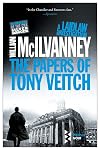
William McIlvanney's 1983 novel The Papers of Tony Veitch was his second (of three) to feature the gritty maverick, Glasgow-based detective Jack Laidlaw.
Laidlaw once again travels the mean streets of Glasgow, trying to find Tony Veitch, a young student who may have killed an alcoholic vagrant and a criminal. Down and outs, titled ladies, and middle class students mingle with the hard men of the Glasgow underworld in ever-changing alliances as Laidlaw and Harkness, his sergeant, try to get at show more the truth of two, then three, deaths. There are seemingly no heroes in this world, not even Laidlaw himself, who is laid even more bare to the reader by Harkness's perceptions of him. In Laidlaw's world, heroes are older working class women who have held home and family together through depression, war, and overwhelming change in the world.
At first, I found the fact that much of the dialogue is in broad dialect really distracting. But once I tuned in, it faded into the background.
After a time I could hear these people speak in my head - hear the humour and the bravado and the aggression. He shows beautifully the odd mix of the Glaswegian character, with its kindness that must always be kept carefully hidden for fear of seeming soft. His villains are frighteningly hard without ever tipping over into caricature, and the ever-present threat of violence is chillingly believable.
‘ "Coulda made something o' himself. But a luckless man. All his days a luckless man. The kinna man woulda got two complimentary tickets for the Titanic.” The unintentional humour of her remark was like her natural appetite for life reasserting itself. Harkness couldn't stop smiling. It was as if Glasgow couldn't shut the wryness of its mouth even at the edge of the grave.’
Laidlaw is complex and multi-faceted but always believable. show less
Laidlaw once again travels the mean streets of Glasgow, trying to find Tony Veitch, a young student who may have killed an alcoholic vagrant and a criminal. Down and outs, titled ladies, and middle class students mingle with the hard men of the Glasgow underworld in ever-changing alliances as Laidlaw and Harkness, his sergeant, try to get at show more the truth of two, then three, deaths. There are seemingly no heroes in this world, not even Laidlaw himself, who is laid even more bare to the reader by Harkness's perceptions of him. In Laidlaw's world, heroes are older working class women who have held home and family together through depression, war, and overwhelming change in the world.
At first, I found the fact that much of the dialogue is in broad dialect really distracting. But once I tuned in, it faded into the background.
After a time I could hear these people speak in my head - hear the humour and the bravado and the aggression. He shows beautifully the odd mix of the Glaswegian character, with its kindness that must always be kept carefully hidden for fear of seeming soft. His villains are frighteningly hard without ever tipping over into caricature, and the ever-present threat of violence is chillingly believable.
‘ "Coulda made something o' himself. But a luckless man. All his days a luckless man. The kinna man woulda got two complimentary tickets for the Titanic.” The unintentional humour of her remark was like her natural appetite for life reasserting itself. Harkness couldn't stop smiling. It was as if Glasgow couldn't shut the wryness of its mouth even at the edge of the grave.’
Laidlaw is complex and multi-faceted but always believable. show less
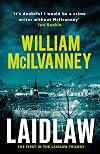
In 1966, Scottish novelist, poet and essayist William McIlvanney (1936-2015) won the Geoffrey Faber Memorial Prize for his debut novel Remedy is None. In 1975, he won the Whitbread Novel Award for Docherty, a gritty piece of historical fiction about a Scottish mining family in the early 20th Century. Having thus been anointed as a “literary” writer, the publication of crime novel Laidlaw in 1977 came as a surprise, if not a shock. What was McIlvanney doing, putting his literary show more credentials at risk by writing a detective novel? Laidlaw would be followed by two other instalments in a trilogy featuring the eponymous Glasgow detective, establishing his creator (with the benefit of hindsight) as the father of “tartan noir”, an ongoing inspiration for the likes of Ian Rankin and Val McDermid. The reaction to the publication of the novel in the 1970s, however, shows that a certain suspicion towards “genre fiction” has long been an unsavoury aspect of the literary world. Reading Laidlaw, on the other hand, proves that why this snobbery is completely off the mark.
At face value, the novel is a tribute to both the American “hardboiled” genre and to Continental fiction (a là Simenon), with which it shares several recognisable tropes. A young woman is sexually assaulted and brutally murdered in Glasgow and D.I. Jack Laidlaw is assigned to the case. Laidlaw, who keeps “Kierkegaard, Camus and Unamuno” hidden in a drawer in his desk “like caches of alcohol”, is an eccentric figure with unusual investigative methods, “a potentially violent man who hates violence”. When constable Harkness is asked by his superiors to partner up with Laidlaw, he is expected not just to help the older detective but also to report on him and keep his wilder behaviour in check. The case leads the duo through the seedy underbelly of Glasgow, where Laidlaw enjoys the grudging respect of dubious figures. But the “polis” are not the only once seeking the murderer. The relatives of the victim are looking for him to avenge her death, whilst criminals associated with him want him out of the way because of the unwelcome attention the crime has brought to their activities. The investigation turns into a race against time, with the murderer in danger of becoming the new victim.
Despite its nods to the genre, McIlvanney brings to this novel some idiosyncratic twists. One of them is the setting – no longer an American metropolis, or London (another “capital” of crime fiction) but 1970s Glasgow with which Laidlaw (and possibly, his creator) seems to have a love-hate relationship. The Glaswegian backdrop is evoked not only through the descriptions within the novel, but also through the judicious use of dialect.
Then there’s the plot. Unlike your typical whodunnit, the murderer is revealed quite early on, as is his motive. The reader’s pleasure does not derive from the unmasking of the perpetrator but, rather, from learning how Laidlaw will get to his man and from a curiosity as to whether others will get to the ‘prey’ before he does. This is as much of a thriller as a “detective” novel.
Laidlaw also gives McIlvanney the opportunity to explore the same socialist themes which underlie his other “non-crime” work. The conversations between the inspector and an increasingly respectful Harkness give voice to pithy social commentary which lays bare the bigotry (whether fuelled by class, religion or other factors) within the world McIlvanney portrays.
What gives Laidlaw is peculiar style, however, is its use of language – the unlikely, yet arresting, images which pepper the text. The victim’s father has a face which looks “like an argument you couldn’t win”. The police mortuary is “the tradesmen’s entrance to the Court”, where “the raw materials of justice” are delivered, “corpses that are precipitates of strange experience, alloys of fear and hate and anger and love and viciousness and bewilderment, that the Court will take and refine into comprehension”. Laidlaw is sickened when he realises that “the first law is real estate, and people are its property”. This is crime fiction, but it is also poetry.
https://endsoftheword.blogspot.com/2020/03/laidlaw-by-william-McIlvanney-Canonga... show less
At face value, the novel is a tribute to both the American “hardboiled” genre and to Continental fiction (a là Simenon), with which it shares several recognisable tropes. A young woman is sexually assaulted and brutally murdered in Glasgow and D.I. Jack Laidlaw is assigned to the case. Laidlaw, who keeps “Kierkegaard, Camus and Unamuno” hidden in a drawer in his desk “like caches of alcohol”, is an eccentric figure with unusual investigative methods, “a potentially violent man who hates violence”. When constable Harkness is asked by his superiors to partner up with Laidlaw, he is expected not just to help the older detective but also to report on him and keep his wilder behaviour in check. The case leads the duo through the seedy underbelly of Glasgow, where Laidlaw enjoys the grudging respect of dubious figures. But the “polis” are not the only once seeking the murderer. The relatives of the victim are looking for him to avenge her death, whilst criminals associated with him want him out of the way because of the unwelcome attention the crime has brought to their activities. The investigation turns into a race against time, with the murderer in danger of becoming the new victim.
Despite its nods to the genre, McIlvanney brings to this novel some idiosyncratic twists. One of them is the setting – no longer an American metropolis, or London (another “capital” of crime fiction) but 1970s Glasgow with which Laidlaw (and possibly, his creator) seems to have a love-hate relationship. The Glaswegian backdrop is evoked not only through the descriptions within the novel, but also through the judicious use of dialect.
Then there’s the plot. Unlike your typical whodunnit, the murderer is revealed quite early on, as is his motive. The reader’s pleasure does not derive from the unmasking of the perpetrator but, rather, from learning how Laidlaw will get to his man and from a curiosity as to whether others will get to the ‘prey’ before he does. This is as much of a thriller as a “detective” novel.
Laidlaw also gives McIlvanney the opportunity to explore the same socialist themes which underlie his other “non-crime” work. The conversations between the inspector and an increasingly respectful Harkness give voice to pithy social commentary which lays bare the bigotry (whether fuelled by class, religion or other factors) within the world McIlvanney portrays.
What gives Laidlaw is peculiar style, however, is its use of language – the unlikely, yet arresting, images which pepper the text. The victim’s father has a face which looks “like an argument you couldn’t win”. The police mortuary is “the tradesmen’s entrance to the Court”, where “the raw materials of justice” are delivered, “corpses that are precipitates of strange experience, alloys of fear and hate and anger and love and viciousness and bewilderment, that the Court will take and refine into comprehension”. Laidlaw is sickened when he realises that “the first law is real estate, and people are its property”. This is crime fiction, but it is also poetry.
https://endsoftheword.blogspot.com/2020/03/laidlaw-by-william-McIlvanney-Canonga... show less
Lists
Awards


You May Also Like


Associated Authors
Statistics
- Works
- 21
- Also by
- 2
- Members
- 2,040
- Popularity
- #12,601
- Rating
- 3.8
- Reviews
- 77
- ISBNs
- 169
- Languages
- 6
- Favorited
- 3