

Alasdair Gray (1934–2019)
Author of Lanark
About the Author
Alasdair James Gray was born on Dec. 28, 1934, in Glasgow to Amy (Fleming) and Alexander Gray. His mother worked in a clothing warehouse, his father in construction. Mr. Gray studied design and mural painting at the Glasgow College of Art. When he graduated in 1957, he was commissioned to paint show more murals around Glasgow, which he continued to create until 2014. He worked on freelance projects and also wrote plays before publishing his first novel. Whether he was creating etchings for his books or a mural to adorn the ceiling of the Glasgow arts and entertainment venue Oran Mor, Mr. Gray created an unusual niche for himself encompassing Scotland's literary and artistic spheres. While his murals can be found at subway stops and restaurants in Glasgow, some of his works are in the collection of the National Galleries of Scotland. In addition to writing fiction, poems and plays for the stage, television and radio Mr. Gray published an autobiography, A Life in Pictures, in 2010. It combined photos, written descriptions and lavish illustrations to reveal that much of Mr. Gray's personal life was embedded in his work. Alasdair James Gray passed away on December 29, 2019 at the age of 85. (Bowker Author Biography) show less
Image credit: Photograph: Eamonn McCabe
Series
Works by Alasdair Gray
Dante's Divine Comedy: Part One: Hell. Decorated and Englished in Prosaic Verse by Alasdair Gray (2018) 48 copies, 1 review
PARADISE: Dante's Divine Trilogy Part Three. Englished in Prosaic Verse by Alasdair Gray (2020) 38 copies, 1 review
PURGATORY: Dante's Divine Trilogy Part Two. Decorated and Englished in Prosaic Verse by Alasdair Gray (2019) — Author — 35 copies, 1 review
Some Unlikely Stories 1 copy
Associated Works
ParaSpheres: Extending Beyond the Spheres of Literary and Genre Fiction: Fabulist and New Wave Fabulist Stories (2006) — Contributor — 65 copies
Where Rockets Burn Through: Contemporary Science Fiction Poems from the UK (2012) — Preface — 10 copies
Tagged
Common Knowledge
- Canonical name
- Gray, Alasdair
- Legal name
- Gray, Alasdair James
- Birthdate
- 1934-12-28
- Date of death
- 2019-12-29
- Gender
- male
- Education
- Glasgow College of Art (Dipl.|1957)
- Occupations
- artist
novelist
playwright
poet - Awards and honors
- Scottish Book of the Year Award (1982, 2011)
Saltire Society Scottish Lifetime Achievement Award (2019)
Whitbread Novel Award (1992)
Guardian Fiction Prize (1992) - Short biography
- Alasdair James Gray was a Scottish writer and artist. His first novel, Lanark, is seen as a landmark of Scottish fiction. He published novels, short stories, plays, poetry and translations, and wrote on politics and the history of English and Scots literature.
- Nationality
- UK
- Birthplace
- Riddrie, Glasgow, Lanarkshire, Scotland, UK
- Places of residence
- Glasgow, Lanarkshire, Scotland, UK
- Place of death
- Glasgow, Lanarkshire, Scotland, UK (Queen Elizabeth University Hospital)
- Map Location
- Scotland, UK
Members
Reviews
HELL: Dante's Divine Trilogy Part One. Decorated and Englished in Prosaic Verse by Alasdair Gray by Alasdair Gray
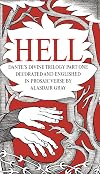
Through sheer serendipity, I discovered that Alasdair Gray recently translated [b:The Divine Comedy|6656|The Divine Comedy|Dante Alighieri|https://i.gr-assets.com/images/S/compressed.photo.goodreads.com/books/1624535952l/6656._SY75_.jpg|809248] while searching the library catalogue. I started reading his interpretation of [b:Inferno|15645|Inferno|Dante Alighieri|https://i.gr-assets.com/images/S/compressed.photo.goodreads.com/books/1520255019l/15645._SY75_.jpg|2377563] at my desk in an empty show more office while a massive storm ravaged Britain - this was not ideal and isn't recommended. It is best experienced at home, with a copy of a more literal translation and the original to hand. I have a copy of Robert Pinsky's that includes the Italian, which proved ideal. Alasdair Gray's translation is described on the cover as 'prosaic verse' and in his foreword as follows: 'My abrupt north English dialect has cut Dante's epic down to the range of my intelligence, which is less than Dante's.' Gray's humility does him credit, but doesn't do his wonderful translation justice. I really enjoyed it both on its own merits and as a contrast to Pinsky's. Although my knowledge of Italian is purely duolingo based, it was also nice to compare with the original. Gray's informal register is very entertaining:
I cannot help thinking that Gray caught the spirit of that gesture. His translations of demon names were also great fun, such as Stinkytail for Malacoda. His version has an elegance that more literal translations struggle to achieve, simply because English is not as melodic and flowing a language as Italian:
I look forward to reading the other two volumes of Gray's [b:The Divine Comedy|6656|The Divine Comedy|Dante Alighieri|https://i.gr-assets.com/images/S/compressed.photo.goodreads.com/books/1624535952l/6656._SY75_.jpg|809248]. He deliberately does not provide the full historical texture and depth of a more literal translation, but instead conveys the essential feeling of it in a vivid and readable style. show less
Al fine de le sue parole il ladro
le mani alzò con amendue le fiche,
gridando: «Togli, Dio, ch’a te le squadro!»
Having said that, the Brute flung up his fists,
Each with two fingers parted in wide Vs,
And screamed, "Up your arse, God! Fuck you and yours!" [Gray]
The thief held up his hands when he was through,
And "God," he cried, making the fig with both -
"Take these, I aim them squarely up at you!" [Pinsky]
I cannot help thinking that Gray caught the spirit of that gesture. His translations of demon names were also great fun, such as Stinkytail for Malacoda. His version has an elegance that more literal translations struggle to achieve, simply because English is not as melodic and flowing a language as Italian:
Ogne lingua per certo verria meno
per lo nostro sermone e per la mente
c’hanno a tanto comprender poco seno.
All speech falls short, there are no words to tell
Of all the carnage we enact on earth
And re-enact repeatedly in Hell. [Gray]
It's certain no human tongue could take the measure
Of those enormities. Our speech and mind,
Straining to comprehend them, flail, and falter. [Pinsky]
I look forward to reading the other two volumes of Gray's [b:The Divine Comedy|6656|The Divine Comedy|Dante Alighieri|https://i.gr-assets.com/images/S/compressed.photo.goodreads.com/books/1624535952l/6656._SY75_.jpg|809248]. He deliberately does not provide the full historical texture and depth of a more literal translation, but instead conveys the essential feeling of it in a vivid and readable style. show less
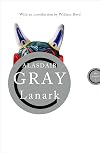
Most of the commentary on this book concentrates on its famous division between the Bildungsroman/roman à clef sections of Books 1 and 2, and the adult/fantastical sections of Books 3 and 4. That's true, and there's a lot to say about the way that Gray structured the book to enhance the parallelisms between Thaw and Lanark's lives (and he even says as much in the Epilogue), but I think the main division in the book is between the quotidian stuff - meaning the lives and loves of the dual show more protagonists - and the broader thematic stuff about society and its evolution.
The Introduction, which like all introductions should really be read last, claims that this is the Glaswegian equivalent of Ulysses. This is neither a true compliment, as Glasgow does not come off like a very nice place in the book, nor really all that meaningful, since Lanark and Ulysses are fairly different works. Lanark has some metafictional elements in it that I didn't enjoy much, but at heart it's divided between a sort of young adult novel about the adolescence of the artistic, asthmatic, alienated youth Duncan Thaw, who's openly based on the author; and a dystopian political novel about Lanark, who is Thaw's spiritual doppelgänger. Both halves of the book, somewhat reordered for artistic effect, have a lot of obvious parallels with each other, and while different readers will have their own favorite parts, I thought the "lovable loser" sections of Thaw's story were the strongest, both since they seemed to be written with real feelings, and because few people who grow through adolescence won't sympathize with his growing pains. By contrast, a lot of the Lanark sections consist of him essentially blundering around in a bizarre future landscape that's clearly based on Glasgow, yet alien enough to be offputting without truly being something new.
The real interest for me was in seeing how Thaw/Lanark's emotional turmoil got reflected in the world around them. One of the more interesting "soft" sci-fi novels I've read in the past few years is Olaf Stapledon's Star Maker, wherein the main character sees the similarity of life at many different scales - conflict between individuals is like conflict between tribes, is like conflict between races, is like conflict between species, and so on. In Lanark, the author, in a cringingly awkward ex cathedra cameo that's reminiscent of nothing so much as the Architect scene in the second Matrix movie, says as much to Lanark: "The Thaw narrative shows a man dying because he is bad at loving. It is enclosed by your narrative which shows civilization collapsing for the same reason." That's the kind of stuff I like reading about, what the relationship is between the omnipresence of human frailty and the corresponding flaws in our societies, what our growth and change says about us, and whether our actions are really leading us anywhere or merely sublimating our failures into ever less satisfying receptacles. The novel doesn't talk about that stuff as much as I'd have liked, but it's good to know Gray was thinking about it when he wrote it.
The emotional turmoil stuff is good too, although better in the Thaw parts, where he's just a kid and can be excused for his weirdness and clumsiness, than in Lanark's, who spends a lot of time in baffling non-conversations with the people around him. Gray is very good at making emotional pain present, be it towards parents, friends, or lovers. Some parts of Thaw's story are actually hard to read, so vividly do Thaw's struggles with girls, his art, his parents, and his maturity come across. However, Lanark strikes me as a book that would have been improved without the metafictional Epilogue where Gray explains exactly that. I'm just not sure it's possible to be truly artistically successful when being so self-referential, even if the little list of plagiarisms is actually really helpful for thinking about what the novel means. I prefer works to stand on their own; it's the job of critics - who are actually encouraged to talk about books and their reactions to them, and reactions to other reactions, etc. - who should be trusted with that stuff, because otherwise the author's breaking of the fourth wall just emphasizes how artificial their work is, and all suspension of disbelief is lost.
Other than that, it's an immense, fascinating novel about a man's journey through the world and his relationship to it that will please both lovers of sci-fi and young adult literature, who are seldom in agreement. show less
The Introduction, which like all introductions should really be read last, claims that this is the Glaswegian equivalent of Ulysses. This is neither a true compliment, as Glasgow does not come off like a very nice place in the book, nor really all that meaningful, since Lanark and Ulysses are fairly different works. Lanark has some metafictional elements in it that I didn't enjoy much, but at heart it's divided between a sort of young adult novel about the adolescence of the artistic, asthmatic, alienated youth Duncan Thaw, who's openly based on the author; and a dystopian political novel about Lanark, who is Thaw's spiritual doppelgänger. Both halves of the book, somewhat reordered for artistic effect, have a lot of obvious parallels with each other, and while different readers will have their own favorite parts, I thought the "lovable loser" sections of Thaw's story were the strongest, both since they seemed to be written with real feelings, and because few people who grow through adolescence won't sympathize with his growing pains. By contrast, a lot of the Lanark sections consist of him essentially blundering around in a bizarre future landscape that's clearly based on Glasgow, yet alien enough to be offputting without truly being something new.
The real interest for me was in seeing how Thaw/Lanark's emotional turmoil got reflected in the world around them. One of the more interesting "soft" sci-fi novels I've read in the past few years is Olaf Stapledon's Star Maker, wherein the main character sees the similarity of life at many different scales - conflict between individuals is like conflict between tribes, is like conflict between races, is like conflict between species, and so on. In Lanark, the author, in a cringingly awkward ex cathedra cameo that's reminiscent of nothing so much as the Architect scene in the second Matrix movie, says as much to Lanark: "The Thaw narrative shows a man dying because he is bad at loving. It is enclosed by your narrative which shows civilization collapsing for the same reason." That's the kind of stuff I like reading about, what the relationship is between the omnipresence of human frailty and the corresponding flaws in our societies, what our growth and change says about us, and whether our actions are really leading us anywhere or merely sublimating our failures into ever less satisfying receptacles. The novel doesn't talk about that stuff as much as I'd have liked, but it's good to know Gray was thinking about it when he wrote it.
The emotional turmoil stuff is good too, although better in the Thaw parts, where he's just a kid and can be excused for his weirdness and clumsiness, than in Lanark's, who spends a lot of time in baffling non-conversations with the people around him. Gray is very good at making emotional pain present, be it towards parents, friends, or lovers. Some parts of Thaw's story are actually hard to read, so vividly do Thaw's struggles with girls, his art, his parents, and his maturity come across. However, Lanark strikes me as a book that would have been improved without the metafictional Epilogue where Gray explains exactly that. I'm just not sure it's possible to be truly artistically successful when being so self-referential, even if the little list of plagiarisms is actually really helpful for thinking about what the novel means. I prefer works to stand on their own; it's the job of critics - who are actually encouraged to talk about books and their reactions to them, and reactions to other reactions, etc. - who should be trusted with that stuff, because otherwise the author's breaking of the fourth wall just emphasizes how artificial their work is, and all suspension of disbelief is lost.
Other than that, it's an immense, fascinating novel about a man's journey through the world and his relationship to it that will please both lovers of sci-fi and young adult literature, who are seldom in agreement. show less

My estimation of this novel rose and fell several times during my reading. I mostly enjoyed bobbing and weaving my way through this Victorian novel spoof pastiche of different unreliable narrators in different styles, formats and genres but there were a few points of tedium. The letters from abroad format went on a little too long and the third section of the novel delivered as bits of reporting were a tad too dry (more interesting when I finally realized what the point of it was). But the show more central idea is genius—that in order to tell the story of a smart, independent, self-actualized woman (in Victorian Scotland or even today) the story has to be approached as science fiction. Such a woman has to be the Frankenstein like creation of a man—she couldn’t come naturally by those qualities. That is the first part (maybe ¾ of the novel). Second part is the real female character telling her side—much more realistic but still skewed by her perspective. And the last part is a kind of reckoning of the two—dispatches from the time create a foundation of reality. Feels old and new at the same time—don’t settle in it will change directions. Lays waste to men as a gender—rightfully so. Presents them as foolish and temperamental and disposable just as women in literature were/are often portrayed. show less
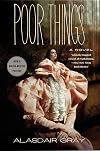
It's almost criminal that Yorgos Lanthimos read this book about child-rearing, feminism, socialism, classism, and patriarchy and made a movie only about sexuality. I loved the movie but now am so angry that he removed the full human condition from it. Bella - Victoria was an intellectual, a philosopher, a feminist, a scientist, and a political practitioner, and Lanthimos made her into only a sexual being. What a missed opportunity. I would love to see a movie based on the whole book.
Lists
Awards


You May Also Like


Associated Authors
Statistics
- Works
- 42
- Also by
- 13
- Members
- 7,436
- Popularity
- #3,290
- Rating
- 3.8
- Reviews
- 110
- ISBNs
- 194
- Languages
- 16
- Favorited
- 51
