

James Hogg (1) (1770–1835)
Author of The Private Memoirs and Confessions of a Justified Sinner
For other authors named James Hogg, see the disambiguation page.
About the Author
Son of a Scottish shepherd and descended from minstrels, Hogg led a life that has the fictional quality Thomas Hardy was to capture later in the century in his novels of country life. After meeting Sir Walter Scott in 1802, Hogg adopted the name "Ettrick Shepherd," a pseudonym under which he show more published original lyrics and ballads. In 1814 Hogg met William Wordsworth and enjoyed literary friendships in the Lake District, although he parodied the other poets' styles and mannerisms in The Poetic Mirror (1816). He married at age 50 and fathered five children, whom he tried to support by the same kind of unproductive farming at which Robert Burns had labored a generation before. Like Burns, his convivial nature and verbal talents won him a following in fashionable society, especially after the publication of his first novel, The Private Memoirs and Confessions of a Justified Sinner (1824), when he was 53 years old. The first novel to explore psychological aberrations, it traces the collapse of a personality under the pressure of social conformity, native superstition, and religious excess. Since the introduction by Andre Gide to the 1947 Cresset edition, it has acquired an academic following and a new popularity. There is a James Hogg Society, founded in 1982, which publishes a newsletter. (Bowker Author Biography) show less
Works by James Hogg
Altrive Tales: Featuring a 'Memoir of the Author's Life' (Collected Works of James Hogg) (2003) 6 copies
The Poems of James Hogg 5 copies
James Hogg Selected Stories and Sketches (Association for Scottish Literary Studies) (1983) 4 copies
The Jacobite Relics of Scotland: Being the Songs, Airs, and Legends of the Adherents to the House of Stuart (1819) 4 copies, 1 review
Scottish Supernatural Classics : The Three Perils of Man, Thrawn Janet and Other Stories, Phantastes and Lilith (2014) 3 copies
The Mountain Bard & Forest Minstrel 3 copies
Contributions to Musical Collections and Miscellaneous Songs (Collected Works of James Hogg) (2015) 2 copies
Scottish Gothic : The Private Memoirs and Confessions of a Justified Sinner, The City of Dreadful Night, A Beleaguered City (2014) 2 copies
The pilgrims of the sun; a poem 2 copies
James Hogg Poems Selected and Edited By John W. Oliver and Published for The Saltire Society (1946) 1 copy
Contributions to Scottish Periodicals (Stirling / South Carolina Research Edition of the Collected) (2021) 1 copy
Der Widersacher : Roman 1 copy
Scottish Pastorals: Together with Other Early Poems and "Letters on Poetry" (Collected Works of James Hogg) (2022) 1 copy
Tales and Sketches, by The Ettrick Shepherd; including several pieces not before printed. Volume IV 1 copy
The Shepherd's Guide 1 copy
The Expedition To Hell 1 copy
The Collected Letters of James Hogg, Volume 2, 1820-1831 (Collected Works of James Hogg) (2006) 1 copy
Hoggs Songs 1 copy
Seeking the Houdy 1 copy
The Hunt Of Eildon 1 copy
Collected Stories 1 copy
Contributions to Blackwood's Edinburgh Magazine: Volume 2, 1829-1835 (Collected Works of James Hogg) (2012) 1 copy
The Canterbury Poets 1 copy
Mountain Bard 1 copy
Associated Works
Poems Bewitched and Haunted (Everyman's Library Pocket Poets Series) (2005) — Contributor — 230 copies
Isaac Asimov's Magical Worlds of Fantasy, Volume 12: Faeries (1991) — Contributor — 214 copies, 4 reviews
Great British Tales of Terror: Gothic Stories of Horror and Romance 1765-1840 (1972) — Contributor — 86 copies
Scotland the Strange: Weird Tales from Storied Lands (British Library Hardback Classics) (2023) — Contributor — 44 copies, 1 review
The Weird Gathering & Other Tales from the Enchanted World of Dark Legends (1979) — Contributor — 34 copies, 1 review
Noctes ambrosianae 2 — Contributor — 3 copies
Shadows from a Veiled Creation: Classic Tales of Supernatural Fiction in the Christian Tradition (2006) — Contributor — 2 copies
Tagged
Common Knowledge
- Canonical name
- Hogg, James
- Other names
- The Ettrick Shepherd
- Birthdate
- 1770
- Date of death
- 1835-11-21
- Gender
- male
- Occupations
- poet
novelist
shepherd
journalist
essayist - Relationships
- Scott, Sir Walter (friend)
- Short biography
- http://www.gis.net/~shepdog/BC_Museum...
- Nationality
- UK
- Birthplace
- Ettrick, Selkirkshire, Scotland, UK
- Places of residence
- Edinburgh, Scotland, UK
Altrive, Yarrow, Selkirkshire, Scotland, UK - Place of death
- Ettrick, Selkirkshire, Scotland, UK
- Burial location
- Ettrick Kirkyard, Ettrick, Selkirkshire, Scotland, UK
- Map Location
- Scotland, UK
Members
Discussions
The Private Memoirs and Confessions of a Justified Sinner in Gothic Literature (March 7)
Reading Group #35 (The Private Memoirs and Confessions of a Justified Sinner) in Gothic Literature (January 2020)
Group Read, October 2019: The Private Memoirs and Confessions of a Justified Sinner in 1001 Books to read before you die (October 2019)
Reviews

“This is one of the most fascinating novels I’ve read in recent times. It deals with Calvinist predestination, fanaticism, demonic possession, insanity, the nature of good and evil, and the power of religion over individuals.” That line opens the first review of this book to appear on WLF. I am in complete agreement with it. Hogg, a Scot, is known—if at all—today for this single work, written in 1824. Its influence, though, has been remarkable; to choose just one of many examples, show more Robert Louis Stevenson credited the book as the inspiration for Dr. Jekyll and Mr. Hyde.
Hogg was a self-educated shepherd in a Scotland that was then almost exclusively Presbyterian, a church whose theology is largely Calvinist. Among its doctrines is that of predestination: God has predetermined the fate of individuals, including their salvation or damnation, before the creation of the world; nothing one does on earth can alter his or her destiny. God’s choice to save certain sinners by grace is called “election” and the “Elect” are, in essence, untouchable because God cannot be wrong. Hogg is primarily concerned with ridiculing this notion. The narrator, Robert Wringham, is approached by a figure whom Wringham takes to be Peter the Great of Russia traveling incognito. This figure expertly manipulates the deeply devout Wringham, convincing him that he is among the Elect and is thus free to do as he will on earth because God has “chosen” him. Wringham thus allows himself to be convinced that he can—and, indeed, must—kill sinners and those predestined to hell. This all plays out in the context of Hogg’s particular storyline and the plot is far more intricate than I have suggested but the brilliance of the work lies in Hogg’s writing: is the mysterious figure Satan himself or is he a figment of Wringham’s imagination? Is Wringham sane or…? It’s impossible to tell. The novel, a mere 230 pages, is comprised of two parts: an editor’s introduction purports to provide background and context; the second half is Wringham’s own memoir of events. They necessarily overlap and it becomes clear that neither narrator (nor, indeed, any of the other minor characters) is reliable. The language is occasionally dated (or reliant on Scottish terms) and Hogg also resorts to difficult to decipher dialect. Still, the genius of the work lies in the writing and the book is very well-conceived, well-written, and well, extraordinary. show less
Hogg was a self-educated shepherd in a Scotland that was then almost exclusively Presbyterian, a church whose theology is largely Calvinist. Among its doctrines is that of predestination: God has predetermined the fate of individuals, including their salvation or damnation, before the creation of the world; nothing one does on earth can alter his or her destiny. God’s choice to save certain sinners by grace is called “election” and the “Elect” are, in essence, untouchable because God cannot be wrong. Hogg is primarily concerned with ridiculing this notion. The narrator, Robert Wringham, is approached by a figure whom Wringham takes to be Peter the Great of Russia traveling incognito. This figure expertly manipulates the deeply devout Wringham, convincing him that he is among the Elect and is thus free to do as he will on earth because God has “chosen” him. Wringham thus allows himself to be convinced that he can—and, indeed, must—kill sinners and those predestined to hell. This all plays out in the context of Hogg’s particular storyline and the plot is far more intricate than I have suggested but the brilliance of the work lies in Hogg’s writing: is the mysterious figure Satan himself or is he a figment of Wringham’s imagination? Is Wringham sane or…? It’s impossible to tell. The novel, a mere 230 pages, is comprised of two parts: an editor’s introduction purports to provide background and context; the second half is Wringham’s own memoir of events. They necessarily overlap and it becomes clear that neither narrator (nor, indeed, any of the other minor characters) is reliable. The language is occasionally dated (or reliant on Scottish terms) and Hogg also resorts to difficult to decipher dialect. Still, the genius of the work lies in the writing and the book is very well-conceived, well-written, and well, extraordinary. show less
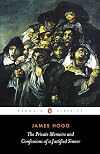
***** for this volume's main entry. This is a one-of-a-kind book that manages to tell the same story in two different ways and achieve two different reactions on the part of the reader. The villain of the first part becomes the narrator of the second part, and it turns out that there are some mitigating circumstances--namely, Satan! Believing completely in predestination and that the Christian saved are that way from birth, and that nothing they can do in life can change that, the villain show more can commit any crime with everlasting--though perhaps not immediate--impunity. To say more would spoil the experience. The book is full of Scots dialect, but pretty easy to understand, as the thickest dialect is reserved for the speech of rustic characters. (The glossary at the back of the book is very selective, so most dialect words aren't even defined, but I found it wasn't that hard to get the gist, and there's always Google.) In any case, this is a unique reading experience and about as good a story of the devil as you'll find. It has memorable scenes, great characters, and well-drawn settings. And even humor. Don't miss it.
And I should note that it isn't necessary to understand the various competing Scottish theologies and factions or other things the editor's over-complex introduction discusses. In fact, you'll probably enjoy it more by skipping the introduction, since it really does nothing to help you read the story. (At least, it has no spoilers, so I'll give it that much credit.) Reading it afterwards would probably make it better.
The Penguin Classics edition includes two more stories in the volume:
Marion's Jock ****
Once you get past the nearly impenetrable Scots dialect, this story of a very hungry servant and the lengths he goes to to satisfy his desire for meat is quite entertaining and funny.
John Gray O' Middlehome ****
This is another enjoyable story, despite the Scots dialect, of a weaver who has a dream of buried treasure. The reactions of his wife and the people of his village to his strange behavior are very funny. show less
And I should note that it isn't necessary to understand the various competing Scottish theologies and factions or other things the editor's over-complex introduction discusses. In fact, you'll probably enjoy it more by skipping the introduction, since it really does nothing to help you read the story. (At least, it has no spoilers, so I'll give it that much credit.) Reading it afterwards would probably make it better.
The Penguin Classics edition includes two more stories in the volume:
Marion's Jock ****
Once you get past the nearly impenetrable Scots dialect, this story of a very hungry servant and the lengths he goes to to satisfy his desire for meat is quite entertaining and funny.
John Gray O' Middlehome ****
This is another enjoyable story, despite the Scots dialect, of a weaver who has a dream of buried treasure. The reactions of his wife and the people of his village to his strange behavior are very funny. show less

James Hogg’s 1824 novel, The Private Memoirs and Confessions of a Justified Sinner: Written by Himself: With a detail of curious traditionary facts and other evidence by the editor tells the story of the George Colwan, the Laird of Dalcastle, and his two sons, George and Robert. The elder Laird marries Rabina Orde, a devout woman who rejects his impiousness. She later has a son, George, who is the Laird’s heir. Her second son, Robert, is strongly implied to be the son of her minister, show more the Reverend Wringhim. The two brothers are separated, with George learning all he needs to become the future Laird while Wringhim raises Robert in his antinomian Calvinist beliefs. When the two brothers meet later on, they frequently fight. George dies in an apparent duel and Robert is accused of the murder, but disappears before he can face trial.
The second half of the novel tells the story from Robert’s point of view, with his antinomian beliefs allowing him to sin with abandon. Robert falls under the sway of a shape-shifting man who encourages him to sin further. The man calls himself Gil-Martin, but Robert believes him to be Czar Peter of Russia (pg. 127). When Robert first questions Gil-Martin about his name, the shape-shifter says, “You may call me Gil-Martin. It is not my Christian name; but it is a name which may serve your turn” (pg. 122). He further states, “I have no parents save one, whom I do not acknowledge” (pg. 122). Hogg intends for the readers to infer that Gil-Martin is the Devil, though he also introduces enough doubt that Gil-Martin may be nothing more than a figment of Robert’s imagination. This version of the literary Devil is particularly interesting, as the doubt over his existence and the fact that he cannot make Robert do anything that he doesn’t want to anyway encourages further questioning of theological dogmatism.
The novel engages directly with Calvinist theology and the concept of predestination, with Robert, the “sinner,” describing himself as “justified” to refer to his acceptance of Calvinism and belief that he is among the elect predestined for paradise, which contradicts the belief that good works could gain entry to heaven. Thus, Robert points out one of the flaws with antinomian predestination (besides assuming the existence of an all-powerful being without repeatable, testable evidence) – if good works will not permit entry to paradise since the “saved” have been chosen since the beginning of time, then they are free to sin at will confident in their belief that their sins were already cleansed through the crucifixion. The “sinner” muses upon this, thinking, “The more I pondered on these things, the more I saw of the folly and inconsistency of ministers, in spending their lives, striving and remonstrating with sinners, in order to induce them to do that which they had it not in their power to do” (pg. 117). Hogg further criticizes the gullible or easily misled through his portrayal of Reverend Wringhim’s belief in maternal impression, a belief William Hogarth criticized in his 1762 satirical print, Credulity, Superstition and Fanaticism (pg. 104). For those interested in Scottish literature or work that engages with the Scottish Reformation, this is a must-read, though Hogg’s use of dialect to capture the Scottish brogue coupled with archaic slang may be difficult for nonacademic readers. show less
The second half of the novel tells the story from Robert’s point of view, with his antinomian beliefs allowing him to sin with abandon. Robert falls under the sway of a shape-shifting man who encourages him to sin further. The man calls himself Gil-Martin, but Robert believes him to be Czar Peter of Russia (pg. 127). When Robert first questions Gil-Martin about his name, the shape-shifter says, “You may call me Gil-Martin. It is not my Christian name; but it is a name which may serve your turn” (pg. 122). He further states, “I have no parents save one, whom I do not acknowledge” (pg. 122). Hogg intends for the readers to infer that Gil-Martin is the Devil, though he also introduces enough doubt that Gil-Martin may be nothing more than a figment of Robert’s imagination. This version of the literary Devil is particularly interesting, as the doubt over his existence and the fact that he cannot make Robert do anything that he doesn’t want to anyway encourages further questioning of theological dogmatism.
The novel engages directly with Calvinist theology and the concept of predestination, with Robert, the “sinner,” describing himself as “justified” to refer to his acceptance of Calvinism and belief that he is among the elect predestined for paradise, which contradicts the belief that good works could gain entry to heaven. Thus, Robert points out one of the flaws with antinomian predestination (besides assuming the existence of an all-powerful being without repeatable, testable evidence) – if good works will not permit entry to paradise since the “saved” have been chosen since the beginning of time, then they are free to sin at will confident in their belief that their sins were already cleansed through the crucifixion. The “sinner” muses upon this, thinking, “The more I pondered on these things, the more I saw of the folly and inconsistency of ministers, in spending their lives, striving and remonstrating with sinners, in order to induce them to do that which they had it not in their power to do” (pg. 117). Hogg further criticizes the gullible or easily misled through his portrayal of Reverend Wringhim’s belief in maternal impression, a belief William Hogarth criticized in his 1762 satirical print, Credulity, Superstition and Fanaticism (pg. 104). For those interested in Scottish literature or work that engages with the Scottish Reformation, this is a must-read, though Hogg’s use of dialect to capture the Scottish brogue coupled with archaic slang may be difficult for nonacademic readers. show less
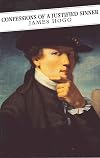
Who is he that causeth the mole, from his secret path of darkness, to throw up the gem, the gold, and the precious ore?
Hogg should be better remembered. Justified Sinner is a dark revelation, one less gothic than psychological. The novel is a headbirth which ignores Lewis/Walpole/Radcliff and instead Babadooks from a nascent emotional realism, one like Fyodor's magic door where everything is tinged yellow and seizures lead to murder. Speaking of crows, I heartily endorse the subtext as being show more an opposition to fanaticism or any dogmatic approach to life or social order. (Please leave the room, Rick Santorum). The novel is two tiered, a found editor's investigation and a journal form the eponymous: the latter is vain, contradictory and doomed. Sorry for the spoiler: what else could you expect from an early novel where Old Scratch is the wingman? There are veiled thoughts on marriage and inheritance at play, poky pines towards Church imposition. That said, this proved an enjoyable bout with the more sinister angels of our nature. show less
Hogg should be better remembered. Justified Sinner is a dark revelation, one less gothic than psychological. The novel is a headbirth which ignores Lewis/Walpole/Radcliff and instead Babadooks from a nascent emotional realism, one like Fyodor's magic door where everything is tinged yellow and seizures lead to murder. Speaking of crows, I heartily endorse the subtext as being show more an opposition to fanaticism or any dogmatic approach to life or social order. (Please leave the room, Rick Santorum). The novel is two tiered, a found editor's investigation and a journal form the eponymous: the latter is vain, contradictory and doomed. Sorry for the spoiler: what else could you expect from an early novel where Old Scratch is the wingman? There are veiled thoughts on marriage and inheritance at play, poky pines towards Church imposition. That said, this proved an enjoyable bout with the more sinister angels of our nature. show less
Lists
Awards


You May Also Like


Associated Authors
Statistics
- Works
- 105
- Also by
- 35
- Members
- 3,126
- Popularity
- #8,175
- Rating
- 3.7
- Reviews
- 47
- ISBNs
- 302
- Languages
- 9
- Favorited
- 8