
Tobias Smollett (–1771)
Author of The Expedition of Humphry Clinker
About the Author
Smollett, the only major eighteenth-century English novelist whose work can seriously be called picaresque, came to the writing of novels with a strong sense of Scottish national pride (an alienating element in the London of the 1750s and 1760s), a Tory feeling for a lost order, horrifying show more experiences as a physician, and a fierce determination to make his way in the literary world. Prolific in a variety of literary forms, he was particularly successful as a popular historian, magazine editor, translator of Cervantes (see Vol. 2), and author of novels about adventurous, unscrupulous, poor young men. His work is marked by vigorous journalistic descriptions of contemporary horrors, such as shipboard amputations or the filthy curative waters of Bath; by a flair for racy narrative often built on violence and sentiment, and for comedy that often relies on practical jokes and puns; and by a great gift for creating comic caricatures. His peppery Travels through France and Italy (1766) was something of a spur to Laurence Sterne's Sentimental Journey, in which Smollett is referred to as Dr. Smelfungus, who "set out with the spleen and jaundice, and every object he passed by was discolored or distorted---He wrote an account of them, but 'twas nothing but the account of his miserable feelings." Smollett's most notable novels are Roderick Random (1748), Peregrine Pickle Pickle (1751), Ferdinand Count Fathom (1753), Sir Launcelot Greaves (1762), which set a precedent by first being serialized in his British Magazine (January 1760--December 1761), and especially The Expedition of Humphrey Clinker (1771), a relatively mellow work that follows the travels of Matthew Bramble, an excitable Welshman, from his home through chaotic England to idyllic Loch Lomond and back. Bramble himself finds what Smollett had irrecoverably lost---his health---as well as a son from his youth. Smollett died in 1771, the year of the novel's appearance, in Leghorn, Italy, and is buried in the English cemetery there. (Bowker Author Biography) show less
Disambiguation Notice:
Smelfungus is a name given by Laurence Sterne to Tobias Smollett as author of a volume of Travels through France and Italy, for the snarling abuse he heaps on the institutions and customs of the countries he visited. In the 19th century it was adopted by Thomas Carlyle as a pen-name when he had any seriously severe criticisms to offer on things, particularly those that have gone or are going to the bad. Patrick Proctor Alexander also used the name in his book Mill and Carlyle, which contrasted Carlyle's views with those of John Stuart Mill. Proctor's Occasional Discourse on Sauertieg by Smelfungus attacks Carlyle's more brutal ideas.
Image credit: from Wikipedia
Works by Tobias Smollett
Humphry Clinker: An Authoritative Text Contemporary Responses Criticism (Norton Critical Editions; 1st Edition) (1771) 137 copies, 2 reviews
The History and Adventures of an Atom (Smollett, Tobias George//Works of Tobias Smollett) (1989) 34 copies
The history of England, from the revolution in 1688, to the death of George the Second (2019) 19 copies
The Expedition of Humphry Clinker: An Authoritative Text, Backgrounds and Contexts, Criticism (Norton Critical Editions; 2nd Edition) (1771) — Author — 15 copies
A complete history of England, from the descent of Julius Cæsar, to the Treaty of Aix la Chapelle, 1748. ... By T. Smol (1763) 13 copies
The adventures of Sir Launcelot Greaves, and The adventures of an atom ... With illustrations by George Cruikshank, etc (2016) 6 copies
Gil Blas, Volume III 6 copies
The History of England in Three Volumes, Vol.II. Continued from the Reign of William and Mary to the Death of George II. (2011) 6 copies
A North Briton extraordinary 3 copies
Select Works of Tobias Smollett V1: Containing the Adventures of Peregrine Pickle and the Adventures of Ferdinand Count Fathom (2007) 3 copies
The adventures of Peregrine Pickle: in which are included, Memoirs of a lady of quality Volume 2 (2010) 2 copies
Plays and Poems 2 copies
Peregrine Pickle Volume two 1 copy
The Works of Tobias Smollett 1 copy
The tears of Scotland 1 copy
The expedition of Humphry Clinker. By: Tobias George Smollett ./ Was the last of the picaresque NOVEL / (2017) 1 copy
Select Works of Tobias Smollett ...: With a Memoir of the Life and Writings of the Author, Volume 2 (2010) 1 copy
The Miscellaneous Works of Tobias Smollett, M. D.: The Expedition of Humphrey Clinker. the Adventures of an Atom (2010) 1 copy
Humphrey Clinker 1 copy
The Works of Tobias Smollett. The Life Roderick Random Pergrine Pickle Humphrey Clinker The Regicide The Reprisal Poems (1903) 1 copy
What Pleases the Ladies 1 copy
The Works, 12 vols, F6 1 copy
Roderick Random Vol Two 1 copy
Roderick Random, Vol One 1 copy
The Adventures of Peregrine Pickle, Volumes 3 & 4 — Author — 1 copy
S&S Little Classics 1 copy
L'Aventurier 1 copy
The Life of Cervantes 1 copy
The History of England, from the Revolution to the Death of George II in Four Volumes (Vol. IV) 1 copy
Smollett's Works 1 copy
Peregryn Pickle. T. 1 1 copy
Peregryn Pickle. T. 2 1 copy
Associated Works
VOLTAIRE - Premium Collection: Novels, Philosophical Writings, Historical Works, Plays, Poems & Letters (60 Works in One Volume) - Illustrated: Candide, ... the Atheist,… (2016) — Translator — 27 copies
The Craft Of Terror - The Best From The Rare And Infamous Gothic Horror Novels (1966) — Author — 8 copies
Tagged
Common Knowledge
- Canonical name
- Smollett, Tobias
- Legal name
- Smollett, Tobias George
- Other names
- Smelfungus
- Birthdate
- 1721-03-19 (baptised)
- Date of death
- 1771-09-17
- Gender
- male
- Education
- University of Glasgow
University of Aberdeen (MD|1750)
apprenticed to a surgeon in Glasgow, Scotland - Occupations
- naval surgeon
dramatist
novelist
editor
translator
poet (show all 8)
satirist
historian - Nationality
- Great Britain
- Birthplace
- Dalquhurn, Dunbartonshire, Scotland, UK
- Places of residence
- Renton, Dunbartonshire, Scotland, UK
Glasgow, Lanarkshire, Scotland, UK
London, Middlesex, England, UK
Bath, Somerset, England, UK
Livorno, Tuscany (now Italy ∙ death)
Cardross, Dumbartonshire, Scotland, UK (show all 7)
Chelsea, London, Middlesex, England, UK - Place of death
- Livorno, Grand Duchy of Tuscany
- Burial location
- Old English Cemetery, Livorno, Tuscany, Italy (Leghorn)
- Map Location
- Scotland, UK
- Disambiguation notice
- Smelfungus is a name given by Laurence Sterne to Tobias Smollett as author of a volume of Travels through France and Italy, for the snarling abuse he heaps on the institutions and customs of the countries he visited.
In the 19th century it was adopted by Thomas Carlyle as a pen-name when he had any seriously severe criticisms to offer on things, particularly those that have gone or are going to the bad. Patrick Proctor Alexander also used the name in his book Mill and Carlyle, which contrasted Carlyle's views with those of John Stuart Mill. Proctor's Occasional Discourse on Sauertieg by Smelfungus attacks Carlyle's more brutal ideas.
Members
Discussions
Folio Archives 428: Travels Through France and Italy by Tobias Smollett 1979 in Folio Society Devotees (May 2025)
Reviews

Fast paced, very funny and successfully operating on multiple levels AT THE SAME TIME.
The novel concerns one Gil Blas, who sets out to display his slack-jawed idiocy to the world. As just one example of what I mean by multiple levels, early on (I don't think I'm giving away too much here) he is captured by bandits, imprisoned and forced into servitude. He effects his escape by robbing a member of the clergy and is consequently plunged into a series of adventures where he is alternately show more imprisoned or in servitude. So you have an interesting story, a moral and character development. Also, by placing Gil Blas at the bottom of society, Le Sage can aim his satire squarely at the ruling classes.
This is an episodic novel. I like an episodic novel but I'm prepared to admit that the main problem with them is that they are, well, episodic. But here there's a smooth richness to the segues that really adds something. And the whole undertaking is elevated by recurring themes and characters and a mirroring of incident from one episode to another.
Just a word on this edition, the Everyman. It's Malkin's revision of Smollett's translation. I had a quick look at Smottlett's and Malkin appears to follow him structurally clause by clause, but often using different words, near synonyms etc. I suppose it was an updating at the time, but now both are old-fashioned. But don't let that put you off. It's well written and the style fits the nature of the story. There are no notes in the Everyman and there are a number of references which I couldn't understand specifically though they're usually clear from the context. Le Sage categorically denies that the characters who are objects of his satire are based on real people. Frankly, I don't believe him. I suspect that a scholarly edition would identify those individuals. That's the only place where I really missed having notes. show less
The novel concerns one Gil Blas, who sets out to display his slack-jawed idiocy to the world. As just one example of what I mean by multiple levels, early on (I don't think I'm giving away too much here) he is captured by bandits, imprisoned and forced into servitude. He effects his escape by robbing a member of the clergy and is consequently plunged into a series of adventures where he is alternately show more imprisoned or in servitude. So you have an interesting story, a moral and character development. Also, by placing Gil Blas at the bottom of society, Le Sage can aim his satire squarely at the ruling classes.
This is an episodic novel. I like an episodic novel but I'm prepared to admit that the main problem with them is that they are, well, episodic. But here there's a smooth richness to the segues that really adds something. And the whole undertaking is elevated by recurring themes and characters and a mirroring of incident from one episode to another.
Just a word on this edition, the Everyman. It's Malkin's revision of Smollett's translation. I had a quick look at Smottlett's and Malkin appears to follow him structurally clause by clause, but often using different words, near synonyms etc. I suppose it was an updating at the time, but now both are old-fashioned. But don't let that put you off. It's well written and the style fits the nature of the story. There are no notes in the Everyman and there are a number of references which I couldn't understand specifically though they're usually clear from the context. Le Sage categorically denies that the characters who are objects of his satire are based on real people. Frankly, I don't believe him. I suspect that a scholarly edition would identify those individuals. That's the only place where I really missed having notes. show less
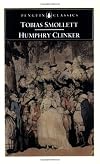
Given how briefly the best authors dedicated themselves to it, realism exerts far too much influence over our reading habits. Beware, when you pick up a Smollett, for here there is no character development, no tight plot, no interest--despite what the back of the book says--in faithfully depicting society.
Humphrey Clinker is, rather, a weird mash-up of Horace and Juvenal's satires, eighteenth century travel literature, and story collections like the Canterbury Tales. It's an epistolary show more something or other, but 'novel' doesn't quite seem to capture it. The best analogue, though, might be: it's a really good sitcom, in which an ensemble cast goes through a series of incidents, with very little connection to each other, and the final episode is, well, just the end, rather than a nice conclusion.
Who are the letter writers? Bramble is a Juvenalian satirist, complaining at great length about medicine, parvenus, the city and tourism. He could also (an uneducated guess) be a model Austen's Mr Bennett, since he combines his satirical grumpiness with much 'man of feeling' generosity. Melford is a Chaucerian story-teller, whose (anachronism alert!) campness and general lack of interest in the ladies must excite all sorts of queer-theorising. Melford's sister Lydia seems to have wandered in from a very boring Richardson novel. And yet the plot, such as it is, hinges on her. Bramble's semi-illiterate, man-chasing sister Tabitha is wonderfully awful. The yet more illiterate servant Jenkins gives Smollett a chance to make endless fun ("We were yesterday three kiple chined, by the grease of God, in the holy bands of mattermoney") of both his world and the romantic plot itself.
If you come to this expecting Austen (or even Fielding), you'll be greatly disappointed. If you come to it expecting an eighteenth century version of Family Guy, you'll probably be very amused. In other words, to all the one and two star reviewers: this isn't a bad book of realism. It's an excellent work of its own kind. I blame your teachers.
"I should renounce politics the more willingly, if I could find other topics of conversation discussed with more modesty and candour; but the daemon of party seems to have usurped every department of life. Even the world of literature and taste is divided into the most virulent factions, which revile, decry and traduce the works of one another." Bramble, p 136.
"...now, all these enormities might be remedied with a very little attention to the article of police, or civil regulation; but the wise patriots of London have taken it into their heads, that all regulation is inconsistent with liberty; and that every man ought to live in his own way, without restraint-- Nay, as there is not sense enough left among them, to be discomposed by the nuisance I have mentioned, they may, for aught I case, wallow in the mire of their own pollution." Bramble, 154. show less
Humphrey Clinker is, rather, a weird mash-up of Horace and Juvenal's satires, eighteenth century travel literature, and story collections like the Canterbury Tales. It's an epistolary show more something or other, but 'novel' doesn't quite seem to capture it. The best analogue, though, might be: it's a really good sitcom, in which an ensemble cast goes through a series of incidents, with very little connection to each other, and the final episode is, well, just the end, rather than a nice conclusion.
Who are the letter writers? Bramble is a Juvenalian satirist, complaining at great length about medicine, parvenus, the city and tourism. He could also (an uneducated guess) be a model Austen's Mr Bennett, since he combines his satirical grumpiness with much 'man of feeling' generosity. Melford is a Chaucerian story-teller, whose (anachronism alert!) campness and general lack of interest in the ladies must excite all sorts of queer-theorising. Melford's sister Lydia seems to have wandered in from a very boring Richardson novel. And yet the plot, such as it is, hinges on her. Bramble's semi-illiterate, man-chasing sister Tabitha is wonderfully awful. The yet more illiterate servant Jenkins gives Smollett a chance to make endless fun ("We were yesterday three kiple chined, by the grease of God, in the holy bands of mattermoney") of both his world and the romantic plot itself.
If you come to this expecting Austen (or even Fielding), you'll be greatly disappointed. If you come to it expecting an eighteenth century version of Family Guy, you'll probably be very amused. In other words, to all the one and two star reviewers: this isn't a bad book of realism. It's an excellent work of its own kind. I blame your teachers.
"I should renounce politics the more willingly, if I could find other topics of conversation discussed with more modesty and candour; but the daemon of party seems to have usurped every department of life. Even the world of literature and taste is divided into the most virulent factions, which revile, decry and traduce the works of one another." Bramble, p 136.
"...now, all these enormities might be remedied with a very little attention to the article of police, or civil regulation; but the wise patriots of London have taken it into their heads, that all regulation is inconsistent with liberty; and that every man ought to live in his own way, without restraint-- Nay, as there is not sense enough left among them, to be discomposed by the nuisance I have mentioned, they may, for aught I case, wallow in the mire of their own pollution." Bramble, 154. show less

I'm a fan of Smollett's picaresques Roderick Random and Humphrey Clinker, and even more so of his Englishing of Don Quixote. I also adore his appearance as the cantankerous (Scottish) Brit abroad, "Smellfungus", in Sterne's Sentimental Journey, written in part as a satirical response to this, Smollett's vinegarish account of his two-year tour, an attempt to recover from the death at 15 of his only child and also to benefit his ailing respiratory system. And the dour Scot's antagonistic show more interactions with the innkeepers, postillions and landlords of the Continent, and his constant unfavourable comparisons of them with their British equivalents, are as much fun as I expected. The French come in for particular abuse, excoriated for their laziness, vanity and above all their shameless pursuit of other (i.e. British) men's wives. The Italians are slightly more agreeable, though sharing their Gallic cousins' absurd religious rituals. Smollett's philippic against duelling is a highlight, as is the incident where he upbraids at length a fellow traveler, believing the poor man to be the local postmaster responsible for assigning him less than adequate horses. There are certain observations on his own countrymen that hold as true today: their despair at not being provided milk for their tea; their self-sabotage through failure to adequately tip; their unaccountable habit of holding aloof each other when they meet by chance in a foreign town.
Smollett's account is dragged down by his fussy insistence on providing complete reports on the local economy and the price of everything everywhere he goes, as well as his meticulous detailing of the ancient ruins and monuments to be found in the South of France and every piece of art he views in Florence. But despite his acerbity and pedantry, he comes across as fundamentally honest and harsh but fair in his judgments. At the very least, dear Smellfungus can't be accused of "going native"! show less
Smollett's account is dragged down by his fussy insistence on providing complete reports on the local economy and the price of everything everywhere he goes, as well as his meticulous detailing of the ancient ruins and monuments to be found in the South of France and every piece of art he views in Florence. But despite his acerbity and pedantry, he comes across as fundamentally honest and harsh but fair in his judgments. At the very least, dear Smellfungus can't be accused of "going native"! show less

As I've worked on the Libraries of Early America (and the Legacy Libraries in general), a few works of literature tend to appear again and again: Don Quixote, Shakespeare, Homer, Milton, &c.). One of these is Tobias Smollett's first novel, The Adventures of Roderick Random (first published in 1748; I read the 2008 Oxford World's Classics edition). I thought this summer would offer a good chance to dig into this picaresque tale and see if I found it as interesting and/or entertaining as show more previous generations of readers.
Published when its author was just 27 years old, and drawing inspiration at least partly from Don Quixote and Gil Blas (as well as on Smollett's own youthful experiences to a degree), this is the engaging and often hilarious story of a young man's roller-coaster ride through childhood and adolescence. Cast out by his father's family and forced to make his own way in the world, the narrator sets off from his native Scotland to try his luck in London. But no sooner does Roderick (or Rory, as he is affectionately known by some) catch a break or find a job he likes than the fates intervene and toss him to the bottom of the heap again (in all sorts of comical ways).
Assisted by his erstwhile and ever-trusting friend Strap, and his worthy uncle Tom Bowling, Random tries his best to make his way in the world, but it's a rare ten-page stretch in which his fortunes are not entirely reversed, usually but not always as a result of Random's own ingenuousness and trusting nature. His adventures take him halfway around the world, as a surgeon's assistant abroad the British fleet against Cartagena in 1741, and again abroad a slave ship bound for Jamaica. From the back alleys of London to the salons of Paris and Bath, Random sees it all as he tries to get ahead (and, for once, actually manage to stay there).
Smollett's incisive wit comes through not only in the telling and amusing names he assigns to his bit players, but also in the satirical treatment of British society, of which few elements escape his pen: among the areas most thoroughly treated are naval customs and culture, political knavery and preferment, and the linkages of monetary worth with marriage potential.
Well worth a read if you've not had the chance, and I'd advise taking your time with it; it'll bear a good close read, and you'll find more reasons to chuckle that way.
http://philobiblos.blogspot.com/2010/08/book-review-adventures-of-roderick.html show less
Published when its author was just 27 years old, and drawing inspiration at least partly from Don Quixote and Gil Blas (as well as on Smollett's own youthful experiences to a degree), this is the engaging and often hilarious story of a young man's roller-coaster ride through childhood and adolescence. Cast out by his father's family and forced to make his own way in the world, the narrator sets off from his native Scotland to try his luck in London. But no sooner does Roderick (or Rory, as he is affectionately known by some) catch a break or find a job he likes than the fates intervene and toss him to the bottom of the heap again (in all sorts of comical ways).
Assisted by his erstwhile and ever-trusting friend Strap, and his worthy uncle Tom Bowling, Random tries his best to make his way in the world, but it's a rare ten-page stretch in which his fortunes are not entirely reversed, usually but not always as a result of Random's own ingenuousness and trusting nature. His adventures take him halfway around the world, as a surgeon's assistant abroad the British fleet against Cartagena in 1741, and again abroad a slave ship bound for Jamaica. From the back alleys of London to the salons of Paris and Bath, Random sees it all as he tries to get ahead (and, for once, actually manage to stay there).
Smollett's incisive wit comes through not only in the telling and amusing names he assigns to his bit players, but also in the satirical treatment of British society, of which few elements escape his pen: among the areas most thoroughly treated are naval customs and culture, political knavery and preferment, and the linkages of monetary worth with marriage potential.
Well worth a read if you've not had the chance, and I'd advise taking your time with it; it'll bear a good close read, and you'll find more reasons to chuckle that way.
http://philobiblos.blogspot.com/2010/08/book-review-adventures-of-roderick.html show less
Lists
Awards


You May Also Like


Associated Authors
Statistics
- Works
- 139
- Also by
- 18
- Members
- 3,946
- Popularity
- #6,405
- Rating
- 3.9
- Reviews
- 58
- ISBNs
- 332
- Languages
- 5
- Favorited
- 15
