
Ann Radcliffe (1764–1823)
Author of The Mysteries of Udolpho
About the Author
Ann Radcliffe was born Ann Ward in England on July 9, 1764. She was the only child of William Ward and Anne Oates Ward. In 1788 she married William Radcliffe. They had no children. Ann published The Castles of Athlin and Dunbayne in 1789. Other works include A Sicilian Romance, The Romance of the show more Forest, The Mysteries of Udolpho, and The Italian. She found much success with The Romance of the Forest and it established her as a Gothic novelist. Her later novels influenced other authors including Jane Austen, Sir Walter Scott, and Mary Wollstonecraft. She died on February 7, 1823 from respiratory problems. (Bowker Author Biography) show less
Image credit: Anne Ward Radcliffe. Wikimedia Commons.
Works by Ann Radcliffe
The Mysteries of Udolpho, A Romance: Interspersed with Some Pieces of Poetry, vol. II (1993) 41 copies
Two Gothic Classics by Women: The Italian; Northanger Abbey (Signet Classic) (1995) 39 copies, 1 review
The Mysteries of Udolpho, A Romance: Interspersed with Some Pieces of Poetry, vol. I (2005) 38 copies
A journey made in the summer of 1794, through Holland and the Western frontier of Germany (1795) (1975) 15 copies, 1 review
Les Evadés des ténèbres : Les Mystères du château d'Udolphe - Frankenstein - Carmilla - Le Fanu - Le Golem (1989) 11 copies
Five Gothic Masterpieces: The Mysteries of Udolpho, The Great God Pan, Frankenstein, Carmilla, and Dracula (2017) 9 copies
The Complete Works of Ann Radcliffe: The Castles of Athlin and Dunbayne, A Sicilian Romance, The Romance of the Forest, The Italian and More (2012) 6 copies
The Mysteries of Udolpho, A Romance: Interspersed with Some Pieces of Poetry, vol. III (2006) 5 copies
Mrs. Radcliffe's Novels: The Italian, The Romance Of The Forest, The Mysteries Of Udolpho (2007) 3 copies
La abadía de San Alban 2 copies
The Romance of the Forest & Northanger Abbey — Author — 1 copy
Romansa Hutan 1 copy
The Female Advocate, Or An Attempt To Recover The Rights of Women From Male Usurpation (2014) 1 copy
[Works] 1 copy
British Novelists: Vol. VI 1 copy
British Novelists: Vol. V 1 copy
MISTERELE DIN UDOLPHO VOL2 1 copy
Anglický gotický román 1 copy
Associated Works
Poems Bewitched and Haunted (Everyman's Library Pocket Poets Series) (2005) — Contributor — 230 copies
Great British Tales of Terror: Gothic Stories of Horror and Romance 1765-1840 (1972) — Contributor — 86 copies
Northanger Abbey | Mysteries of Udolpho (abridged) | Castle of Otranto (1963) — Contributor — 70 copies, 3 reviews
Ladies of the Gothics: Tales of Romance and Terror by the Gentle Sex (1975) — Contributor — 48 copies, 1 review
Three eighteenth century romances: The castle of Otranto; Vathek; The romance of the forest (1971) — Contributor — 46 copies, 2 reviews
The Complete Northanger Horrid Novel Collection (9 Books of Gothic Romance and Horror) (2013) — Contributor — 28 copies, 1 review
The Midnight Inkwell: Sinister Short Stories by Classic Women Writers (2023) — Contributor — 3 copies
Anthology of Romanticism Volume Two: Selections From The Pre-Romantic Movement — Contributor — 2 copies
The King's Story Book — Contributor — 1 copy
Tagged
Common Knowledge
- Canonical name
- Radcliffe, Ann
- Legal name
- Radcliffe, Ann Ward
- Other names
- Mrs. Radcliffe
Ward, Ann (birth) - Birthdate
- 1764-07-09
- Date of death
- 1823-02-07
- Gender
- female
- Occupations
- novelist
poet - Relationships
- Ward, William (father)
Radcliffe, William (husband)
Lee, Sophia (friend) - Short biography
- Mrs. Radcliffe was the most popular writer of her day! She was born Ann Ward and in 1787 married journalist William Radcliffe. She created six spooky novels with a blend of the supernatural, morals, romantic descriptions of landscape, and drama that British readers just could not get enough of. Although she was not the first to write Gothic fiction, she's considered a pioneer of the genre and a major influence on many other writers. (See for example, Jane Austen's Northanger Abbey.)
- Nationality
- Great Britain
- Birthplace
- Holborn, London, England, UK
- Places of residence
- Bath, Somerset, England, UK
London, England, UK - Place of death
- Ramsgate, Kent, England, UK
- Burial location
- Chapel of Ease, St. George's Church, Hanover Square, London, England, UK
- Map Location
- England, UK
Members
Discussions
Mrs. Radcliffe in Gothic Literature (February 2022)
The Mysteries of Udolpho in Gothic Literature (September 2018)
The Italian by Ann Radcliffe - lyzard tutoring SqueakyChu in 75 Books Challenge for 2014 (May 2016)
1001 Group Read May, 2012: The Mysteries of Udolpho in 1001 Books to read before you die (September 2012)
Reviews

The Mysteries of Udolpho was Ann Radcliffe’s fourth and most popular novel. Published in 1794, it was one of the earliest works of Gothic fiction, a tremendously popular genre of the period. Jane Austen was significantly influenced by Udolpho, satirizing the Gothic fiction genre in Northanger Abbey.
I avoided this book for years, thanks to its length and derision from fellow readers. Inspired by Jane Austen’s Bookshelf, I finally took the plunge. And I loved it! Okay, so you have to get show more past 8 chapters of our heroine, Emily, traipsing pointlessly around the French countryside on her father’s whim. You also have to either read (or in my case skip over) a lot of very bad poetry. It takes a long time for Emily to reach Castle Udolpho but by that point there’s romance, intrigue, and skullduggery galore. Emily, under the “care” of her aunt and the aunt’s abusive husband, was forced to leave the love of her life to essentially be held captive in the castle where strange, eerie things are happening. The aunt’s husband is a villain of the highest order, and hopes to profit from Emily’s family wealth. Radcliffe’s portrayal of a controlling, abusive man is so on the mark it made my skin crawl. The numerous titular “mysteries” appear and remain unexplained as the novel winds through many twists and turns. Radcliffe expertly ties everything up with reveals that are both unexpected and satisfying. show less
I avoided this book for years, thanks to its length and derision from fellow readers. Inspired by Jane Austen’s Bookshelf, I finally took the plunge. And I loved it! Okay, so you have to get show more past 8 chapters of our heroine, Emily, traipsing pointlessly around the French countryside on her father’s whim. You also have to either read (or in my case skip over) a lot of very bad poetry. It takes a long time for Emily to reach Castle Udolpho but by that point there’s romance, intrigue, and skullduggery galore. Emily, under the “care” of her aunt and the aunt’s abusive husband, was forced to leave the love of her life to essentially be held captive in the castle where strange, eerie things are happening. The aunt’s husband is a villain of the highest order, and hopes to profit from Emily’s family wealth. Radcliffe’s portrayal of a controlling, abusive man is so on the mark it made my skin crawl. The numerous titular “mysteries” appear and remain unexplained as the novel winds through many twists and turns. Radcliffe expertly ties everything up with reveals that are both unexpected and satisfying. show less
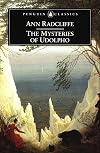
THIS REVIEW IS SPOILERIFIC! However, it's a 200+ year old book, so you might have heard the plot somewhere...
NOTE: Thoughts from my second tour of the book at the bottom.
In the Mysteries of Udolpho we have the grandmother of the Gothic novel, springhead of every soap opera, the original melodrama, something so outlandish and overwrought that it has been -- and deserves to be -- much mocked and parodied. At the same time, it commands some respect because of what it is -- an early novel, show more written when the form was still in its infancy, written by a woman at a time when women had no access to much education or ability to make a living for themselves, written at a time when the very idea of "what was a woman" had barely pushed out the roots of change.
That in itself sounds overwrought, but one must make large claims for this novel, this great ancestor of the novel, still read when so many of its contemporaries are lost in the dusty stacks of archival libraries. I will admit readily that, to finish the last 200+ pages of the novel, I stayed up very late.
But now that we have spoken to its dignity and given the respect it deserves for its place in history, let's get to the myriad stupid, irritating things Radcliffe does that infuriate the modern reader and even drove contemporary readers (like Jane Austen, most famously) to mock it.
Our heroine, Emily St. Aubert, is the only child of a gentleman of retiring and pure nature. We know this because he has the word "Saint" abbreviated in his name and because he rhapsodizes about nature and death and makes pious speeches about Heaven and death. We are told he does good for the poor even though he is, for a person of his social status, poor himself, and so everyone loves him despite his somewhat holier-than-thou attitude. He has raised his daughter to be just like him. Emily is well educated (for a woman) with music and poetry and drawing, her fine, delicate, high spiritual nature underlined by her tendency to stare at trees and mountains.
Emily has many features which are designed to mark her as a woman of delicacy and grace. She has beauty and a very sympathetic heart -- we are told -- which she exhibits when it is convenient or will underline how kind and beautiful she is. What she lacks are any braincells devoted to such foreign things as logic, reason, common sense, or even the lessons of simple observation. While she may spend long hours in raptures over leaping rivulets and verdant demonstrations of nature's power, the simpler facts elude her.
Of course, the poor girl spends so much time fainting, she must have suffered dozens of head injuries or have some sort of medical affliction unknown in Radcliffe's time but treated in ours with a colorful little pill, possibly available in the cheaper generic. She faints a lot. She faints to excess, shall we say, and over everything. Some are understandable, while others are just plain annoying. I am tempted to buy my own copy of the book for the pleasure of taking a pink highlighter and marking every time Emily faints, nearly faints, or cannot support herself. Really, she should have loosened her corset.
When Emily is not fainting, she is weeping. When not weeping, there is sobbing, crying, gasping, moaning, and sighing (oh, let us not forget sighing).
Now, she has a few things to weep and sigh about. First, her mother dies rather suddenly. Then, within probably a year, her father becomes ill and, while traveling for his health, sickens and dies. By strange coincidence (which I really want to term "coinkedink, because that's how often these "just so happens" happen) he does so near an abandoned chateau where we are presented with our First Mystery -- and there will be many more, all made Very Mysterious. Orphaned and under age, she is sent to live with her capricious and self centered aunt. This aunt toys with her by first denying, then allowing, then denying again Emily to be married to her beloved Valencourt.
Oh, let's take a moment to talk about Valencourt. Here's another useless article. He is, indeed, Emily's soul mate and mirror, although instead of fainting and sinking helpless into conveniently placed chairs, he exclaims, paces around, and skulks in the darkness. Now that I think about it, except for the bloodsucking and sparkling, he is a forebear of Edward Cullens, what with his stalking behavior, declarations, and scary possessiveness. Yes, he is the template for the Romantic Hero. He also is fairly annoying because he doesn't do much except give his money away, get rapturous in the trees, and the aforementioned skulking.
Back to Emily. Torn from her love when her aunt marries an Italian named Montoni (Dun dun dun!) and taken to Italy, she waxes rhapsodic on Venetian gondolas rowed out to sea under the moonlight and resists the attempts of her aunt and Montoni to force her into marriage with a Count Moreno. Oh, did I not mention that at least 1/3 of men who spend time in Emily's presence fall in love -- or at least in lust -- with her, often violently? Talk about pheromones. Those who resist her charms either take up the villain role of wanting to control and torment her or want to father her. And that sums up all the male characters. Anyway, to escape Moreno (among other things) Montoni takes them all into the mountains to his castle Udolpho, where he turns warlord and bandit according to the rules of war in the Italian states at the time. The central part of the novel happens in this pile, and Emily experiences constant horror, terror, fear, etc.,etc., because she won't spend any time thinking.
Now, she is in a tough situation, but she does everything she can to milk it for all it's worth in drama -- much leaning on window casements, much tender poking at emotional wounds, more sighing. She also collects ghost stories and catches glimpses of things that thrill her with terror because she won't take any time to properly observe them or think it over. But these are important, because they are More Mysteries. Anyway, her aunt dies, leaving her inheritor of valuable properties Montoni wants her to sign over. Her serving woman, Annette -- another garrulous, irritating idiot who serves only as a bridge between Emily and one of the two sensible characters in the novel, Ludovico -- helps to keep Emily upset as much as possible. Ludovico eventually engineers an escape for Emily and a Frenchman kept prisoner in Udolpho. They sail back to France and by Some Chance, their ship wrecks near that very Chateau where we had our First Mystery. Now, with the introduction of Count de Villefort (the other sensible person in this novel, for which I am SO grateful), the mysteries pile up a bit and then unravel. Emily is almost reunited with Valencourt, but he's ruined his reputation and lost his fortune in Paris, so now he's not worthy of her. They spend quite a long time tormenting each other with declarations of Separating Forever, while not actually leaving the room, and Never Seeing Each Other More, while staring and sighing.
We then have some more ghost silliness which turns out to be pirates. Ludovico vanishes mysteriously only to turn up later when the Count is attacked by said pirates (in the mountains! but whatever) and finally the mysteries begin to unravel. Emily comes of age to inherit, Montoni is captured and killed so those properties are now hers, the real owner of Udolpho is a crazy nun in a nearby convent who was REALLY the Italian mistress of the previous owner of the chalet who contrived to kill her lover's wife who JUST HAPPENED to be Emily's aunt and the sister of her father, who wanted to CONCEAL the mystery of his beloved sister's death but Emily is such a twin to this particular paragon that the truth outs, and Valencourt is not really all that bad, but just noble and stupid.
Oh, and the Thing Behind the Veil that so terrified Emily is a wax figure. I think it is the predecessor of Aunt Ada Doom's "Something Nasty in the Woodshed".
Radcliffe does a few things that nearly sent her book crashing against a wall. First, Emily sees Mysterious Things that upset, terrify, haunt, and worry her -- but we do not get to see these things for ourselves, even in part. There are some words in a document she wasn't supposed to see (but fainting messed her up there) which Radcliffe never does clear up, although by the very end of the novel we get full and somewhat tedious explanations.
Second, Radcliffe never has a character tell us a thing until they have told us why they can't tell us and made us promise we won't tell. Once they agree to speak, we get a few more minutes of details about how horrible it is and why they can't speak of it. And when they finally DO speak of it, it's rare they actually SAY anything. Or, worse still, they will simply refuse to convey information "because of honour". There is a great deal of what I consider pure deception by omission, all done in the name of paper thin honour.
Radcliffe only tops that little technique, however, by use of the "Oh, YOU know what I mean" technique. Characters will assume they already know the substance of a conversation before it happens, which of course means they are wrong about what they think they know. Usually both characters think they know and think the other person knows, and so you can imagine how much useful information is passed along. It's like the Passive-Aggressive Playbook.
Then there are the travelogues, the interminable descriptions of every terrifying or overwhelming crag, tree, precipice, cascade,sunset, starry or cloudy sky, distant view, flower, twig, dust mote. Luckily, once you learn Radcliffe's set up for these, they can be skimmed or skipped entirely. She might as well have put [insert atmosphere X here] and saved ink.
My last complaint is about Emily's dog, Marchon. The poor creature keeps vanishing, completely forgotten, until he's needed to bark an ill-timed alert or lick his suffering mistress's hand. For all the begging she did to bring him along, he was left behind at Udolpho. Oh Well. Furry plot device.
Yet, with all these irritations (and more I don't have space or patience to list) the novel still managed to capture my attention. I shed a few tears with Emily over the death of her father. I felt anxious to know how she would escape. I was mystified over Ludovico's disappearance. I stayed up to read the ending.
And yet I could not help laughing, sometimes with irritation, over the contrivance and coincidence, over the extremes to which Radcliffe went to arouse her reader's emotion and bypass any reason or rationale. Here we have the heart of the romance novel, the seedlings of the horror story, the first dark shade of the mystery. Even fantasy and science fiction can trace their lineage back here, for Mary Shelly certainly read the book and felt its influence in [Frankenstein]. The Mysteries of Udolpho stands as the Tree of Life for modern genre literature.
Also, you could make a great drinking game out of it.
[edited for clarity and because I hate typos]
July 30, 2011 -- Just got my own copy and am rereading it with the express purpose of marking every single fainting spell Emily has.
August 19, 2011 -- once again, stayed up late to finish the downhill slide of this book. Emily St. Aubert faints a total of 30 times, and gets a little faint-ish several more. Since the story encompasses a single year, you might easily suppose the young woman had a problem. Other characters who faint -- M. St. Aubert (more than once), Valencourt, Count Morona, Mme. Cheron/Montoni, Lady Blanche, St Foix, Dorothea, Annette, and an unnamed servant girl. Men usually faint due to injury, women from fear or excessive emotion. Oh, and one minor male character had fits and the mysterious nun Agnes/Lady Laurentini has "phrenzies".
And the CRYING. The weeping, sobbing, teardrops, flooded eyes, and so forth.
Still, the book holds up. I found it much easier to read, and actually looked into the occasional (stiff, boring, almost annoying) poems attributed to either Emily or Valencourt (stuff quoted from actual poets was usually good or at least tolerable). Radcliffe was not a poet, but she kept trying. The book gets an extra star for a second read (within a year!) and because it is a very good example of the early novel. It also stands as an excellent BAD example of what modern writers must not do -- the characters do not change despite all they experience. The only one who has even the smallest change at all is Mme. Cheron/Montoni who, upon the point of her death makes some atonement for her mistreatment of Emily, although it is less a change in her personality as using Emily to revenge herself upon Montoni. Still, the villains are villainous, the virtuous return always to their virtues, the silly stay silly, the loyal remain loyal -- everyone is the same person through and through from the start to the end. The only one who could be said to have learned a single thing is Valancourt, and all he learned is that he should stay out of Paris because it's full of vice he isn't smart enough to avoid.
This time through, Valancourt annoyed me far more than Emily did the first time. He's fickle, demanding, and despite his generous ways is still essentially driven only by his feelings at the moment. Still, both Emily and Valancourt are the sort who prefer to pick over the wounds of the past to keep them fresh and painful rather than moving on and letting stuff heal. Of course, if they did that, we'd have a completely different story. show less
NOTE: Thoughts from my second tour of the book at the bottom.
In the Mysteries of Udolpho we have the grandmother of the Gothic novel, springhead of every soap opera, the original melodrama, something so outlandish and overwrought that it has been -- and deserves to be -- much mocked and parodied. At the same time, it commands some respect because of what it is -- an early novel, show more written when the form was still in its infancy, written by a woman at a time when women had no access to much education or ability to make a living for themselves, written at a time when the very idea of "what was a woman" had barely pushed out the roots of change.
That in itself sounds overwrought, but one must make large claims for this novel, this great ancestor of the novel, still read when so many of its contemporaries are lost in the dusty stacks of archival libraries. I will admit readily that, to finish the last 200+ pages of the novel, I stayed up very late.
But now that we have spoken to its dignity and given the respect it deserves for its place in history, let's get to the myriad stupid, irritating things Radcliffe does that infuriate the modern reader and even drove contemporary readers (like Jane Austen, most famously) to mock it.
Our heroine, Emily St. Aubert, is the only child of a gentleman of retiring and pure nature. We know this because he has the word "Saint" abbreviated in his name and because he rhapsodizes about nature and death and makes pious speeches about Heaven and death. We are told he does good for the poor even though he is, for a person of his social status, poor himself, and so everyone loves him despite his somewhat holier-than-thou attitude. He has raised his daughter to be just like him. Emily is well educated (for a woman) with music and poetry and drawing, her fine, delicate, high spiritual nature underlined by her tendency to stare at trees and mountains.
Emily has many features which are designed to mark her as a woman of delicacy and grace. She has beauty and a very sympathetic heart -- we are told -- which she exhibits when it is convenient or will underline how kind and beautiful she is. What she lacks are any braincells devoted to such foreign things as logic, reason, common sense, or even the lessons of simple observation. While she may spend long hours in raptures over leaping rivulets and verdant demonstrations of nature's power, the simpler facts elude her.
Of course, the poor girl spends so much time fainting, she must have suffered dozens of head injuries or have some sort of medical affliction unknown in Radcliffe's time but treated in ours with a colorful little pill, possibly available in the cheaper generic. She faints a lot. She faints to excess, shall we say, and over everything. Some are understandable, while others are just plain annoying. I am tempted to buy my own copy of the book for the pleasure of taking a pink highlighter and marking every time Emily faints, nearly faints, or cannot support herself. Really, she should have loosened her corset.
When Emily is not fainting, she is weeping. When not weeping, there is sobbing, crying, gasping, moaning, and sighing (oh, let us not forget sighing).
Now, she has a few things to weep and sigh about. First, her mother dies rather suddenly. Then, within probably a year, her father becomes ill and, while traveling for his health, sickens and dies. By strange coincidence (which I really want to term "coinkedink, because that's how often these "just so happens" happen) he does so near an abandoned chateau where we are presented with our First Mystery -- and there will be many more, all made Very Mysterious. Orphaned and under age, she is sent to live with her capricious and self centered aunt. This aunt toys with her by first denying, then allowing, then denying again Emily to be married to her beloved Valencourt.
Oh, let's take a moment to talk about Valencourt. Here's another useless article. He is, indeed, Emily's soul mate and mirror, although instead of fainting and sinking helpless into conveniently placed chairs, he exclaims, paces around, and skulks in the darkness. Now that I think about it, except for the bloodsucking and sparkling, he is a forebear of Edward Cullens, what with his stalking behavior, declarations, and scary possessiveness. Yes, he is the template for the Romantic Hero. He also is fairly annoying because he doesn't do much except give his money away, get rapturous in the trees, and the aforementioned skulking.
Back to Emily. Torn from her love when her aunt marries an Italian named Montoni (Dun dun dun!) and taken to Italy, she waxes rhapsodic on Venetian gondolas rowed out to sea under the moonlight and resists the attempts of her aunt and Montoni to force her into marriage with a Count Moreno. Oh, did I not mention that at least 1/3 of men who spend time in Emily's presence fall in love -- or at least in lust -- with her, often violently? Talk about pheromones. Those who resist her charms either take up the villain role of wanting to control and torment her or want to father her. And that sums up all the male characters. Anyway, to escape Moreno (among other things) Montoni takes them all into the mountains to his castle Udolpho, where he turns warlord and bandit according to the rules of war in the Italian states at the time. The central part of the novel happens in this pile, and Emily experiences constant horror, terror, fear, etc.,etc., because she won't spend any time thinking.
Now, she is in a tough situation, but she does everything she can to milk it for all it's worth in drama -- much leaning on window casements, much tender poking at emotional wounds, more sighing. She also collects ghost stories and catches glimpses of things that thrill her with terror because she won't take any time to properly observe them or think it over. But these are important, because they are More Mysteries. Anyway, her aunt dies, leaving her inheritor of valuable properties Montoni wants her to sign over. Her serving woman, Annette -- another garrulous, irritating idiot who serves only as a bridge between Emily and one of the two sensible characters in the novel, Ludovico -- helps to keep Emily upset as much as possible. Ludovico eventually engineers an escape for Emily and a Frenchman kept prisoner in Udolpho. They sail back to France and by Some Chance, their ship wrecks near that very Chateau where we had our First Mystery. Now, with the introduction of Count de Villefort (the other sensible person in this novel, for which I am SO grateful), the mysteries pile up a bit and then unravel. Emily is almost reunited with Valencourt, but he's ruined his reputation and lost his fortune in Paris, so now he's not worthy of her. They spend quite a long time tormenting each other with declarations of Separating Forever, while not actually leaving the room, and Never Seeing Each Other More, while staring and sighing.
We then have some more ghost silliness which turns out to be pirates. Ludovico vanishes mysteriously only to turn up later when the Count is attacked by said pirates (in the mountains! but whatever) and finally the mysteries begin to unravel. Emily comes of age to inherit, Montoni is captured and killed so those properties are now hers, the real owner of Udolpho is a crazy nun in a nearby convent who was REALLY the Italian mistress of the previous owner of the chalet who contrived to kill her lover's wife who JUST HAPPENED to be Emily's aunt and the sister of her father, who wanted to CONCEAL the mystery of his beloved sister's death but Emily is such a twin to this particular paragon that the truth outs, and Valencourt is not really all that bad, but just noble and stupid.
Oh, and the Thing Behind the Veil that so terrified Emily is a wax figure. I think it is the predecessor of Aunt Ada Doom's "Something Nasty in the Woodshed".
Radcliffe does a few things that nearly sent her book crashing against a wall. First, Emily sees Mysterious Things that upset, terrify, haunt, and worry her -- but we do not get to see these things for ourselves, even in part. There are some words in a document she wasn't supposed to see (but fainting messed her up there) which Radcliffe never does clear up, although by the very end of the novel we get full and somewhat tedious explanations.
Second, Radcliffe never has a character tell us a thing until they have told us why they can't tell us and made us promise we won't tell. Once they agree to speak, we get a few more minutes of details about how horrible it is and why they can't speak of it. And when they finally DO speak of it, it's rare they actually SAY anything. Or, worse still, they will simply refuse to convey information "because of honour". There is a great deal of what I consider pure deception by omission, all done in the name of paper thin honour.
Radcliffe only tops that little technique, however, by use of the "Oh, YOU know what I mean" technique. Characters will assume they already know the substance of a conversation before it happens, which of course means they are wrong about what they think they know. Usually both characters think they know and think the other person knows, and so you can imagine how much useful information is passed along. It's like the Passive-Aggressive Playbook.
Then there are the travelogues, the interminable descriptions of every terrifying or overwhelming crag, tree, precipice, cascade,sunset, starry or cloudy sky, distant view, flower, twig, dust mote. Luckily, once you learn Radcliffe's set up for these, they can be skimmed or skipped entirely. She might as well have put [insert atmosphere X here] and saved ink.
My last complaint is about Emily's dog, Marchon. The poor creature keeps vanishing, completely forgotten, until he's needed to bark an ill-timed alert or lick his suffering mistress's hand. For all the begging she did to bring him along, he was left behind at Udolpho. Oh Well. Furry plot device.
Yet, with all these irritations (and more I don't have space or patience to list) the novel still managed to capture my attention. I shed a few tears with Emily over the death of her father. I felt anxious to know how she would escape. I was mystified over Ludovico's disappearance. I stayed up to read the ending.
And yet I could not help laughing, sometimes with irritation, over the contrivance and coincidence, over the extremes to which Radcliffe went to arouse her reader's emotion and bypass any reason or rationale. Here we have the heart of the romance novel, the seedlings of the horror story, the first dark shade of the mystery. Even fantasy and science fiction can trace their lineage back here, for Mary Shelly certainly read the book and felt its influence in [Frankenstein]. The Mysteries of Udolpho stands as the Tree of Life for modern genre literature.
Also, you could make a great drinking game out of it.
[edited for clarity and because I hate typos]
July 30, 2011 -- Just got my own copy and am rereading it with the express purpose of marking every single fainting spell Emily has.
August 19, 2011 -- once again, stayed up late to finish the downhill slide of this book. Emily St. Aubert faints a total of 30 times, and gets a little faint-ish several more. Since the story encompasses a single year, you might easily suppose the young woman had a problem. Other characters who faint -- M. St. Aubert (more than once), Valencourt, Count Morona, Mme. Cheron/Montoni, Lady Blanche, St Foix, Dorothea, Annette, and an unnamed servant girl. Men usually faint due to injury, women from fear or excessive emotion. Oh, and one minor male character had fits and the mysterious nun Agnes/Lady Laurentini has "phrenzies".
And the CRYING. The weeping, sobbing, teardrops, flooded eyes, and so forth.
Still, the book holds up. I found it much easier to read, and actually looked into the occasional (stiff, boring, almost annoying) poems attributed to either Emily or Valencourt (stuff quoted from actual poets was usually good or at least tolerable). Radcliffe was not a poet, but she kept trying. The book gets an extra star for a second read (within a year!) and because it is a very good example of the early novel. It also stands as an excellent BAD example of what modern writers must not do -- the characters do not change despite all they experience. The only one who has even the smallest change at all is Mme. Cheron/Montoni who, upon the point of her death makes some atonement for her mistreatment of Emily, although it is less a change in her personality as using Emily to revenge herself upon Montoni. Still, the villains are villainous, the virtuous return always to their virtues, the silly stay silly, the loyal remain loyal -- everyone is the same person through and through from the start to the end. The only one who could be said to have learned a single thing is Valancourt, and all he learned is that he should stay out of Paris because it's full of vice he isn't smart enough to avoid.
This time through, Valancourt annoyed me far more than Emily did the first time. He's fickle, demanding, and despite his generous ways is still essentially driven only by his feelings at the moment. Still, both Emily and Valancourt are the sort who prefer to pick over the wounds of the past to keep them fresh and painful rather than moving on and letting stuff heal. Of course, if they did that, we'd have a completely different story. show less

The Mysteries of Udolpho came within pages of being the third book off one of my reading lists that was left unfinished. Ann Radcliffe's novel relating the ordeals of Emily St. Aubert is an exasperating slog which taxes your patience through the tedious repetition of mundane details intended to elicit sympathy for her melancholy protagonist and multiple ineffective attempts to create mystery by the withholding of crucial facts by an otherwise intrusive narrator.
The first hundred pages of the show more book see Emily lose both parents in a manner more akin to batteries draining than the effects of disease, as well as losing Valancourt, the man who wins her lifelong affection despite the lack of meaningful interaction between them leading up to her infatuation. Her tearful brooding over these tragedies occupies all her spare time during this period.
After fulfilling her father's dying wish by burning his secret letters, Emily is placed in the care of her aunt, the first of several characters masquerading as wealthy while seeking to enrich themselves through favorable marriages to someone of actual wealth. Forced to travel from her native France to Venice, Emily is stalked by Count Morano, another charlatan who is so besotted with Emily that he forgets he is royalty and she nothing. His repeated proposals are enthusiastically supported by her aunt's villainous husband Montoni, who conceives to force Emily to wed the Count despite her strenuous objections. In the first but not last unbelievable turn of events, Emily unwittingly agrees to wed Morano while believing she is discussing a different topic.
On the morning before her coerced nuptials, Emily is again forced to flee in the company of her aunt and uncle, this time to Udolpho castle, where she and her aunt are held prisoner by Montoni and his despicable henchmen. During her captivity, she sees a sight so horrible she faints but tells no one what it is, including the reader and alternates between brooding over her lost love Valancourt, investigating the mysterious music and singing outside her window, and vacillating whether to sign over her birth right to Montoni in exchange for her freedom.
Unfortunately, you are only halfway through the novel at this point, and have another three hundred pages of—among myriad other nuisances—Emily's constant tears, tiresome references to her father's mysterious letters and the sight at Udolpho that caused Emily to faint, a chateau haunted by mysterious music and singing (yes, again) and a dying, disreputable nun with a secret upon which the whole novel turns.
Most disappointing about The Mysteries of Udolpho is that it is actually an entertaining and ultimately redeeming story ruined by the way Radcliffe goes about supposedly building mystery and suspense through tiresome repetition of known and uninteresting facts (which adds a significant number of unnecessary pages) and summarizing events she should have instead spent time narrating, as well as swooping in like Agatha Christie's Poirot to reveal—in two unsatisfying pages near the very end of the book—the mystery of Emily's father's letters and the horrid sight at Udolpho. If that is typical of the gothic style, this will be my only venture into the genre.
If you keep in mind the era this novel was written in, the level of sophistication of readers of the time and perhaps the lack of entertainment alternatives that would leave readers no choice but to tolerate writing of this nature, you might enjoy this book more than I did. show less
The first hundred pages of the show more book see Emily lose both parents in a manner more akin to batteries draining than the effects of disease, as well as losing Valancourt, the man who wins her lifelong affection despite the lack of meaningful interaction between them leading up to her infatuation. Her tearful brooding over these tragedies occupies all her spare time during this period.
After fulfilling her father's dying wish by burning his secret letters, Emily is placed in the care of her aunt, the first of several characters masquerading as wealthy while seeking to enrich themselves through favorable marriages to someone of actual wealth. Forced to travel from her native France to Venice, Emily is stalked by Count Morano, another charlatan who is so besotted with Emily that he forgets he is royalty and she nothing. His repeated proposals are enthusiastically supported by her aunt's villainous husband Montoni, who conceives to force Emily to wed the Count despite her strenuous objections. In the first but not last unbelievable turn of events, Emily unwittingly agrees to wed Morano while believing she is discussing a different topic.
On the morning before her coerced nuptials, Emily is again forced to flee in the company of her aunt and uncle, this time to Udolpho castle, where she and her aunt are held prisoner by Montoni and his despicable henchmen. During her captivity, she sees a sight so horrible she faints but tells no one what it is, including the reader and alternates between brooding over her lost love Valancourt, investigating the mysterious music and singing outside her window, and vacillating whether to sign over her birth right to Montoni in exchange for her freedom.
Unfortunately, you are only halfway through the novel at this point, and have another three hundred pages of—among myriad other nuisances—Emily's constant tears, tiresome references to her father's mysterious letters and the sight at Udolpho that caused Emily to faint, a chateau haunted by mysterious music and singing (yes, again) and a dying, disreputable nun with a secret upon which the whole novel turns.
Most disappointing about The Mysteries of Udolpho is that it is actually an entertaining and ultimately redeeming story ruined by the way Radcliffe goes about supposedly building mystery and suspense through tiresome repetition of known and uninteresting facts (which adds a significant number of unnecessary pages) and summarizing events she should have instead spent time narrating, as well as swooping in like Agatha Christie's Poirot to reveal—in two unsatisfying pages near the very end of the book—the mystery of Emily's father's letters and the horrid sight at Udolpho. If that is typical of the gothic style, this will be my only venture into the genre.
If you keep in mind the era this novel was written in, the level of sophistication of readers of the time and perhaps the lack of entertainment alternatives that would leave readers no choice but to tolerate writing of this nature, you might enjoy this book more than I did. show less
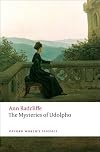
I can see why The Mysteries of Udolpho has endured. Radcliffe is clearly a skilled writer, and her control of atmosphere is undeniable. The landscapes are vivid, the emotional tone is consistent, and the novel is deeply invested in creating a sustained sense of suspense and unease.
That said, this ultimately did not work for me.
Much of the novel’s tension is built through extended description and delayed revelation. Long passages of scenery and mood are meant to heighten emotional stakes, show more but for me they often felt like narrative stalling rather than progression. I understand the intention — to create a sense of the sublime and psychological pressure — but I found myself wanting the story to move forward rather than circle its own atmosphere.
More importantly, the core conflicts are not ones I naturally engage with. The dangers in the novel are largely social and psychological: reputation, propriety, inheritance, and control within rigid societal structures. While these are meaningful within the context of the time, they never felt immediate or compelling to me as sources of horror or tension.
Emily herself is often praised as a model of sensibility, but this was another point of distance for me. Her consistent restraint, rationality, and emotional control made her difficult for me to connect with. Instead of deepening the stakes, her responses often flattened them, making the narrative feel more observational than immersive.
I also struggled with the romantic framework underlying much of the story. The emotional and moral stakes tied to love, virtue, and social position simply aren’t areas I find particularly engaging, and they form a significant portion of the novel’s focus.
None of this is a flaw in the book itself. Udolpho is doing exactly what it set out to do, and doing it well. But its strengths — atmospheric excess, moral sensibility, and socially grounded tension — are not the elements I look for in fiction, particularly in horror or Gothic literature.
I’m glad I read it for its historical importance and to better understand the development of the Gothic tradition, but it confirmed that this style of storytelling is not for me. show less
That said, this ultimately did not work for me.
Much of the novel’s tension is built through extended description and delayed revelation. Long passages of scenery and mood are meant to heighten emotional stakes, show more but for me they often felt like narrative stalling rather than progression. I understand the intention — to create a sense of the sublime and psychological pressure — but I found myself wanting the story to move forward rather than circle its own atmosphere.
More importantly, the core conflicts are not ones I naturally engage with. The dangers in the novel are largely social and psychological: reputation, propriety, inheritance, and control within rigid societal structures. While these are meaningful within the context of the time, they never felt immediate or compelling to me as sources of horror or tension.
Emily herself is often praised as a model of sensibility, but this was another point of distance for me. Her consistent restraint, rationality, and emotional control made her difficult for me to connect with. Instead of deepening the stakes, her responses often flattened them, making the narrative feel more observational than immersive.
I also struggled with the romantic framework underlying much of the story. The emotional and moral stakes tied to love, virtue, and social position simply aren’t areas I find particularly engaging, and they form a significant portion of the novel’s focus.
None of this is a flaw in the book itself. Udolpho is doing exactly what it set out to do, and doing it well. But its strengths — atmospheric excess, moral sensibility, and socially grounded tension — are not the elements I look for in fiction, particularly in horror or Gothic literature.
I’m glad I read it for its historical importance and to better understand the development of the Gothic tradition, but it confirmed that this style of storytelling is not for me. show less
Lists
Female Author (1)
Reading LIst (1)
1790s (1)
Out of Copyright (1)
el (3)
Book wishlist (2)
18th Century (1)
Awards


You May Also Like


Associated Authors
Statistics
- Works
- 58
- Also by
- 16
- Members
- 6,656
- Popularity
- #3,678
- Rating
- 3.4
- Reviews
- 124
- ISBNs
- 373
- Languages
- 13
- Favorited
- 23