
Clara Reeve (1729–1807)
Author of The Old English Baron: A Gothic Story
Works by Clara Reeve
Gothic Classics: The Castle of Otranto and The Old English Baron (Haunted Library Horror Classics) (2002) 44 copies, 1 review
The Two Mentors 3 copies
HIl Ivecchio barone inglese 1 copy
Anglický gotický román 1 copy
Associated Works
Tagged
Common Knowledge
- Birthdate
- 1729
- Date of death
- 1807
- Gender
- female
- Occupations
- novelist
translator - Short biography
- Clara Reeve was one of eight children born to a clergyman and his wife in Ipswich. After his death in 1755, she moved with her mother and sisters to Colchester. Her first published work was a 1772 translation from Latin of Argentis, an allegorical work by the 16th-century Scottish poet John Barclay, issued under the title The Phoenix. She also wrote several original works, the best-known of which was The Champion of Virtue, re-published a year later as The Old English Baron (1778), a Gothic novel written in imitation of -- or as a rival to -- the Castle of Otranto by Horace Walpole, with which it has often been printed. Clara Reeve also contributed to literary history with her 1785 volume The Progress of Romance, an analysis of the evolution of epic into romance and then into the novel. Sir Walter Scott, an admirer of Clara Reeve, composed a memoir of her for Ballantyne's Novelists.
- Nationality
- UK
- Birthplace
- Ipswich, England
- Places of residence
- Colchester, Essex, England, UK
- Place of death
- Ipswich, Suffolk, England, UK
- Associated Place (for map)
- England, UK
Members
Reviews

This isn't very good. The author wrote this as an attempt to produce something like The Castle of Otranto but without the unrealistic and over-the-top supernatural elements that jarred her out of the story. And, indeed, the supernatural elements here are almost subdued compared to Otranto. But what it makes up for in credibility, it more than loses in terms of predictability.
Also: emotions run dramatically wild.
Towards the end, the book needlessly drags out revealing the central conceit to show more side characters, with characters intentionally withholding crucial information so as to build up to an emotional tension in preparation for dramatic reveals and scenes of emotional release. That gets old really fast. Coupled with endless marriage preambles, it makes the final third a chore to sit through. show less
Also: emotions run dramatically wild.
Towards the end, the book needlessly drags out revealing the central conceit to show more side characters, with characters intentionally withholding crucial information so as to build up to an emotional tension in preparation for dramatic reveals and scenes of emotional release. That gets old really fast. Coupled with endless marriage preambles, it makes the final third a chore to sit through. show less
Gothic Classics: The Castle of Otranto and The Old English Baron (Haunted Library Horror Classics) by Clara Reeve
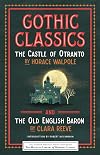
Gothic Classics by Horace Walpole and Clara Reeve is a 2022 Poisoned Pen publication.
Poisoned Pen Press has been releasing some of the more obscure British Crime Library mysteries in digital format, which is just awesome. I’m so happy these mostly forgotten gems have been saved, reformatted into digital form, and is reaching new audiences. Like their work with mysteries, there is an audience for horror classics that have also been out of print or forgotten over time.
This collection show more contains two old Gothic classics:
The Castle of Otranto and The Old English Baron.
Anyone with an interest in Gothic literature, in all its various melodramas, will have heard of at least one of these stories. I think it’s great that the publisher placed these two early Gothic novels together in one book, the reason being that they are connected by style and format. Clara Reeve, the author of ‘The Old English Baron’, claimed her novel was the literary offspring of ‘The Castle of Ontranto.” Both novels combine romance with a ‘contemporary novel’ and sports the ridged rules of Gothic literature.
The Castle of Ontranto has been deemed the first Gothic novel- though some will argue it might be a precursor-so that alone should give it a place in history.
The story is absolutely over the top and beyond the pale in terms of believability. There’s a haunted castle, an ancient prophesy, intense melodrama, and tragedy. This style is one that is utilized in many other popular novels - such as ‘Dracula’, as an example. The influence this novel provided to more accepted literary works, should give it some credence and is therefore undeserving of some of the shrill criticisms it endures today. But then there were criticisms long before now…
The Old English Baron, on the other hand, is an attempt by Clara Reeve to give the Gothic tales a more literary approach. Reeve felt the need to correct the issues she discerned in The Castle of Ontantro. She lays out her critique of TCOO in the preface of her book. Her opinion is that the use of supernatural elements is overdone in Walpole’s book, and her novel, while still adding those elements, are toned down so that they are more believable.
The result, unfortunately, is a dull book that doesn’t even have the entertainment value of ‘Ontrantro’.
Granted, these stories do not measure up to our present-day standards, which explains the poor marks by some modern readers. Yet, I feel it is unfair to judge these stories through a modern lens. This style of writing has, of course, fallen out of favor, but these novels still hold a place in the history of Gothic novels and I’m glad they have been re-released for the sake of prosperity, if nothing else.
Overall, while I agree with Reeve that the supernatural content of ‘Ontantro’ is overwrought and unbelievable, at least today we can find humor in it. The same can’t be said of The Old English Baron, but I’m glad we have both books available in one volume to compare and study.
4 stars for the preservation of these novels and for combining them into one volume.
3.5 stars for The Castle of Ontantro- which is, a re-read for me.
2 stars for The Old English Baron- as Reeve failed to ‘correct’ the failures of ‘Ontantro’ in my humble opinion. show less
Poisoned Pen Press has been releasing some of the more obscure British Crime Library mysteries in digital format, which is just awesome. I’m so happy these mostly forgotten gems have been saved, reformatted into digital form, and is reaching new audiences. Like their work with mysteries, there is an audience for horror classics that have also been out of print or forgotten over time.
This collection show more contains two old Gothic classics:
The Castle of Otranto and The Old English Baron.
Anyone with an interest in Gothic literature, in all its various melodramas, will have heard of at least one of these stories. I think it’s great that the publisher placed these two early Gothic novels together in one book, the reason being that they are connected by style and format. Clara Reeve, the author of ‘The Old English Baron’, claimed her novel was the literary offspring of ‘The Castle of Ontranto.” Both novels combine romance with a ‘contemporary novel’ and sports the ridged rules of Gothic literature.
The Castle of Ontranto has been deemed the first Gothic novel- though some will argue it might be a precursor-so that alone should give it a place in history.
The story is absolutely over the top and beyond the pale in terms of believability. There’s a haunted castle, an ancient prophesy, intense melodrama, and tragedy. This style is one that is utilized in many other popular novels - such as ‘Dracula’, as an example. The influence this novel provided to more accepted literary works, should give it some credence and is therefore undeserving of some of the shrill criticisms it endures today. But then there were criticisms long before now…
The Old English Baron, on the other hand, is an attempt by Clara Reeve to give the Gothic tales a more literary approach. Reeve felt the need to correct the issues she discerned in The Castle of Ontantro. She lays out her critique of TCOO in the preface of her book. Her opinion is that the use of supernatural elements is overdone in Walpole’s book, and her novel, while still adding those elements, are toned down so that they are more believable.
The result, unfortunately, is a dull book that doesn’t even have the entertainment value of ‘Ontrantro’.
Granted, these stories do not measure up to our present-day standards, which explains the poor marks by some modern readers. Yet, I feel it is unfair to judge these stories through a modern lens. This style of writing has, of course, fallen out of favor, but these novels still hold a place in the history of Gothic novels and I’m glad they have been re-released for the sake of prosperity, if nothing else.
Overall, while I agree with Reeve that the supernatural content of ‘Ontantro’ is overwrought and unbelievable, at least today we can find humor in it. The same can’t be said of The Old English Baron, but I’m glad we have both books available in one volume to compare and study.
4 stars for the preservation of these novels and for combining them into one volume.
3.5 stars for The Castle of Ontantro- which is, a re-read for me.
2 stars for The Old English Baron- as Reeve failed to ‘correct’ the failures of ‘Ontantro’ in my humble opinion. show less

The author says she wrote this in response to Walpole's The Castle of Otranto. It doesn't compare. Unlike Walpole, who made a private study of it, Reeve knows nothing about the Middle Ages. Consequently, her barons live and behave like Georgian country squires. She refers to the younger characters as "Mister" which is entirely anachronistic. And I think the narrowness of her own horizons shows in the way she spends pages on the division of the estates, right down to tableware and linens, show more like some penny-pinching housewife. Somehow the phrase "a nation of shopkeepers" sprang to mind.
Of academic merit only to people who study Gothic literature in depth.
ETC show less
Of academic merit only to people who study Gothic literature in depth.
ETC show less

Probably one that only need be read by the most committed fans of gothic fiction. Basically a toned-down "Castle of Otranto" with the setting changed and the outcome pretty obvious from the get-go.
Lists
Awards

You May Also Like


Associated Authors
Statistics
- Works
- 16
- Also by
- 3
- Members
- 305
- Popularity
- #77,180
- Rating
- 3.1
- Reviews
- 5
- ISBNs
- 51
- Languages
- 1
- Favorited
- 3