
Maria Edgeworth (1767–1849)
Author of Castle Rackrent
About the Author
Maria Edgeworth was born in Blackbourton, Oxfordshire, England on January 1, 1767. She was educated at a school in Derby, England and then attended a school in London. In 1782, she went to live with her father at Edgeworthstown and acted as his chief assistant and secretary in the management of his show more estates. She helped educate her brothers and sisters, and the stories she invented for them were later published under the title The Parents Assistant. Her novels and stories fall into three categories: sketches of Irish life, commentary on contemporary English society, and instruction in children's moral training. Her first work, Letters for Literary Ladies, a plea for the reform of woman's education, was published in 1795. She would later collaborate with her father Richard Lovell Edgeworth on Practical Education and Essays on Professional Education. Her first novel, Castle Rackrent, was published in 1800. Her other works include Belinda, Moral Tales, The Absentee, and Helen. During the Irish famine (1845-1847), she did what she could to alleviate the suffering of the Irish peasants including having a large quantity of flour and rice sent over from Boston to give out among the starving. She died in 1849 at the age of 82. (Bowker Author Biography) show less
Image credit: Courtesy of the NYPL Digital Gallery (image use requires permission from the New York Public Library)
Works by Maria Edgeworth
Two Irish National Tales: Castle Rackrent, The Wild Irish Girl (New Riverside Editions) (2005) 22 copies
The little dog Trusty ; The orange man ; and, The cherry orchard : being the tenth part of Early Lessons (1801) (2011) 5 copies
Harrington and Thoughts on Bores 3 copies
Tales of fashionable life vol 3 2 copies
Moral tales and popular tales 2 copies
Lazy Lawrence and other stories, 2 copies
Harry and Lucy: To which are added The little dog Trusty, The cherry orchard, and The orange man 2 copies
Maria Edgeworth, Complete Works (illustrated): (Seventeen Books and 20 illustrations included in this edition) (2016) 2 copies
The birth-day present 2 copies
RECITS POPULAIRES. 1 copy
“The Irish Incognito” 1 copy
The Fireside Story Book: Containing Waste Not, Want Not; The Bracelets; And Lazy Lawrence (1847) (2010) 1 copy
Mademoiselle Panache 1 copy
Leonora Volume II 1 copy
Tales 1 copy
Moral Tales. In Three Volumes, Vol. I: Containing Forester, and the Prussian Vase, pp. 16-255 1 copy
The Blue Jar Story Book 1 copy
The barring out. : A tale. 1 copy
Rosamond and other tales ... Retold in easy words chiefly of one syllable by A. Pitt-Kethley ... With 23 illustrations (1917) 1 copy
Selected Tales(2nd series) 1 copy
Maria Edgeworth in France and Switzerland : selections from the Edgeworth family letters (1979) 1 copy
Simple Susan and other tales 1 copy
The Works of Maria Edgeworth 1 copy
Edgeworth, Maria Archive 1 copy
Contes Moraux de Miss. Edgeworth, Vol. 1: Traduits de L'Anglais (Classic Reprint) (French Edition) (2017) 1 copy
Murad, the unlucky 1 copy
The Works: Maria Edgeworth 1 copy
Tales of Fashionable Life 1 copy
Associated Works
Chloe Plus Olivia: An Anthology of Lesbian Literature from the 17th Century to the Present (1994) — Contributor — 483 copies, 1 review
English short stories of the nineteenth century — Contributor — 1 copy
Tagged
Common Knowledge
- Canonical name
- Edgeworth, Maria
- Birthdate
- 1767-01-01
- Date of death
- 1849-05-22
- Gender
- female
- Education
- at home
- Occupations
- children's writer
novelist
landowner
social reformer
author
writer - Relationships
- Edgeworth, Richard Lovell (father)
Edgeworth, M. Pakenham (half-brother)
Edgeworth, Francis Ysidro (nephew)
Butler, D. E. (great-great-nephew)
Beddoes, Thomas (brother-in-law)
Beddoes, Thomas Lovell (nephew) (show all 9)
Lazarus, Rachel Mordecai (friend)
Carrington, Leonora (descendant)
Moorhead, Joanna (descendant) - Short biography
- From PBS.org: Maria Edgeworth is often called the "Irish Jane Austen" or the "female Sir Walter Scott," although her writing actually influenced both. Her novels and stories fall into three categories: sketches of Irish life, commentary on contemporary English society, and instruction in children's moral training. Published between 1796 and 1834, her work is characterized by both a Scott-like Romantic attachment to the past and an Austenian wit and rationalism. The English-born Edgeworth was the second of her father's 22 surviving children (by four wives). She was schooled in Derby, England, and then in London. Her father believed that education was central to the construction of the "new" individual of the 18th-century, who would rise on merit rather than birth -- an idea derived from and also spurring the revolutions in politics and philosophy in the late 1700s. In 1782, Maria Edgeworth went to live with her father in Ireland and served as his property manager. Here she collected material for her novels about Irish landlords and peasants, but she also ingested his theories of education. Thirteen years later, Maria Edgeworth's first published work appeared: "Letters for Literary Ladies," a plea for women's education reform. She would later collaborate with her father on Practical Education (1798) and Essays on Professional Education (1809). Maria Edgeworth's first novel, probably her most famous work, Castle Rackrent (1800), was originally published anonymously. During the Irish famine of 1845-1847, she worked arduously for the relief of the Irish peasants.
- Nationality
- Ireland
- Birthplace
- Black Bourton, Oxfordshire, England, UK
- Places of residence
- Edgeworthstown, County Longford, Ireland (death)
Blackbourton, Oxfordshire, England, UK (birth) - Place of death
- Edgeworthstown, County Longford, Ireland
- Burial location
- St. John's Church, Edgeworthstown, Longford, Ireland (family tomb)
- Associated Place (for map)
- Ireland
Members
Discussions
Group read: Belinda by Maria Edgeworth in Virago Modern Classics (March 2019)
Group read: Castle Rackrent by Maria Edgeworth in 75 Books Challenge for 2015 (May 2015)
Reviews

Oh what a delicious, funny and painful (as all truly deep humor is) book: a portrait, written in the early 19th century, about a series of negligent (understatement) Anglo-Irish landowners over a series of generations (supposedly in the 18th century, but . . . ) as narrated by the faithful Thady Quirk, estate agent to most of them as he lives into his 90's. Rack renting was the lamentable practice of, essentially, leasing a parcel of land to a person who would then rent said parcel out in show more smaller landholdings at madly overrated prices and without any restrictions or responsibilities toward the land or for those who cultivated it. Everyone made money except the folks at the bottom, who barely ended up scratching out a living and who had no security, no reason either than to practice farming at its worst (for the hope of quickest and surest profit) and in this practice lie the origins and reason for the famine. No, Edgeworth didn't prophecy the famine, how could she, and yet, a modern reader cannot help feel awe at her acuity and the sheer genius. I plan to listen to this in a recorded book form pronto -- I had to read it aloud in a pretend Irish accent, to get the full glory. ***** show less

Belinda Portman is making her entry into society, orchestrated by her aunt Mrs Stanhope, who has made successful matches for all of her other nieces. She arranges for Belinda to stay in London with Lady Delacour for an indefinite period in order to be introduced to the “right” people and ultimately marry. Lady Delacour is witty, fashionable, and the life of every party, but her public persona masks an unhappy marriage. Her husband lives his own life, socializing with other men and show more drinking too much. Belinda is surprisingly immune to these tensions, and Lady Delacour so admires her level-headedness that Belinda soon becomes her friend and confidante.
Lady Delacour introduces Belinda to the wealthy Clarence Hervey, and the two appear to be destined for romance until Belinda learns that he keeps a mistress. Circumstances lead to Bellinda's introduction to the Percival family, through whom she comes to understand what makes for a happy marriage and family life. The Percivals introduce Belinda to Mr Vincent, who appears to be a most suitable alternative to Hervey.
But who is truly the best match? A typical romance novel would cast one of the men as noble and the other, a rake. But Maria Edgeworth portrays both men as noble and flawed, in different ways.The full reveal takes some time (and a considerable number of pages), but in the end the choice is obvious and satisfying. show less
Lady Delacour introduces Belinda to the wealthy Clarence Hervey, and the two appear to be destined for romance until Belinda learns that he keeps a mistress. Circumstances lead to Bellinda's introduction to the Percival family, through whom she comes to understand what makes for a happy marriage and family life. The Percivals introduce Belinda to Mr Vincent, who appears to be a most suitable alternative to Hervey.
But who is truly the best match? A typical romance novel would cast one of the men as noble and the other, a rake. But Maria Edgeworth portrays both men as noble and flawed, in different ways.The full reveal takes some time (and a considerable number of pages), but in the end the choice is obvious and satisfying. show less
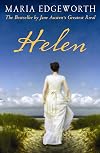
Perhaps this book could be called 'Integrity' or 'Truthfulness', because it deals fundamentally with how a minor piece of deceit can turn into systemic untruthfulness, which in turn can ruin lives. It shows how individuals can be eaten up and distorted by different kinds of deceit - false friendship, a wish to appear fashionable, an appearance of virtue masking something very different. As ever, Edgeworth's didactic purpose is accompanied by a gripping plot, as eponymous heroine Helen show more brushes against the dangers of extravagance, wrestles with the twin challenges of betraying a friend against betraying herself, and all at the same time is matched with a charming partner - who may or may not keep his faith when she is compromised. Fascinating - as ever. show less
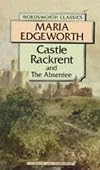
A funny little story, scarcely fifty pages, and oh so different to expectation. From the title and the period I think I'd mixed it up with something more nascent Gothic in style, like Radcliffe's The Mysteries of Udolpho, but instead, this is the tale of four generations of the dissolute aristocratic family the Rackrents, originally the O'Shaughlins. (Speaking of names, there are a few townships at whose nomenclatures I wasn't sure whether I was supposed to laugh, but did anyway.) Similar to show more Ishiguro's Remains of the Day, the story is told from the point of view of a blindly faithful underling, Thady McQuirk (and that name made it difficult to work out, in the first half-page or so, whether the narrator was male or female). I'm not sure whether poor old Thady ever gains enlightenment to go with his disillusionment, but I enjoyed reading between the lines of his seemingly innocuous portraiture to dissect the characters within - particulary his self-designated favourite Rackrent, Sir Condy.
"That's the secret of Castle Rackrent!" is a line I remember vividly from The Great Gatsby, never knowing why. Now I too have been initiated into the secret, and it's not a terribly hidden one (it just *screams* Marxist reading!): the hollowness of wealth, its sham pretentions - it's all in the name of Castle Rackrent. show less
"That's the secret of Castle Rackrent!" is a line I remember vividly from The Great Gatsby, never knowing why. Now I too have been initiated into the secret, and it's not a terribly hidden one (it just *screams* Marxist reading!): the hollowness of wealth, its sham pretentions - it's all in the name of Castle Rackrent. show less
Lists
Awards


You May Also Like


Associated Authors
Statistics
- Works
- 149
- Also by
- 18
- Members
- 3,764
- Popularity
- #6,733
- Rating
- 3.5
- Reviews
- 53
- ISBNs
- 453
- Languages
- 7
- Favorited
- 10