
A. L. Kennedy (1) (1965–)
Author of Day
For other authors named A. L. Kennedy, see the disambiguation page.
About the Author
A. L. Kennedy lives in Glasgow, Scotland. (Bowker Author Biography)
Series
Works by A. L. Kennedy
Papercuts 1 copy
Failing to Fall 1 copy
Absolutely nothing 1 copy
Frank - story 1 copy
Vanish (story) 1 copy
Spared [short story] 1 copy
As God Made Us 1 copy
A bad son [short story] 1 copy
Touch positive [short story] 1 copy
Elsewhere [short story] 1 copy
A wrong thing [short story] 1 copy
Didacus 1 copy
Indelible acts [short story] 1 copy
Associated Works
The Great War: Stories Inspired by Items from the First World War (2015) — Contributor — 119 copies, 18 reviews
Freedom: Stories Celebrating the Universal Declaration of Human Rights (2009) — Contributor — 88 copies, 2 reviews
Tagged
Common Knowledge
- Legal name
- Kennedy, Alison Louise
- Birthdate
- 1965-10-22
- Gender
- female
- Education
- University of Warwick (BA Theatre Studies and Drama)
- Occupations
- stand-up comedian
journalist (freelance)
university lecturer
associate professor (Creative Writing ∙ Warwick University)
short story writer
novelist - Awards and honors
- Austrian State Prize for European Literature (2007)
Lannan Literary Award (Fiction, 2007)
Granta's Best of Young British Novelists (1993)
Granta's Best of Young British Novelists (2003) - Agent
- Antony Harwood (Antony Harwood Ltd)
- Nationality
- Scotland
- Birthplace
- Dundee, Scotland, UK
- Places of residence
- Coventry, Warwickshire, England, UK
Glasgow, Scotland, UK - Map Location
- Scotland, UK
Members
Reviews

Well. This is one of THOSE books...as soon as I finished it I flipped back to the beginning and read it again. So have read it twice now, and what do I think? Incisive. Impassioned. Witty. Sexy. Clever. Sad. Beguilingly strange.
Elizabeth Barber is on a cruise with her boyfriend Derek. Problem is, that wasn't the plan. The plan was to take this 7-day cruise with her sometime lover Arthur Lockwood, who is also aboard. Seems Arthur and Elizabeth have a long history together and apart--5 years show more as lovers working as fraudulent mediums, a split, then an unexpected reunion in "sodding Beverley" followed by years of surreptitious meetings akin to the current cruise (minus Derek, of course, who decided, in innocence, to turn this into a holiday with Elizabeth complete with marriage proposal). Arthur and Elizabeth are "bad" people who are bad for each other, Elizabeth believes.
That's the simple plot stuff. Which is next to nothing of what this book is about. Addressed to "you," the book is a kind of Blue Book, not of gun values, grammar or whatever, but of the soul. A Blue Book of life, love, conscience, sorrow, survival. show less
Elizabeth Barber is on a cruise with her boyfriend Derek. Problem is, that wasn't the plan. The plan was to take this 7-day cruise with her sometime lover Arthur Lockwood, who is also aboard. Seems Arthur and Elizabeth have a long history together and apart--5 years show more as lovers working as fraudulent mediums, a split, then an unexpected reunion in "sodding Beverley" followed by years of surreptitious meetings akin to the current cruise (minus Derek, of course, who decided, in innocence, to turn this into a holiday with Elizabeth complete with marriage proposal). Arthur and Elizabeth are "bad" people who are bad for each other, Elizabeth believes.
That's the simple plot stuff. Which is next to nothing of what this book is about. Addressed to "you," the book is a kind of Blue Book, not of gun values, grammar or whatever, but of the soul. A Blue Book of life, love, conscience, sorrow, survival. show less
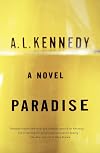
"Paradise" by A. L. Kennedy had a profound effect on me in many ways. This is a somewhat difficult review to write because of my personal familiarity with alcoholism.
First of all I want to say that the writing is beautiful, poetic, original, sad, haunting, disturbing, and at times extremely funny. Kennedy will knock you down with such beautiful and devastating sentences as “If we were years ago and other people. If God allowed just anything.”
The depiction of alcoholism is real, honest, show more and brutal:
“I am delicate and the world is impossibly wrong, is unthinkable and I am not forewarned, forearmed, equipped. I cannot manage. If there was something useful I could do, I would – but there isn’t. So I drink.
So I drank.
And on all those other evenings, drink has trotted in and softened worries, charmed away internal repetitions of unpleasant facts and lifted my attitude those few vital degrees which prevent everybody from dragging their past behind them like a corpse, while bolting forward through a suicidal haze.”
I have felt this exactly but could not express it as accurately as Kennedy does here. She is unclean, uncomfortable, doesn’t understand, suicidal. And she compares this to how she was when she was a little girl, clean, happy, untainted, with her brother and parents, when there was love, health, beauty, and a future.
I normally do not give a book five stars. There have only been a few. But this one well deserves it. The writing is just phenomenal. I don’t know why this book is not as well known as Henry Miller’s "Tropic of Cancer". It is that good. It also reminds me a little of "The White Hotel" by D. M. Thomas, especially the surreal nightmarish train ride at the end with all of the sexual undertones – a train ride itself is a sexual innuendo, hills being the mounds of flesh, trees being pubic hairs, the train slicing through...
I almost didn’t mention this next part but I feel I should because it is important to me. The book also had a physical effect on me, I guess because I so strongly identified with it. I don’t drink coffee. I hate the taste. Always have. But in one scene, on the train, she is in a bar and the bartender gives her coffee and it is the best coffee she has ever had and with each new mug it tastes even better. That night I dreamed I made myself coffee and I remember tasting it and enjoying how good it tasted. I actually remember, can feel, the taste. This next part is extremely strange. In one point of the book she is walking with her father. She accidentally steps on a board with a nail and the nail punctures her foot. The next morning I woke up with a huge bruise on the bottom of my right foot. Fortunately it wasn’t cut but there was, and still is, a huge bruise. I have no memory of stepping on anything. I don’t know what this means. I should probably talk to a therapist about it… But as you can see, the book did have multiple effects on me.
It is a dangerous book to someone like myself; like looking in a mirror and seeing the real horror of life reflected back at me. Beautiful, astonishing, mad horror. show less
First of all I want to say that the writing is beautiful, poetic, original, sad, haunting, disturbing, and at times extremely funny. Kennedy will knock you down with such beautiful and devastating sentences as “If we were years ago and other people. If God allowed just anything.”
The depiction of alcoholism is real, honest, show more and brutal:
“I am delicate and the world is impossibly wrong, is unthinkable and I am not forewarned, forearmed, equipped. I cannot manage. If there was something useful I could do, I would – but there isn’t. So I drink.
So I drank.
And on all those other evenings, drink has trotted in and softened worries, charmed away internal repetitions of unpleasant facts and lifted my attitude those few vital degrees which prevent everybody from dragging their past behind them like a corpse, while bolting forward through a suicidal haze.”
I have felt this exactly but could not express it as accurately as Kennedy does here. She is unclean, uncomfortable, doesn’t understand, suicidal. And she compares this to how she was when she was a little girl, clean, happy, untainted, with her brother and parents, when there was love, health, beauty, and a future.
I normally do not give a book five stars. There have only been a few. But this one well deserves it. The writing is just phenomenal. I don’t know why this book is not as well known as Henry Miller’s "Tropic of Cancer". It is that good. It also reminds me a little of "The White Hotel" by D. M. Thomas, especially the surreal nightmarish train ride at the end with all of the sexual undertones – a train ride itself is a sexual innuendo, hills being the mounds of flesh, trees being pubic hairs, the train slicing through...
I almost didn’t mention this next part but I feel I should because it is important to me. The book also had a physical effect on me, I guess because I so strongly identified with it. I don’t drink coffee. I hate the taste. Always have. But in one scene, on the train, she is in a bar and the bartender gives her coffee and it is the best coffee she has ever had and with each new mug it tastes even better. That night I dreamed I made myself coffee and I remember tasting it and enjoying how good it tasted. I actually remember, can feel, the taste. This next part is extremely strange. In one point of the book she is walking with her father. She accidentally steps on a board with a nail and the nail punctures her foot. The next morning I woke up with a huge bruise on the bottom of my right foot. Fortunately it wasn’t cut but there was, and still is, a huge bruise. I have no memory of stepping on anything. I don’t know what this means. I should probably talk to a therapist about it… But as you can see, the book did have multiple effects on me.
It is a dangerous book to someone like myself; like looking in a mirror and seeing the real horror of life reflected back at me. Beautiful, astonishing, mad horror. show less
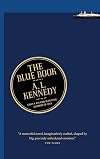
A L Kennedy is a wonderfully challenging author, both in terms of style and plot. This book is surely one of her most challenging.
Blue books are often guides, factual pieces full of information. This is a novel full of illusions. Set in the artificial world of a transatlantic cruise ship, the very setting is designed to seduce the passengers into believing they are interesting cosmopolitan people, not the bored and empty people so many of them are.
Elizabeth Barber knows this world is not show more for her, but here she is, trapped for the duration. A former illusionist, Elizabeth is highly skilled at both listening and lying..
Kennedy develops her story episodically, moving back and forth in time, focussing now on one protagonist, now on another. There are times when she digresses and addresses the reader directly, musing at times on the nature of writing, of reading, and even of books themselves.
Much like an illusionist herself, Kennedy reveals history and motives, seemingly from nowhere. Then you realize, of course, the rabbit was in the hat all along.
How much do we need to be deceived or to deceive ourselves? After all, it's the truth that so often hurts.
This is not a feel good book, but unlike a feel good book it will make you think, and you will remember it. That is Kennedy's huge talent. show less
Blue books are often guides, factual pieces full of information. This is a novel full of illusions. Set in the artificial world of a transatlantic cruise ship, the very setting is designed to seduce the passengers into believing they are interesting cosmopolitan people, not the bored and empty people so many of them are.
Elizabeth Barber knows this world is not show more for her, but here she is, trapped for the duration. A former illusionist, Elizabeth is highly skilled at both listening and lying..
Kennedy develops her story episodically, moving back and forth in time, focussing now on one protagonist, now on another. There are times when she digresses and addresses the reader directly, musing at times on the nature of writing, of reading, and even of books themselves.
Your book - it's started now, it's touched and opened, held. You could, if you wanted, heft it, wonder if it weighs more than a pigeon, or a plimsoll, or quite probably rather less than a wholemeal loaf. It offers you these possibilities.
And quite naturally, you face it. Your eyes, your lips are turned towards it - all that paleness, all those marks - and you are so close here that if it were a person you might kiss. That might be unavoidable.
Much like an illusionist herself, Kennedy reveals history and motives, seemingly from nowhere. Then you realize, of course, the rabbit was in the hat all along.
How much do we need to be deceived or to deceive ourselves? After all, it's the truth that so often hurts.
This is not a feel good book, but unlike a feel good book it will make you think, and you will remember it. That is Kennedy's huge talent. show less
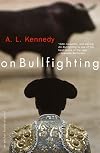
Goddammit, that woman. Every sentence a spear of piercing truth (pun fully intended), this is about life, religion, culture, humanity, and bull-fighting. The personal bits made me cry, the observining parts are highly interesting, the analytic aspects rendered me speechless. It's the kind of book, which you would put down every so often, tap on the page and yell to a hypothetical other person in the room "Hey! Listen to this! I have to read that to you!"
Lists
Take Four Books (1)
Booker Prize (1)
Awards


You May Also Like


Associated Authors
Statistics
- Works
- 64
- Also by
- 27
- Members
- 3,766
- Popularity
- #6,732
- Rating
- 3.7
- Reviews
- 100
- ISBNs
- 263
- Languages
- 12
- Favorited
- 22
