
Andrew O'Hagan
Author of Be Near Me
About the Author
Andrew O'Hagan was born in 1968 in Glasgow, Scotland. He studied at the University of Strathclyde. He is an Editor at Large for Esquire, London Review of Books and Critic at Large for T: The New York Times Style Magazine. He is a creative writing fellow at King's College London. He has worked as an show more editor and ghostwriter. He has twice been nominated for the Man Booker Prize. He was voted one of Granta's Best of Young British Novelists in 2003. He has won the Los Angeles Times Book Award and the E.M. Forster Award from the American Academy of Arts & Letters, made Honorary Doctor of Letters by University of Strathclyde in 2008, and was made Fellow of the Royal Society of Literature in 2010. His book awards include the 2000 Winifred Holtby Memorial Prize for Our Fathers, the 2003 James Tait Black Memorial Prize (fiction), for Personality, and the 2010 Glenfiddich Spirit of Scotland Award for Writing. His fiction includes Our Fathers, Personality, Be Near Me, The Life and Opinions of Maf the Dog, and of His Friend Marilyn Monroe, The Illuminations. His non-fiction includes The Missing and The Atlantic Ocean. He also has written short stories and book reviews. (Bowker Author Biography) show less
Image credit: Eventbrite
Works by Andrew O'Hagan
The life and opinions of Maf the dog, and of his friend Marilyn Monroe (2010) 223 copies, 14 reviews
Journeys 3 copies
Happy Birthday, Dear Happy 2 copies
Gordon - story 1 copy
The Satoshi Affair 1 copy
The sensitivity reader 1 copy
Les éphémères 1 copy
Effimeri (Italian Edition) 1 copy
Associated Works
The Decameron Project: 29 New Stories from the Pandemic (2020) — Contributor — 160 copies, 5 reviews
Granta 150: There Must Be Ways to Organise the World With Language (2020) — Contributor — 53 copies, 1 review
So, What Kept You?: New Stories inspired by Anton Chekhov and Raymond Carver (2006) — Contributor — 2 copies
Tagged
Common Knowledge
- Birthdate
- 1968
- Gender
- male
- Education
- University of Strathclyde (English)
St Michael's Academy - Occupations
- novelist
- Awards and honors
- E. M. Forster Award (2003)
Granta's Best of Young British Novelists (2003)
Royal Society of Literature (Fellow) - Nationality
- Scotland
- Birthplace
- Glasgow, Scotland, UK
- Places of residence
- Kilwinning, Scotland, UK
- Associated Place (for map)
- Scotland, UK
Members
Discussions
2015 Booker Prize longlist: The Illuminations in Booker Prize (October 2015)
Reviews
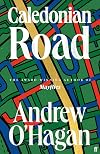
London is changing, the old guard of family wealth is being usurped by new foreign wealth. Traditional roles are being sidelined and art, fashion and crime is becoming the role of youth. Meanwhile exploitation is still happening and no-one is safe. Following a group of people centred around academic and art critic Campbell Flynn, Caledonian Road explores how London has changed.
I really like O'Hagan's writing and this book is superb. The length may seem daunting but the prose skips along and show more it doesn't feel excessive. It may be high praise but I feel this book is like and update to the classic 19th century novels of life by Thackeray. The details are fantastic and nuanced, there's a gentle push at the woke generation and a stronger push at corrupt businessmen, the downstairs tenant is a real Dickensian character and the whole is so enjoyable that, for me, it sits at the top of the books I've read this year! show less
I really like O'Hagan's writing and this book is superb. The length may seem daunting but the prose skips along and show more it doesn't feel excessive. It may be high praise but I feel this book is like and update to the classic 19th century novels of life by Thackeray. The details are fantastic and nuanced, there's a gentle push at the woke generation and a stronger push at corrupt businessmen, the downstairs tenant is a real Dickensian character and the whole is so enjoyable that, for me, it sits at the top of the books I've read this year! show less

In Andrew O’Hagan’s poignant novel The Illuminations, Anne Quirk’s mind is slowly unraveling. Anne, in her eighties, is living in a sheltered housing development in Saltcoats, North Ayrshire in Scotland, closely watched over by her sometimes meddlesome but well-meaning neighbour Maureen, and, more distantly, her daughter Alice. Sadly Anne’s time at Lochranza Court is coming to an end: it’s becoming clear to those around her that she’s declining, losing her grip on the present and show more no longer capable of living semi-independently. In the meantime, her grandson Luke, a captain with the Royal Western Fusiliers, is completing a tour of duty in Afghanistan. When his mission goes horribly wrong, Luke returns home and tries to forget the tragic events he witnessed along with his own fatal error in judgment that contributed to the mission’s disastrous conclusion. Luke and Anne have a bond, one that goes beyond simple mutual affection engendered by common blood: Anne passed her love of the visual arts to Luke. In her youth, Anne was a documentary photographer whose work, had it become widely known, would have likely led to an international career and widespread acclaim. But instead of pursuing her passion, she allowed a man’s betrayal to crush her spirit. At the crux of her memories is Harry, the man who taught her the art of photography and broke her heart. Her memories are fixated on Blackpool, the English resort town famous for its “illuminations,” an annual lights festival, where Anne kept a studio in a bedsit and where she carried on her affair with Harry, until he stopped meeting her. When the time comes for his grandmother to be moved into a nursing home, Luke takes Anne to Blackpool, where she can revisit her past with dignity, and Luke can redouble his efforts to forget. The Illuminations, a profoundly human novel that often triggers an emotional response, is also one that never descends into sentiment. O’Hagan, a disciplined fiction writer and journalist, knows how to move a story forward. His exploration of memory, loss and family secrets is wise and moving. show less
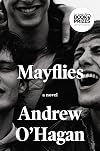
Beautiful and heartbreaking, human, political, and suffused with the music and films of my youth. The book starts in the 80's when Manchester was celebrating ten years at the heart of the music scene for smart and discerning post-punk music geeks. Its a good thing it starts with all the fun of 80's era sex and drugs and rock and roll because this book gets HEAVY. I don't want to spoil anything so I will just say it is about true friendship (male friendship here, with hallmarks slightly show more differnt than those for women), those people for whom you would do anything. I confess I missed some of the political references being a Yank and all, but I got most, and I think most people with a minimally serviceable understanding of the horrors of Thatcher's UK will as well. The film and music references were a blast. I knew I was hooked when the boys argued about what instrument Karl Marx would play if he were in The Fall. (It's a glockenspiel according to the book, but I lean maracas myself.) I was so charmed I even forgave O'Hagan for dissing Orchestral Maneuvers in the Dark, a band I loved at the time (though that love has, admittedly, dimmed.) I did think in the first half things spun off on tangents on occasion, but this was a 4.5 for me. show less
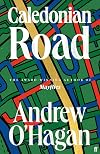
Caledonian Road: Class-bound satire and sentimentality
Reviewed in the United States on February 4, 2025
This (2024) doorstop novel, modeled on Bonfire of the Vanities, veers between satire and sentimentality, describing how contemporary Britain has been been undermined by immigration. The novel gets off to a good start and shows some wit, then bogs into a tedious midsection, and picks up at chapter 32. The deteriorating main character is well-described, along with the particularities of show more London real estate and effects of corrupt Russian money in Great Britain. A hotshot London academic art historian from an impoverished background is having a midlife meltdown assisted by his bond with a more-worldly Cambridge University mate with shady business interests who has behaved badly. Because of his social connections and media profile, the Professor falls under the influence of a subversive graduate student who uses the dark web and scandal mongering to expose and shakedown Establishment power. Polish, Irish, Scottish, and Ethiopian characters are depicted with love. Upper-class English characters and their enablers are shown as sleazy and ridiculous. The Professor's psychoanalytic wife offers good insight into what sustains art and what is wrong. show less
Reviewed in the United States on February 4, 2025
This (2024) doorstop novel, modeled on Bonfire of the Vanities, veers between satire and sentimentality, describing how contemporary Britain has been been undermined by immigration. The novel gets off to a good start and shows some wit, then bogs into a tedious midsection, and picks up at chapter 32. The deteriorating main character is well-described, along with the particularities of show more London real estate and effects of corrupt Russian money in Great Britain. A hotshot London academic art historian from an impoverished background is having a midlife meltdown assisted by his bond with a more-worldly Cambridge University mate with shady business interests who has behaved badly. Because of his social connections and media profile, the Professor falls under the influence of a subversive graduate student who uses the dark web and scandal mongering to expose and shakedown Establishment power. Polish, Irish, Scottish, and Ethiopian characters are depicted with love. Upper-class English characters and their enablers are shown as sleazy and ridiculous. The Professor's psychoanalytic wife offers good insight into what sustains art and what is wrong. show less
Lists
Booker Prize (2)
Take Four Books (1)
Awards


You May Also Like


Associated Authors
Statistics
- Works
- 29
- Also by
- 16
- Members
- 2,953
- Popularity
- #8,644
- Rating
- 3.8
- Reviews
- 118
- ISBNs
- 178
- Languages
- 12
- Favorited
- 5