

M. J. Hyland
Author of Carry Me Down
About the Author
Image credit: Photo by Rory Carnegie
Works by M. J. Hyland
This is How 1 copy
Leva-me contigo 1 copy
Associated Works
A Fork in the Road: Tales of Food, Pleasure, and Discovery on the Road (2013) — Contributor — 115 copies, 2 reviews
Better Than Fiction 2: True Adventures from 30 Great Fiction Writers (2015) — Contributor — 34 copies
Tagged
Common Knowledge
- Canonical name
- Hyland, M. J.
- Legal name
- Hyland, Maria Joan
- Birthdate
- 1968-06-06
- Gender
- female
- Education
- University of Melbourne
- Occupations
- writer
lecturer - Nationality
- UK
Ireland - Birthplace
- London, England, UK
- Places of residence
- London, England, UK
Melbourne, Victoria, Australia - Map Location
- Ireland
Members
Reviews

Patrick Oxtoby, the main character, is a strange young man whose interactions are prickly because he is extremely self-conscious and defensive. The academic promise he once demonstrated has dissipated, and he settles in a small town to begin his career as an auto mechanic. Living at a boarding house, he can't seem to settle into the rhythm of easy conversations with the other two boarders. One horrendous moment of unreasonable rage results in a life he cannot imagine, and M.J. Hyland show more describes his reactions, a mixture of disbelief, embarrassment and guilt, perfectly. Patrick is not a particularly likeable person; however, the course of his life's choices are riveting. M.J. Hyland has a deceptively simple style that creates a building of tension as understanding of Patrick's dysfunction grows. show less
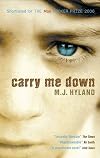
Pain is much harder on the mind than ignorance.
My head, as though filled with helium, has nothing in it to carry me down to rest, to dark, down to sleep. It is pitch-black and yet there is no darkness in my mind. There is blinding bright day when it should be night.
M.J. Hyland’s second novel languished on my shelf for years. I honestly don’t know why. Last week, it called to me for some reason, and over the last few days it’s riveted me with its dark, strangely compelling narrative show more about an odd Irish boy. John Egan is a misfit, for sure. For one thing, he’s a giant—nearly six feet tall—and his voice has broken early. According to his mother, he’s “An eleven-year-old in the body of a grown man who insists on the ridiculous truth and who has got into a bad habit of lying.” At first, there’s regular talk of taking John to the doctor yet again to investigate what is evidently some abnormality of the endocrine system. School personnel are also concerned. There are embarrassing exchanges between John and the headmaster about how the physically and socially awkward boy, who stands out like a sore thumb, is getting along. There’s even talk of moving him up a grade, where he might blend in better with the older kids. Psychiatric problems are suggested, but it’s an ongoing challenge for the reader to understand what is really going on with this boy and his family. It always seems possible that John’s unusual thoughts, preoccupations, and impulses are actually adaptations to a highly dysfunctional family dynamic. Reading this book, one enters R.D. Laing territory for sure. (A brutal scene early on in the book, in which his father challenges John to prove that he’s more than “a poor soft lad” by assisting in the hot-water drowning of a litter of kittens (“grubs with fur”) was almost more than I could bear. I very nearly quit right then and there.)
As the narrative opens, it is 1972 and John and his parents are living with his granny in Gorey, County Wexford. His parents, John tells us, are extraordinarily glamorous, and their love story is the stuff of myth. (In order to marry, both Helen and Michael, like movie stars, broke off engagements to others.) Here’s the thing about this detail: it, like so many others John provides, cannot be trusted. As far as narrators go, he could take the cake for unreliability. Still, one can’t shake the sense that everyone else in John’s enmeshed nuclear family is equally unreliable and untrustworthy. There’s a big secret here—possibly many—and the reader is swept along, not by an eventful plot (there isn’t one), but by the desire to get to the bottom of it all, to understand why there’s such a sense of menace.
John, as his father (Michael) observes much later in the book, is “an odd mixture . . . of little boy and . . . grown lad” and it’s sometimes difficult for others to figure out which one they’re interacting with. The boy’s favourite book is The Guinness Book of World Records. The accounts of escape artists particularly captivate him, suggesting that he too wants or needs to break free. John’s goal is to get himself in The Guinness Book “along with all the other people who do not want to be forgotten or ignored.” “I will break an important record,” he vows, “or do a remarkable thing. I don’t see the point of living unless there is something I can do better than anyone else can do or unless I can do something that nobody else can.” Because of the mood that Hyland creates, I almost immediately thought of the teenaged Columbine school shooters, Eric Harris and Dylan Klebold. But no, that’s not where Hyland is headed.
John decides that he has an extraordinary talent. He’s a human lie detector, which does not mean he himself is a model of truthfulness. In fact, he makes quite a pastime of lying; he also engages in impulsive stealing. To him, there is no cognitive dissonance. He is not a criminal. He sees himself as potentially more sensitive than any polygraph, picking up as he does on changes in the musculature and colouring of a liar’s face, as well as alterations in vocal tone and diction. His own physiological responses alert him. Initially, he vomits (or wants to) when being lied to. Gradually, he gets this reflex under control and attends to other signals that his body provides—an elevation in temperature, for example. So confident is he in his unique gift that he writes repeatedly to The Guinness Book publishers. He is willing to undergo testing, he tells them, to prove he is worthy of inclusion in their book.
Certainly, John’s immediate family provides him with ample opportunity for lie-detection practice. His mother, with whom he shares an abnormal intimacy and whom he tells about his talent, points out that most of what John is detecting are people’s white lies about embarrassing personal matters or socially sensitive topics. As perceptive as John may be, he can’t seem to pick up on the big things. His father, Michael, once an electrician, has been unemployed for three years. In fact, his job loss is what forced the family of three to move in with John’s granny. The boy blindly accepts the story that his father, who apparently gained easy entry into MENSA, the oldest high IQ society in the world, is simply preparing for a place at Trinity College Dublin. Michael spends his days reading obscure texts on phrenology, criminology, and abnormal psychology, rather than making an effort to find gainful employment. John is also entirely unaware of the reason why the family hastily leaves Gorey for Dublin, ultimately ending up in the notoriously squalid, crime-ridden Ballymun highrise tower complex.
In Dublin, John is increasingly stressed, prone to episodes of shouting and physical aggression. After he calls out a lie—an act which threatens to destroy the family—his behaviour becomes plainly pathological. His mother calls the Garda and a social worker transports him late at night to a boys’ home. The housefather there is interested in John’s view of himself “as a bit of a lie detector”. “Did you know,” he asks the boy, “that there are other people in the world who can do this?” He continues: “most lie detectors develop their super-sensitivity to emotion early in life. . . [It] is often due to unusual childhood circumstances. . . many have extremely irritable mothers, or alcoholic fathers, or some other force or presence in their early life that is, or was, unhealthy, unnatural, unpleasant, or extremely upsetting in some way.”
That’s one theory; Hyland provides others. However, she doesn’t give the reader an easy time or an easy resolution. Her dark tale has all the complexity and ambiguity of real life. Carry Me Down is not a book for everyone, obviously, but it is a compelling and impressive work—one of those books whose many knots you want to disentangle through discussion with others. show less
My head, as though filled with helium, has nothing in it to carry me down to rest, to dark, down to sleep. It is pitch-black and yet there is no darkness in my mind. There is blinding bright day when it should be night.
M.J. Hyland’s second novel languished on my shelf for years. I honestly don’t know why. Last week, it called to me for some reason, and over the last few days it’s riveted me with its dark, strangely compelling narrative show more about an odd Irish boy. John Egan is a misfit, for sure. For one thing, he’s a giant—nearly six feet tall—and his voice has broken early. According to his mother, he’s “An eleven-year-old in the body of a grown man who insists on the ridiculous truth and who has got into a bad habit of lying.” At first, there’s regular talk of taking John to the doctor yet again to investigate what is evidently some abnormality of the endocrine system. School personnel are also concerned. There are embarrassing exchanges between John and the headmaster about how the physically and socially awkward boy, who stands out like a sore thumb, is getting along. There’s even talk of moving him up a grade, where he might blend in better with the older kids. Psychiatric problems are suggested, but it’s an ongoing challenge for the reader to understand what is really going on with this boy and his family. It always seems possible that John’s unusual thoughts, preoccupations, and impulses are actually adaptations to a highly dysfunctional family dynamic. Reading this book, one enters R.D. Laing territory for sure. (A brutal scene early on in the book, in which his father challenges John to prove that he’s more than “a poor soft lad” by assisting in the hot-water drowning of a litter of kittens (“grubs with fur”) was almost more than I could bear. I very nearly quit right then and there.)
As the narrative opens, it is 1972 and John and his parents are living with his granny in Gorey, County Wexford. His parents, John tells us, are extraordinarily glamorous, and their love story is the stuff of myth. (In order to marry, both Helen and Michael, like movie stars, broke off engagements to others.) Here’s the thing about this detail: it, like so many others John provides, cannot be trusted. As far as narrators go, he could take the cake for unreliability. Still, one can’t shake the sense that everyone else in John’s enmeshed nuclear family is equally unreliable and untrustworthy. There’s a big secret here—possibly many—and the reader is swept along, not by an eventful plot (there isn’t one), but by the desire to get to the bottom of it all, to understand why there’s such a sense of menace.
John, as his father (Michael) observes much later in the book, is “an odd mixture . . . of little boy and . . . grown lad” and it’s sometimes difficult for others to figure out which one they’re interacting with. The boy’s favourite book is The Guinness Book of World Records. The accounts of escape artists particularly captivate him, suggesting that he too wants or needs to break free. John’s goal is to get himself in The Guinness Book “along with all the other people who do not want to be forgotten or ignored.” “I will break an important record,” he vows, “or do a remarkable thing. I don’t see the point of living unless there is something I can do better than anyone else can do or unless I can do something that nobody else can.” Because of the mood that Hyland creates, I almost immediately thought of the teenaged Columbine school shooters, Eric Harris and Dylan Klebold. But no, that’s not where Hyland is headed.
John decides that he has an extraordinary talent. He’s a human lie detector, which does not mean he himself is a model of truthfulness. In fact, he makes quite a pastime of lying; he also engages in impulsive stealing. To him, there is no cognitive dissonance. He is not a criminal. He sees himself as potentially more sensitive than any polygraph, picking up as he does on changes in the musculature and colouring of a liar’s face, as well as alterations in vocal tone and diction. His own physiological responses alert him. Initially, he vomits (or wants to) when being lied to. Gradually, he gets this reflex under control and attends to other signals that his body provides—an elevation in temperature, for example. So confident is he in his unique gift that he writes repeatedly to The Guinness Book publishers. He is willing to undergo testing, he tells them, to prove he is worthy of inclusion in their book.
Certainly, John’s immediate family provides him with ample opportunity for lie-detection practice. His mother, with whom he shares an abnormal intimacy and whom he tells about his talent, points out that most of what John is detecting are people’s white lies about embarrassing personal matters or socially sensitive topics. As perceptive as John may be, he can’t seem to pick up on the big things. His father, Michael, once an electrician, has been unemployed for three years. In fact, his job loss is what forced the family of three to move in with John’s granny. The boy blindly accepts the story that his father, who apparently gained easy entry into MENSA, the oldest high IQ society in the world, is simply preparing for a place at Trinity College Dublin. Michael spends his days reading obscure texts on phrenology, criminology, and abnormal psychology, rather than making an effort to find gainful employment. John is also entirely unaware of the reason why the family hastily leaves Gorey for Dublin, ultimately ending up in the notoriously squalid, crime-ridden Ballymun highrise tower complex.
In Dublin, John is increasingly stressed, prone to episodes of shouting and physical aggression. After he calls out a lie—an act which threatens to destroy the family—his behaviour becomes plainly pathological. His mother calls the Garda and a social worker transports him late at night to a boys’ home. The housefather there is interested in John’s view of himself “as a bit of a lie detector”. “Did you know,” he asks the boy, “that there are other people in the world who can do this?” He continues: “most lie detectors develop their super-sensitivity to emotion early in life. . . [It] is often due to unusual childhood circumstances. . . many have extremely irritable mothers, or alcoholic fathers, or some other force or presence in their early life that is, or was, unhealthy, unnatural, unpleasant, or extremely upsetting in some way.”
That’s one theory; Hyland provides others. However, she doesn’t give the reader an easy time or an easy resolution. Her dark tale has all the complexity and ambiguity of real life. Carry Me Down is not a book for everyone, obviously, but it is a compelling and impressive work—one of those books whose many knots you want to disentangle through discussion with others. show less
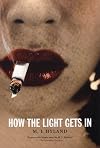
Lou is a decidedly unlikable character: self-centered, disrespectful, unaware and withdrawn. In other words, she is a typical teenager, seeing life through her narrow lens and unable to open her eyes to the impacts of her own actions, only the impacts of others unto her. She has reason to have a chip of her shoulder, but so concentrated is she on her own perceptions and goals that she fails to see how she sabotages herself.
It is only in second part of the story, when she is finally able to show more connect to Gita and Lishny that she realizes that she is not alone - and thus the light starts to get in. She learns her final lesson when she, herself, becomes a victim of someone else's selfish act.
This is what makes this book so interesting and compelling: young Lou, who is far from perfect and still has so much to learn, does change even in an infinitesimal way to grow toward adulthood. The quintessential coming of age novel. show less
It is only in second part of the story, when she is finally able to show more connect to Gita and Lishny that she realizes that she is not alone - and thus the light starts to get in. She learns her final lesson when she, herself, becomes a victim of someone else's selfish act.
This is what makes this book so interesting and compelling: young Lou, who is far from perfect and still has so much to learn, does change even in an infinitesimal way to grow toward adulthood. The quintessential coming of age novel. show less

Completely unintended, the last book I read had much in common with the previous one. Waar je valt/Carry me down is about an eleven year old boy, and tells the story of one year in his life when everything changes, in him, his body and his family. The situation this boy, John Egan, is in, is a lot more tragic than in Black Swan Green, but while reading it I couldn’t help but compare the two. In Carry Me Down, taking place in Ireland in the early seventies, the parents of John are show more struggling with themselves, their relationship and their future. Meanwhile John, who is really tall for his age and has hit puberty early, is trying to keep everything the way it was, and understand why everything seems to be changing. The story is a long winding road downhill, and John tries his hardest to stop it. This leads to inevitable tragedy.
While reading it I kept asking myself if John was just growing up, and reacting the way he does because he is still a child at heart and tries to do what he can, or if there is something ‘wrong’ him, psychologically. I still don’t know. I finished the book in nearly one go, I just couldn’t put it down. A great read. show less
While reading it I kept asking myself if John was just growing up, and reacting the way he does because he is still a child at heart and tries to do what he can, or if there is something ‘wrong’ him, psychologically. I still don’t know. I finished the book in nearly one go, I just couldn’t put it down. A great read. show less
Lists
Awards


You May Also Like


Associated Authors
Statistics
- Works
- 7
- Also by
- 8
- Members
- 1,971
- Popularity
- #13,048
- Rating
- 3.5
- Reviews
- 93
- ISBNs
- 85
- Languages
- 8
- Favorited
- 5
