
Christos Tsiolkas
Author of The Slap
About the Author
Christos Tsiolkas is an Australian author who made the finalist for the Melbourne Prize for Literature 2015. He also won a Queensland Literary Award 2015 in the Steele Rudd Award category for a Short Story Collection. (Bowker Author Biography)
Works by Christos Tsiolkas
Associated Works
Tagged
Common Knowledge
- Birthdate
- 1965
- Gender
- male
- Education
- Blackburn High School
University of Melbourne (BA) - Occupations
- novelist
- Awards and honors
- Melbourne Prize for Literature (2021)
- Agent
- Smart Artists Management
- Nationality
- Australia
- Birthplace
- Melbourne, Victoria, Australia
- Places of residence
- Melbourne, Victoria, Australia
- Associated Place (for map)
- Melbourne, Victoria, Australia
Members
Reviews
Wow. Just wow.
That said, this is a book that is bound to make a lot of people uncomfortable. I winced at a lot of the casual sexual attitudes/behavior, the drugs, the racist/sexist comments -- and then I realized that this is fiction and also that very few of the things that made me uncomfortable were actually untrue of real people in real life. (I have to admit that a few of these things I'm guilty of in some way -- like Anouk's flashes of furious temper.) And that's the authors genius show more (yes, you got that word right...): he has been able to capture the ugly aspects of human nature, as well as the good stuff about families and friends, good stuff that rarely comes in nice neat tidy packages. It's as if the lid has been lifted off an ant farm, and we see all the secret thoughts of the eight characters through whom Tsiolkas spins his tale.
The story starts with a slap, as everyone who is considering reading this book probably is aware -- the slap lands on the cheek of a misbehaving three-year-old at a suburban BBQ. That blow has consequences that richochet throughout the circle of friends and family, but the events that follow in the lives of those affected aren't always tied directly to the slap -- the slap forces them, indirectly, to re-evaluate many other things in their lives. The characters range from a teenage girl and her close friend, a teenage boy, all the way up to an aging Greek patriarch, and include the mother of the slapped child and the wife of the "slapper".
Every one of those is pitch perfect. The author is a man, and yet he writes more compelling and real female characters -- subtle, nuanced -- than I can recall reading before in a novel by a male author. He writes equally vividly about Aisha's views of Anouk (a married woman's views of her single friend's supposed attitude to children) and of Anouk's reaction to those ideas -- forcing the reader to understand there are no easy answers in life's most pressing questions.
This is not a book to read if you need to identify with a character, or need comforting stories. None of these individuals are altogether admirable; many make choices that someone will disagree with. And yet at the same time, they all emerge as real and vivid, and perhaps more sympathetic because of their flaws. (And yes, this will force you to think about child-rearing these days, but that is just the tip of a very large iceberg.) There are great, vivid characters, living ordinary lives and reaching the kind of routine epiphanies that we all experience.
In short -- read this book. show less
That said, this is a book that is bound to make a lot of people uncomfortable. I winced at a lot of the casual sexual attitudes/behavior, the drugs, the racist/sexist comments -- and then I realized that this is fiction and also that very few of the things that made me uncomfortable were actually untrue of real people in real life. (I have to admit that a few of these things I'm guilty of in some way -- like Anouk's flashes of furious temper.) And that's the authors genius show more (yes, you got that word right...): he has been able to capture the ugly aspects of human nature, as well as the good stuff about families and friends, good stuff that rarely comes in nice neat tidy packages. It's as if the lid has been lifted off an ant farm, and we see all the secret thoughts of the eight characters through whom Tsiolkas spins his tale.
The story starts with a slap, as everyone who is considering reading this book probably is aware -- the slap lands on the cheek of a misbehaving three-year-old at a suburban BBQ. That blow has consequences that richochet throughout the circle of friends and family, but the events that follow in the lives of those affected aren't always tied directly to the slap -- the slap forces them, indirectly, to re-evaluate many other things in their lives. The characters range from a teenage girl and her close friend, a teenage boy, all the way up to an aging Greek patriarch, and include the mother of the slapped child and the wife of the "slapper".
Every one of those is pitch perfect. The author is a man, and yet he writes more compelling and real female characters -- subtle, nuanced -- than I can recall reading before in a novel by a male author. He writes equally vividly about Aisha's views of Anouk (a married woman's views of her single friend's supposed attitude to children) and of Anouk's reaction to those ideas -- forcing the reader to understand there are no easy answers in life's most pressing questions.
This is not a book to read if you need to identify with a character, or need comforting stories. None of these individuals are altogether admirable; many make choices that someone will disagree with. And yet at the same time, they all emerge as real and vivid, and perhaps more sympathetic because of their flaws. (And yes, this will force you to think about child-rearing these days, but that is just the tip of a very large iceberg.) There are great, vivid characters, living ordinary lives and reaching the kind of routine epiphanies that we all experience.
In short -- read this book. show less

At a suburban picnic, some theoretically adult person loses control and slaps someone else's bratty little kid in the face. Lots of people then have opinions about this.
The basic premise of this one seemed like it could be a setup for something good. One shocking incident whose consequences ripple out across different people's lives in different ways, in eight sections each told from the point of view of a different person who witnessed it... that's got potential, right?
The problem is these show more people are all unbelievably awful and I resent having just spent nearly 500 pages in their company. It's not even that they're unlikable, as such. Unlikable characters can be fine. But if you're going to write them, by god, there needs to be something about them to make them worth reading about. They can be compelling in a train wreck kind of way, or provocative in their terribleness, or disturbingly sympathetic even when you don't want them to be, or at the absolute least they can get up to some entertainingly horrific things. But these folks? Nope, nothing of the sort. Their unlikability is entirely of the petty, banal, profoundly dull kind. And, hey, even that can work, if you're saying something interesting and resonant about the petty banality of people. I'm pretty sure that's what this one is trying to do. And there are moments where that almost works, little fleeting glimpses of some kind of possibly worthwhile commentary. But mostly it's just deeply tedious, with neither the characters nor the author feeling like they have anything actually insightful to say, despite their constant droning on about men and women and kids and relationships and The State of the World Today and blah, blah, blah, blah, blah.
I spent a few days once in Melbourne, Australia, where this is set. I thought it was a lovely city, possibly one of the nicest I've ever been to. But I swear, less than a hundred pages in I was fantasizing about someone dropping a nuke on the place just to rid the world of these people. It would be a great shame, yes, but quite possibly worth it.
Rating: 2/5, and that's actually being super generous. show less
The basic premise of this one seemed like it could be a setup for something good. One shocking incident whose consequences ripple out across different people's lives in different ways, in eight sections each told from the point of view of a different person who witnessed it... that's got potential, right?
The problem is these show more people are all unbelievably awful and I resent having just spent nearly 500 pages in their company. It's not even that they're unlikable, as such. Unlikable characters can be fine. But if you're going to write them, by god, there needs to be something about them to make them worth reading about. They can be compelling in a train wreck kind of way, or provocative in their terribleness, or disturbingly sympathetic even when you don't want them to be, or at the absolute least they can get up to some entertainingly horrific things. But these folks? Nope, nothing of the sort. Their unlikability is entirely of the petty, banal, profoundly dull kind. And, hey, even that can work, if you're saying something interesting and resonant about the petty banality of people. I'm pretty sure that's what this one is trying to do. And there are moments where that almost works, little fleeting glimpses of some kind of possibly worthwhile commentary. But mostly it's just deeply tedious, with neither the characters nor the author feeling like they have anything actually insightful to say, despite their constant droning on about men and women and kids and relationships and The State of the World Today and blah, blah, blah, blah, blah.
I spent a few days once in Melbourne, Australia, where this is set. I thought it was a lovely city, possibly one of the nicest I've ever been to. But I swear, less than a hundred pages in I was fantasizing about someone dropping a nuke on the place just to rid the world of these people. It would be a great shame, yes, but quite possibly worth it.
Rating: 2/5, and that's actually being super generous. show less
A man at a weekend barbecue slaps someone else's child in anger, and the act reverberates through his circle of friends and family.
I'm a bit mystified as to why this book has such a low rating here on Goodreads. But there were a couple of things I really admired about the book; uncoincidentally, those same theories might explain why some people seemed to dislike the book so much.
First of all, Tsiolkas takes a nonjudgmental attitude toward his characters. They not only do things we probably show more don't admire much, but they do some genuinely awful things, too. Yet nothing terrible happens to them; they go about their lives without getting the karmic slap with a two-by-four that a lot of readers not only want but have come to expect (see e.g. East of Eden). I suspect this drives that same group of readers completely nuts.
What I suspect angered readers even more is the one character that people seem to despise without even quite realizing what's creating such violently negative reaction: the mother who not only doesn't wax rhapsodic with every breath about how motherhood is the best thing she's ever done, but actually detests motherhood and probably detests her child, too. This book contains that character and then some in Rosie, the mother of the child receiving the slap. (Check the reviews on Charlotte Mendelsohn's "When We Were Bad"; another book that got horrible ratings that you can't quite figure out -- similar character, same explanation. Although that book also wasn't helped by the fact that a couple of people seemed to also go insane at its use of Yiddish and Hebrew words. A totally different subject that I won't talk about or I'll go insane.) Rosie hates being a mother and also hates her kid, a vile little brat who is eminently hatable (unsurprisingly, given the rotten parent hand that life dealt the little shit).
But again, Tsiolkas doesn't condemn Rosie, nor does he paint her as a monster or make her see the error of her ways by the last page. She continues on unchanged, and Tsiolkas gives the impression that she'll do so long after the book has ended. He also very much takes his time in revealing her character -- another thing I admired about the book.
To me, these things make the book nuanced; to a lot of readers, I guess, they make the book immoral.
I would probably normally give this one four stars instead of five, but the rating is so shamefully low that I bumped up my own in the benighted hope that the overall rating would tick up slightly. show less
I'm a bit mystified as to why this book has such a low rating here on Goodreads. But there were a couple of things I really admired about the book; uncoincidentally, those same theories might explain why some people seemed to dislike the book so much.
First of all, Tsiolkas takes a nonjudgmental attitude toward his characters. They not only do things we probably show more don't admire much, but they do some genuinely awful things, too. Yet nothing terrible happens to them; they go about their lives without getting the karmic slap with a two-by-four that a lot of readers not only want but have come to expect (see e.g. East of Eden). I suspect this drives that same group of readers completely nuts.
What I suspect angered readers even more is the one character that people seem to despise without even quite realizing what's creating such violently negative reaction: the mother who not only doesn't wax rhapsodic with every breath about how motherhood is the best thing she's ever done, but actually detests motherhood and probably detests her child, too. This book contains that character and then some in Rosie, the mother of the child receiving the slap. (Check the reviews on Charlotte Mendelsohn's "When We Were Bad"; another book that got horrible ratings that you can't quite figure out -- similar character, same explanation. Although that book also wasn't helped by the fact that a couple of people seemed to also go insane at its use of Yiddish and Hebrew words. A totally different subject that I won't talk about or I'll go insane.) Rosie hates being a mother and also hates her kid, a vile little brat who is eminently hatable (unsurprisingly, given the rotten parent hand that life dealt the little shit).
But again, Tsiolkas doesn't condemn Rosie, nor does he paint her as a monster or make her see the error of her ways by the last page. She continues on unchanged, and Tsiolkas gives the impression that she'll do so long after the book has ended. He also very much takes his time in revealing her character -- another thing I admired about the book.
To me, these things make the book nuanced; to a lot of readers, I guess, they make the book immoral.
I would probably normally give this one four stars instead of five, but the rating is so shamefully low that I bumped up my own in the benighted hope that the overall rating would tick up slightly. show less

I read to the end because I don't feel I should give a scathing review of a book I haven't finished.
The Slap is a disjointed, unpleasant mess of a book.
The concept of each chapter being narrated by a different character so as to offer varied perspectives is not a new one, however here it is poorly executed. The characters lack their own unique voice and style. They speak the same way, swear the same way, and even have sex the same way. (As a side note, I am not prudish about sex scenes, show more but in this book they are unnecessarily frequent and repetitive in nature, leaving me with the impression that the author was showing off at "being a bit naughty" Grow up.)
It is almost as if the author had several ideas for different books, but slung them all together clumsily in this one effort, trying to link them with a potentially controversial incident. Unfortunately, rather than being properly explored through different points of view, the incident in question is quite often forgotten in favour of other irrelevant and pointless pursuits.
Very few of the characters have any redeeming qualities, and not one of them seems to learn anything from anyone else around them, least of all the child at the centre of the incident. (For one glorious moment I thought he was going to get something of what he deserved, but no, another unnecessary plot point reared its ugly head, and the revolting little creature remained unscathed.) I am not against an author challenging me with unlikeable protagonists - Lionel Shriver proved the expert with We Need to Talk About Kevin. Christos Tsiolkas could learn a thing or two there.
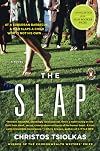
I picked up The Slap thinking it looked promising and perhaps thought-provoking. The tag line on the cover of my copy asks "Whose side are you on?" My answer is no-one's. I am not on the side of the victim, not on the side of any of the other characters and least of all on the side of the author. show less
The Slap is a disjointed, unpleasant mess of a book.
The concept of each chapter being narrated by a different character so as to offer varied perspectives is not a new one, however here it is poorly executed. The characters lack their own unique voice and style. They speak the same way, swear the same way, and even have sex the same way. (As a side note, I am not prudish about sex scenes, show more but in this book they are unnecessarily frequent and repetitive in nature, leaving me with the impression that the author was showing off at "being a bit naughty" Grow up.)
It is almost as if the author had several ideas for different books, but slung them all together clumsily in this one effort, trying to link them with a potentially controversial incident. Unfortunately, rather than being properly explored through different points of view, the incident in question is quite often forgotten in favour of other irrelevant and pointless pursuits.
Very few of the characters have any redeeming qualities, and not one of them seems to learn anything from anyone else around them, least of all the child at the centre of the incident. (For one glorious moment I thought he was going to get something of what he deserved, but no, another unnecessary plot point reared its ugly head, and the revolting little creature remained unscathed.) I am not against an author challenging me with unlikeable protagonists - Lionel Shriver proved the expert with We Need to Talk About Kevin. Christos Tsiolkas could learn a thing or two there.
I picked up The Slap thinking it looked promising and perhaps thought-provoking. The tag line on the cover of my copy asks "Whose side are you on?" My answer is no-one's. I am not on the side of the victim, not on the side of any of the other characters and least of all on the side of the author. show less
Lists
Booker Prize (1)
Take Four Books (1)
Awards


You May Also Like


Associated Authors
Statistics
- Works
- 22
- Also by
- 7
- Members
- 4,240
- Popularity
- #5,931
- Rating
- 3.4
- Reviews
- 242
- ISBNs
- 199
- Languages
- 10
- Favorited
- 1
