
Andrew McGahan (1966–2019)
Author of The White Earth
About the Author
Andrew McGahan published his first book Praise in 1992. His other novels included 1988, Last Drinks, Underground, the Ship Kings series, and The Rich Man's House. He received the Miles Franklin and the Commonwealth Writers' prize in 2005 for The White Earth and the Aurealis Award for Wonders of a show more Godless World. He won the Matilda prize for his 1992 play Bait. He also wrote a collection of children's short stories entitled Treasures of the Deep. He died from pancreatic cancer on February 1, 2019 at the age of 52. (Bowker Author Biography) show less
Image credit: Courtesy of Allen and Unwin
Series
Works by Andrew McGahan
Wonders Of A Godless Sea 1 copy
Tagged
Common Knowledge
- Birthdate
- 1966
- Date of death
- 2019-02-01
- Gender
- male
- Occupations
- novelist
screenwriter
playwright
young adult writer - Nationality
- Australia
- Birthplace
- Dalby, Queensland, Australia
- Places of residence
- Brisbane, Queensland, Australia
- Associated Place (for map)
- Queensland, Australia
Members
Reviews
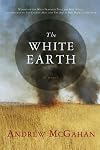
A beautiful, timeless, gothic cathedral of a novel. Andrew McGahan, who passed away tragically young this year (2019), remains an underrated Australian novelist. While he is better known for his sardonic novellas capturing Queensland so well and - to younger readers - for his YA fiction, this is McGahan's great work.
Set during the Keating era and the passing of Native Title legislation (with flashbacks to the long dry years of the Menzies era), The White Earth is a story of our country's show more history, of a brewing war over that same history (a war that, in the 15 years since the novel was published, has erupted), and of the lies we tell to replace an unpalatable truth.
However, far from being didactic, McGahan grounds his examination in young William's discovery of his new world, Kunal Station, the farm where he and his recently-widowed mother have been taken in. The farm teems with gothic experiences and strange characters navigating their own paths. Importantly, the author also allows all of his characters to speak their truths, questioning that strange feeling (which I know only too well, as the descendant of a white family 200 years on this soil) of being the possessor of a stolen land while also having a genuine longstanding connection to the land oneself.
It is a novel of questions rather than answers, an earnest look at the challenges of land ownership, of Native Title, of family, and of history itself. show less
Set during the Keating era and the passing of Native Title legislation (with flashbacks to the long dry years of the Menzies era), The White Earth is a story of our country's show more history, of a brewing war over that same history (a war that, in the 15 years since the novel was published, has erupted), and of the lies we tell to replace an unpalatable truth.
However, far from being didactic, McGahan grounds his examination in young William's discovery of his new world, Kunal Station, the farm where he and his recently-widowed mother have been taken in. The farm teems with gothic experiences and strange characters navigating their own paths. Importantly, the author also allows all of his characters to speak their truths, questioning that strange feeling (which I know only too well, as the descendant of a white family 200 years on this soil) of being the possessor of a stolen land while also having a genuine longstanding connection to the land oneself.
It is a novel of questions rather than answers, an earnest look at the challenges of land ownership, of Native Title, of family, and of history itself. show less
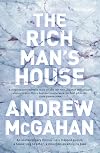
Andrew McGahan's last novel before his death from cancer in 2019 is a ripper.
He tells the tale of a super-wealthy man who is the only person to have climbed the world's highest mountain. (No, it's not Everest, you'll have to read the book).
Bring into the tale a woman with a curious past, where she once wrote a book about the "presences" that could be found in natural phenomena, ignoring the fact that LSD and cocaine were useful in discovering and dealing with them, and it becomes clear that show more the Rich Man wants to clear his new, fabulously extravagant home of all pesky, potential "presences".
It doesn't quite work out as he might hope it will.
The author notes in a preface that he was rushed to complete this novel, and there are some passages that really could do with some editing.
But, all in all, it's a rollicking adventure, and so different to anything else he published.
It's worth reading, but not as good as 'The Good Earth', 'Last Drinks' or 'Praise'.
Vale, Andrew. Thank you. show less
He tells the tale of a super-wealthy man who is the only person to have climbed the world's highest mountain. (No, it's not Everest, you'll have to read the book).
Bring into the tale a woman with a curious past, where she once wrote a book about the "presences" that could be found in natural phenomena, ignoring the fact that LSD and cocaine were useful in discovering and dealing with them, and it becomes clear that show more the Rich Man wants to clear his new, fabulously extravagant home of all pesky, potential "presences".
It doesn't quite work out as he might hope it will.
The author notes in a preface that he was rushed to complete this novel, and there are some passages that really could do with some editing.
But, all in all, it's a rollicking adventure, and so different to anything else he published.
It's worth reading, but not as good as 'The Good Earth', 'Last Drinks' or 'Praise'.
Vale, Andrew. Thank you. show less
Loved this book and days later, I'm still thinking about it. It eludes genre-classification and all I can compare it to is Stephen King's works - a thriller that is real and realistic in all but one little aspect which changes everything. If someone were to describe the plot to me, I would have brushed it aside as not my thing and would never have read it. So I urge you to give this one a go even if the blurb sounds kind of weird to you. An interesting point is that this book has a lot show more masculine features - the rugged setting, the ambitious ruthless billionaire, the dangerous mountaineering... yet the main character is a woman who is rather sensitive (don't worry there is no mushy gushy stuff here). The contrast works really well - it balances the story but also adds to the feeling of disturbance. Highly recommend. show less
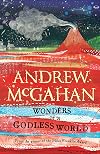
I loved this book. The plot was bizarre and totally fantastical and if it wasn't so beautifully written I would not have been the least bit interested. The writing just swept me along and I found myself picking it up to read a few lines at every chance I got.
It left me wondering about perceptions people have of themselves and their own sanity. Andrew McGahan made these characters come to life without giving them a name, one of which is comatose and the other a "retarded" orphan who does not show more communicate.
I am now a Andrew McGahan fan and have two more of his books to read. show less
It left me wondering about perceptions people have of themselves and their own sanity. Andrew McGahan made these characters come to life without giving them a name, one of which is comatose and the other a "retarded" orphan who does not show more communicate.
I am now a Andrew McGahan fan and have two more of his books to read. show less
Lists
Awards


You May Also Like


Statistics
- Works
- 12
- Members
- 1,289
- Popularity
- #19,896
- Rating
- 3.6
- Reviews
- 32
- ISBNs
- 115
- Languages
- 3
- Favorited
- 1