
Gail Jones (1) (1955–)
Author of Five Bells
For other authors named Gail Jones, see the disambiguation page.
About the Author
Gail Jones was born in 1955 in Harvey, Australia. She was educated at the University of Western Australia. She is Professor of Writing in the Writing and Society Research School at the University of Western Australia. She is the author of two short-story collections, and a critical monograph. Her show more novels include Black Mirror, Sixty Lights, Dreams of Speaking, Sorry, and A Guide to Berlin, which won the 2016 Colin Roderick Award and the HT Priestley Medal. (Bowker Author Biography) show less
Works by Gail Jones
Associated Works
Tagged
Common Knowledge
- Birthdate
- 1955-06-17
- Gender
- female
- Education
- University of Western Australia
- Occupations
- novelist
professor (Writing)
short story writer - Organizations
- University of Western Sydney (Writing and Society Research School)
University of Western Australia - Nationality
- Australia
- Birthplace
- Harvey, Western Australia, Australia
- Places of residence
- Western Australia, Australia
New South Wales, Australia - Associated Place (for map)
- Western Australia, Australia
Members
Reviews
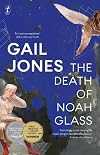
While Noah Glass's two adult children are still making funeral plans and coming to terms with the sudden death of their father, the police arrive to let them know that he is suspected of having stolen an Italian statue. Noah Glass was an art historian and he had recently been in Palermo, but his area of expertise was far removed from the relatively recent sculpture and his personal views made such an accusation unthinkable to his children. Evie, who has traveled to Sydney from her home in show more Melbourne and is staying in her father's apartment, isn't interested in the subject, but Martin, a divorced father and artist, can't get it out of his mind. So he goes to Palermo, determined to find answers.
The Death of Noah Glass takes each of the three characters, Noah, Evie and Martin, and spends alternating chapters with each of them as they are pulled into environments that challenge and stretch them, even as they come to terms with the past. This is a quiet, but gorgeously told story of family. Gail Jones's writing here reminded me of Anne Tyler's best work, with its tight focus on family ties and reliance on good writing and complex and nuanced characters to tell the story. show less
The Death of Noah Glass takes each of the three characters, Noah, Evie and Martin, and spends alternating chapters with each of them as they are pulled into environments that challenge and stretch them, even as they come to terms with the past. This is a quiet, but gorgeously told story of family. Gail Jones's writing here reminded me of Anne Tyler's best work, with its tight focus on family ties and reliance on good writing and complex and nuanced characters to tell the story. show less

It's a bright sunny Saturday in Australia, and crowds of people converge on the Circular Quay in Sydney, with its views of the landmark Opera House and bridge. Among them are four people who interpret what they see in very different ways due to their histories and circumstances. First is Ellie, a transplant from the countryside, who is meeting up with her former childhood lover for the first time in years. James is eager to meet Ellie, hoping that connecting with her can help him heal from a show more traumatic event which he cannot overcome on his own. Catherine has just moved to Australia from Ireland and is only starting to recover from the grief of losing her brother. Pei Xing suffered greatly during the Cultural Revolution in China and emigrated to Australia hoping to start a new life, but finding a fragment of her old.
Each character's backstory is complicated and messy, as are most people's, and Jones does an excellent job at threading the stories together. Commonalities pop up in unexpected places—Doctor Zhivago, the ferries, a missing child—yet each character is unique and fully formed. Small acts of kindness among strangers are impactful for all four characters, and the interconnected nature of social interaction is a major theme. Sydney, and the Circular Quay in particular, is like another character, influencing each of the four in different ways, and being interpreted by each of the four in different ways, sometimes differently in the same day. For instance, one person thinks the Opera House resembles a body bent in a graceful curve, another a hooded eye. What one person can see as beautiful and containing hope, another sees as foreboding.
I thought I knew where the book was going, led in part by the jacket flap description, but the ending was a surprise and darker than I anticipated. But the plot is beside the point. The real beauty of the book lies in the character descriptions and the setting and atmosphere. The author reminds us that we are all of us connected in a myriad of ways, if only we could see it. show less
Each character's backstory is complicated and messy, as are most people's, and Jones does an excellent job at threading the stories together. Commonalities pop up in unexpected places—Doctor Zhivago, the ferries, a missing child—yet each character is unique and fully formed. Small acts of kindness among strangers are impactful for all four characters, and the interconnected nature of social interaction is a major theme. Sydney, and the Circular Quay in particular, is like another character, influencing each of the four in different ways, and being interpreted by each of the four in different ways, sometimes differently in the same day. For instance, one person thinks the Opera House resembles a body bent in a graceful curve, another a hooded eye. What one person can see as beautiful and containing hope, another sees as foreboding.
I thought I knew where the book was going, led in part by the jacket flap description, but the ending was a surprise and darker than I anticipated. But the plot is beside the point. The real beauty of the book lies in the character descriptions and the setting and atmosphere. The author reminds us that we are all of us connected in a myriad of ways, if only we could see it. show less
Sorry by Gail Jones
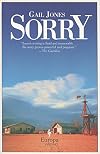
Sorry is a quiet novel about dramatic events. I love when an author can accomplish this juxtaposition. The events circle around the consequences of a disastrous marriage between Nicholas and Stella. The two meet in England and quickly marry, moving, at Nicholas's insistence, to Australia. Nicholas becomes abusive and Stella shuts down. Their daughter, Perdita, finds friendship with a deaf and mute boy, Billy, and a young girl, Mary, who is Aboriginal Australian. Nicholas's actions reach to show more these friends with dramatic and traumatic results.
The backdrop of this novel is the two world wars, the setting in outback Australia, and the theme of saying "sorry" and what that truly means and also who it impacts. I found this theme was dealt with in a powerful and sensitive way.
I really enjoyed this novel and would like to read more by Gail Jones. Thanks for the intro to this author, Club Read! show less
The backdrop of this novel is the two world wars, the setting in outback Australia, and the theme of saying "sorry" and what that truly means and also who it impacts. I found this theme was dealt with in a powerful and sensitive way.
I really enjoyed this novel and would like to read more by Gail Jones. Thanks for the intro to this author, Club Read! show less
Sorry by Gail Jones

What does it mean to say you are sorry? That you regret what happened, whether for the distress it caused yourself or others? That you wished it had never happened? That you wish there were a way to atone? Perhaps it is said as a summation, a closing ritual, either expected or received in surprise, unaware of the silent emotions of the sorry one. Can you know the meaning of another's sorry-ness, of another's sorrow? If saying you are sorry is open to interpretation, how much more so then, show more the failure to say you are sorry. The expectant pause in the story, the silent internal debate, perhaps an ignorant obliviousness or a nonchalant callousness. What is gained or lost with sorry being said or left unsaid?
A whisper: sssshh. The thinnest vehicle of breath.
This is a story that can only be told in a whisper...
'Don't tell them," she said. That was all: Don't tell them.
...And when for comfort we held hands, overlapping, as girls do, in riddled ways, in secret understandings and unspoken allegiances, the sticky stuff of my father's life bound us like sisters.
So begins the first page of this devastatingly beautiful novel about Perdita, her family, and the ways in which speech and silence can each be a salve and a torment.
Perdita's parents met in England and married with the air of Well, that's done. Neither Stella or Nicholas was looking for romance, and their sterile togetherness reflects their egocentric emptiness. Stella lives in a Shakespearian world that only she can navigate, reciting long passages from the tragedies as her way of interpreting and interacting with the world around her. Nicholas, too, is lost in his own world, composed of imagined academic success as an anthropologist and later of manly posturings overlaying his deep sense of impotence at not being able to join up in WWII. Completely self-absorbed and living in isolated fantasies, the couple has a child shortly after leaving England to live in the West Australian outback, where Nicholas can make his name as the translator of the Aborigines.
Perdita is left to flourish or not in this wrack of a family. When Stella enters a deep post-natal depression, fueled by the emotional extremes of Shakespearian tragedy, Perdita is nursed by two Aborigine servants. Growing up, Perdita exists on the edges of two worlds, the one inhabited by her parents, and the one shown her by the Aborigine people who live on the fringes of that world. When she is ten, Nicholas takes Stella to the clinic in town where she rests, off and on, for much of Perdita's childhood. On the way home, he stops at a convent and takes on Mary, a sixteen year old Aborigine orphan, as a cook and tutor for his daughter. Instantly, Mary and Perdita are bound by a love based on sisterhood, shared hardship, and need. Together with Billy, the deaf-mute neighbor boy, they find and share the affection and community that each lacks.
War intensifies the ugliness of Stella and Nicholas's declines, and then something horrific happens, and the children are torn apart. Perdita is cast into silence and withdraws into herself, until she feels as hardened and dead as an ammonite. Her struggle to find herself and regain her voice is a story that tears at the heart. What secrets does her silence hold, and will she herself ever know?
Evocative of the fears and determination of the war years and eloquent on the beauty of the outback and the generous kinship of the Aborigine, [Sorry] is a novel rooted in wartime Australia. Yet the story stretches beyond the particular into the nature of introspection and the use of language to create and maintain identity. The language is beautiful, the story heartbreaking, and the ideas thought provoking. Read this novel. You won't be sorry. show less
A whisper: sssshh. The thinnest vehicle of breath.
This is a story that can only be told in a whisper...
'Don't tell them," she said. That was all: Don't tell them.
...And when for comfort we held hands, overlapping, as girls do, in riddled ways, in secret understandings and unspoken allegiances, the sticky stuff of my father's life bound us like sisters.
So begins the first page of this devastatingly beautiful novel about Perdita, her family, and the ways in which speech and silence can each be a salve and a torment.
Perdita's parents met in England and married with the air of Well, that's done. Neither Stella or Nicholas was looking for romance, and their sterile togetherness reflects their egocentric emptiness. Stella lives in a Shakespearian world that only she can navigate, reciting long passages from the tragedies as her way of interpreting and interacting with the world around her. Nicholas, too, is lost in his own world, composed of imagined academic success as an anthropologist and later of manly posturings overlaying his deep sense of impotence at not being able to join up in WWII. Completely self-absorbed and living in isolated fantasies, the couple has a child shortly after leaving England to live in the West Australian outback, where Nicholas can make his name as the translator of the Aborigines.
Perdita is left to flourish or not in this wrack of a family. When Stella enters a deep post-natal depression, fueled by the emotional extremes of Shakespearian tragedy, Perdita is nursed by two Aborigine servants. Growing up, Perdita exists on the edges of two worlds, the one inhabited by her parents, and the one shown her by the Aborigine people who live on the fringes of that world. When she is ten, Nicholas takes Stella to the clinic in town where she rests, off and on, for much of Perdita's childhood. On the way home, he stops at a convent and takes on Mary, a sixteen year old Aborigine orphan, as a cook and tutor for his daughter. Instantly, Mary and Perdita are bound by a love based on sisterhood, shared hardship, and need. Together with Billy, the deaf-mute neighbor boy, they find and share the affection and community that each lacks.
War intensifies the ugliness of Stella and Nicholas's declines, and then something horrific happens, and the children are torn apart. Perdita is cast into silence and withdraws into herself, until she feels as hardened and dead as an ammonite. Her struggle to find herself and regain her voice is a story that tears at the heart. What secrets does her silence hold, and will she herself ever know?
Evocative of the fears and determination of the war years and eloquent on the beauty of the outback and the generous kinship of the Aborigine, [Sorry] is a novel rooted in wartime Australia. Yet the story stretches beyond the particular into the nature of introspection and the use of language to create and maintain identity. The language is beautiful, the story heartbreaking, and the ideas thought provoking. Read this novel. You won't be sorry. show less
Lists
Booker Prize (1)
Awards


You May Also Like


Associated Authors
Statistics
- Works
- 13
- Also by
- 2
- Members
- 1,167
- Popularity
- #22,033
- Rating
- 3.7
- Reviews
- 76
- ISBNs
- 94
- Languages
- 6
- Favorited
- 7