
Edward St. Aubyn
Author of Mother's Milk
About the Author
Image credit: BBC News
Series
Works by Edward St. Aubyn
The Patrick Melrose Novels: Never Mind, Bad News, Some Hope, and Mother's Milk (2012) 688 copies, 26 reviews
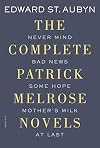
The Complete Patrick Melrose Novels: Never Mind, Bad News, Some Hope, Mother's Milk, and At Last (2012) 469 copies, 7 reviews
Patrick Melrose II 1 copy
Linee parallele 1 copy
Patrick Melrose 5: At Last 1 copy
Some Hope/Mother's Milk 1 copy
Associated Works
Tagged
Common Knowledge
- Birthdate
- 1960-01-14
- Gender
- male
- Education
- Westminster School, London
University of Oxford (Keble College) - Occupations
- journalist
author - Relationships
- Shulman, Nicola (ex-wife)
St Aubyn, Lorna (mother) - Nationality
- UK
- Birthplace
- London, England, UK
- Places of residence
- St Michael's Mount, Cornwall, England, UK
- Associated Place (for map)
- England, UK
Members
Reviews
Leaning toward 4.5 stars.
This was a bit difficult to get through at first, not so much because of the subject matter (which was horrifying and traumatic, but tempered with that amazing dry British humor), but because of the language. It was beautifully written, but... man, it's not something you breeze through easily. It was clearly written by and about the British upper class, and I'd often forget it took place in the twentieth and twenty-first century, because the vocabulary and tone was show more so similar to classic British novels from hundreds of years ago.
St. Aubyn's prose reminds me of Ian McEwan, in that he delves into the very depths of his protagonist's mind (as well of the minds of other characters in other sections of the book). Understandable, since this is heavily based on the author's own life, but the level of insight is still incredible. The streams of consciousness were often dreamlike, flowing easily from one subject to the next, with slight interjections of opinions and observations. You learn how each character thinks. It's amazing.
I was extremely attached to Patrick, despite all his bad behavior. He is the central character of each book, and you just want him to be happy and healthy. We see him grow from an abused, helpless little boy to a lost young man self-destructing with drugs, to a lost adult (temporarily) sober and adrift, to a(n unfaithful) husband and father terrified of repeating the mistakes of his family's past, all the while craving the love of his parents while simultaneously resenting them for their abuse and neglect.
I also found myself laughing at odd moments in the book, which I believe is a coping mechanism the author uses for himself and for the audience because of the dark subject matter. How do you laugh at a story that's based on the worst kind of childhood abuse? But St. Aubyn makes it possible, without the reader feeling awful for doing so.
I stayed up late last night to finish the book, and I was so relieved to feel the catharsis of the ending, right along with Patrick. It's definitely a bleak series, but the ending is hopeful. For all the terrible things that happen throughout the books, and for all the demons Patrick fights, I considered this ending to be happy, and when I finally closed the book after finishing, I fell asleep relieved and lighter.
I highly recommend this book, but warn against the subject matter. It is beautifully, poetically written as it deals with childhood sexual abuse and childhood physical abuse, parental alcoholism and neglect, suicide, and heavy drug usage.
With a dash of dry British humor to soften the blow. show less
This was a bit difficult to get through at first, not so much because of the subject matter (which was horrifying and traumatic, but tempered with that amazing dry British humor), but because of the language. It was beautifully written, but... man, it's not something you breeze through easily. It was clearly written by and about the British upper class, and I'd often forget it took place in the twentieth and twenty-first century, because the vocabulary and tone was show more so similar to classic British novels from hundreds of years ago.
St. Aubyn's prose reminds me of Ian McEwan, in that he delves into the very depths of his protagonist's mind (as well of the minds of other characters in other sections of the book). Understandable, since this is heavily based on the author's own life, but the level of insight is still incredible. The streams of consciousness were often dreamlike, flowing easily from one subject to the next, with slight interjections of opinions and observations. You learn how each character thinks. It's amazing.
I was extremely attached to Patrick, despite all his bad behavior. He is the central character of each book, and you just want him to be happy and healthy. We see him grow from an abused, helpless little boy to a lost young man self-destructing with drugs, to a lost adult (temporarily) sober and adrift, to a(n unfaithful) husband and father terrified of repeating the mistakes of his family's past, all the while craving the love of his parents while simultaneously resenting them for their abuse and neglect.
I also found myself laughing at odd moments in the book, which I believe is a coping mechanism the author uses for himself and for the audience because of the dark subject matter. How do you laugh at a story that's based on the worst kind of childhood abuse? But St. Aubyn makes it possible, without the reader feeling awful for doing so.
I stayed up late last night to finish the book, and I was so relieved to feel the catharsis of the ending, right along with Patrick. It's definitely a bleak series, but the ending is hopeful. For all the terrible things that happen throughout the books, and for all the demons Patrick fights, I considered this ending to be happy, and when I finally closed the book after finishing, I fell asleep relieved and lighter.
I highly recommend this book, but warn against the subject matter. It is beautifully, poetically written as it deals with childhood sexual abuse and childhood physical abuse, parental alcoholism and neglect, suicide, and heavy drug usage.
With a dash of dry British humor to soften the blow. show less
Charlie, a successful screenwriter, has been given six months to live. He wants to do something useful with his time remaining. He will write a novel of and about consciousness. But first, to put himself in the proper artistic frame of mind and squalor, he’ll liquidate his assets and drop half of it onto the roulette table in Monte Carlo. Unfortunately, Charlie wins and it takes him longer than planned to purge himself of his fiscal solidity. But with the help of Angelique, a gambling show more fiend who demands that he give her 1 million francs per day in order for her to be his muse, he succeeds. He has somewhat less luck with his novel, which involves three characters on a train returning to London from a conference on consciousness at Oxford. Stiff with received opinions, his characters become as marooned in the fog of consciousness as their train is in the fog that halts them at Didcot Junction (ever the bane of the Oxford to London line). While Angelique gambles, Charlie sits in the Salle Privée writing furiously, and his characters on the train disport the various prominent positions on consciousness. But it’s not working and eventually Charlie needs other remedies including a failed “long swim” off a Mediterranean isle, and a sojourn alone on the Saharan dunes.
St. Aubyn’s concept for this novel of consciousness is audacious. That it fails is consistent with the ineffable nature (perhaps) of his subject. But that it entertains, that it delights, that it raises our emotional hackles is entirely down to St. Aubyn’s lyrical prose. His sentences are pure pleasure to read, often grounded in the rapturously real but never far from a metaphor or an extended simile. And very funny! More so, probably, for those who are au fait with debates on consciousness in philosophy and cognitive science. Of special note is Charlie’s New York agent, Arnie, whose brief appearances come with zingers attached. He’s priceless.
As with many comic novels, the subject matter here is serious in the extreme, bathetically so. Beyond the wit and maudlin excess lies an honest struggle with a topic that may tragically (or comically) be beyond our grasp. Well worth the challenge for a writer of St. Aubyn’s intelligence. Recommended. show less
St. Aubyn’s concept for this novel of consciousness is audacious. That it fails is consistent with the ineffable nature (perhaps) of his subject. But that it entertains, that it delights, that it raises our emotional hackles is entirely down to St. Aubyn’s lyrical prose. His sentences are pure pleasure to read, often grounded in the rapturously real but never far from a metaphor or an extended simile. And very funny! More so, probably, for those who are au fait with debates on consciousness in philosophy and cognitive science. Of special note is Charlie’s New York agent, Arnie, whose brief appearances come with zingers attached. He’s priceless.
As with many comic novels, the subject matter here is serious in the extreme, bathetically so. Beyond the wit and maudlin excess lies an honest struggle with a topic that may tragically (or comically) be beyond our grasp. Well worth the challenge for a writer of St. Aubyn’s intelligence. Recommended. show less

Some Hope was originally published as three novellas, each one a snapshot of a period in the life of Patrick Melrose. In the first, Never Mind, Patrick is a young boy and the focus of the story is on his monstrous father; in the second, Bad News, that father has just died and Patrick is in his early twenties; and in the third, also called Some Hope, Patrick is coming up to thirty and is also, perhaps, coming to terms with the difficulties of his early childhood.
The story is a bit of a show more triptych, with books one and three both structured around a social occasion and sharing similar themes (gossip, bitchiness, social power dynamics), while book two focuses much more on Patrick himself and what's going on inside his head.
In the first few pages of the first book, as we are being introduced to the unhappy marriage of Patrick's parents, the following lines appear:
When she had met David, she thought that he was the first person who really understood her. Now he was the last person she would go to for understanding. it was hard to explain this change and she tried to resist the temptation of thinking that he had been waiting all along for her money to subsidize his fantasies of how he deserved to live. Perhaps, on the contrary, it was her money that had cheapened him. He had stopped his medical practice soon after their marriage. At the beginning, there had been talk of using some of her money to start a home for alcoholics. In a sense they had succeeded.
That last sentence is a perfect example of the way that this book makes you gasp - at once with horror and with admiration for the subtlety of the writing. On the following page - after Patrick's mother shakes off her hangover jitters with a handful of uppers and downers ("the yellow pills for keeping her alert and the white ones for taking away the dread and panic that alertness brought with it"), we see her "recognizing herself in the mirror for the first time that day". At this point I knew that it would be a gruelling but breathtaking read, and that's what it turned out to be.
There were times when I felt the book was suffering from diminishing returns. In particular, much of it is a vicious skewering of the British upper classes, and at moments I felt I just couldn't be bothered to be plunged back into the obnoxious idiocy of this snobbish world. But then the quality of the writing would make me smile - we are introduced to one character like this:
Kitty Harrow, at home in the country, lay in bed propped up by a multitude of pillows, her King Charles spaniels hidden in the troughs of her undulating bedspread, and a ravaged breakfast tray abandoned beside her like an exhausted lover.
Within this context, we have the story of Patrick himself - sometimes awful, sometimes funny, sometimes infuriating, sometimes even moving. I don't want to talk too much about what happens to avoid spoilers. But I found myself stretched in all sorts of different ways while reading this. Very good. show less
The story is a bit of a show more triptych, with books one and three both structured around a social occasion and sharing similar themes (gossip, bitchiness, social power dynamics), while book two focuses much more on Patrick himself and what's going on inside his head.
In the first few pages of the first book, as we are being introduced to the unhappy marriage of Patrick's parents, the following lines appear:
When she had met David, she thought that he was the first person who really understood her. Now he was the last person she would go to for understanding. it was hard to explain this change and she tried to resist the temptation of thinking that he had been waiting all along for her money to subsidize his fantasies of how he deserved to live. Perhaps, on the contrary, it was her money that had cheapened him. He had stopped his medical practice soon after their marriage. At the beginning, there had been talk of using some of her money to start a home for alcoholics. In a sense they had succeeded.
That last sentence is a perfect example of the way that this book makes you gasp - at once with horror and with admiration for the subtlety of the writing. On the following page - after Patrick's mother shakes off her hangover jitters with a handful of uppers and downers ("the yellow pills for keeping her alert and the white ones for taking away the dread and panic that alertness brought with it"), we see her "recognizing herself in the mirror for the first time that day". At this point I knew that it would be a gruelling but breathtaking read, and that's what it turned out to be.
There were times when I felt the book was suffering from diminishing returns. In particular, much of it is a vicious skewering of the British upper classes, and at moments I felt I just couldn't be bothered to be plunged back into the obnoxious idiocy of this snobbish world. But then the quality of the writing would make me smile - we are introduced to one character like this:
Kitty Harrow, at home in the country, lay in bed propped up by a multitude of pillows, her King Charles spaniels hidden in the troughs of her undulating bedspread, and a ravaged breakfast tray abandoned beside her like an exhausted lover.
Within this context, we have the story of Patrick himself - sometimes awful, sometimes funny, sometimes infuriating, sometimes even moving. I don't want to talk too much about what happens to avoid spoilers. But I found myself stretched in all sorts of different ways while reading this. Very good. show less
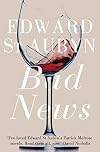
From the first Patrick Melrose novel, [b:Never Mind|13514899|Never Mind (The Patrick Melrose Novels, #1)|Edward St. Aubyn|https://images.gr-assets.com/books/1336063799s/13514899.jpg|19070801], it was overwhelmingly evident that poor abused Patrick was not going to have a happy life. ‘Bad News’ confirms this with a vengeance. It takes the reader to 1982 and follows Patrick to New York, where he picks up his father’s ashes and goes on a drug binge that he is lucky to survive. Between show more doses of coke, smack, etc, Patrick attempts small talk with miscellaneous family friends and acquaintances. These interactions are the best part of the book, as St Aubyn has an incredible talent for evoking social nuance. Whilst mouthing platitudes about his father, the acquaintances studiously ignore the evidence that Patrick is a physical wreck, drug addict, and abuse victim. An exemplary incidence of this occurs in this exchange between Patrick and a certain Mr. Banks:
‘Bad News’ is as viciously well-written as [b:Never Mind|13514899|Never Mind (The Patrick Melrose Novels, #1)|Edward St. Aubyn|https://images.gr-assets.com/books/1336063799s/13514899.jpg|19070801] and Patrick’s spiral of self-destruction is painful to read. I was reminded somewhat of [b:The Goldfinch|17333223|The Goldfinch|Donna Tartt|https://images.gr-assets.com/books/1451554970s/17333223.jpg|24065147], although Patrick’s substance abuse seems more extreme and hopeless. Theo Decker at least had friends to reach out to, whereas Patrick appears unmoored and alienated from everyone who isn’t actively selling him drugs. If I hadn’t known that there were several more novels in Patrick Melrose series, I would have expected him to be dead of an overdose before the end of this book. show less
“I don’t think that people noo so much about how to bring up kids in those days. A lot of parents in your fawther’s generation just didn’t know how to express their love.”
“Cruelty is the opposite of love,” said Patrick, “not just some inarticulate version of it.”
‘Bad News’ is as viciously well-written as [b:Never Mind|13514899|Never Mind (The Patrick Melrose Novels, #1)|Edward St. Aubyn|https://images.gr-assets.com/books/1336063799s/13514899.jpg|19070801] and Patrick’s spiral of self-destruction is painful to read. I was reminded somewhat of [b:The Goldfinch|17333223|The Goldfinch|Donna Tartt|https://images.gr-assets.com/books/1451554970s/17333223.jpg|24065147], although Patrick’s substance abuse seems more extreme and hopeless. Theo Decker at least had friends to reach out to, whereas Patrick appears unmoored and alienated from everyone who isn’t actively selling him drugs. If I hadn’t known that there were several more novels in Patrick Melrose series, I would have expected him to be dead of an overdose before the end of this book. show less
Lists
Awards


You May Also Like


Associated Authors
Statistics
- Works
- 26
- Also by
- 1
- Members
- 5,860
- Popularity
- #4,210
- Rating
- 3.7
- Reviews
- 271
- ISBNs
- 307
- Languages
- 15
- Favorited
- 16