
J. M. Dillard
Author of The Lost Years
About the Author
J. M. Dillard lives in the sleepy community of Ojai, California, with her husband and dogs.
Disambiguation Notice:
J.M. Dillard is the pseudonym of author Jeanne Kalogridis.
Image credit: Alan C. Teeple
Series
Works by J. M. Dillard
Associated Works
Tagged
Common Knowledge
- Legal name
- Kalogridis, Jeanne
- Other names
- Dillard, Jeanne
Dillard, J. M. - Birthdate
- 1954-12-17
- Gender
- female
- Education
- University of South Florida (BA, Russian)
University of South Florida (MA, Linguistics) - Occupations
- fiction writer
- Nationality
- USA
- Birthplace
- Winter Haven, Florida, USA
- Places of residence
- Washington, D.C., USA
West Coast, USA
Florida, USA - Disambiguation notice
- J.M. Dillard is the pseudonym of author Jeanne Kalogridis.
- Associated Place (for map)
- USA
Members
Reviews

Love & Loss: The Life of Leonardo’s Lisa
Jeanne Kalogridis' historical fiction masterpiece, I, Mona Lisa, presents in entirety an aura of elegance most intriguing. One minute glimmering with the opulence of Renaissance Florence, the next dripping with the bloodshed of war and personal vendettas. There is no question that the author is one of the finest writers of period literature, leaving no minute detail out. Her pen flourishes as she lavishly paints a very realistic portrait of Florence show more Italy in it's prime.
Not much is actually known of Lisa di Antonio Gherardini, the young and enchanting woman Leonardo da Vinci chose as his model for the Mona Lisa. With that fact Jeanne Kalogridis could indulge in free liberty, giving herself reign to create a character so believable that when you turn the last page, you will feel the author has written a biography. Her Mona Lisa becomes a heroine you will never be able to forget.
At a little over 500 pages the reader immediately becomes immersed in the grandiose city of Florence; it's grand architecture, glorious costumes, and many talented artisans that built magnificent cathedrals, carved life-like marble statues, toiled brushstroke after brushstroke over paintings that graced every church and affluent Florentine home. Readers will revel in the art worlds of Michaelangelo, Botticelli, and of course this story's hero, talented and sweet, Leonardo da Vinci, whom you will see in a different light than you've ever seen him before.
Our smiling Lisa is a young girl when we open the first page. She is the daughter of a wool merchant and a captivating mother who had once caught the eye of Giuliano de Medici, brother of the elite Lorenzo, known as Il Magnifico. Before long Lisa's world is catapulted into many woven tangled webs that include death and deceit, murder and betrayal, love and passion, and mysteries that will take her many years to unravel. She is swept up into the decadent lives of the de Medici family and is taken under their wing, her a mere peasant, mysteriously loved and protected by one the most wealthiest families in Italy. A family of power who one minute relishes in their ability to bring art and culture to their city, yet in another can order a swift slice of a sword that can bring destruction and death without remorse. Lisa learns she has a part to play in their chaotic political games and discovers she may not be who she thought she was. In fact a major part of this riveting tale is the puzzle of who her true father is. Baited, deceived and used as an instrument for religious and politic gain, Lisa time and time again proves to the world she is clever and can match her tormentors eye for eye and come out winning, each and every time they bring her down.
Throughout this marvelous novel, Lisa is tested for her strength and perseverance during many difficult scenarios that bring her love and loss many times over. She learns that all is not always as it seems, and that the ones you love and trust the most, can be the cause of your downfall and destruction, while others you believe are perfect strangers can be secret allies deviously plotting for your success. There is a tiny bit of predictability as the reader can imagine how it will all end but for 90% of this lengthy novel you will totally be enraptured and captivated as the author navigates you into world of Renaissance Italy. I can find no fault with this book and can not give it any higher stars than I am allowed. Standing ovation, for historical fiction this is exquisite! show less
Jeanne Kalogridis' historical fiction masterpiece, I, Mona Lisa, presents in entirety an aura of elegance most intriguing. One minute glimmering with the opulence of Renaissance Florence, the next dripping with the bloodshed of war and personal vendettas. There is no question that the author is one of the finest writers of period literature, leaving no minute detail out. Her pen flourishes as she lavishly paints a very realistic portrait of Florence show more Italy in it's prime.
Not much is actually known of Lisa di Antonio Gherardini, the young and enchanting woman Leonardo da Vinci chose as his model for the Mona Lisa. With that fact Jeanne Kalogridis could indulge in free liberty, giving herself reign to create a character so believable that when you turn the last page, you will feel the author has written a biography. Her Mona Lisa becomes a heroine you will never be able to forget.
At a little over 500 pages the reader immediately becomes immersed in the grandiose city of Florence; it's grand architecture, glorious costumes, and many talented artisans that built magnificent cathedrals, carved life-like marble statues, toiled brushstroke after brushstroke over paintings that graced every church and affluent Florentine home. Readers will revel in the art worlds of Michaelangelo, Botticelli, and of course this story's hero, talented and sweet, Leonardo da Vinci, whom you will see in a different light than you've ever seen him before.
Our smiling Lisa is a young girl when we open the first page. She is the daughter of a wool merchant and a captivating mother who had once caught the eye of Giuliano de Medici, brother of the elite Lorenzo, known as Il Magnifico. Before long Lisa's world is catapulted into many woven tangled webs that include death and deceit, murder and betrayal, love and passion, and mysteries that will take her many years to unravel. She is swept up into the decadent lives of the de Medici family and is taken under their wing, her a mere peasant, mysteriously loved and protected by one the most wealthiest families in Italy. A family of power who one minute relishes in their ability to bring art and culture to their city, yet in another can order a swift slice of a sword that can bring destruction and death without remorse. Lisa learns she has a part to play in their chaotic political games and discovers she may not be who she thought she was. In fact a major part of this riveting tale is the puzzle of who her true father is. Baited, deceived and used as an instrument for religious and politic gain, Lisa time and time again proves to the world she is clever and can match her tormentors eye for eye and come out winning, each and every time they bring her down.
Throughout this marvelous novel, Lisa is tested for her strength and perseverance during many difficult scenarios that bring her love and loss many times over. She learns that all is not always as it seems, and that the ones you love and trust the most, can be the cause of your downfall and destruction, while others you believe are perfect strangers can be secret allies deviously plotting for your success. There is a tiny bit of predictability as the reader can imagine how it will all end but for 90% of this lengthy novel you will totally be enraptured and captivated as the author navigates you into world of Renaissance Italy. I can find no fault with this book and can not give it any higher stars than I am allowed. Standing ovation, for historical fiction this is exquisite! show less

This book is a novelization of the pilot episode of the 1980s syndicated television series that was a sequel to the 1953 The War of the Worlds film. I've never seen the show, and from reading this book, I'm not terribly encouraged to do so. At least on the page, the characters have the charisma and interest of planks of wood. There's a male scientist undergoing an unconvincing dissolving relationship (it's not unconvincing that the relationship is dissolving; it's unconvincing that it ever show more existed in the first place, given his fiancée's characterization as a one-dimensional harridan), a female scientist with a daughter and an unconvincing sexual tension with the male scientist, and a Native American Army colonel who spends his time dispensing earthly wisdom and stories (though this is amusingly undercut in one scene where he privately reveals that he's just bullshitting someone, but this is the exception). Then there's all the scenes written from the point-of-view of the aliens (no longer Martians, but that's okay since there was never any clear reason why the protagonists of the 1953 film thought they were Martians anyway) which just go on and on and on with tedious extraterrestrial politics and power plays. The only worthwhile character is Doctor Clayton Forrester, and that's probably just because of my nostalgia for the 1953 movie, not anything this book actually does.
It also suffers from the fact that it's a novelization of a pilot; the whole book is just set up for a series of stories in a completely different medium, rendering the whole thing pretty pointless as an independent reading exercise. It follows the pilot formula to a t-- the characters learn of a threat, try to fight back with limited success (though in this book's case that amounts to about seventeen tedious car trips between California and New Mexico), organize and get introduced to the recurring characters, and then strike back with a definitive victory that's ultimately irrelevant because we have to get a few more seasons out of this concept. (Think of both Stargate pilots, actually.) Yawn. The format shift also makes this book suffer because you can't gloss over unwieldy things in a book the way you can in a TV show, such as the fact that somehow the invasion of the entire Earth by an alien force in 1953 has had no impact on society or history. Everyone acts like the woman scientist (sorry, I can't be bothered to look up her name) should be all gung-ho about fighting the aliens because her second cousin or something was killed by them... but surely almost everyone on the planet would have lost someone close to them in the attack? So much for the "great disillusionment". On the other hand, the prose format means there's some nice flashbacks to the 1953 invasion, but once again that's more success because of nostalgia than anything this book is actually doing. I was surprised at how poor this effort was; J. M. Dillard has certainly taken some pretty crap source scripts and turned them into decent novels before, so I don't know what her problem was here. A really crap source script, maybe? I don't know that I'll ever brave the War of the Worlds TV show to find out after reading this. show less
It also suffers from the fact that it's a novelization of a pilot; the whole book is just set up for a series of stories in a completely different medium, rendering the whole thing pretty pointless as an independent reading exercise. It follows the pilot formula to a t-- the characters learn of a threat, try to fight back with limited success (though in this book's case that amounts to about seventeen tedious car trips between California and New Mexico), organize and get introduced to the recurring characters, and then strike back with a definitive victory that's ultimately irrelevant because we have to get a few more seasons out of this concept. (Think of both Stargate pilots, actually.) Yawn. The format shift also makes this book suffer because you can't gloss over unwieldy things in a book the way you can in a TV show, such as the fact that somehow the invasion of the entire Earth by an alien force in 1953 has had no impact on society or history. Everyone acts like the woman scientist (sorry, I can't be bothered to look up her name) should be all gung-ho about fighting the aliens because her second cousin or something was killed by them... but surely almost everyone on the planet would have lost someone close to them in the attack? So much for the "great disillusionment". On the other hand, the prose format means there's some nice flashbacks to the 1953 invasion, but once again that's more success because of nostalgia than anything this book is actually doing. I was surprised at how poor this effort was; J. M. Dillard has certainly taken some pretty crap source scripts and turned them into decent novels before, so I don't know what her problem was here. A really crap source script, maybe? I don't know that I'll ever brave the War of the Worlds TV show to find out after reading this. show less
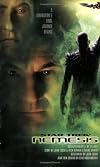
I've given this 4🌟 because of my affection for the characters, though objectively it's probably a solid 3🌟.
I think I could have done without yet another storyline where Deanna Troiis subjected to a psychic sexual assault. There is an important story to be told about the effects of sexual violence, and the strength and courage of survivors. It just feels like repeatedly using her empathic abilities to cast her as a vulnerable victim does a disservice to her character through one of her show more greatest strengths . That quibble aside, the plot is pretty solid, and the novel form allows a peek into the characters' inner worlds which complements the emotional nuances of the actors' portrayals, assuming you've seen the film.
There is an emotionality about it, a big chunk of which I guess I bring as a fan, this being the last outing of the full Next Generation crew, but how could [spoiler, like, really massive spoiler]Data's heroic sacrifice and death to save Captain Picard fail to move you if you have even a passing feeling for these characters.
I do think the film franchise could have borne a sequel to "Nemesis" with the TNG crew,maybe going on something like "The Search for Data", but perhaps that would have been too corny an idea. It does sound more like a sitcom set in an IT department, come to think of it but we're obviously past that possibility now.
Anyway, definitely worth a read if you want a quick fix of interstellar action, with extra emotional depth if you know the Enterprise crew and their back stories. show less
I think I could have done without yet another storyline where Deanna Troi
There is an emotionality about it, a big chunk of which I guess I bring as a fan, this being the last outing of the full Next Generation crew, but how could [spoiler, like, really massive spoiler]
I do think the film franchise could have borne a sequel to "Nemesis" with the TNG crew,
Anyway, definitely worth a read if you want a quick fix of interstellar action, with extra emotional depth if you know the Enterprise crew and their back stories. show less
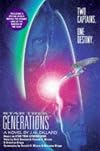
J.M. Dillard's adaptation of Star Trek: Generations not only covers the plot of the film, but includes one of the deleted scenes, more of the crew from the original Enterprise, and improves the ending. Since the movie is its own entity and the book closely follows its story, I will primarily focus on Dillard's alterations.
Following Kirk's death on the Enterprise-B, Dillard turns his attention to original crew members besides Scotty and Chekov. Sulu, aboard the Excelsior, receives the news show more via subspace message in the middle of an evacuation drill in which his crew is simulating a warp core breach and separating the saucer section. This is particularly poignant as it foreshadows the later evacuation of the Enterprise-D. Dillard's addition of McCoy and Spock attending Kirk's memorial service provides a much-needed emotional response that seemed missing in the film.
Moving to the Next Generation-era scenes, Dillard hews fairly close to the film, though with additional dialogue or the full sequence of Geordi following his return from the Klingon Bird of Prey. Dillard drastically alters both Kirk and Soran's deaths, removing the bridge crash from the movie. Instead, Soran shoots Kirk with the distruptor during their fight. Soran, recognizing Kirk, realizes that Picard must have traveled to the Nexus and is now working to undo Soran's work. Rather than die when his probe explodes, Soran dies after Picard shoots him. Apparently, this sequence did not test well with audiences, but I feel it works better than the scene the filmmakers reshot, in which Kirk dies in a bridge collapse.
The final section of the book contains a making-of for Star Trek: Generations that has some interesting behind-the-scenes information. It's mostly promotional, meant to help sell the film, but it should be of interest to Trekkers curious about The Next Generation's transition from television to film. show less
Following Kirk's death on the Enterprise-B, Dillard turns his attention to original crew members besides Scotty and Chekov. Sulu, aboard the Excelsior, receives the news show more via subspace message in the middle of an evacuation drill in which his crew is simulating a warp core breach and separating the saucer section. This is particularly poignant as it foreshadows the later evacuation of the Enterprise-D. Dillard's addition of McCoy and Spock attending Kirk's memorial service provides a much-needed emotional response that seemed missing in the film.
Moving to the Next Generation-era scenes, Dillard hews fairly close to the film, though with additional dialogue or the full sequence of Geordi following his return from the Klingon Bird of Prey. Dillard drastically alters both Kirk and Soran's deaths, removing the bridge crash from the movie. Instead, Soran shoots Kirk with the distruptor during their fight. Soran, recognizing Kirk, realizes that Picard must have traveled to the Nexus and is now working to undo Soran's work. Rather than die when his probe explodes, Soran dies after Picard shoots him. Apparently, this sequence did not test well with audiences, but I feel it works better than the scene the filmmakers reshot, in which Kirk dies in a bridge collapse.
The final section of the book contains a making-of for Star Trek: Generations that has some interesting behind-the-scenes information. It's mostly promotional, meant to help sell the film, but it should be of interest to Trekkers curious about The Next Generation's transition from television to film. show less
Lists
Awards

You May Also Like


Associated Authors
Statistics
- Works
- 51
- Also by
- 2
- Members
- 14,653
- Popularity
- #1,572
- Rating
- 3.6
- Reviews
- 238
- ISBNs
- 364
- Languages
- 17
- Favorited
- 12