
The Other Side of Silence is a nice return to form after the rather bloated and aimless direction the books were taking of late. The plotting and pacing are much tighter here, and while Kerr can't resist the odd flashback they never threaten to overwhelm the main narrative. A fun, quick read.
Reasonably useful though a little outdated in a number of sections.
I'd never read any of Hammett's short fiction before and was pleasantly surprised by what I found. These are brisk, snappy stories that are ludicrous fun to read and more on the action side of the spectrum than the sleuthing, which suited me just fine. The Golden Horseshoe and The Girl With the Silver Eyes were my favourites of the bunch, though the oddly surreal The Farewell Murder was probably the most memorable piece, with its mix of African tribal curses, Russian millionaires and a psychopathic British ex-military man.
I don't think I've ever read anything quite like this. Part post-apocalyptic novel, part existentialist treaty, part Kafka-esque nightmare, it is, in its essence, an utterly original work and one of the finest pieces of weird fiction I've read in years.
If you've read Evenson before you'll sort of know what to expect, lots of weirdness, lots of disorientation, razor sharp prose and a wicked sense of humor that's several shades darker than black. Immobility raises all this to truly nightmarish levels to the point where I felt physically queasy throughout the book, yet enjoying the hell out of every moment.
At its heart a quest novel, Evenson uses this basic set up to explore all manner of themes about man and his place in the universe, doing this all with a lightness of touch that never once threatens to bog things down. By the end of the novel I truly had a greater appreciation (and fear) of just how precarious our hold on the environment is, and how easily things can slip into meaningless and chaos.
A superb piece of work.
If you've read Evenson before you'll sort of know what to expect, lots of weirdness, lots of disorientation, razor sharp prose and a wicked sense of humor that's several shades darker than black. Immobility raises all this to truly nightmarish levels to the point where I felt physically queasy throughout the book, yet enjoying the hell out of every moment.
At its heart a quest novel, Evenson uses this basic set up to explore all manner of themes about man and his place in the universe, doing this all with a lightness of touch that never once threatens to bog things down. By the end of the novel I truly had a greater appreciation (and fear) of just how precarious our hold on the environment is, and how easily things can slip into meaningless and chaos.
A superb piece of work.

I'd heard some bad things about Derleth's posthumous collaborations with Lovecraft, how he had a tendency to over-categorise the Mythos and apply a simplistic Christian morality on creatures whose very power to chill stemmed from the fact that they were utterly beyond human notions of good or evil. Despite that, I found this quite an effective and well written work, and Derleth's vision, if not entirely in keeping with Lovecraft's own, was not wholly incompatible either. There's a lot of good, if derivative, stuff in here and a nice sense of sustained menace running throughout the piece. Derleth might not have "got" Lovecraft entirely, but he understood enough about what made him an effective horror writer as regards the basics of tone, imagery, characterisation, and plot not to drop the ball. Only the last act really lets the piece down, leaving the reader on a distinctly "that's it? moment. A pity considering all the good work leading up to it.

Maigret turns Nero Wolfe in this one and spends the majority of the novel bedridden after taking a bullet to the shoulder in the opening chapter. It's an interesting experiment, but the story's a little too convoluted and implausible to make for really compelling reading. The addition of his wife as sidekick also felt rather limp.

This is very much a book of two halves. The first half, an overview of the early writers who helped to shape the modern fantasy genre, is pretty gripping stuff. Carter nails precisely what makes writers like Dunsany and Eddison so pivotal to the genre, as well as superb writers in their own right, and does so in a humorous and pithy style that clearly shows his great love and respect of the field overall.
The second half of the book, unfortunately, loses its way big time. Carter spends a couple of chapters on world building while berating various writers like Howard and Brackett for their inappropriate nomenclature, as well as well as writers like Tolkien for their 'lack of a religious element' in their works. While some of his points ring true (Howard _was_ a notoriously sloppy world builder, IMO) Carter more often than not fundamentally misses the point many of his examples were aiming for with their respective works, or chooses to criticise them on the most petty and quibbling aspects of their work.
More egregiously, he then proceeds to lecture the reader on effective world building, using his own execrable Thongor series as a main example (Ssaa! floaters! Herpes Zoster!). These chapters are nigh on worthless at best, and potentially harmful at worst (if one were to actually follow his advice, which seems unlikely), though they do provide quite a few belly laughs at Carter's expense.
The second half of the book, unfortunately, loses its way big time. Carter spends a couple of chapters on world building while berating various writers like Howard and Brackett for their inappropriate nomenclature, as well as well as writers like Tolkien for their 'lack of a religious element' in their works. While some of his points ring true (Howard _was_ a notoriously sloppy world builder, IMO) Carter more often than not fundamentally misses the point many of his examples were aiming for with their respective works, or chooses to criticise them on the most petty and quibbling aspects of their work.
More egregiously, he then proceeds to lecture the reader on effective world building, using his own execrable Thongor series as a main example (Ssaa! floaters! Herpes Zoster!). These chapters are nigh on worthless at best, and potentially harmful at worst (if one were to actually follow his advice, which seems unlikely), though they do provide quite a few belly laughs at Carter's expense.
Mieville takes an ingenious concept (two cities coexisting in the same physical space, separated by their citizens' mutual ignorance of the other) and weaves a compelling murder mystery around it. Unlike the Bas Lag books Mieville reins in his creativity for this one, keeping the central idea at once in the background and also informing every aspect of the plot. It's a pretty intriguing read for about two third of the length, but the last part descends into rather familiar crime/thriller territory with no real development of the central theme. Nonetheless, it's a nice fast paced read with some interesting things to say about urban life and the psychological effects it has on its denizens.
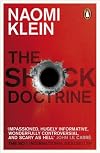
I read this book over the course of a year. Not because it was particularly heavy going, or slow, but simply due to the sheer momentousness of the things being said. What Naomi Klein has achieved here is a staggering overview of an insidious global phenomenon, disaster capitalism, which just might be one of the most potent driving forces in world economics of the past fifty years. Starting from a basic premise that the confusion immediately following periods of shock puts people in a malleable state, economists led by the Chicago School teachings of Milton Friedman began applying the principle to whole countries, seizing on periods of mass shock (wars, coups, natural disasters etc) to force through radical free-market reforms and privatisations of state assets while the populations were still reeling from the aftermath. Klein charts this process from its genesis in South America to the post-Communist regions of Eastern Europe to the reconstruction fiascos in Iraq, Sri Lanka and New Orleans, showing how the unifying factor in each case was the desire of a select few to make obscene profits from the misery and suffering of untold millions.
It's a horrendous picture and in Klein's hands it's utterly convincing. The devastation sown in the wake of these disasters is all too real to ignore, yet it is only through the unifying lens of Friedman's theories that it begins to make some sort of sense. Disaster and chaos come to be seen not as destabilising forces but golden show more opportunities, at least for those in the position to take advantage of them. For the rest of us the results are devastating, blowing apart the ever growing gap between the rich and the poor, devastating social welfare programs, destroying communities, and driving countries into crippling debt.
It's rare that I ever read a book that has such a profound impact on my very world view, but this is such a book. I urge anyone at all interested in real world events to read this book immediately. Heck, I urge everyone to read this book period. It's that good. show less
It's a horrendous picture and in Klein's hands it's utterly convincing. The devastation sown in the wake of these disasters is all too real to ignore, yet it is only through the unifying lens of Friedman's theories that it begins to make some sort of sense. Disaster and chaos come to be seen not as destabilising forces but golden show more opportunities, at least for those in the position to take advantage of them. For the rest of us the results are devastating, blowing apart the ever growing gap between the rich and the poor, devastating social welfare programs, destroying communities, and driving countries into crippling debt.
It's rare that I ever read a book that has such a profound impact on my very world view, but this is such a book. I urge anyone at all interested in real world events to read this book immediately. Heck, I urge everyone to read this book period. It's that good. show less
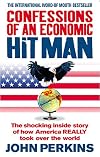
Interesting if lightweight look at the role in which economics can be twisted to fit the needs of big business and empire building. Perkins was an early iteration of the economic hit man, fraudulent economists whose job it was to drive developing countries into debt by convincing them to accept huge development loans from the IMF and World Bank which they could never pay back. As a 'confessional the book is unfortunately saddled with a lot of soulless soul-searching which comes across as desperately contrived and phoney, but the parts in which the author actually recounts what he did as an EHM are pretty interesting (though as I said somewhat lightweight). I'm not sure how much of the behind the scenes stuff to believe, and I assume Perkins left a lot of material out for various reasons, so the book is best read as an overview of what this sort of character's job entails (I had no idea of what people like this actually did prior to reading this).

I wasn't sure how to rate this. It's a curious mixture of the gripping and the absolutely mundane. The gripping part involves a search by a bunch of engineers to prove that the tail wing of a new passenger plane contains a latent design flaw (which admittedly doesn't sound that gripping, but in Nevil Shute's hands becomes so) while the mundane part concerns pretty much everything else, specifically a horrendous domestic drama involving a cast of insipid female characters straight out of a Cholmondley Warner sketch.
Honestly, I'm not sure why Shute thought this constituted the "bits that make it fun" as he more or less makes one of his characters say on the final page. I'm not even sure if it would've been particularly fun for his readers at the time. With the exception of the narrator's wife, it would be hard to call these characters anything other than vapidly drawn caricatures, a sort of wish fulfilment wife fancy for men of the 1940s, I suppose, loyal, sweet tempered, a bit dim but keen to learn all the domestic duties required of them. And ever so pretty. Etc.
Another thing which bothered me was that Shute frequently violated one of the principal rules of POV by narrating several chapters outside of the experience of the main character (the book is written in the first person). I'm not usually a massive stickler for things like that, but the fact that pretty much all these chapters involved the nonsense above made them seem especially pointless.
Luckily the main story show more is a belter, and Shute has an excellent way of conveying pretty technical engineering terms to the layman in a clear and concise manner. Had the book focussed purely on this aspect of the story and cut out all the fluff I'd probably be rating it a four. show less
Honestly, I'm not sure why Shute thought this constituted the "bits that make it fun" as he more or less makes one of his characters say on the final page. I'm not even sure if it would've been particularly fun for his readers at the time. With the exception of the narrator's wife, it would be hard to call these characters anything other than vapidly drawn caricatures, a sort of wish fulfilment wife fancy for men of the 1940s, I suppose, loyal, sweet tempered, a bit dim but keen to learn all the domestic duties required of them. And ever so pretty. Etc.
Another thing which bothered me was that Shute frequently violated one of the principal rules of POV by narrating several chapters outside of the experience of the main character (the book is written in the first person). I'm not usually a massive stickler for things like that, but the fact that pretty much all these chapters involved the nonsense above made them seem especially pointless.
Luckily the main story show more is a belter, and Shute has an excellent way of conveying pretty technical engineering terms to the layman in a clear and concise manner. Had the book focussed purely on this aspect of the story and cut out all the fluff I'd probably be rating it a four. show less
The Other Side of Silence is a nice return to form after the rather bloated and aimless direction the books were taking of late. The plotting and pacing are much tighter here, and while Kerr can't resist the odd flashback they never threaten to overwhelm the main narrative. A fun, quick read.
Reasonably useful though a little outdated in a number of sections.
I don't think I've ever read anything quite like this. Part post-apocalyptic novel, part existentialist treaty, part Kafka-esque nightmare, it is, in its essence, an utterly original work and one of the finest pieces of weird fiction I've read in years.
If you've read Evenson before you'll sort of know what to expect, lots of weirdness, lots of disorientation, razor sharp prose and a wicked sense of humor that's several shades darker than black. Immobility raises all this to truly nightmarish levels to the point where I felt physically queasy throughout the book, yet enjoying the hell out of every moment.
At its heart a quest novel, Evenson uses this basic set up to explore all manner of themes about man and his place in the universe, doing this all with a lightness of touch that never once threatens to bog things down. By the end of the novel I truly had a greater appreciation (and fear) of just how precarious our hold on the environment is, and how easily things can slip into meaningless and chaos.
A superb piece of work.
If you've read Evenson before you'll sort of know what to expect, lots of weirdness, lots of disorientation, razor sharp prose and a wicked sense of humor that's several shades darker than black. Immobility raises all this to truly nightmarish levels to the point where I felt physically queasy throughout the book, yet enjoying the hell out of every moment.
At its heart a quest novel, Evenson uses this basic set up to explore all manner of themes about man and his place in the universe, doing this all with a lightness of touch that never once threatens to bog things down. By the end of the novel I truly had a greater appreciation (and fear) of just how precarious our hold on the environment is, and how easily things can slip into meaningless and chaos.
A superb piece of work.
I'd never read any of Hammett's short fiction before and was pleasantly surprised by what I found. These are brisk, snappy stories that are ludicrous fun to read and more on the action side of the spectrum than the sleuthing, which suited me just fine. The Golden Horseshoe and The Girl With the Silver Eyes were my favourites of the bunch, though the oddly surreal The Farewell Murder was probably the most memorable piece, with its mix of African tribal curses, Russian millionaires and a psychopathic British ex-military man.
This is very much a book of two halves. The first half, an overview of the early writers who helped to shape the modern fantasy genre, is pretty gripping stuff. Carter nails precisely what makes writers like Dunsany and Eddison so pivotal to the genre, as well as superb writers in their own right, and does so in a humorous and pithy style that clearly shows his great love and respect of the field overall.
The second half of the book, unfortunately, loses its way big time. Carter spends a couple of chapters on world building while berating various writers like Howard and Brackett for their inappropriate nomenclature, as well as well as writers like Tolkien for their 'lack of a religious element' in their works. While some of his points ring true (Howard _was_ a notoriously sloppy world builder, IMO) Carter more often than not fundamentally misses the point many of his examples were aiming for with their respective works, or chooses to criticise them on the most petty and quibbling aspects of their work.
More egregiously, he then proceeds to lecture the reader on effective world building, using his own execrable Thongor series as a main example (Ssaa! floaters! Herpes Zoster!). These chapters are nigh on worthless at best, and potentially harmful at worst (if one were to actually follow his advice, which seems unlikely), though they do provide quite a few belly laughs at Carter's expense.
The second half of the book, unfortunately, loses its way big time. Carter spends a couple of chapters on world building while berating various writers like Howard and Brackett for their inappropriate nomenclature, as well as well as writers like Tolkien for their 'lack of a religious element' in their works. While some of his points ring true (Howard _was_ a notoriously sloppy world builder, IMO) Carter more often than not fundamentally misses the point many of his examples were aiming for with their respective works, or chooses to criticise them on the most petty and quibbling aspects of their work.
More egregiously, he then proceeds to lecture the reader on effective world building, using his own execrable Thongor series as a main example (Ssaa! floaters! Herpes Zoster!). These chapters are nigh on worthless at best, and potentially harmful at worst (if one were to actually follow his advice, which seems unlikely), though they do provide quite a few belly laughs at Carter's expense.
I'd heard some bad things about Derleth's posthumous collaborations with Lovecraft, how he had a tendency to over-categorise the Mythos and apply a simplistic Christian morality on creatures whose very power to chill stemmed from the fact that they were utterly beyond human notions of good or evil. Despite that, I found this quite an effective and well written work, and Derleth's vision, if not entirely in keeping with Lovecraft's own, was not wholly incompatible either. There's a lot of good, if derivative, stuff in here and a nice sense of sustained menace running throughout the piece. Derleth might not have "got" Lovecraft entirely, but he understood enough about what made him an effective horror writer as regards the basics of tone, imagery, characterisation, and plot not to drop the ball. Only the last act really lets the piece down, leaving the reader on a distinctly "that's it? moment. A pity considering all the good work leading up to it.
I read this book over the course of a year. Not because it was particularly heavy going, or slow, but simply due to the sheer momentousness of the things being said. What Naomi Klein has achieved here is a staggering overview of an insidious global phenomenon, disaster capitalism, which just might be one of the most potent driving forces in world economics of the past fifty years. Starting from a basic premise that the confusion immediately following periods of shock puts people in a malleable state, economists led by the Chicago School teachings of Milton Friedman began applying the principle to whole countries, seizing on periods of mass shock (wars, coups, natural disasters etc) to force through radical free-market reforms and privatisations of state assets while the populations were still reeling from the aftermath. Klein charts this process from its genesis in South America to the post-Communist regions of Eastern Europe to the reconstruction fiascos in Iraq, Sri Lanka and New Orleans, showing how the unifying factor in each case was the desire of a select few to make obscene profits from the misery and suffering of untold millions.
It's a horrendous picture and in Klein's hands it's utterly convincing. The devastation sown in the wake of these disasters is all too real to ignore, yet it is only through the unifying lens of Friedman's theories that it begins to make some sort of sense. Disaster and chaos come to be seen not as destabilising forces but golden show more opportunities, at least for those in the position to take advantage of them. For the rest of us the results are devastating, blowing apart the ever growing gap between the rich and the poor, devastating social welfare programs, destroying communities, and driving countries into crippling debt.
It's rare that I ever read a book that has such a profound impact on my very world view, but this is such a book. I urge anyone at all interested in real world events to read this book immediately. Heck, I urge everyone to read this book period. It's that good. show less
It's a horrendous picture and in Klein's hands it's utterly convincing. The devastation sown in the wake of these disasters is all too real to ignore, yet it is only through the unifying lens of Friedman's theories that it begins to make some sort of sense. Disaster and chaos come to be seen not as destabilising forces but golden show more opportunities, at least for those in the position to take advantage of them. For the rest of us the results are devastating, blowing apart the ever growing gap between the rich and the poor, devastating social welfare programs, destroying communities, and driving countries into crippling debt.
It's rare that I ever read a book that has such a profound impact on my very world view, but this is such a book. I urge anyone at all interested in real world events to read this book immediately. Heck, I urge everyone to read this book period. It's that good. show less
Maigret turns Nero Wolfe in this one and spends the majority of the novel bedridden after taking a bullet to the shoulder in the opening chapter. It's an interesting experiment, but the story's a little too convoluted and implausible to make for really compelling reading. The addition of his wife as sidekick also felt rather limp.
Interesting if lightweight look at the role in which economics can be twisted to fit the needs of big business and empire building. Perkins was an early iteration of the economic hit man, fraudulent economists whose job it was to drive developing countries into debt by convincing them to accept huge development loans from the IMF and World Bank which they could never pay back. As a 'confessional the book is unfortunately saddled with a lot of soulless soul-searching which comes across as desperately contrived and phoney, but the parts in which the author actually recounts what he did as an EHM are pretty interesting (though as I said somewhat lightweight). I'm not sure how much of the behind the scenes stuff to believe, and I assume Perkins left a lot of material out for various reasons, so the book is best read as an overview of what this sort of character's job entails (I had no idea of what people like this actually did prior to reading this).
Mieville takes an ingenious concept (two cities coexisting in the same physical space, separated by their citizens' mutual ignorance of the other) and weaves a compelling murder mystery around it. Unlike the Bas Lag books Mieville reins in his creativity for this one, keeping the central idea at once in the background and also informing every aspect of the plot. It's a pretty intriguing read for about two third of the length, but the last part descends into rather familiar crime/thriller territory with no real development of the central theme. Nonetheless, it's a nice fast paced read with some interesting things to say about urban life and the psychological effects it has on its denizens.
I wasn't sure how to rate this. It's a curious mixture of the gripping and the absolutely mundane. The gripping part involves a search by a bunch of engineers to prove that the tail wing of a new passenger plane contains a latent design flaw (which admittedly doesn't sound that gripping, but in Nevil Shute's hands becomes so) while the mundane part concerns pretty much everything else, specifically a horrendous domestic drama involving a cast of insipid female characters straight out of a Cholmondley Warner sketch.
Honestly, I'm not sure why Shute thought this constituted the "bits that make it fun" as he more or less makes one of his characters say on the final page. I'm not even sure if it would've been particularly fun for his readers at the time. With the exception of the narrator's wife, it would be hard to call these characters anything other than vapidly drawn caricatures, a sort of wish fulfilment wife fancy for men of the 1940s, I suppose, loyal, sweet tempered, a bit dim but keen to learn all the domestic duties required of them. And ever so pretty. Etc.
Another thing which bothered me was that Shute frequently violated one of the principal rules of POV by narrating several chapters outside of the experience of the main character (the book is written in the first person). I'm not usually a massive stickler for things like that, but the fact that pretty much all these chapters involved the nonsense above made them seem especially pointless.
Luckily the main story show more is a belter, and Shute has an excellent way of conveying pretty technical engineering terms to the layman in a clear and concise manner. Had the book focussed purely on this aspect of the story and cut out all the fluff I'd probably be rating it a four. show less
Honestly, I'm not sure why Shute thought this constituted the "bits that make it fun" as he more or less makes one of his characters say on the final page. I'm not even sure if it would've been particularly fun for his readers at the time. With the exception of the narrator's wife, it would be hard to call these characters anything other than vapidly drawn caricatures, a sort of wish fulfilment wife fancy for men of the 1940s, I suppose, loyal, sweet tempered, a bit dim but keen to learn all the domestic duties required of them. And ever so pretty. Etc.
Another thing which bothered me was that Shute frequently violated one of the principal rules of POV by narrating several chapters outside of the experience of the main character (the book is written in the first person). I'm not usually a massive stickler for things like that, but the fact that pretty much all these chapters involved the nonsense above made them seem especially pointless.
Luckily the main story show more is a belter, and Shute has an excellent way of conveying pretty technical engineering terms to the layman in a clear and concise manner. Had the book focussed purely on this aspect of the story and cut out all the fluff I'd probably be rating it a four. show less
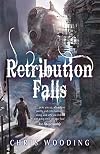
I don't normally give books five stars, and rarely books that 'just' entertain me, but this was so ludicrously entertaining that I'm willing to make an exception. Just this once, mind.
Retribution Falls is a steampunk adventure novel following the trials and tribulations of the crew of the Ketty jay, a misfit bunch of sky pirates and their equally misfit captain Darian Frey. Think Firefly meets Laputa: Castle in the Sky and you won't be too far off the mark. Following a botched raid on a passenger skyship that sees them set up and left in the lurch, the crew of the Ketty Jay find themselves on the run from every quarter, struggling to uncover a vast conspiracy while simultaneously fighting to clear their name, etc, etc.
On paper this shouldn't work anywhere near as well as it did. The plot is crammed with every cliché in the book, cliffhangers and da-dah! moments spring up every dozen or so pages, twists and turns can be seen coming from a mile off. Yet the whole thing is carried through with such verve and infectious enthusiasm that I just didn't care. Chris Wooding, the author, clearly loves the world and the characters he's created, and by the end of the novel I did too.
Five stars, fully deserved. I haven't enjoyed myself like this in a long time.
Retribution Falls is a steampunk adventure novel following the trials and tribulations of the crew of the Ketty jay, a misfit bunch of sky pirates and their equally misfit captain Darian Frey. Think Firefly meets Laputa: Castle in the Sky and you won't be too far off the mark. Following a botched raid on a passenger skyship that sees them set up and left in the lurch, the crew of the Ketty Jay find themselves on the run from every quarter, struggling to uncover a vast conspiracy while simultaneously fighting to clear their name, etc, etc.
On paper this shouldn't work anywhere near as well as it did. The plot is crammed with every cliché in the book, cliffhangers and da-dah! moments spring up every dozen or so pages, twists and turns can be seen coming from a mile off. Yet the whole thing is carried through with such verve and infectious enthusiasm that I just didn't care. Chris Wooding, the author, clearly loves the world and the characters he's created, and by the end of the novel I did too.
Five stars, fully deserved. I haven't enjoyed myself like this in a long time.
Craft of Intelligence: America's Legendary Spy Master on the Fundamentals of Intelligence Gathering for a Free World by Allen W. Dulles
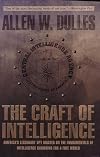
Quite dated but a fascinating look into the world of Cold War era espionage from a legend of the CIA.
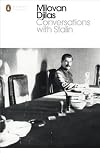
I felt I didn't get as much out of this as I could have done given my ignorance of many of the events the author talks about. Many of the individuals involved were likewise unknown to me, and the few details he sketches of certain prominent characters (Beria, Molotov, etc) didn't really add much to what I already knew. Regarding the man himself, Djilas probably gives as accurate a representation as he can, but they are by nature only one man's experience of a complex and multifaceted personality, and therefore a bit one-dimensional.
But this isn't a bio, so much as a study in disillusionment. Split into three largish chapters -- Raptures, Doubts and Disappointments -- the author charts his gradual realization that a system that he held to be the pinnacle of human achievement was in fact nothing of the sort. The turnaround isn't quite so dramatic as it could have been, partly due to Djilas's rather low-key style that never really convinces us of his emotional states at any particular time, and partly because he never hides the fact that he's writing the work from a position of condemnation.
I'll probably come back to this at a later time, when I'm a bit more familiar with the events and context.
But this isn't a bio, so much as a study in disillusionment. Split into three largish chapters -- Raptures, Doubts and Disappointments -- the author charts his gradual realization that a system that he held to be the pinnacle of human achievement was in fact nothing of the sort. The turnaround isn't quite so dramatic as it could have been, partly due to Djilas's rather low-key style that never really convinces us of his emotional states at any particular time, and partly because he never hides the fact that he's writing the work from a position of condemnation.
I'll probably come back to this at a later time, when I'm a bit more familiar with the events and context.
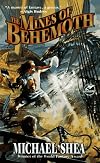
It's rare to find a truly great sword and sorcery novel, one that sticks rigidly to the genre but expands things to novel length without compromising the inherently personal nature of the stakes. Michael Shea already wrote a classic in Nifft the Lean, as superb a collection of S&S novellas as any out there, but he surpasses himself in The Mines of Behemoth, a truly staggering achievement of fantasy by any standards you care to rate.
Like The Fishing of the Demon Sea, this one takes place primarily in the primary subworld, a nightmarish landscape straight out the mind of Jack Vance, Clark Ashton Smith, and Hieronymus Bosch. Shea's a fantastic world builder at the worst of times, but he adds an added layer of complexity with the addition of the Behemoths, an intricate society of something like giant ants that feeds off the subworld's denizens as the humans (in their puny way) feed off them.
Following an offer to get a defunct behemoth mine up and running again, Nifft and his longterm friend Barnar, soon find themselves on an impromptu treasure hunt in the very subworld itself (of which the mines are but one of many entrances). Needless to say, this goes horribly wrong due to the greed and boundless ambition of Nifft, who soon takes it upon himself to obtain a magic elixir that enables anyone who takes it to assume monstrous size.
There's a lot more to the story than that, of course, but one of the pleasures of reading Shea is the constant inventiveness he hits you with page show more after page. Get this if you at all enjoy literate and adventurous fantasy fiction. show less
Like The Fishing of the Demon Sea, this one takes place primarily in the primary subworld, a nightmarish landscape straight out the mind of Jack Vance, Clark Ashton Smith, and Hieronymus Bosch. Shea's a fantastic world builder at the worst of times, but he adds an added layer of complexity with the addition of the Behemoths, an intricate society of something like giant ants that feeds off the subworld's denizens as the humans (in their puny way) feed off them.
Following an offer to get a defunct behemoth mine up and running again, Nifft and his longterm friend Barnar, soon find themselves on an impromptu treasure hunt in the very subworld itself (of which the mines are but one of many entrances). Needless to say, this goes horribly wrong due to the greed and boundless ambition of Nifft, who soon takes it upon himself to obtain a magic elixir that enables anyone who takes it to assume monstrous size.
There's a lot more to the story than that, of course, but one of the pleasures of reading Shea is the constant inventiveness he hits you with page show more after page. Get this if you at all enjoy literate and adventurous fantasy fiction. show less
Note this review. I doubt its like will ever be seen again.
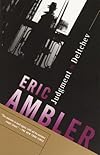
One of Ambler's better Cold War era thrillers. This one centres around the show trial of a supposed traitor to a fictional Eastern European state, and the political muck that's raked up in its wake. Like a lot of the best Amblers it's fast paced and well-plotted, with an interesting and shady group of characters and a morally ambiguous tone that prefigures the works of writers like le Carre and Deighton.
This is my second Furst, after The Foreign Correspondent, and I'm still not entirely sure what to make of him. He can write, that much is obvious, but there's a curious lack of immersiveness when reading his works that might be partly stylistic and partly structural.
Like The Foreign Correspondent there's very little plot to speak of; characters come and go, events occur, some things get resolved, some don't. It might be true to life but it doesn't make for a particularly gripping narrative. Furst also seems to have no compunctions in building up a scene or crisis point and then doing absolutely nothing with it.
Case in point, the main character, a hard nosed detective named Costa Zannis, is roped into a cross-national operation to help smuggle Jews out of Nazi occupied Germany. All the while pressure is mounting across Europe, people are going missing; the operation is becoming increasingly dangerous to maintain. To compound matters, a general in the SS catches wind of what's going down and takes steps to terminate it.
So what does Furst do with this compelling material? Nothing at all. Everything just peters out and gets forgotten about. Zannis, barring an oddly tacked on sideplot set in Paris involving the retrieval of a missing British scientist, is never really under threat the entire novel. Oh, threats are talked about, and talked about some more, but everything happens at a remove.
Maybe I'm a bit too much of a traditionalist to enjoy these books, or perhaps I'm show more just missing the point. But it's clear that the author is at least passingly aware of the conventions of the genre and the need to fulfil them. The novel opens with a chase scene set in a factory at night, ending with a death. Why put this in if it isn't going to set the tone to follow? And the aforementioned scene in Paris, while genuinely exciting, feels tacked on and gratuitous. There's a sense throughout of the author wanting to have his cake and eat it, wanting to appeal to two crowds simultaneously and not quite getting it right.
I'm aware that neither Spies nor Foreign Correspondent are anywhere near Furst's best books, but if this is the formula on which his earlier books are also set then I'm not sure if I'm going to enjoy them half as much as I had hoped.
Next up: The Polish Officer show less
Like The Foreign Correspondent there's very little plot to speak of; characters come and go, events occur, some things get resolved, some don't. It might be true to life but it doesn't make for a particularly gripping narrative. Furst also seems to have no compunctions in building up a scene or crisis point and then doing absolutely nothing with it.
Case in point, the main character, a hard nosed detective named Costa Zannis, is roped into a cross-national operation to help smuggle Jews out of Nazi occupied Germany. All the while pressure is mounting across Europe, people are going missing; the operation is becoming increasingly dangerous to maintain. To compound matters, a general in the SS catches wind of what's going down and takes steps to terminate it.
So what does Furst do with this compelling material? Nothing at all. Everything just peters out and gets forgotten about. Zannis, barring an oddly tacked on sideplot set in Paris involving the retrieval of a missing British scientist, is never really under threat the entire novel. Oh, threats are talked about, and talked about some more, but everything happens at a remove.
Maybe I'm a bit too much of a traditionalist to enjoy these books, or perhaps I'm show more just missing the point. But it's clear that the author is at least passingly aware of the conventions of the genre and the need to fulfil them. The novel opens with a chase scene set in a factory at night, ending with a death. Why put this in if it isn't going to set the tone to follow? And the aforementioned scene in Paris, while genuinely exciting, feels tacked on and gratuitous. There's a sense throughout of the author wanting to have his cake and eat it, wanting to appeal to two crowds simultaneously and not quite getting it right.
I'm aware that neither Spies nor Foreign Correspondent are anywhere near Furst's best books, but if this is the formula on which his earlier books are also set then I'm not sure if I'm going to enjoy them half as much as I had hoped.
Next up: The Polish Officer show less

Himes wrote some of the coolest novels in the genre, and Cotton Comes to Harlem is one of his best. It's a non-stop roller coaster ride of sex, violence and manic black humor that literally left me breathless at times; it's that good. In between the action Himes sneaks in a few telling comments on race relations and race politics, but this is by no means a cultural polemic posing as a thriller: it's the real deal baby. Check out A Rage in Harlem as well (the second best of his Harlem novels) then pick up anything else he's written.