
William Strunk (1869–1946)
Author of The Elements of Style
About the Author
William Strunk Jr. was born in Cincinnati, Ohio on July 1, 1869. He received a bachelor's degree at the University of Cincinnati in 1890 and Ph.D. at Cornell University in 1896. He taught English at Cornell University for forty-six years. He wrote two books: The Elements of Style, which was later show more published under the title The Elements and Practice of Composition, and English Metres. He was also an editor and edited important works by such authors as William Shakespeare, John Dryden, and James Fenimore Cooper. He served as a literary consultant to the 1936 MGM film version of Romeo and Juliet. He died on September 26, 1946. (Bowker Author Biography) show less
Disambiguation Notice:
The Elements of Style was later edited and expanded by E.B. White and is now often referred to as 'Strunk and White'. This page is for the author William Strunk, Jr., alone - please do not combine with the page for Strunk and White, or E.B. White.
Image credit: William Strunk Jr. ca. 1930's
Works by William Strunk
The Elements of Style Workbook: Writing Strategies with Grammar Book (Writing Workbook Featuring New Lessons on Writing with Style) (2017) 71 copies
The Elements of Style by William Strunk Jr. & How To Speak And Write Correctly by Joseph Devlin - Special Edition (2006) 11 copies
The Elements of Style by Strunk Jr., William, White, E. B. on 01/11/2003 4th (fourth) edition 3 copies
The Elements of Style [VHS] 2 copies
The Elements of Reasoning 2 copies
Tagged
Common Knowledge
- Canonical name
- Strunk, William
- Other names
- Strunk Jr., William
- Birthdate
- 1869-07-01
- Date of death
- 1946-09-26
- Gender
- male
- Education
- University of Cincinnati (BA | 1890)
Cornell University (Ph.D. | 1896) - Occupations
- professor (English)
writer - Organizations
- Cornell University
- Relationships
- Strunk, W. Oliver (son)
White, E.B. (student) - Short biography
- William Strunk, Jr., and his wife had two sons and a daughter. E.B. White praised Strunk's work The Elements of Style, usually referred to as "Strunk & White", as a "43-page summation of the case for cleanliness, accuracy, and brevity in the use of English" that has not been surpassed in the decades since it was first published.
- Nationality
- USA
- Birthplace
- Cincinnati, Ohio, USA
- Places of residence
- Ithaca, New York, USA
Terre Haute, Indiana, USA - Place of death
- Poughkeepsie, New York, USA
- Burial location
- Pleasant Grove Cemetery, Ithaca, New York, USA
- Map Location
- Ohio, USA
- Disambiguation notice
- The Elements of Style was later edited and expanded by E.B. White and is now often referred to as 'Strunk and White'. This page is for the author William Strunk, Jr., alone - please do not combine with the page for Strunk and White, or E.B. White.
Members
Reviews
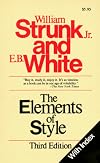
A book so useful that I own two copies of it - one for home and one for the office. Yet there seems to be an almost universal misconception about this book - actually, there seem to be two misconceptions about this book, and everyone seems to have one or the other firmly entrenched in their mind, and disparages all heretics who take the opposing view. Sort of like modern politics.
The first misconception is that this book of rules is a blueprint that the authors require to be imposed on all show more who dare to write. The partisans of this view, like dissenters attacking the King James Bible, take great delight in pointing to the many violations of these supposedly inviolable rules by the authors themselves.
The second misconception, held with equal ferocity, is that this book in fact *is* the Bible of writing and anyone who writes must follow it or be damned. Apparently, for this crowd, if one wishes to use a keyboard or lift a pencil, one must first apply for a license to do so by purchasing a copy of this book.
Anyone who bothers to actually read the book (as opposed to simply turning the pages in an effort to discredit it or to dispatch an heretical adversary) would quickly see that neither of these orthodoxies is correct. The book is simply an enunciation of principles designed to improve the writing of the average person who must write - nothing more and nothing less. "'It is an old observation," White quotes Strunk in his introduction to the Third Edition, "that the best writers sometimes disregard the rules of rhetoric. When they do so, however, the reader will usually find in the sentence some compensating merit, attained at the cost of the violation. Unless he is certain of doing as well, he will probably do best to follow the rules." Clearly, even in Strunk and White's view, the orthodoxy can be challenged, if done well. But the person who is not as strong or confident a writer should hew to the mainstream.
This then, is the audience to whom Strunk and White addressed themselves - the mainstream, not the professional writer. One of the most useful axioms about writing ever taught to me came not from this book but from my Legal Writing professor at Notre Dame. The first rule, she taught, is know who your audience is. That should also be the first rule in evaluating this book. For if it is evaluated as a tool to improve the writing of the average reader, then it is admirably designed. It is concise, easily digested, and a generally accurate guide.
But those who review a book like this are usually not average readers - they are voracious readers and writers, and while they, too, can benefit from this little book (one should not venture off the highway without a map to guide you back when necessary), they are not its principle audience, and should lay down the implements of inquisition and consider the book for what it is - a guide, not a Bible. show less
The first misconception is that this book of rules is a blueprint that the authors require to be imposed on all show more who dare to write. The partisans of this view, like dissenters attacking the King James Bible, take great delight in pointing to the many violations of these supposedly inviolable rules by the authors themselves.
The second misconception, held with equal ferocity, is that this book in fact *is* the Bible of writing and anyone who writes must follow it or be damned. Apparently, for this crowd, if one wishes to use a keyboard or lift a pencil, one must first apply for a license to do so by purchasing a copy of this book.
Anyone who bothers to actually read the book (as opposed to simply turning the pages in an effort to discredit it or to dispatch an heretical adversary) would quickly see that neither of these orthodoxies is correct. The book is simply an enunciation of principles designed to improve the writing of the average person who must write - nothing more and nothing less. "'It is an old observation," White quotes Strunk in his introduction to the Third Edition, "that the best writers sometimes disregard the rules of rhetoric. When they do so, however, the reader will usually find in the sentence some compensating merit, attained at the cost of the violation. Unless he is certain of doing as well, he will probably do best to follow the rules." Clearly, even in Strunk and White's view, the orthodoxy can be challenged, if done well. But the person who is not as strong or confident a writer should hew to the mainstream.
This then, is the audience to whom Strunk and White addressed themselves - the mainstream, not the professional writer. One of the most useful axioms about writing ever taught to me came not from this book but from my Legal Writing professor at Notre Dame. The first rule, she taught, is know who your audience is. That should also be the first rule in evaluating this book. For if it is evaluated as a tool to improve the writing of the average reader, then it is admirably designed. It is concise, easily digested, and a generally accurate guide.
But those who review a book like this are usually not average readers - they are voracious readers and writers, and while they, too, can benefit from this little book (one should not venture off the highway without a map to guide you back when necessary), they are not its principle audience, and should lay down the implements of inquisition and consider the book for what it is - a guide, not a Bible. show less
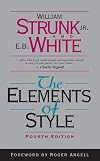
Strunk and White’s The Elements of Style, is a short, concise guide to effective writing. This short guide covers everything from basic grammatical usage to composition, but it is more than just a guide to good writing. The book is filled with provocative axioms to keep in mind while writing. Because writing is a form of communication, a hallmark of it is to be succinct.
There is an overwhelming emphasis in this guide on clear, concise writing. “When a sentence is made stronger, it show more usually becomes shorter. Thus, brevity is a by-product of vigor.” (p. 19). The best-known writers—Homer, Dante, and Shakespeare are mentioned—grab the reader’s attention by being “specific, definite, and concrete” and use words to create pictures (p. 21) in order to create impactful writing. It is always important to use the active voice in writing and to avoid conditionals such as should, could, and would, in order to prevent a piece of writing from sounding as though it lacks authority. The authors therefore recommend rewriting and revising and to “ruthlessly delete the excesses” (p. 72).
Composition is a major element in creating clear, readable writing. To be effective, writing must be organized and follow a specific plan—although that plan may not always follow the order of a writer’s thought process. However, it forces the writer to think; “the act of composition, or creation, disciplines the mind” (p. 70).
In the course of their writing, writers end up revealing something about themselves and their identity, and this is what makes good writing stand out. A writer develops their style through practice and patience. EB White suggests that the writer first place themselves in the background, so that a sense of style can be achieved by first having none. “Style is the writer, and therefore what you are, rather than what you know, will at last determine your style” (p. 84).
Although the authors are very definite in their opinions, they present them with humor in some places, preventing this book from becoming too pedantic. It is also important to consider that this guide is not the last word in what is “correct” writing or style; “the shape of our language is not rigid” (p. 39) and that “there is no satisfactory explanation of style, no infallible guide to good writing, no assurance that a person who thinks clearly will be able to write clearly, no key that unlocks the door, no inflexible rule by which writers may shape their course” (p. 66). However, The Elements of Style is an invaluable guide that gives a reader advice on how to think about their writing, how to write clear and concise prose, and how to achieve a unique sense of style. show less
There is an overwhelming emphasis in this guide on clear, concise writing. “When a sentence is made stronger, it show more usually becomes shorter. Thus, brevity is a by-product of vigor.” (p. 19). The best-known writers—Homer, Dante, and Shakespeare are mentioned—grab the reader’s attention by being “specific, definite, and concrete” and use words to create pictures (p. 21) in order to create impactful writing. It is always important to use the active voice in writing and to avoid conditionals such as should, could, and would, in order to prevent a piece of writing from sounding as though it lacks authority. The authors therefore recommend rewriting and revising and to “ruthlessly delete the excesses” (p. 72).
Composition is a major element in creating clear, readable writing. To be effective, writing must be organized and follow a specific plan—although that plan may not always follow the order of a writer’s thought process. However, it forces the writer to think; “the act of composition, or creation, disciplines the mind” (p. 70).
In the course of their writing, writers end up revealing something about themselves and their identity, and this is what makes good writing stand out. A writer develops their style through practice and patience. EB White suggests that the writer first place themselves in the background, so that a sense of style can be achieved by first having none. “Style is the writer, and therefore what you are, rather than what you know, will at last determine your style” (p. 84).
Although the authors are very definite in their opinions, they present them with humor in some places, preventing this book from becoming too pedantic. It is also important to consider that this guide is not the last word in what is “correct” writing or style; “the shape of our language is not rigid” (p. 39) and that “there is no satisfactory explanation of style, no infallible guide to good writing, no assurance that a person who thinks clearly will be able to write clearly, no key that unlocks the door, no inflexible rule by which writers may shape their course” (p. 66). However, The Elements of Style is an invaluable guide that gives a reader advice on how to think about their writing, how to write clear and concise prose, and how to achieve a unique sense of style. show less
http://nhw.livejournal.com/872531.html
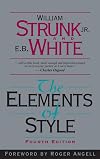
This has been on my shelf for several years, and I took it down on Monday on impulse. It was a good impulse. This is a great little book, and should be read by anyone who writes for a living or in their spare time, ie pretty much anyone reading this. The one off-putting element for us on this side of the Atlantic is that it proclaims its American credentials loudly, but most of its grammar and usage points are relevant to any English idiom, and the tips show more on good and clear writing style are relevant to any language.
It is also beautifully written - and one suspects that the best bits came from the pen of the author of Charlotte's Web and Stuart Little. For instance:
"Writing is, for most, laborious and slow. The mind travels faster than the pen; consequently, writing becomes a question of learning to make occasional wing shots, bringing down the bird of thought as it flashes by. A writer is a gunner, sometimes waiting in the blind for something to come in, sometimes roaming the countryside hoping to scare something up. Like other gunners, the writer must cultivate patience, working many covers to bring down one partridge."
That's from the closing chapter on style in general. But some of the illustrations of the particular are memorable too. I remember once in a previous job sending a cross note to a colleague complaining about his use of colons: I wish I had been able to quote Strunk and White's lucid explanation of the topic. And this illustration of how to construct a sentence badly will linger in my mind:
"New York's first commercial human-sperm bank opened Friday with semen samples from eighteen men frozen in a stainless steel tank."
As the text goes on to say, "the reader's heart goes out to those eighteen poor fellows"!
Anyway, a tremendously useful read. I hope that I follow most of its recommendations instinctively, but it never does any harm to be reminded, to sharpen the saw as it were. I would say it's actually of greater relevance to the general writer than the Economist Style Guide, though the latter is also essential in my own line of work. show less
This has been on my shelf for several years, and I took it down on Monday on impulse. It was a good impulse. This is a great little book, and should be read by anyone who writes for a living or in their spare time, ie pretty much anyone reading this. The one off-putting element for us on this side of the Atlantic is that it proclaims its American credentials loudly, but most of its grammar and usage points are relevant to any English idiom, and the tips show more on good and clear writing style are relevant to any language.
It is also beautifully written - and one suspects that the best bits came from the pen of the author of Charlotte's Web and Stuart Little. For instance:
"Writing is, for most, laborious and slow. The mind travels faster than the pen; consequently, writing becomes a question of learning to make occasional wing shots, bringing down the bird of thought as it flashes by. A writer is a gunner, sometimes waiting in the blind for something to come in, sometimes roaming the countryside hoping to scare something up. Like other gunners, the writer must cultivate patience, working many covers to bring down one partridge."
That's from the closing chapter on style in general. But some of the illustrations of the particular are memorable too. I remember once in a previous job sending a cross note to a colleague complaining about his use of colons: I wish I had been able to quote Strunk and White's lucid explanation of the topic. And this illustration of how to construct a sentence badly will linger in my mind:
"New York's first commercial human-sperm bank opened Friday with semen samples from eighteen men frozen in a stainless steel tank."
As the text goes on to say, "the reader's heart goes out to those eighteen poor fellows"!
Anyway, a tremendously useful read. I hope that I follow most of its recommendations instinctively, but it never does any harm to be reminded, to sharpen the saw as it were. I would say it's actually of greater relevance to the general writer than the Economist Style Guide, though the latter is also essential in my own line of work. show less
Is this a flawed book?
Of course. The style of prose it advocates was already out of date when it was published. It presents the taste of its authors' as inviolable laws, leading to painful contortions in the written language of those who try to follow it.
As the previous sentence indicates, even in matters of simple punctuation I do not agree with The Elements of Style.
And yet much of the advice is still solid. Even if you disagree with Strunk and White, it is better to have consciously show more rejected a rule than to have never considered the matter.
There is also a surprising playfulness with language that appears between dour pronunciations. This side of The Elements of style was unknown to me prior to reading it, seemingly having been missed by both its detractors and fanatics. show less
Of course. The style of prose it advocates was already out of date when it was published. It presents the taste of its authors' as inviolable laws, leading to painful contortions in the written language of those who try to follow it.
As the previous sentence indicates, even in matters of simple punctuation I do not agree with The Elements of Style.
And yet much of the advice is still solid. Even if you disagree with Strunk and White, it is better to have consciously show more rejected a rule than to have never considered the matter.
There is also a surprising playfulness with language that appears between dour pronunciations. This side of The Elements of style was unknown to me prior to reading it, seemingly having been missed by both its detractors and fanatics. show less
Lists
Awards


You May Also Like


Associated Authors
Statistics
- Works
- 20
- Members
- 26,159
- Popularity
- #799
- Rating
- 4.2
- Reviews
- 234
- ISBNs
- 195
- Languages
- 4
- Favorited
- 6
