
Joseph Gibaldi
Author of MLA Handbook for Writers of Research Papers
About the Author
Works by Joseph Gibaldi
Tagged
Common Knowledge
Members
Reviews
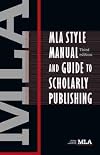
This is the only style guide that I could imagine reading cover to cover. And I'm a boring guy, but still: that says something. It says the humanities will make your life better with elegance, like a crisp oxford shirt. Out of the three big styles with which I have good familiarity, I'd describe APA in a word as "clear"; Chicago as "thorough"; and MLA as "flexible," and for writers as opposed to readers there's no doubt that the latter is the most rewarding to work with, as you decide how to show more weave a citation into a quote and the quote into your paragraph, as you think about the most elegant (again) way to direct a reader to a source. This third edition fixes the second-biggest problem with MLA, which was the ungodly mess involved in web citation; it doesn't fix the biggest problem, which remains in-text citation of works that aren't books, like, what's the easiest way to do a lit review of a hundred papers if you're a psychologist, say, other than use APA so you can insert years in your citations instead of stupid abbreviated titles; or, what's the best way of citing magazine articles if you're in media studies, other than by paper and date (pedantic) or by stupid abbreviated titles like "Hello" and "Death" and "Umbrella stand." But that's not the end of, nor does it match my complaints about the other styles, and the price of admission is almost earned back by the fun of going through the chapter of lists to see which countries and LAtin phrases and langauges and geographical terms and works of literature are worthy of standardized MLA-sanctioned abbreviations and which are not. It is to laugh, the MLA, you flock of winking parvenus. show less
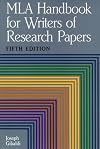
For most writing "style guide" books, you can gauge how good it is by its usefulness and the applicability of its advice. The MLA Handbook isn't really one of them. You buy it, or any of the other books on writing research papers, because you have to write a research paper and you get points off for using the wrong style. Too bad professors don't usually consider winging it to be a style. What set this book apart from the rest of the herd for me is that the English department in my college show more chose this as its writing and citation resource. The writing in the book is dry and can be annoying, like most of its ilk. I've always preferred Strunk's implied "you idiot" method of communication. show less
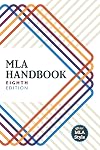
Could be better organized, more thorough. I have lots of mixed feelings towards this edition.
This edition has shifted all the information about page layout onto their online MLA Style Center. On the one hand, that's much more accessible than having to flip open a copy of the book, and makes it more available to those don't own a copy, for whatever reason. On the other hand, this omission does make the Handbook slightly incomplete as a style guide. I can't think of any changes to the page show more structure... it's not like "size 12 double-spaced font" is going to be changing on the fly, so why not print it?
I'm going to dodge nitpicking on changes to how citations are actually written following the universal format: I appreciate what they were trying to do, and while I don't think they stuck the landing, I can live with it, especially once I get around the learning curve.
The citation part of the book is organized by each element, and so the examples you might be looking for may be spread out. Gone is the ability to flip to the section on books and look for the heading that describes your situation. Now, in theory, this is all right because everything is supposed to fit the same template, and besides, MLA has foresworn being an authority, anyway.* I was just working on our online guide for the library and double-checking how to cite TV shows. Well, there are examples-- each slightly different with no particular word of differentiation -- on pages 40, 38, 33, 30, 28, 24. If I want an example of a source, I don't want to have to go element by element to land on the complete example closest to my situation. Not useless, but I wish there was the section breaking down all the elements followed by section dedicated to examples.
Okay, I lied, I do have to rant a bit about how the citations are written, because this is SO ASS-BACKWARD:
URLs are back, supposedly by popular demand. What cracks me up is that the section that introduces them gives 3 very good for why URLs are a clunky waste, but eh, go ahead and use them anyway, they might be useful! I noticed that the examples they give that include URLs are all precious, tidy, succinct URLS, too. Ever looked at the permalink for an EBSCOhost database? Woof. They also advise against using URL shorteners because if the service dies, the link dies, too-- but but but previously we weren't including info at all on the URL! The rest of the citation is supposed to provide that context! Contrary to what students may wish, citation pages are not yet simply a list of URLs without any other information provided! Booo. Boo, I say!
They do have an example online referring to EBSCO (MLA seems to have lost the capacity to distinguish between the provider and the database, and again, the Shrug of God says ehhh, either way-- no! That's not how that works!), but it's much, much shorter and tidier than the permalinks I get. I even tried strategically chopping parts off the permalink to see if they'd still work, trying to get it down to their version, but no dice. Not that I'd make a student put up with that, either. On that note, everything is clear and written out... except URLs have to have the http://www. hacked off. On a personal level, I'm okay with that and often do that myself anyway; as a librarian I'm not looking forward to trying to get students to pay that much attention.
On that note, again, the semi-simplified nature of this edition means we don't have to figure out abbreviations for composers or translators anyway. Citations get longer to include the more colloquial "performance by....," "created by...," "season X, episode Y..." but we do shorten the previously unlabeled volume and issue into vol. X, no. Y. Again, mixed feelings! In and of itself, that's not bad, but it just feels arbitrary that we're not writing out "volume X, issue Y."
*What's up with that? Again, mixed feelings-- yeah, I'll tell students this isn't brain surgery, and that writing citations are often more of an art than a science, and that they should try to be descriptive but internal consistency is more important than adhering to the stylebook. But-- for the originating authority on this style to take the same stance is frustrating. No, I want to know how to cite thing X so I can know what I'm talking about when teaching students how to cite thing X, instead of having to shrug and say, I dunno, close enough, just cite it however.
On the plus side, the universal style lends itself to a nice universal worksheet/template to guide students, which the student workers I've tested it out on liked. We made our own version that includes some lightly-colored notes to elaborate on what's meant by version or number or location.
--
Ooh, speaking of location-- the one change I really do whole-heartedly embrace: no more place of publication for books! Hallelujah! I hope you're listening, APA! show less
This edition has shifted all the information about page layout onto their online MLA Style Center. On the one hand, that's much more accessible than having to flip open a copy of the book, and makes it more available to those don't own a copy, for whatever reason. On the other hand, this omission does make the Handbook slightly incomplete as a style guide. I can't think of any changes to the page show more structure... it's not like "size 12 double-spaced font" is going to be changing on the fly, so why not print it?
I'm going to dodge nitpicking on changes to how citations are actually written following the universal format: I appreciate what they were trying to do, and while I don't think they stuck the landing, I can live with it, especially once I get around the learning curve.
The citation part of the book is organized by each element, and so the examples you might be looking for may be spread out. Gone is the ability to flip to the section on books and look for the heading that describes your situation. Now, in theory, this is all right because everything is supposed to fit the same template, and besides, MLA has foresworn being an authority, anyway.* I was just working on our online guide for the library and double-checking how to cite TV shows. Well, there are examples-- each slightly different with no particular word of differentiation -- on pages 40, 38, 33, 30, 28, 24. If I want an example of a source, I don't want to have to go element by element to land on the complete example closest to my situation. Not useless, but I wish there was the section breaking down all the elements followed by section dedicated to examples.
Okay, I lied, I do have to rant a bit about how the citations are written, because this is SO ASS-BACKWARD:
URLs are back, supposedly by popular demand. What cracks me up is that the section that introduces them gives 3 very good for why URLs are a clunky waste, but eh, go ahead and use them anyway, they might be useful! I noticed that the examples they give that include URLs are all precious, tidy, succinct URLS, too. Ever looked at the permalink for an EBSCOhost database? Woof. They also advise against using URL shorteners because if the service dies, the link dies, too-- but but but previously we weren't including info at all on the URL! The rest of the citation is supposed to provide that context! Contrary to what students may wish, citation pages are not yet simply a list of URLs without any other information provided! Booo. Boo, I say!
They do have an example online referring to EBSCO (MLA seems to have lost the capacity to distinguish between the provider and the database, and again, the Shrug of God says ehhh, either way-- no! That's not how that works!), but it's much, much shorter and tidier than the permalinks I get. I even tried strategically chopping parts off the permalink to see if they'd still work, trying to get it down to their version, but no dice. Not that I'd make a student put up with that, either. On that note, everything is clear and written out... except URLs have to have the http://www. hacked off. On a personal level, I'm okay with that and often do that myself anyway; as a librarian I'm not looking forward to trying to get students to pay that much attention.
On that note, again, the semi-simplified nature of this edition means we don't have to figure out abbreviations for composers or translators anyway. Citations get longer to include the more colloquial "performance by....," "created by...," "season X, episode Y..." but we do shorten the previously unlabeled volume and issue into vol. X, no. Y. Again, mixed feelings! In and of itself, that's not bad, but it just feels arbitrary that we're not writing out "volume X, issue Y."
*What's up with that? Again, mixed feelings-- yeah, I'll tell students this isn't brain surgery, and that writing citations are often more of an art than a science, and that they should try to be descriptive but internal consistency is more important than adhering to the stylebook. But-- for the originating authority on this style to take the same stance is frustrating. No, I want to know how to cite thing X so I can know what I'm talking about when teaching students how to cite thing X, instead of having to shrug and say, I dunno, close enough, just cite it however.
On the plus side, the universal style lends itself to a nice universal worksheet/template to guide students, which the student workers I've tested it out on liked. We made our own version that includes some lightly-colored notes to elaborate on what's meant by version or number or location.
--
Ooh, speaking of location-- the one change I really do whole-heartedly embrace: no more place of publication for books! Hallelujah! I hope you're listening, APA! show less

The third edition (2008) features a foreword by Domna Stanton, a former president of the MLA. This self-indulgent albeit interesting foreword provides clues that help explain how scholarly writing has successfully subverted itself and, sad to say, become marginal in contemporary American culture.
Just as in 2005 Domna Stanton chose, in Michael Drout's words, "the weakest possible ground to make any kind of substantive argument" to defend academic freedom, so here in 2008 she chooses the show more least rhetorically effective position from which to encourage the use of proper style by budding scholarly writers: the historical and cultural contingency of standards. show less
Just as in 2005 Domna Stanton chose, in Michael Drout's words, "the weakest possible ground to make any kind of substantive argument" to defend academic freedom, so here in 2008 she chooses the show more least rhetorically effective position from which to encourage the use of proper style by budding scholarly writers: the historical and cultural contingency of standards. show less
Lists
You May Also Like


Associated Authors
Statistics
- Works
- 8
- Members
- 7,995
- Popularity
- #3,028
- Rating
- 3.7
- Reviews
- 27
- ISBNs
- 44
- Favorited
- 1