
E. B. White (1899–1985)
Author of Charlotte's Web
About the Author
Born in Mount Vernon, New York, E. B. White was educated at Cornell University and served as a private in World War I. After several years as a journalist, he joined the staff of the New Yorker, then in its infancy. For 11 years he wrote most of the "Talk of the Town" columns, and it was White and show more James Thurber who can be credited with setting the style and attitude of the magazine. In 1938 he retired to a saltwater farm in Maine, where he wrote essays regularly for Harper's Magazine under the title "One Man's Meat." Like Thoreau, White preferred the woods; he also resembled Thoreau in his impatience and indignation. White received several prizes: in 1960, the gold medal of the American Academy of Arts and Letters; in 1963, the Presidential Medal of Freedom, the nation's highest civilian award (he was honored along with Thornton Wilder and Edmund Wilson); and in 1978, a special Pulitzer Prize. His verse is original and witty but with serious undertones. His friend James Thurber described him as "a poet who loves to live half-hidden from the eye." Three of his books have become children's classics: Stuart Little (1945), about a mouse born into a human family, Charlotte's Web (1952), about a spider who befriends a lonely pig, and The Trumpet of the Swan (1970). Among his best-known and most widely used books is The Elements of Style (1959), a guide to grammar and rhetoric based on a text written by one of his professors at Cornell, William Strunk, which White revised and expanded. White was married to Katherine Angell, the first fiction editor of the New Yorker. (Bowker Author Biography) Elwyn Brooks White was born on July 11, 1899, in Mt. Vernon, New York. After graduating from Cornell University, he worked briefly for an advertising agency and as a newspaper reporter before joining the staff of The New Yorker magazine in 1927. As a columnist for The New Yorker and a contributor to Harper's Magazine, White established a reputation as a prose stylist of exceptional elegance, clarity and wit. His interests, as reflected in his writing, were numerous and varied; his essays touched on such wide-ranging subjects as politics, farm animals, and life in New York City. White married Katharine S. Angell in 1929. They had one son, and in 1957 the family left New York for a farm in North Brookline, Maine. Writings from The New Yorker, 1927-1976 is a compilation of columns and essays produced during White's long relationship with the magazine. One Man's Meat, published in 1942, is a collection of his writings for Harper's. White adapted a short guide to English grammar and usage, The Elements of Style, from a college text written by one of his professors at Cornell, William Strunk Jr. It has sold millions of copies since it was first published in 1959 and has become a cherished resource for guidance in writing. White also co-authored Is Sex Necessary? with the humorist James Thurber, a fellow staff member at The New Yorker. E.B. White died on October 1, 1985 after succumbing to Alzheimer's. His diverse legacy also includes three children's books: Stuart Little, Charlotte's Web, and The Trumpet of the Swan. In 1970 the American Library Association presented White the Laura Ingalls Wilder Award in recognition of his "substantial and lasting contribution to literature for children." He was also awarded the Presidential Medal of Freedom in 1963 and received a special Pulitzer Prize citation for his body of work in 1970. (Bowker Author Biography) show less
Works by E. B. White
Chickens, Gin, and a Maine Friendship: The Correspondence of E. B. White and Edmund Ware Smith (2020) 54 copies, 3 reviews
The Wild Flag: Editorials from The New Yorker on Federal World Government and Other Matters (1946) 46 copies
In the Words of E. B. White: Quotations from America's Most Companionable of Writers (2011) 27 copies, 2 reviews
Newbery Award Favorite Library 8 Book Box Set : Charlotte's Web, The One and Only Ivan, Ella Enchanted, Dragonwings (2020) — Contributor — 18 copies
New York Sketches 15 copies
Death of a Pig 7 copies
Reading room 3 copies
The Elements of Reasoning 2 copies
Stuart Little - Abridged 1 copy
Charlotte's Web 1 copy
Charlotte's Web 1980 Edition 1 copy
Charlotte's Web [Illustrated] (text only) 1st (First) edition by E. B. White,G. Williams (1952) 1 copy
Pajęczyna Szarloty 1 copy
Til Death Do Us Part 1 copy
A Letter From E. B. White 1 copy
The geese 1 copy
The Hour of Letdown 1 copy
Charlotte's Web- "DVD" Movie 1 copy
Irtnog 1 copy
Rare - Charlotte's Web & Other Classics by White Illustrated New Sealed Leather Bound (1777) 1 copy, 1 review
[Title missing] 1 copy
Qui New York 1 copy
Seeing Stars 1 copy
Les aventures de Narcisse 1 copy
Associated Works
Fierce Pajamas: An Anthology of Humor Writing from The New Yorker (2001) — Contributor — 789 copies, 5 reviews
A Patriot's Handbook: Songs, Poems, Stories, and Speeches Celebrating the Land We Love (2003) — some editions — 567 copies, 5 reviews
The World of the Short Story: A 20th Century Collection (1986) — Contributor — 512 copies, 4 reviews
Reporting World War II Part One : American Journalism, 1938-1944 (1995) — Contributor — 480 copies, 3 reviews
Reporting World War II Part Two : American Journalism 1944-1946 (1995) — Contributor — 430 copies, 3 reviews
The Lives and Times of Archy and Mehitabel (1927) — Introduction, some editions — 407 copies, 8 reviews
75 Short Masterpieces: Stories from the World's Literature (1961) — Contributor — 319 copies, 2 reviews
The 50 Funniest American Writers: An Anthology of Humor from Mark Twain to The Onion (2011) — Contributor — 286 copies, 3 reviews
This is My Best: American Greatest Living Authors Present and Give Their Reasons Why (1942) — Contributor — 214 copies
An American Album: One Hundred and Fifty Years of Harper's Magazine (2000) — Contributor — 145 copies, 1 review
The Glorious American Essay: One Hundred Essays from Colonial Times to the Present (2020) — Contributor — 119 copies
The Owl in the Attic and Other Perplexities (1931) — Introduction, some editions — 116 copies, 1 review
The Greatest Sailing Stories Ever Told: Twenty-Seven Unforgettable Stories (2002) — Contributor — 84 copies
Gentlemen, Scholars and Scoundrels: A Treasury of the Best of Harper's Magazine from 1850 to the Present (1972) — Contributor — 62 copies
Published and Perished: Memoria, Eulogies, and Remembrances of American Writers (2002) — Contributor — 41 copies, 1 review
The Best of Both Worlds: An Anthology of Stories for All Ages (1968) — Contributor — 25 copies, 1 review
Charlotte's Web - 3 Movie Collection (Charlotte's Web/Charlotte's Web -Animation/Charlotte's Web 2 - Animation) (2013) — Original book — 11 copies, 1 review
Contemporary Short Stories: Representative Selections, Volume 3 — Contributor — 6 copies
Furrow's End: An Anthology of Great Farm Stories — Contributor — 2 copies
Contos Dramáticos — Contributor — 1 copy
The Ethnic Image in Modern American Literature, 1900-1950, Volumes 1-2 (1984) — Contributor — 1 copy
Eight Modern Essayists (First Edition) — Contributor — 1 copy
Tagged
Common Knowledge
- Canonical name
- White, E. B.
- Legal name
- White, Elwyn Brooks
- Other names
- Andy (nickname)
- Birthdate
- 1899-07-11
- Date of death
- 1985-10-01
- Gender
- male
- Education
- Cornell University (AB|1921)
- Occupations
- journalist
writer
editor - Organizations
- Harper's Magazine
The New Yorker
United States Army (WWI)
Phi Gamma Delta
Quill and Dagger Society, Cornell University
United Press International (show all 7)
American Legion - Awards and honors
- Pulitzer Prize (Special Citation, 1978)
Laura Ingalls Wilder Medal (1970)
Presidential Medal of Freedom (1963)
American Academy of Arts and Letters (1962)
American Academy of Arts and Letters Gold Medal (1960) - Relationships
- White, Katharine S. (spouse)
Angell, Roger (stepson)
Thurber, James (friend)
Strunk, William (mentor) - Cause of death
- Alzheimer's disease
- Nationality
- USA
- Birthplace
- Mount Vernon, New York, USA
- Places of residence
- Seattle, Washington, USA
New York, New York, USA - Place of death
- North Brooklin, Maine, USA
- Burial location
- Brooklin Cemetery, Brooklin, Maine, USA
- Associated Place (for map)
- USA
Members
Discussions
Thornwillow Charlotte’s Web in Fine Press Forum (January 17)
October 2015: E.B. White in Monthly Author Reads (December 2017)
Reviews

Perhaps best known for his children's classic, CHARLOTTE'S WEB, White was also a long time contributor to The New Yorker. This varied 1981 collection of short pieces from his long career was probably one of his last books. White died in 1985. It's a bit uneven of course, but there is plenty to enjoy here, and I've found much to reflect on and chuckle over as I sampled from it over the past several weeks. (Its short pieces make it a perfect book for the bathroom or maybe to tuck in the door show more pocket of your car.)
White tries to disavow himself as a poet, preferring 'non-poet' -
"The life of a non-poet is an agreeable one: he feels no obligation to mingle with other writers of verse to exchange sensitivities, no compulsion to visit the Y to read from his own works, no need to travel the wine-and-cheese circuit, where the word 'poet' carries the aroma of magic and ladies creep up from behind carrying ballpoint pens and sprigs of asphodel."
I must confess this cracked me up. But despite his protestations about his skill at poetry, here are a couple samples of his poems that brought me up short.
"This is what youth must figure out:
Girls, love and living.
The having, the not having,
The spending and giving,
And the melancholy time of not knowing.
This is what age must learn about:
The ABC of dying.
The going, yet not going,
The loving and leaving,
And the unbearable knowing and knowing."
("Youth and Age")
Or this one, from "Incident on a Campus," wherein he revisits his college town and watches the students walking by (something I like to do too) -
"Eagerly,
Strong and resolute and sad,
Firm and gay and brave and fair,
And it was more than I could bear
That none of them was I,
That not a one was I."
That probably could have also been called 'Youth and Age.' It sure gut-punched this old man.
But enough. This is a book packed chock full of vintage E.B. White, one of the last great practitioners of writing in this odd English language. Very highly recommended.
- Tim Bazzett, author of the memoir, BOOKLOVER show less
White tries to disavow himself as a poet, preferring 'non-poet' -
"The life of a non-poet is an agreeable one: he feels no obligation to mingle with other writers of verse to exchange sensitivities, no compulsion to visit the Y to read from his own works, no need to travel the wine-and-cheese circuit, where the word 'poet' carries the aroma of magic and ladies creep up from behind carrying ballpoint pens and sprigs of asphodel."
I must confess this cracked me up. But despite his protestations about his skill at poetry, here are a couple samples of his poems that brought me up short.
"This is what youth must figure out:
Girls, love and living.
The having, the not having,
The spending and giving,
And the melancholy time of not knowing.
This is what age must learn about:
The ABC of dying.
The going, yet not going,
The loving and leaving,
And the unbearable knowing and knowing."
("Youth and Age")
Or this one, from "Incident on a Campus," wherein he revisits his college town and watches the students walking by (something I like to do too) -
"Eagerly,
Strong and resolute and sad,
Firm and gay and brave and fair,
And it was more than I could bear
That none of them was I,
That not a one was I."
That probably could have also been called 'Youth and Age.' It sure gut-punched this old man.
But enough. This is a book packed chock full of vintage E.B. White, one of the last great practitioners of writing in this odd English language. Very highly recommended.
- Tim Bazzett, author of the memoir, BOOKLOVER show less
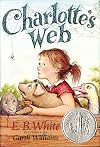
Though intended for children, this book (as they say), is just about perfect. It's not just the tale, it's the writing style.
I probably have not read this in over 35 years, and I'm a bit ashamed to say that I never read it to my two older sons, though I just recently finished reading it with my five-year-old daughter.
I've known some who have grown up on farms, and they're a lot less squeamish about the killing of animals and life is a bit more matter-of-fact than for maybe some of us who show more grew up in the suburbs. But, what I missed when I was much younger, whether it is Charlotte growing old or Fern growing up, is the passage of time is inevitable.
“After all, what's a life, anyway? We're born, we live a little while, we die. A spider's life can't help being something of a mess, with all this trapping and eating flies. By helping you, perhaps I was trying to lift up my life a trifle. Heaven knows anyone's life can stand a little of that.”
Whether seven or forty seven, I couldn't help but being sensitive. I still cannot read this book without getting tears in my eyes. show less
I probably have not read this in over 35 years, and I'm a bit ashamed to say that I never read it to my two older sons, though I just recently finished reading it with my five-year-old daughter.
I've known some who have grown up on farms, and they're a lot less squeamish about the killing of animals and life is a bit more matter-of-fact than for maybe some of us who show more grew up in the suburbs. But, what I missed when I was much younger, whether it is Charlotte growing old or Fern growing up, is the passage of time is inevitable.
“After all, what's a life, anyway? We're born, we live a little while, we die. A spider's life can't help being something of a mess, with all this trapping and eating flies. By helping you, perhaps I was trying to lift up my life a trifle. Heaven knows anyone's life can stand a little of that.”
Whether seven or forty seven, I couldn't help but being sensitive. I still cannot read this book without getting tears in my eyes. show less

Oh my! I love this story. I love the disorientation, the discomfort of it for the reader. Wait, that doesn't sound right.
What I mean is that this story hits a nerve. The whole piece sounds crazy, like a mere crazy person's rambling. But the more you read, the more you come to grasp the narrator's way of speech, his metaphors, his fragments, and you sense the psychological pain he is in and what it is founded upon. He is in anguish that glittering modern metropolitan life has been one big show more bait and switch for him (for everyone). He has lost the "rat race."
This story--a surprise from E.B. White--prompted yet another lively discussion in The Short Story Club group. You can join the group here: https://www.goodreads.com/group/show/1187035 show less
What I mean is that this story hits a nerve. The whole piece sounds crazy, like a mere crazy person's rambling. But the more you read, the more you come to grasp the narrator's way of speech, his metaphors, his fragments, and you sense the psychological pain he is in and what it is founded upon. He is in anguish that glittering modern metropolitan life has been one big show more bait and switch for him (for everyone). He has lost the "rat race."
This story--a surprise from E.B. White--prompted yet another lively discussion in The Short Story Club group. You can join the group here: https://www.goodreads.com/group/show/1187035 show less
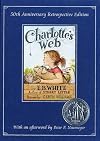
Although as a child I preferred both Stuart Little and the Trumpet of the Swan (in particular, scenes from The Trumpet of the Swan really stick with me), as an adult I really prefer Charlotte's Web. I really do think this is one of the perfect children's books. There's not a lot to date it in terms of attitudes and characterizations. The writing is of course beautiful. It moves so beautifully from the perspective of Fern to Wilbur, and incorporates so smoothly both the cruelties and show more tragedies of ordinary life, while balancing them with humor, love, and activism. [return][return]One of my favorite lines is from chapter 1, spoken by Mr. Arable, in response to his son who asked if he could have a pig too: "No, I only distribute pigs to early risers. Fern was up at daylight, trying to rid the world of injustice. As a result, she now has a pig. A small one, to be sure, but nevertheless a pig. It just shows what can happen if a person gets out of bed promptly." show less
Lists
Must-Read Maine (5)
Comfort Reads (1)
Five star books (1)
Unread books (1)
BitLife (1)
BBC Big Read (1)
Craft Books (1)
Writing (1)
KID BOOKS (1)
Elementary Reads (1)
el (1)
1970 Club (1)
BBC Big Read (1)
. (1)
1940s (1)
1970s (4)
Favourite Books (2)
Childhood books (2)
4th Grade Books (3)
Overdue Podcast (3)
Folio Society (2)
Ambleside Books (2)
Elevenses (2)
Kindness (1)
Put a Bird On It (1)
Have read (1)
Books I've Read (1)
Lista d1 (1)
Newbery Adjacent (1)
1950s (1)
Robin (1)
Food Fiction (1)
Sonlight Books (1)
Read (1)
Awards


You May Also Like


Associated Authors
Statistics
- Works
- 92
- Also by
- 83
- Members
- 111,570
- Popularity
- #76
- Rating
- 4.1
- Reviews
- 1,737
- ISBNs
- 697
- Languages
- 25
- Favorited
- 97


