
James Thurber (1894–1961)
Author of The Thurber Carnival
About the Author
Born in Columbus, Ohio, Thurber was blinded in one eye in a childhood accident. He attended Ohio State University but left without earning a degree. In 1925 he moved to New York City, where he joined the staff of the New Yorker in 1927 at the urging of his friend E. B. White. For the rest of his show more lifetime, Thurber contributed to the magazine his highly individual pieces and those strange, wry, and disturbing pen-and-ink drawings of "huge, resigned dogs, the determined and sometimes frightening women, the globular men who try so hard to think so unsuccessfully." The period from 1925, when the New Yorker was founded, until the death of its creator-editor, Harold Ross, in 1951, was described by Thurber in delicious and absorbing detail in The Years with Ross (1959). Of his two great talents, Thurber preferred to think of himself primarily as a writer, illustrating his own books. He published "fables" in the style of Aesop (see Vol. 2) and La Fontaine (see Vol. 2)---usually with a "barbed tip of contemporary significance"---children's books, several plays (two Broadway hits, one successful musical revue), and endless satires and parodies in short stories or full-length works. "The Secret Life of Walter Mitty," included in My World---and Welcome to It (1942), is probably his best-known story and continues to be frequently anthologized. T. S. Eliot described Thurber's work as "a form of humor which is also a way of saying something serious." (Bowker Author Biography) show less
Works by James Thurber
Collecting Himself: James Thurber on Writing and Writers, Humor, and Himself (1989) — Author — 148 copies
People Have More Fun Than Anybody: A Centennial Celebration Of Drawings And Writings (1994) 62 copies
Thurber and Company: A New Collection of Drawings of Male and Female Animals Including the Human (1966) 54 copies, 1 review
The Dog Department: James Thurber on Hounds, Scotties, and Talking Poodles (2001) 47 copies, 2 reviews
Vintage Thurber: A Selection of the Best Writings and Drawings of James Thurber: v. 2 (1963) 42 copies
Selected Shorts: Timeless Classics (Selected Shorts: A Celebration of the Short Story) (2006) 38 copies, 2 reviews
Vintage Thurber: A Selection of the Best Writings and Drawings of James Thurber: v. 1 (1963) 35 copies
The James Thurber Audio Collection: Fables and Selected Stories by James Thurber (2011) 14 copies, 1 review
The Greatest Man in the World 4 copies
Is Sex Necessary?, etc 3 copies
You Could Look It Up (Love Stories) 3 copies
The Night the Bed Fell 3 copies
A Thurber garland 2 copies
Zehn goldene Regeln für das Zusammenleben mit 100 warnenden Beispielen / Der Hund, der die Leute biß. Und andere Gesch (1991) 2 copies
Alleen 1 copy
The Wood Duck 1 copy
My Life and Hard Times, etc 1 copy
O cartaz de Mr. Martin 1 copy
De tretten ure 1 copy
Favole per il nostro tempo 1 copy
The Hound and the Bug 1 copy
No title 1 copy
The Lady on the Bookcase 1 copy
A Full Confession 1 copy
Associated Works
Literature: An Introduction to Fiction, Poetry, and Drama (1995) — Contributor, some editions — 1,017 copies, 7 reviews
Perrine's Literature: Structure, Sound, and Sense (1970) — Contributor, some editions — 897 copies, 4 reviews
Fierce Pajamas: An Anthology of Humor Writing from The New Yorker (2001) — Contributor — 790 copies, 5 reviews
Spells of Enchantment: The Wondrous Fairy Tales of Western Culture (1991) — Contributor — 605 copies, 5 reviews
The World of the Short Story: A 20th Century Collection (1986) — Contributor — 513 copies, 4 reviews
Drinking, Smoking and Screwing: Great Writers on Good Times (1994) — Contributor — 354 copies, 5 reviews
The 50 Funniest American Writers: An Anthology of Humor from Mark Twain to The Onion (2011) — Contributor — 287 copies, 3 reviews
An American Album: One Hundred and Fifty Years of Harper's Magazine (2000) — Contributor — 145 copies, 1 review
The Glorious American Essay: One Hundred Essays from Colonial Times to the Present (2020) — Contributor — 119 copies
Cavalcade of comedy; 21 brilliant comedies from Jonson and Wycherley to Thurber and Coward (1953) — Contributor — 101 copies
The Greatest Sailing Stories Ever Told: Twenty-Seven Unforgettable Stories (2002) — Contributor — 84 copies
Murder by the Book: Literary Mysteries from Alfred Hitchcock Mystery Magazine and Ellery Queen's Mystery Magazine (1995) — Contributor — 71 copies
Gentlemen, Scholars and Scoundrels: A Treasury of the Best of Harper's Magazine from 1850 to the Present (1972) — Contributor — 62 copies
The Signet Classic Book of Contemporary American Short Stories (1985) — Contributor — 47 copies, 1 review
Out of the Best Books: An Anthology of Literature, Vol. 5: Community Responsibility (1969) — Contributor — 30 copies
The Best of Both Worlds: An Anthology of Stories for All Ages (1968) — Contributor — 25 copies, 1 review
The Greatest American Short Stories: Twenty Classics of Our Heritage (1953) — Contributor — 21 copies, 1 review
Alexanders langes Leben, Stalins früher Tod und andere abwegige Geschichten. Erzählungen und Berichte aus Parallelwelten. (1999) — Contributor — 15 copies
Amerikanische Kurzgeschichten (American Short Stories) (English and German Edition) (1956) — Contributor — 10 copies
Der Zauberspiegel. Phantastische Erzählungen der Weltliteratur — Contributor — 2 copies
Rex Lardner Selects the Best of Sports Fiction — Contributor — 2 copies
The Ethnic Image in Modern American Literature, 1900-1950, Volumes 1-2 (1984) — Contributor — 1 copy
Hånden i sandet og andre virkelige kriminalsager skildret af berømte kriminalforfattere (1974) 1 copy, 1 review
Eleven American Stories — Contributor — 1 copy
Configurations: American Short Stories for the EFL Classroom, Advanced Level (1984) — Contributor — 1 copy
Behind the Wheel: Stories of Cars on Road and Track — Contributor — 1 copy
Al pie del acantilado — Contributor — 1 copy
Tagged
Common Knowledge
- Canonical name
- Thurber, James
- Legal name
- Thurber, James Grover
- Birthdate
- 1894-12-08
- Date of death
- 1961-11-02
- Gender
- male
- Education
- Ohio State University
- Occupations
- cartoonist
author
playwright
reporter
code clerk - Organizations
- The New Yorker
U.S. Department of State - Awards and honors
- Caldecott Medal (1944)
- Cause of death
- pneumonia
hematoma - Nationality
- USA
- Birthplace
- Columbus, Ohio, USA
- Places of residence
- Washington, D.C., USA
Paris, Île-de-France, France
New York, New York, USA
Columbus, Ohio, USA - Place of death
- New York, New York, USA
- Burial location
- Green Lawn Cemetery, Columbus, Ohio, USA
- Associated Place (for map)
- USA
Members
Discussions
Found: Kid’s book about a haunted castle in Name that Book (November 2023)
Reviews

I grew up with a couple of little books of Thurber highlights, and had the idea of him as an off-beat humorist, someone who would put surreal seals and hippopotami into domestic scenes and delicately undermine the staid course of mid-century American mediocrity by giving downtrodden husbands an escape into the world of the imagination (“Walter Mitty”) and office-workers a chance to fantasise about taking revenge on evil co-workers (“The cat-bird seat”). When you read him in bulk like show more this, you get a different perspective: the subversive humour is still there, of course, but it’s part of a systematic, organised journalistic career in which Thurber came to see that making people laugh was a marketable skill he had. Like any successful humorist, he had to be a disciplined, organised writer who could cut everything unnecessary out of his work and avoid treading on editors’ or readers’ toes, while meeting deadlines and wordcounts. Seeing “behind the scenes” might take some of the magic away, but it gives you more admiration for his professionalism.
I enjoyed revisiting the celebrated cartoons and comic stories, of course, but some of the most interesting writing here turned out to be from My life and hard times (1933), about his childhood and adolescence in Columbus, Ohio, and The years with Ross (1958), about the early days of the New Yorker when he worked with Harold Ross and E B White. In both cases there is obviously a certain amount of embroidery going on — Thurber is not the sort of person to let boring facts get in the way of a good anecdote — but he manages to give some fascinating glimpses into what it was like living in a provincial US city before the Great War and into how the world of weekly magazines worked in the 1920s and 30s.
Otherwise, there are a few fun things here I didn’t know about, like the apocalyptic graphic fable The last flower (1939), and an earlier graphic fable The race of life (1932), in which a protean family of man woman and child suffers all kinds of normal adventures (weather, hunger, etc.) before coming face to face with a totally unexplained Giant Rabbit. Both of these are also fun because of the way they manage to sneak in large amounts of nudity without ever being prurient or erotic about it. show less
I enjoyed revisiting the celebrated cartoons and comic stories, of course, but some of the most interesting writing here turned out to be from My life and hard times (1933), about his childhood and adolescence in Columbus, Ohio, and The years with Ross (1958), about the early days of the New Yorker when he worked with Harold Ross and E B White. In both cases there is obviously a certain amount of embroidery going on — Thurber is not the sort of person to let boring facts get in the way of a good anecdote — but he manages to give some fascinating glimpses into what it was like living in a provincial US city before the Great War and into how the world of weekly magazines worked in the 1920s and 30s.
Otherwise, there are a few fun things here I didn’t know about, like the apocalyptic graphic fable The last flower (1939), and an earlier graphic fable The race of life (1932), in which a protean family of man woman and child suffers all kinds of normal adventures (weather, hunger, etc.) before coming face to face with a totally unexplained Giant Rabbit. Both of these are also fun because of the way they manage to sneak in large amounts of nudity without ever being prurient or erotic about it. show less
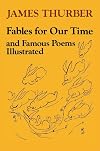
Somewhere along the line -- largely because of The 13 Clocks, I'm guessing -- Thurber has suffered the same fate as Mark Twain in that he's become known as an avuncular old man who told some funny stories and was generally amusing. You'll be disabused of that notion pretty quickly after you finish this book. Go read "The Fairly Intelligent Fly" or "The Sheep in Wolf's Clothing" if you don't believe me. Thurber happens to be hilarious, but he bites.
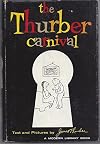
We had a copy of this book on our vast bookshelves when I was a child. Thurber was a favorite of mine because of his wonderful, wonky drawings. As I grew out of toddlerhood, I loved having his stories read to me, and then began to read them myself. ( I really fell in love with The Last Flower. It came out around the same time as Where Have All the Flowers Gone and I would drive my family nuts singing while engaged in the pictures.) Still later, I read the short stories myself, and knew them show more well enough that at a very young age I wrote a poem in tribute to Walter Mitty (whose story is in this book), and won a prize for it. Alas that copy, which looked like the one pictured here, is no longer in my personal library. But when we found a box of give-away free books while walking on Locust Street here in Philly, I grabbed it. Yes it's paperback, and yellowed. Yes, its cover price was $2.75 and it has a price sticker from Encore Books for $1.00. But it has beloved Thurber sketches and witty, wonderful stories. I had to rescue it and let it feel the love I've carried for it for almost 70 years. Rounded up, because of love. show less
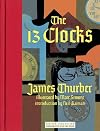
This is one of the coolest children's books I've ever read, and I read a decent amount (you wanna fight about it?).
While a simple tale on the surface, clever wordplay and interesting ambiguity leads to a fantastic read.
I read the edition with an introduction by Neil Gaiman, who is quite the wordsmith himself. Even he had trouble saying what kind of story this is. It's a hard one to pin down, so all I can really say about it that will make any amount of sense is how it made me feel.
This show more book made me feel exactly how I always thought I was supposed to feel when I finally read Alice in Wonderland, but didn't.
Alice in Wonderland, I was always told, is filled with clever wordplay. It's a book that's not about the story, it's about what's beneath the story. It's about a clever man having fun toying with the English language. Unfortunately Alice in Wonderland may have been written too long ago, because I experienced little of that when I read it.
This, on the other hand, is from the fifties. Still not new, but new enough that I was able to get that second layer of meaning from it which made it engaging and thought-provoking. This all on top of the tale itself, which is a lot of fun all on its own. show less
While a simple tale on the surface, clever wordplay and interesting ambiguity leads to a fantastic read.
I read the edition with an introduction by Neil Gaiman, who is quite the wordsmith himself. Even he had trouble saying what kind of story this is. It's a hard one to pin down, so all I can really say about it that will make any amount of sense is how it made me feel.
This show more book made me feel exactly how I always thought I was supposed to feel when I finally read Alice in Wonderland, but didn't.
Alice in Wonderland, I was always told, is filled with clever wordplay. It's a book that's not about the story, it's about what's beneath the story. It's about a clever man having fun toying with the English language. Unfortunately Alice in Wonderland may have been written too long ago, because I experienced little of that when I read it.
This, on the other hand, is from the fifties. Still not new, but new enough that I was able to get that second layer of meaning from it which made it engaging and thought-provoking. This all on top of the tale itself, which is a lot of fun all on its own. show less
Lists
Children's Humor (1)
1950s (1)
Great Audiobooks (1)
Best Audiobooks (1)
Five Star Novels (1)
Favourite Books (1)
Audio Books (1)
Short and Sweet (1)
Read This Next (1)
Ambleside Year 8 (2)
1930s (2)
1940s (2)
Best Beach Reads (1)
Princess Tales (1)
Read These Too (1)
Ambleside Books (1)
Folio Society (1)
Awards


You May Also Like


Associated Authors
Statistics
- Works
- 136
- Also by
- 179
- Members
- 18,295
- Popularity
- #1,200
- Rating
- 3.9
- Reviews
- 370
- ISBNs
- 328
- Languages
- 12
- Favorited
- 84

