
Dorothy Parker (1) (1893–1967)
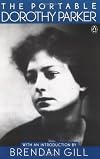
Author of The Portable Dorothy Parker [1973 Deluxe Edition]
For other authors named Dorothy Parker, see the disambiguation page.
About the Author
Poet and short story writer Dorothy Parker was born in New Jersey on August 22, 1893. When she was 5, her mother died and her father, a clothes salesman, remarried. Parker had a great antipathy toward her stepmother and refused to speak to her. She attended parochial school and Miss Dana's school show more in Morristown, New Jersey, for a brief time before dropping out at age 14. A voracious reader, she decided to pursue a career in literature. She began her career by writing verse as well as captions for a fashion magazine. During the years of her greatest fame, Dorothy Parker was known primarily as a writer of light verse, an essential member of the Algonquin Round Table, and a caustic and witty critic of literature and society. She is remembered now as an almost legendary figure of the 1920s and 1930s. Her reviews and staff contributions to three of the most sophisticated magazines of this century, Vanity Fair, the New Yorker, and Esquire, were notable for their put-downs. For all her highbrow wit, however, Dorothy Parker was liberal, even radical, in her political views, and the hard veneer of brittle toughness that she showed to the world was often a shield for frustrated idealism and soft sensibilities. The best of her fiction is marked by a balance of ironic detachment and sympathetic compassion, as in "Big Blonde," which won the O. Henry Award for 1929 and is still her best-remembered and most frequently anthologized story. The best of Dorothy Parker is readily and compactly accessible in The Portable Dorothy Parker. Her own selection of stories and verse for the original edition of that compilation, published in 1944, remains intact in the revised edition, but included also are additional stories, reviews, and articles. Parker died of a heart attack at the age of 73 in 1967. In her will, she bequeathed her estate to the Dr. Martin Luther King, Jr. foundation. Following King's death, her estate was passed on to the NAACP. (Bowker Author Biography) show less
Works by Dorothy Parker
Dorothy Parker 26 copies
Dorothy Parker : Selected Stories (Big Blonde, Too Bad, Song of Shirt, Mr. Durant, Diary of a New York Lady, Standard of Living, The Garter) (1995) 18 copies, 1 review
Here We Are 6 copies
New York To Detroit 3 copies
Little Curtis 3 copies
The Indispensable Dorothy Parker 3 copies
Arrangement in Black and White 2 copies
Soldiers of the Republic 2 copies
The Waltz 2 copies
Such a Pretty Little Picture and Other Stories (Dover Thrift Editions: Short Stories) (2023) 2 copies
The Algonquin Wits: A Crackling Collection of Bon Mots, Wisecracks, Epigrams and Gags (1968) 2 copies
You Were Perfectly Fine 2 copies
Clothe the Naked 2 copies
Glory in the Daytime 2 copies
The Last Tea 2 copies
Song of the Shirt, 1941 2 copies
Dikter 1 copy
Enough Rope Poem 1 copy
Lady With A Lamp 1 copy
Story {poem} 1 copy
The Penguin Dorothy Parker 1 copy
But the One on the Right 1 copy
Lolita 1 copy
The Bolt Behind the Blue 1 copy
Résumé 1 copy
I Live on Your Visits 1 copy
Sentiment 1 copy
Trade Winds [1938 film] — Screenwriter — 1 copy
Suzy [1936 film] — Screenwriter — 1 copy
Cousin Larry 1 copy
Just a Little One 1 copy
The Wonderful Old Gentleman 1 copy
“De Profundis” 1 copy
The Little Hours 1 copy
The Lovely Leave 1 copy
Bohemia [poem] 1 copy
Comment [poem] 1 copy
One Perfect Rose [poem] 1 copy
Una imagen perfecta 1 copy
Mr. Durant 1 copy
The Garter (Short Stories) 1 copy
Parker Dorothy 1 copy
Guinevere at Her Fireside" 1 copy
Parker, Dorothy Archive 1 copy
Too Bad 1 copy
Big Loira 1 copy
Associated Works
Literature: An Introduction to Fiction, Poetry, and Drama (1995) — Contributor, some editions — 1,017 copies, 7 reviews
Fierce Pajamas: An Anthology of Humor Writing from The New Yorker (2001) — Contributor — 790 copies, 5 reviews
Secret Ingredients: The New Yorker Book of Food and Drink (2007) — Contributor — 596 copies, 10 reviews
American Poetry: The Twentieth Century, Volume One: Henry Adams to Dorothy Parker (2000) — Contributor — 482 copies, 1 review
Points of View: An Anthology of Short Stories, Revised & Updated Edition (1995) — Contributor — 443 copies, 7 reviews
Drinking, Smoking and Screwing: Great Writers on Good Times (1994) — Contributor — 354 copies, 5 reviews
75 Short Masterpieces: Stories from the World's Literature (1961) — Contributor — 319 copies, 2 reviews
The 50 Funniest American Writers: An Anthology of Humor from Mark Twain to The Onion (2011) — Contributor — 287 copies, 3 reviews
This is My Best: American Greatest Living Authors Present and Give Their Reasons Why (1942) — Contributor — 214 copies
First Fiction: An Anthology of the First Published Stories by Famous Writers (1994) — Contributor — 197 copies, 1 review
Poetry Speaks Expanded: Hear Poets Read Their Own Work from Tennyson to Plath (2007) — Contributor — 158 copies, 2 reviews
The Glorious American Essay: One Hundred Essays from Colonial Times to the Present (2020) — Contributor — 119 copies
The Vicious Circle: Mystery and Crime Stories by Members of the Algonquin Round Table (2007) — Contributor — 99 copies, 1 review
Out of the Best Books: An Anthology of Literature, Vol. 3: Intelligent Family Living (1967) — Contributor — 34 copies
Fifty Years of the American Short Story from the O. Henry Awards 1919-1970 (1970) — Contributor — 17 copies, 1 review
Great American Short Stories: O. Henry Memorial Prize Winning Stories, 1919-1934 (1935) — Contributor — 11 copies, 1 review
The Best Short Stories of 1931 and the Yearbook of the American Short Story (1931) — Contributor — 7 copies, 1 review
Fifty Years of the American Short Story from the O. Henry Awards 1919-1970, Volume 2 (1970) — Contributor — 5 copies
The Best from Cosmopolitan — Contributor — 4 copies
The Best Short Stories of 1928 and the Yearbook of the American Short Story (1928) — Contributor — 3 copies
The Ethnic Image in Modern American Literature, 1900-1950, Volumes 1-2 (1984) — Contributor — 1 copy
Schöne Ferien — Contributor — 1 copy
Tagged
Common Knowledge
- Canonical name
- Parker, Dorothy
- Legal name
- Rothschild, Dorothy (birth name)
- Other names
- Dot
Dottie - Birthdate
- 1893-08-22
- Date of death
- 1967-06-07
- Gender
- female
- Education
- convent
- Occupations
- journalist
writer
satirist
drama critic
screenwriter
poet (show all 8)
short story writer
columnist - Organizations
- Algonquin Round Table
Vogue
Vanity Fair
The New Yorker
Paramount Pictures - Awards and honors
- American Academy of Arts and Letters (Literature ∙ 1959)
New Jersey Hall of Fame (2014) - Relationships
- Rothschild, Martin (uncle)
Campbell, Alan (husband)
Hellman, Lillian (friend, executor) - Short biography
- Dorothy Parker, née Rothschild, was born in the West End section of Long Branch, New Jersey, to J. Henry and Elizabeth Rothschild. Her mother died when she was four years old. She attended a Catholic grammar school and a finishing school in Morristown, NJ, and her formal education ended when she was 14.
In 1914, she sold her first poem to Vanity Fair. At age 22, she took an editorial job at Vogue, and continued to write poems for newspapers and magazines. In 1917, she joined Vanity Fair. That same year, she married Edwin P. Parker, a stockbroker, but they divorced in 1928.
S In 1919, she became a founding member of the Algonquin Round Table, the informal gathering of writers who lunched at the Algonquin Hotel in New York City. In 1922, Parker published her first short story and over the years, she contributed poetry, fiction and book reviews as the "Constant Reader" columnist.
In 1934, Parker married actor-writer Alan Campbell and the couple relocated to Los Angeles. They divorced in 1947, and remarried in 1950, but their relationship deteriorated.
She was inducted into the American Academy of Arts and Letters in 1959 and was a visiting professor at California State College in Los Angeles in 1963. She returned to Manhattan and lived in the Volney Hotel on the Upper East Side for the last 15 years of her life. - Cause of death
- heart attack
- Nationality
- USA
- Birthplace
- Long Branch, New Jersey, USA
- Places of residence
- Morristown, New Jersey, USA
Hollywood, California, USA
New York, New York, USA - Place of death
- New York, New York, USA
- Burial location
- NAACP Headquarters, Baltimore, Maryland, USA
- Map Location
- New Jersey, USA
Members
Discussions
Victorian Ironic/Satire on Marriage Short Story in Name that Book (July 2015)
Reviews

Famous for her one-liners/zingers, Parker is typically referred to as a "wit" which always conjures up for me some sort of light-hearted banter setting up for some ultimate punchline*.
This definitely was not the case for Parker's short stories which are more like domestic psychological thrillers, be it the toxic relationships buoyed along by societal expectations (her shrewd insight into such tumultuous relationships reminds me of Yates and makes me wonder how personal a research she must show more have conducted) or a racist-and-don't-know-it at a house party.
Add to this Parker's ability to present to you one side of a character's story (some stories are literally just one person's side of the conversation) yet show you the entire intricate minefield of relationships in the narrative. Each story is an exercise in holding your breath and slowly shuddering and exhaling at the end.
*which I found was the case for the poems which didn't grab me as much as the stories did. I also found her cultural reviews dated less accessible, it feels necessary to be in that cultural zeitgeist while reading them. For the stories alone, the collection would be five stars. show less
This definitely was not the case for Parker's short stories which are more like domestic psychological thrillers, be it the toxic relationships buoyed along by societal expectations (her shrewd insight into such tumultuous relationships reminds me of Yates and makes me wonder how personal a research she must show more have conducted) or a racist-and-don't-know-it at a house party.
Add to this Parker's ability to present to you one side of a character's story (some stories are literally just one person's side of the conversation) yet show you the entire intricate minefield of relationships in the narrative. Each story is an exercise in holding your breath and slowly shuddering and exhaling at the end.
*which I found was the case for the poems which didn't grab me as much as the stories did. I also found her cultural reviews dated less accessible, it feels necessary to be in that cultural zeitgeist while reading them. For the stories alone, the collection would be five stars. show less

Parker is unquestionably the queen, but I prefer her in snippets. Taken as a whole the stories are too much the same, and make me want to tear my hair in frustration at the limitations placed on women's lives.

Todo mundo sabe que a Dorothy Parker é a rainha dos one liners, mas ela se segura nos contos? Não só se segura como são impecáveis, não são apenas espirituosos, como também de uma passivo-agressividade bem nova-iorquina e em alguns pontos beiram a tragédia pela via da tragicomédia. Um sucesso.
Cineastas que recomendo para quem gosta de Dorothy Parker: Whit Stillman e Woody Allen, do próprio coração de Nova York, mas a diferença mais gritante é que Parker adota sempre o ponto de show more vista das mulheres, o que nem sempre acontece com esses cineastas. show less
Cineastas que recomendo para quem gosta de Dorothy Parker: Whit Stillman e Woody Allen, do próprio coração de Nova York, mas a diferença mais gritante é que Parker adota sempre o ponto de show more vista das mulheres, o que nem sempre acontece com esses cineastas. show less
Once upon a time I had this idea that one should read a book from start to finish, and if one was being particularly through that included the preface and any appendix. However that technique has often left me hanging in one part of a book (really wishing that I was reading another part, farther in) - and if it's a book of collected stories and poems, it's not really vital that you go in order.
I've also begun reading this book more than once and ended up hopping about and only reading bits show more and pieces. So this time through - and I do intended to finish the whole of it this time (yes, really) - I went straight for the part I was most interested: the reviews of plays and books and other articles. I only wish there were more of these because Parker is such fun as a reviewer. More than once I've read a bit and laughed in agreement. Such as:
And that nicely sums up why I could never finish The Brothers Karamazov - I made the mistake of putting it down for a day and when I tried to pick it up again I was lost and unable to figure out who was who. I probably would have had to keep a cheat sheet of names to properly keep track, and so gave up and moved on to other books.
Here's a later review, to give you another idea of why I turned to these first. Here Parker confesses to be "a confirmed user of Whodunits":
The Parker who writes poetry and short stories almost seems a different person. Reading too many of those pieces makes me feel somewhat depressed - or at least feeling a bit too full of the angst of love and loss, or of really horrible people who seem to pop up regularly in her short stories. I'd enjoy her writing more if I could read it all in chronological order and have the reviews and essays as relief. But I do understand the why of the ordering - the first section is how Parker herself grouped her works, and the later was added after her death.
At least if you read all her reviews last you'll be left with the more lively person who's just shared her thoughts on a play or book. That's the Parker I think I like most.
_________________________
[Here I go off on a tangent. Just noting.] When looking up the word mandragora, wikipedia helpfully pushed me over to the page on mandrake - which seems fair because it probably wasn't the demon or the band. Anyway. Under in pop culture this caught my eye:
"...Not poppy, nor mandragora,
Nor all the drowsy syrups of the world,
Shall ever medicine thee to that sweet sleep
Which thou owedst yesterday."
Shakespeare: Othello III.iii
Parker was wonderfully well read, so I can't think this is a coincidence. But that's just my guess, seeing that the use of mandragora probably doesn't pop up all that often. Now of course I should go reread Othello and see about the context of that quote. show less
I've also begun reading this book more than once and ended up hopping about and only reading bits show more and pieces. So this time through - and I do intended to finish the whole of it this time (yes, really) - I went straight for the part I was most interested: the reviews of plays and books and other articles. I only wish there were more of these because Parker is such fun as a reviewer. More than once I've read a bit and laughed in agreement. Such as:
p. 420 "...There's only one thing I could wish about the whole play - I do wish they would do something about those Russian names. Owing to the local Russian custom of calling each person sometimes by all of his names, sometimes by only his first three or four, and sometimes by a nickname which has nothing to do with any of the other names, it is difficult for one with my congenital lowness of brow to gather exactly whom they are talking about. I do wish that as long as they are translating the thing, they would go right ahead, while they're at it, and translate Fedor Vasilyevich Protosov and Sergei Dmitrievich Abreskov and Ivan Petrovich Alexandrov into Joe and Harry and Fred."
--Vanity Fair review of Tolstoy's play Redemption, December 1918
And that nicely sums up why I could never finish The Brothers Karamazov - I made the mistake of putting it down for a day and when I tried to pick it up again I was lost and unable to figure out who was who. I probably would have had to keep a cheat sheet of names to properly keep track, and so gave up and moved on to other books.
Here's a later review, to give you another idea of why I turned to these first. Here Parker confesses to be "a confirmed user of Whodunits":
p. 568 "To me, the raveled sleeve of care is never more painlessly knitted up than in an evening alone in a chair snug yet copious, with a good light and an easily held little volume sloppily printed and bound in inexpensive paper. I do not ask much of it - which is just as well, for that is all I get. It does not matter if I guess the killer, and if I happen to discover, along around page 208, that I have read the work before, I attribute the fact not to the less than arresting powers of the author, but to my own lazy memory. I like best to have one book in my hand, and a stack of others on the floor beside me, so as to know the supply of poppy and mandragora will not run out before the small hours. In all reverence I say Heaven bless the Whodunit, the soothing balm on the wound, the cooling hand on the brow, the opiate of the people."
--Book review Of Ellery Queen: The New York Murders, from Esquire, January 1959
The Parker who writes poetry and short stories almost seems a different person. Reading too many of those pieces makes me feel somewhat depressed - or at least feeling a bit too full of the angst of love and loss, or of really horrible people who seem to pop up regularly in her short stories. I'd enjoy her writing more if I could read it all in chronological order and have the reviews and essays as relief. But I do understand the why of the ordering - the first section is how Parker herself grouped her works, and the later was added after her death.
At least if you read all her reviews last you'll be left with the more lively person who's just shared her thoughts on a play or book. That's the Parker I think I like most.
_________________________
[Here I go off on a tangent. Just noting.] When looking up the word mandragora, wikipedia helpfully pushed me over to the page on mandrake - which seems fair because it probably wasn't the demon or the band. Anyway. Under in pop culture this caught my eye:
"...Not poppy, nor mandragora,
Nor all the drowsy syrups of the world,
Shall ever medicine thee to that sweet sleep
Which thou owedst yesterday."
Shakespeare: Othello III.iii
Parker was wonderfully well read, so I can't think this is a coincidence. But that's just my guess, seeing that the use of mandragora probably doesn't pop up all that often. Now of course I should go reread Othello and see about the context of that quote. show less
Lists
Awards


You May Also Like


Associated Authors
Statistics
- Works
- 148
- Also by
- 108
- Members
- 10,380
- Popularity
- #2,290
- Rating
- 4.0
- Reviews
- 128
- ISBNs
- 250
- Languages
- 11
- Favorited
- 143


