
Marion Meade (1934–2022)
Author of Dorothy Parker: What Fresh Hell Is This?
About the Author
Marion Meade is the author of Dorothy Parker: What Fresh Hell Is This? and Bobbed Hair and Bathtub Gin: Writers Running Wild in the Twenties. She has also written biographies of Woody Allen, Buster Keaton, Eleanor of Aquitaine, Madame Blavatsky, and Victoria Woodhull, as well as two novels about show more medieval France. show less
Image credit: Marion Meade
Works by Marion Meade
Associated Works
The Portable Dorothy Parker [2006 Deluxe Edition] (2006) — Editor, some editions — 1,628 copies, 10 reviews
Tagged
Common Knowledge
- Birthdate
- 1934-01-07
- Date of death
- 2022-12-29
- Gender
- female
- Education
- Northwestern University (BA|Journalism|1955)
Columbia Graduate School of Journalism - Occupations
- novelist
reporter
biographer - Short biography
- Marion Meade is an American biographer and novelist, whose subjects stretch from 12th-century French royalty to 20th-century stand-up comedians. She is best known for her portraits of literary figures and iconic filmmakers.
- Nationality
- USA (birth)
- Birthplace
- Pittsburgh, Pennsylvania, USA
- Places of residence
- New York, New York, USA
Chicago, Illinois, USA - Associated Place (for map)
- USA
Members
Reviews
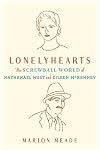
Reviewing this book, I am more grateful than ever to the innovator who thought up the decimal-star system. No way could I rate this four stars, and three-and-a-half is a little mingy, so I really give it 3.8 stars.
The Publisher Says: NATHANAEL WEST—novelist, screenwriter, playwright, devoted outdoorsman—was one of the most gifted and original writers of his generation, a comic artist whose insight into the brutalities of modern life proved prophetic. He is famous for two masterpieces, show more Miss Lonelyhearts (1933) and The Day of the Locust (1939). Seventy years later, The Day of the Locust remains the most penetrating novel ever written about Hollywood.
EILEEN MCKENNEY—accidental muse, literary heroine—was the inspiration for her sister Ruth’s humorous stories, My Sister Eileen, which led to stage, film, and television adaptations, including Leonard Bernstein’s 1953 musical Wonderful Town. She grew up in Cleveland and moved to Manhattan at 21 in search of romance and adventure. She and her sister lived in a basement apartment in the Village with a street-level window into which men frequently peered.
Husband and wife were intimate with F. Scott Fitzgerald, Dorothy Parker, Katharine White, S.J. Perelman, Bennett Cerf, and many of the literary, theatrical, and movie notables of their era. With Lonelyhearts, biographer Marion Meade, whose Bobbed Hair and Bathtub Gin earned accolades from the Washington Post Book World ("Wonderful") to the San Francisco Chronicle ("Like looking at a photo album while listening to a witty insider reminisce about the images"), restores West and McKenney to their rightful places in the rich cultural tapestry of interwar America.
My Review: It's a good story...hot young honey who's famous for being famous marries screwed-up weirdo writer of unsalable novels, they end up dead. Kinda like the Joe Orton story, only no one here's a real man.
Nathanael West comes out worst in this dual bio. He sounds like a self-loathing closet queer and anti-Semitic Jew, with a talent for cruelty and impeccable, phony manners. (Sure could write, though.) Eileen McKenney sounds like someone we all know today, the fifteen-minutes' wonder...Joe the Plumber, Sarah Palin...who would've spent the rest of her life trying to cash in on her fleeting moment of celebrity.
Dreadful people, actually, ones I'd pay not to know, and I am double glad that I didn't buy this book. Meade does a solid job reporting the facts, and even goes so far as to avoid calling West a closet case...but really, ma'am, you reported that the trog had gonorrhea of the ANUS, now does that not suggest something to you? Go Google the phrase "lucky Pierre" and stand back.
One of the bitterest ironies of the whole book is that Eileen's sister Ruth, the author of My Sister Eileen, became a very wealthy woman starting four days after Eileen's death...the Broadway show "My Sister Eileen" was a huge, huge hit, and spawned numerous revivals and reworkings, supporting its author all the rest of her life. I wonder if she'd've shared the gelt with Eileen. We'll never know, of course, but I suspect not. Ruth is not a likable character at all, per Meade, inclined to manic depressive episodes and a Communist True Believer (how tedious).
So why rate the book so highly? Because...these are REAL people, not airbrushed whitewashed celebrified people. They come across as, well, fascinating in their very, very, very flawed selves. Meade's made some dim corners of American celebrity life quite a lot brighter, and I suspect the likes of Kato Kaelin are busily dusting the corners of their lives.
I don't think I'll recommend this book to anyone not fascinated by Nathanael West. Really, it's just too far to go for someone just browsing around, and probably too tedious for anyone not already familiar with the time-period (1900-1940) in BOTH New York and Hollywood.
This work is licensed under a Creative Commons Attribution-NonCommercial-ShareAlike 3.0 Unported License. show less
The Publisher Says: NATHANAEL WEST—novelist, screenwriter, playwright, devoted outdoorsman—was one of the most gifted and original writers of his generation, a comic artist whose insight into the brutalities of modern life proved prophetic. He is famous for two masterpieces, show more Miss Lonelyhearts (1933) and The Day of the Locust (1939). Seventy years later, The Day of the Locust remains the most penetrating novel ever written about Hollywood.
EILEEN MCKENNEY—accidental muse, literary heroine—was the inspiration for her sister Ruth’s humorous stories, My Sister Eileen, which led to stage, film, and television adaptations, including Leonard Bernstein’s 1953 musical Wonderful Town. She grew up in Cleveland and moved to Manhattan at 21 in search of romance and adventure. She and her sister lived in a basement apartment in the Village with a street-level window into which men frequently peered.
Husband and wife were intimate with F. Scott Fitzgerald, Dorothy Parker, Katharine White, S.J. Perelman, Bennett Cerf, and many of the literary, theatrical, and movie notables of their era. With Lonelyhearts, biographer Marion Meade, whose Bobbed Hair and Bathtub Gin earned accolades from the Washington Post Book World ("Wonderful") to the San Francisco Chronicle ("Like looking at a photo album while listening to a witty insider reminisce about the images"), restores West and McKenney to their rightful places in the rich cultural tapestry of interwar America.
My Review: It's a good story...hot young honey who's famous for being famous marries screwed-up weirdo writer of unsalable novels, they end up dead. Kinda like the Joe Orton story, only no one here's a real man.
Nathanael West comes out worst in this dual bio. He sounds like a self-loathing closet queer and anti-Semitic Jew, with a talent for cruelty and impeccable, phony manners. (Sure could write, though.) Eileen McKenney sounds like someone we all know today, the fifteen-minutes' wonder...Joe the Plumber, Sarah Palin...who would've spent the rest of her life trying to cash in on her fleeting moment of celebrity.
Dreadful people, actually, ones I'd pay not to know, and I am double glad that I didn't buy this book. Meade does a solid job reporting the facts, and even goes so far as to avoid calling West a closet case...but really, ma'am, you reported that the trog had gonorrhea of the ANUS, now does that not suggest something to you? Go Google the phrase "lucky Pierre" and stand back.
One of the bitterest ironies of the whole book is that Eileen's sister Ruth, the author of My Sister Eileen, became a very wealthy woman starting four days after Eileen's death...the Broadway show "My Sister Eileen" was a huge, huge hit, and spawned numerous revivals and reworkings, supporting its author all the rest of her life. I wonder if she'd've shared the gelt with Eileen. We'll never know, of course, but I suspect not. Ruth is not a likable character at all, per Meade, inclined to manic depressive episodes and a Communist True Believer (how tedious).
So why rate the book so highly? Because...these are REAL people, not airbrushed whitewashed celebrified people. They come across as, well, fascinating in their very, very, very flawed selves. Meade's made some dim corners of American celebrity life quite a lot brighter, and I suspect the likes of Kato Kaelin are busily dusting the corners of their lives.
I don't think I'll recommend this book to anyone not fascinated by Nathanael West. Really, it's just too far to go for someone just browsing around, and probably too tedious for anyone not already familiar with the time-period (1900-1940) in BOTH New York and Hollywood.
This work is licensed under a Creative Commons Attribution-NonCommercial-ShareAlike 3.0 Unported License. show less
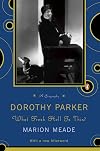
It’s hard to figure out just what to make of Dorothy Parker. She was a charter member of the Algonquin Round Table, sort of a 20th century version of the Mermaid Tavern; one of the most incisive book and drama critics of her time (“This is not a book to be tossed aside lightly. It should be thrown with great force.”); an award-winning short story writer; and a poet of many memorable verses (in the “Portable” series of collected works, the only three that have continuously remained show more in print are The Portable William Shakespeare, The Portable King James Bible, and The Portable Dorothy Parker; that’s not bad company to be in).
At the same time, her personal life was disastrous. She was attracted first to aristocratic seducers and later to much younger men (“Ducking for apples – but for a typographical error, it’s the story of my life”); an alcoholic and chain-smoker; survivor of three suicide attempts (“Razors pain you / Rivers are damp / Acids stain you / Drugs cause cramp / Guns aren’t lawful / Nooses give / Gas smells awful / You might as well live”); pathologically unable to meet a deadline; a dog lover but unwilling to take the time to train them (when one of her dogs defecated on the carpet in a exclusive hotel, the manager rushed up and shouted “Mrs. Parker, look what your dog did!”. She looked him in the eye, replied “No, I did that” and stalked off.); and perennially sponging off her friends whether she was making money at the time or not.
As in most really good biographies, the author (Marion Meade) is transparent; she just reports the facts and lets the story tell itself. If you read this book without ever reading any of Dorothy Parker’s poetry, you might be puzzled how Parker could ever be thought worthy of any acknowledgement at all, much less a postage stamp; if you read her poetry without knowing her life story you’d be missing a lot. Do both.
“Life is a glorious cycle of song
A medley of extemporanea
And love is a thing that can never go wrong
And I am Marie of Roumania” show less
At the same time, her personal life was disastrous. She was attracted first to aristocratic seducers and later to much younger men (“Ducking for apples – but for a typographical error, it’s the story of my life”); an alcoholic and chain-smoker; survivor of three suicide attempts (“Razors pain you / Rivers are damp / Acids stain you / Drugs cause cramp / Guns aren’t lawful / Nooses give / Gas smells awful / You might as well live”); pathologically unable to meet a deadline; a dog lover but unwilling to take the time to train them (when one of her dogs defecated on the carpet in a exclusive hotel, the manager rushed up and shouted “Mrs. Parker, look what your dog did!”. She looked him in the eye, replied “No, I did that” and stalked off.); and perennially sponging off her friends whether she was making money at the time or not.
As in most really good biographies, the author (Marion Meade) is transparent; she just reports the facts and lets the story tell itself. If you read this book without ever reading any of Dorothy Parker’s poetry, you might be puzzled how Parker could ever be thought worthy of any acknowledgement at all, much less a postage stamp; if you read her poetry without knowing her life story you’d be missing a lot. Do both.
“Life is a glorious cycle of song
A medley of extemporanea
And love is a thing that can never go wrong
And I am Marie of Roumania” show less
The Last Days of Dorothy Parker: The Extraordinary Lives of Dorothy Parker and Lillian Hellman and How Death Can Be Hell on Friendship (A Penguin Classics Special) by Marion Meade
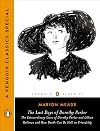
Dorothy Parker and Lillian Hellman were close friends for many years. Unfortunately for Parker, she made Hellman her executor, and Hellman not only threw out Parker's remaining papers, she managed to deter potential biographers and anyone else who might prevent Parker sinking into obscurity.
As a Parker biographer, Meade loathes Hellman and really puts the boot into Dashiell Hammett.
I enjoyed this short biography in a nasty sort of way, particularly because I was such a fan of Hellman's show more memoirs in the days when I was young and trusting and thought she was telling the truth. show less
As a Parker biographer, Meade loathes Hellman and really puts the boot into Dashiell Hammett.
I enjoyed this short biography in a nasty sort of way, particularly because I was such a fan of Hellman's show more memoirs in the days when I was young and trusting and thought she was telling the truth. show less
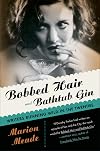
The Roaring Twenties are a romantic period. Jazz. Flappers. Consumption of vast quantities of alcohol despite (or perhaps because of) Prohibition. Americans living in Paris on the cheap. Writers as celebrities exchanging witty barbs. The Algonquin Round Table. A golden era in New York, a city built on golden eras.
Marion Meade attempts to capture this glamorous period in Bobbed Hair and Bathtub Gin: Writers Running Wild in the Twenties by focusing on the lives of Zelda Fitzgerald, Edna St. show more Vincent Millay, Dorothy Parker, and Edna Ferber. I’d never heard of Ferber (her novels became the basis of the musical Show Boat and the film Cimarron), and really only knew just a bit of the reputation of the other three women.
The romance of the twenties crashes down in this book. In contrast to the romantic images we see these women’s lives scarred by depression, alcoholism, suicide attempts, failed marriages, abortions, and sexism. That they made it through the decade alive seems to be a great accomplishment, much less their great writing and contributions to popular culture.
Meade sticks to a straight chronology for the narrative with eleven annual chapters from 1920 to 1930. In each chapter, Meade goes through the year weaving in and out of the lives of the four principals in a series of vignettes. That the book is in a sense a quadruple biography makes it a challenge to read compared to traditional biographies especially since one has to learn the family, friends and associates of each writer. I found it more confusing that although Fitzgerald, Parker, Millay and Ferber rarely interact with one another the ancillary characters often do show up with each of them.
The book is gossipy at times, in a sense aping the writing style of 1920’s personality pages, but one does get a good sense of each writer. Parker – or Dottie as she’s called throughout the work — known for her quick wit and charm is revealed to have a darker interior life. She attempts suicide three times within the course of the narrative and never seems ready to acknowledge her inner demons. Millay – called Vincent – finds early success redefining herself in a Bohemian mold, yet seems to lose herself in it and by the end of this time period she seems to be leading and unsatisfactory life built on pretension. Ferber seems to me to lead the most conventional life and most devoted to the straightforward career of writing divorced from the glamour of the era. While it may make her story a bit dull, it also makes her accomplishments the most impressive. Zelda to me is the most heartbreaking yet inspiring. Her desire to define herself through dance and writing despite the constraints of her upbringing and the insults of Scott Fitzgerald (definitely the villain of this piece) was especially moving. Her descent into insanity seems inevitable but I can’t help feeling she’d have done well if only given a fair shake.
Overall, I’d say this is an interesting and educational book. It may not have the information value of a straightforward biography but it does capture the essence of the era and offer valuable contrasts among the four women writers. A particularly depressing afterword also demonstrates the wisdom of cutting short the narrative after 1930, while these writers were still at their peak.
Interesting Quotes:
Zelda Fitzgerald asserts feminist principles at parties hosted by Gertrude Stein and Alice B. Toklas. An interesting counterpoint to reading The Autobiography of Alice B. Toklas where Stein has Toklas stating her duty was to talk with the wives of famous men, as if the women had made no contributions themselves:
“From her vantage point in the ladies’ ghetto, Zelda found it all a little offensive. Of course Gertrude and Alice were eccentrics — and lesbians — but that was besides the point. What made her indignant was how they treated women. She had never cared for the role of the wallflower.” (p. 142-43)
Zelda on Ernest Hemingway:
“There could be little doubt who wrote The Sun Also Rises, because the author sounded exactly like a man obsessed with hunting and fishing — and killing bulls. Ernest’s tough-guy act was a fake, in her opinion, because nobody could be “as male as all that.” (p. 164) show less
Marion Meade attempts to capture this glamorous period in Bobbed Hair and Bathtub Gin: Writers Running Wild in the Twenties by focusing on the lives of Zelda Fitzgerald, Edna St. show more Vincent Millay, Dorothy Parker, and Edna Ferber. I’d never heard of Ferber (her novels became the basis of the musical Show Boat and the film Cimarron), and really only knew just a bit of the reputation of the other three women.
The romance of the twenties crashes down in this book. In contrast to the romantic images we see these women’s lives scarred by depression, alcoholism, suicide attempts, failed marriages, abortions, and sexism. That they made it through the decade alive seems to be a great accomplishment, much less their great writing and contributions to popular culture.
Meade sticks to a straight chronology for the narrative with eleven annual chapters from 1920 to 1930. In each chapter, Meade goes through the year weaving in and out of the lives of the four principals in a series of vignettes. That the book is in a sense a quadruple biography makes it a challenge to read compared to traditional biographies especially since one has to learn the family, friends and associates of each writer. I found it more confusing that although Fitzgerald, Parker, Millay and Ferber rarely interact with one another the ancillary characters often do show up with each of them.
The book is gossipy at times, in a sense aping the writing style of 1920’s personality pages, but one does get a good sense of each writer. Parker – or Dottie as she’s called throughout the work — known for her quick wit and charm is revealed to have a darker interior life. She attempts suicide three times within the course of the narrative and never seems ready to acknowledge her inner demons. Millay – called Vincent – finds early success redefining herself in a Bohemian mold, yet seems to lose herself in it and by the end of this time period she seems to be leading and unsatisfactory life built on pretension. Ferber seems to me to lead the most conventional life and most devoted to the straightforward career of writing divorced from the glamour of the era. While it may make her story a bit dull, it also makes her accomplishments the most impressive. Zelda to me is the most heartbreaking yet inspiring. Her desire to define herself through dance and writing despite the constraints of her upbringing and the insults of Scott Fitzgerald (definitely the villain of this piece) was especially moving. Her descent into insanity seems inevitable but I can’t help feeling she’d have done well if only given a fair shake.
Overall, I’d say this is an interesting and educational book. It may not have the information value of a straightforward biography but it does capture the essence of the era and offer valuable contrasts among the four women writers. A particularly depressing afterword also demonstrates the wisdom of cutting short the narrative after 1930, while these writers were still at their peak.
Interesting Quotes:
Zelda Fitzgerald asserts feminist principles at parties hosted by Gertrude Stein and Alice B. Toklas. An interesting counterpoint to reading The Autobiography of Alice B. Toklas where Stein has Toklas stating her duty was to talk with the wives of famous men, as if the women had made no contributions themselves:
“From her vantage point in the ladies’ ghetto, Zelda found it all a little offensive. Of course Gertrude and Alice were eccentrics — and lesbians — but that was besides the point. What made her indignant was how they treated women. She had never cared for the role of the wallflower.” (p. 142-43)
Zelda on Ernest Hemingway:
“There could be little doubt who wrote The Sun Also Rises, because the author sounded exactly like a man obsessed with hunting and fishing — and killing bulls. Ernest’s tough-guy act was a fake, in her opinion, because nobody could be “as male as all that.” (p. 164) show less
Lists
Awards


You May Also Like


Associated Authors
Statistics
- Works
- 17
- Also by
- 3
- Members
- 2,599
- Popularity
- #9,880
- Rating
- 4.0
- Reviews
- 51
- ISBNs
- 103
- Languages
- 3
- Favorited
- 2