
William Zinsser (1922–2015)
Author of On Writing Well
About the Author
William Knowlton Zinsser (October 7, 1922 - May 12, 2015) was an American writer, editor, literary critic, and teacher. He began his career as a journalist for the New York Herald Tribune, where he worked as a feature writer, drama editor, film critic and editorial writer. Throughout the 1970s, show more Zinsser taught writing at Yale University. He wrote 18 books, including On Writing Well, which is in its 17th edition. Zinsser died at the age of 92 in Manhattan on May 12, 2015. (Bowker Author Biography) show less
Image credit: William Zinsser, author of the classic On Writing Well. Copied from On Memoir, Truth and 'Writing Well'.
Series
Works by William Zinsser
Extraordinary Lives: The Art and Craft of American Biography (1986) — Editor — 134 copies, 2 reviews
Worlds of Childhood: The Art and Craft of Writing for Children (1990) — Editor — 98 copies, 1 review
American Places: A Writer's Pilgrimage to 15 of This Country's Most Visited and Cherished Sites (1992) 66 copies, 1 review
WEEKEND GUESTS: From "We're So Glad You Could Come" to "We're So Sorry You Have to Go" and Vice-Versa (1963) 4 copies
Search & Research : The collections and uses of the New York Public Library at Fifth Avenue and 42nd Street (1961) 3 copies
On Writing Well by Zinsser, William Published by St. Martins 30 Anv edition (2006) Library Binding 1 copy
The paradise bit : a novel 1 copy
The city dwellers 1 copy
There Are Smiles 1 copy
Associated Works
Tagged
Common Knowledge
- Legal name
- Zinsser, William Knowlton
- Birthdate
- 1922-10-07
- Date of death
- 2015-05-12
- Gender
- male
- Education
- Princeton University (BA|1944)
- Occupations
- writer
editor
teacher
journalist - Organizations
- Yale University
The New School
Columbia University
Book-of-the-Month Club
New York Herald-Tribune
United States Army (WWII) - Relationships
- Zinsser, Caroline (wife)
- Nationality
- USA
- Birthplace
- New York, New York, USA
- Places of residence
- New York, New York, USA
Niantic, Connecticut, USA - Place of death
- New York, New York, USA
- Associated Place (for map)
- New York, USA
Members
Reviews
Spiritual Quests: The Art and Craft of Religious Writing (The Writer's Craft) by William Knowlton Zinsser

This book is the manicured transcript of an event in New York City in the 1980s. This seminar featured six prominent writers influenced by different faith traditions. They spoke on how their religious beliefs/practices changed the way they wrote. By commenting on a practice as timeless as writing, this account captures much of religious writers’ sentiments towards their craft.
All of these six speeches were interesting. They covered faith traditions as disparate as Roman Catholicism, show more Protestantism, Christian Orthodoxy, African-American Methodism, Judaism, and meditative religions. I especially enjoyed the thoughts shared by two of my literary heroes, Frederick Buechner and Jaroslav Pelikan. I will share my reflections on their reflections below.
Buechner has published in the genres of fiction, theology, and memoir. His clarity at seeing religious practice in life captured my attention as a sixteen year old. I especially appreciate his honesty and his circuitous optimism. He is obviously well schooled, and having converted as an adult, he approaches faith as a peculiarity. Faith always seems like an external object to him and something that he wants to carefully bring evermore within. To borrow phraseology from another author, he is always a resident alien in the Christian world.
Pelikan is a well-known scholar of early Christian history. He writes with precision and conveys his message from his erudition. In this work, he describes the autobiographical nature of scholarship in the lives of Augustine of Hippo, John Henry Newman, and Boethius. Of course, as with all scholars, Pelikan is ultimately speaking of his own experiences and capabilities. He shares how they and he have found writing on religious themes to be nourishing to their souls.
This work is especially relevant to those who produce religious texts professionally – pastors, teachers, and (of course) writers. Despite its age, its messages are fresh to the contemporary reader. I wonder what Zinsser, a great teacher of modern writing, would have done were he offered to hold this seminar in 2020 instead of 1988. Who would he bring on board to relate their experiences? What traditions would garner the most attention? Zinsser has since deceased, and we will never know. Fortunately, these transcripts remain to guide us in our writing and lives today. show less
All of these six speeches were interesting. They covered faith traditions as disparate as Roman Catholicism, show more Protestantism, Christian Orthodoxy, African-American Methodism, Judaism, and meditative religions. I especially enjoyed the thoughts shared by two of my literary heroes, Frederick Buechner and Jaroslav Pelikan. I will share my reflections on their reflections below.
Buechner has published in the genres of fiction, theology, and memoir. His clarity at seeing religious practice in life captured my attention as a sixteen year old. I especially appreciate his honesty and his circuitous optimism. He is obviously well schooled, and having converted as an adult, he approaches faith as a peculiarity. Faith always seems like an external object to him and something that he wants to carefully bring evermore within. To borrow phraseology from another author, he is always a resident alien in the Christian world.
Pelikan is a well-known scholar of early Christian history. He writes with precision and conveys his message from his erudition. In this work, he describes the autobiographical nature of scholarship in the lives of Augustine of Hippo, John Henry Newman, and Boethius. Of course, as with all scholars, Pelikan is ultimately speaking of his own experiences and capabilities. He shares how they and he have found writing on religious themes to be nourishing to their souls.
This work is especially relevant to those who produce religious texts professionally – pastors, teachers, and (of course) writers. Despite its age, its messages are fresh to the contemporary reader. I wonder what Zinsser, a great teacher of modern writing, would have done were he offered to hold this seminar in 2020 instead of 1988. Who would he bring on board to relate their experiences? What traditions would garner the most attention? Zinsser has since deceased, and we will never know. Fortunately, these transcripts remain to guide us in our writing and lives today. show less

Light-hearted and yet serious, these collected magazine articles depict the United States in the first half of the 1960s. Zinsser is best remembered as the author of some of the most helpful books on the craft of writing. His own writing is taut and conversational. When he does turn to cliché, it is not a lapse, but a signal that he listens to our habitual colloquialisms. One example: “In due time—and seldom has time been more due—we actually did arrive.” Not all the pieces have show more aged well, which is only to be expected from ephemera, but many retain a freshness that makes them worth reading a half-century on. His curmudgeonly look at the newly-booming Barbie industry is for him a reflection of the growing obsession with acquiring possessions. The term “life-style” had probably not yet been coined, but its appearance is foreshadowed. Others I particularly enjoyed were his visit to the Bahamian shooting set of the fourth Bond film, “Thunderball,” a portrait of Woody Allen the stand-up comedian who had just signed a contract to write, appear in, and possibly direct three movies, and an elegy to the passing of the Burma Shave signs that I well-remember from our vacation drives through the South. Recommended to anyone interested in the culture of the Sixties. show less
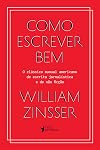
"Como escrever bem" foi pensado e escrito principalmente para quem escreve ou pretende escrever não ficção. Mas a obra do jornalista e professor norte-americano William Zinsser é uma coleção de textos preciosos para quem precisa se comunicar por escrito com clareza. Ou seja, praticamente todos, sejam profissionais de comunicação ou não.
O livro tem tradução de Bernardo Ajzenberg, com ótima adequação de palavras e expressões que só fariam sentido no original em inglês. Alguns show more capítulos da obra, porém, foram suprimidos dessa edição. Perguntei sobre essa ausência à editora Três Estrelas, que rapidamente respondeu que a exclusão foi feita porque os capítulos "eram muito referidos à língua inglesa, sem possível adaptação às questões que enfrenta um um redator em português". É pena, gostaria de conhecê-los.
Zissner, morto em 2015 aos 92 anos, deixou em "Como escrever bem" e em toda a sua obra um elogio aos bons textos. Mais do que isso, um convite a todos que queiram compartilhar experiências ou memórias, mesmo sem a pretensão de publicar um livro.
Uma só ressalva: é uma pena que Zissner cite apenas textos e autores norte-americanos. Naturalmente, os melhores, mas sem nenhuma referência de grandes textos fora dos EUA. show less
O livro tem tradução de Bernardo Ajzenberg, com ótima adequação de palavras e expressões que só fariam sentido no original em inglês. Alguns show more capítulos da obra, porém, foram suprimidos dessa edição. Perguntei sobre essa ausência à editora Três Estrelas, que rapidamente respondeu que a exclusão foi feita porque os capítulos "eram muito referidos à língua inglesa, sem possível adaptação às questões que enfrenta um um redator em português". É pena, gostaria de conhecê-los.
Zissner, morto em 2015 aos 92 anos, deixou em "Como escrever bem" e em toda a sua obra um elogio aos bons textos. Mais do que isso, um convite a todos que queiram compartilhar experiências ou memórias, mesmo sem a pretensão de publicar um livro.
Uma só ressalva: é uma pena que Zissner cite apenas textos e autores norte-americanos. Naturalmente, os melhores, mas sem nenhuma referência de grandes textos fora dos EUA. show less

Does it bother you, too, that so many books offering writing advice are poorly written? This is an exception; the prose sparkles. All the more surprising, since these essays originated either as lectures or as taped interviews. If you've read other published collections of lectures, you can guess how much work went into making these so readable, yet that never shows. I asked myself if anyone should read this who isn't looking for tips for writing their own memoirs, and answered yes. This show more book would be enjoyable for anyone who loves good writing. And if you don't, why are you following Goodreads? show less
Lists
You May Also Like


Associated Authors
Statistics
- Works
- 34
- Also by
- 4
- Members
- 10,837
- Popularity
- #2,190
- Rating
- 4.1
- Reviews
- 115
- ISBNs
- 100
- Languages
- 5
- Favorited
- 9