
Brian Lumley (1937–2024)
Author of Necroscope
About the Author
Brian Lumley was born on England's North Coast on December 2, 1937. He joined the British Army in his teens and remained a soldier for twenty-two years. He first started writing while stationed in Berlin. Lumley's first book was published in the early 1970's. He retired from the Army in 1981 and show more took up writing full time. He is the author of over 40 books, and is most well known for his "Necroscope Series" which consists of 13 titles. He won the 1989 British Fantasy Award for his Novelette "Fruiting Bodies" as well as the 1990 Fear Magazine Award for "Necroscope III: The Source." In 1998, Lumley won the Grand Master of Horror Award at the World Horror Convention in Phoenix, Arizona. On 28 March 2010 Lumley received the Lifetime Achievement Award of the Horror Writers Association. He also received a World Fantasy Award for Lifetime Achievement in 2010. (Bowker Author Biography) show less
Image credit: Courtesy of Silky Lumley
Series
Works by Brian Lumley
Titus Crow, Volume 1: The Burrowers Beneath; The Transition of Titus Crow (1997) 301 copies, 3 reviews
Brian Lumley's Mythos Omnibus Vol. 1: Burrowers Beneath, Transition of Titus Crow, Clock of Dreams (1997) 91 copies
Brian Lumley's Mythos Omnibus Vol. 2: Spawn of the Winds, In the Moons of Borea, Elysia (1997) 68 copies
Synchronicity, or Something 6 copies
Haggopian [short story] 5 copies
The Second Wish [Short story] 4 copies
The Nonesuch 4 copies
Necros 4 copies
The Sister City 4 copies
Aunt Hester 3 copies
No Way Home 3 copies
Cryptically Yours 3 copies
The Picnickers [short fiction] 3 copies
The Man Who Killed Kew Gardens 3 copies
The Taint [short story] 2 copies
The Sorcerer's Dream [Teh Atht] 2 copies
De Marigny's Clock 2 copies
Mylakhrion the Immortal [Teh Atht] 2 copies
The Place of Waiting [short story] 2 copies
The Man Who Felt Pain 2 copies
The Thin People 2 copies
The Thing From The Blasted Heath 2 copies
What Dark God? 2 copies
The Strange Years 2 copies
Recognition 2 copies
Born of the Winds 2 copies
Back Row 2 copies
Psychomech 02 - Psychosphere 1 copy
E-Branch 01 - Invaders 1 copy
Necroscope 05 - Deadspawn 1 copy
Necroscope 04 - Deadspeak 1 copy
E-Branch 02 - Defilers 1 copy
Psychomech 01 - Psychomech 1 copy
Necroscope 02 - Wamphyri! 1 copy
Bernhard the Conqueror 1 copy
Necroscope Das Erwachen 1 copy
Psychomech 03 - Psychamok 1 copy
E-Branch 03 - Avengers 1 copy
Vampire World 03 - Bloodwars 1 copy
Necroscope 12 - The Touch 1 copy
Necroscope 03 - The Source 1 copy
The Pit-Yakker 1 copy
La saga di Titus Crow 1 copy
Uzzi 1 copy
The Man Who Saw No Spiders 1 copy
The Thief Immortal 1 copy
Feasibility Study 1 copy
Lords of the Morass 1 copy
Snarker's Son 1 copy
The Luststone 1 copy
The Wine of the Wizard 1 copy
Kiss Of The Lamia 1 copy
Faraono priešas 1 copy
The Unbeliever 1 copy
Mowa Umarłych 1 copy
Dreamland 3: Mondsüchtig 1 copy
Sie lauern in der Tiefe 1 copy
Deja Viewer 1 copy
Big C 1 copy
Dylath-Leen 1 copy
Two-stone Tom's Big T.o.e. 1 copy
The Black Recalled 1 copy
The Hymn 1 copy
The Mirror Of Nitocris 1 copy
The Sorcerer's Book 1 copy
The Kiss Of Bugg-shash 1 copy
Name And Number 1 copy
Cement Surroundings 1 copy
Lord of the Worms 1 copy
Rising With Surtsey 1 copy
To Kill a Wizard! 1 copy
Gaddy's Gloves 1 copy
Necroscope 01 - Necroscope 1 copy
Associated Works
The Vampire Archives: The Most Complete Volume of Vampire Tales Ever Published (2007) — Contributor — 217 copies, 5 reviews
Dark Detectives: An Anthology of Supernatural Mysteries (1999) — Contributor — 104 copies, 2 reviews
The Mammoth Book of Nightmare Stories: Twisted Tales Not to Be Read at Night! (2019) — Contributor — 54 copies
In Delirium — Contributor — 11 copies
Dark Discoveries Issue Number 15, Fall 2009 — Contributor — 1 copy
Tagged
Common Knowledge
- Birthdate
- 1937-12-02
- Date of death
- 2024-01-02
- Gender
- male
- Occupations
- soldier (military policeman)
author - Organizations
- British Army
Horror Writers Association (president) - Awards and honors
- World Horror Convention Grand Master Award (1998)
- Relationships
- Lumley, Dorothy (ex-wife)
- Nationality
- UK
- Birthplace
- Horden, County Durham, England, UK
- Places of residence
- County Durham, England, UK
Germany - Map Location
- England, UK
Members
Discussions
The return of an old "friend" in Good Show Sir! — bad science fiction and fantasy covers (January 2025)
Brian Lumley's Necroscope books? in Thing(amabrarian)s That Go Bump in the Night (July 2011)
Reviews

The other edition in my library has a more complete review that I wrote when I read it again around 2008. I'd first encountered these when I was about 20 and was not aware of how Lumley relegates women in this and, I think, the other books - the basic triumvirate of mother, sex object and witch. That's all the women get to do is be had for sex, motherhood or advice pertaining to the supernatural, and the last one has to be dead to get that role. Sad really and a product of its time when it show more was expected not only from the writer and his male readers, but of women who only really knew female characters through the lenses of men who love to keep them in their little boxes. show less
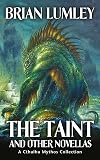
An interesting collection of ... tertiary?* Cthulhu Mythos tales. They're collected from throughout his career and each has a brief preface by Lumley giving some background and his opinions of the piece. Spoilers follow, major spoilers are marked.
*Primary was of course Lovecraft and correspondents, Derleth was a late enough protegée to be secondary, so Lumley as Derleth's protegée is tertiary.
I've heard mixed things of Lumley, including that his writing is unsatisfactory pastiche. I found show more all of them worth reading, but that's not an unfair comment. Most of the stories are heavily based on Lovecraft's works (the exceptions being from Derleth's), with a heavy focus on Cthulhu and watery entities, and long lists of the same old Mythos tomes. The writing is also, to varying extents, influenced the same way, as Lumley points out. I don't know whether it's down to being a Best Of collection but a certain sense of sameness pervaded the collection. There are two tales written as witness statements by protagonists thought to be insane and possibly murderers. There seemed to be an emphasis on water and Cthulhu, and a small collection of tomes focused on these topics. There are also two stories where it turns out someone is a Mythos cultist. In a book of seven stories, that feels like a lot.
Despite this I enjoyed it reasonably well. My personal favourites were the final two, Lord of the Worms and the House of the Temple. The House I enjoyed not least because it felt the most original in terms of what was actually going on, though the ending owes something to Lovecraft's "The Thing on the Doorstep" and the protagonists seem a little feckless. Lord of the Worms did something rather different, had a pleasingly practical (if stubborn) protagonist, and a satisfying aura of menace.
"The Taint" is the title story and it probably earned it, though I thought the writing was a bit creaky. The opening was quite heavy, and the middle-class domestic troubles felt just a tad too prominent to me. However, the developments in the rest of the novel were interestingly different, and I didn't have much idea where exactly it was going, though the overall lines were clear enough.I'm still not sure about stories where the protagonist is a villain, let alone a Mythos cultist. This was miles better than the revolting "Doom that Came to Innsmouth" which gave us a serial killer rapist protagonist, but I still find something intrusive and unwanted about having the character through whose head we see the world casually condemning a mildly inconvenient friend to a slow and horrible death. There was also some slightly confusing stuff about genetic modification, which left me confused about the book's intended period for a while - was this supposed to be alt-hist or maybe actual sci-fi? I don't think so, but then there seem to be some actual successes in gene therapy and genetic engineering... that kind of thing would be blazed over the media as a staggering triumph, but both it and the Innsmouth Lookers have obviously been kept mostly obscure.
The remaining stories were fine, all with their own strengths and weaknesses. Indecisive narrators who hesitate to do anything, even in the face of huge volumes of Mythos tomes and evidence they're telling the truth, are a bit of a theme in Mythos fiction so I can't really fault it for that. I did feel the writing tends to get too thick, especially where Mythos is concerned, and that it worked best when it broke free of the Lovecraft/Derleth influence to something a little freer and more natural. On the whole I'd call this a fairly solid and readable collection, with interesting ideas and scenes, but not one I see myself coming back to. I may be interested to see what becomes of Titus Crow, who I know has a bit of a series. show less
*Primary was of course Lovecraft and correspondents, Derleth was a late enough protegée to be secondary, so Lumley as Derleth's protegée is tertiary.
I've heard mixed things of Lumley, including that his writing is unsatisfactory pastiche. I found show more all of them worth reading, but that's not an unfair comment. Most of the stories are heavily based on Lovecraft's works (the exceptions being from Derleth's), with a heavy focus on Cthulhu and watery entities, and long lists of the same old Mythos tomes. The writing is also, to varying extents, influenced the same way, as Lumley points out. I don't know whether it's down to being a Best Of collection but a certain sense of sameness pervaded the collection. There are two tales written as witness statements by protagonists thought to be insane and possibly murderers. There seemed to be an emphasis on water and Cthulhu, and a small collection of tomes focused on these topics. There are also two stories where it turns out someone is a Mythos cultist. In a book of seven stories, that feels like a lot.
Despite this I enjoyed it reasonably well. My personal favourites were the final two, Lord of the Worms and the House of the Temple. The House I enjoyed not least because it felt the most original in terms of what was actually going on, though the ending owes something to Lovecraft's "The Thing on the Doorstep" and the protagonists seem a little feckless. Lord of the Worms did something rather different, had a pleasingly practical (if stubborn) protagonist, and a satisfying aura of menace.
"The Taint" is the title story and it probably earned it, though I thought the writing was a bit creaky. The opening was quite heavy, and the middle-class domestic troubles felt just a tad too prominent to me. However, the developments in the rest of the novel were interestingly different, and I didn't have much idea where exactly it was going, though the overall lines were clear enough.
The remaining stories were fine, all with their own strengths and weaknesses. Indecisive narrators who hesitate to do anything, even in the face of huge volumes of Mythos tomes and evidence they're telling the truth, are a bit of a theme in Mythos fiction so I can't really fault it for that. I did feel the writing tends to get too thick, especially where Mythos is concerned, and that it worked best when it broke free of the Lovecraft/Derleth influence to something a little freer and more natural. On the whole I'd call this a fairly solid and readable collection, with interesting ideas and scenes, but not one I see myself coming back to. I may be interested to see what becomes of Titus Crow, who I know has a bit of a series. show less

The third of Lumley's dreamlands novels has something of the flavor of superhero team-up to it. In particular, it seems that all of the villains of the dreamlands have formed a Legion of Doom in order to be avenged on its heroes. These books are not big on "character development" anyway (as neither are actual dreams), but this one does even less than its predecessors. As superhero comics eventually became notorious for doing, this novel "kills" its protagonists in a non-final sort of way. I show more was relieved that a threatened cross-over with Lumley's Titus Crow stories did not manifest!
The division of the book into three 10-chapter parts was pretty artificial, and the plot does not reach any sort of plateau in between them. Moreover, the "epilogue" is really the thirty-first chapter, without which it would have been a very different book.
Oh, and David Hero gets naked again. show less
The division of the book into three 10-chapter parts was pretty artificial, and the plot does not reach any sort of plateau in between them. Moreover, the "epilogue" is really the thirty-first chapter, without which it would have been a very different book.
Oh, and David Hero gets naked again. show less
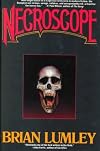
I don't know if I've ever read anything in quite this genre before. It's basically urban fantasy, except set during the Cold War (which makes some sense, given this book was released in 1986) and with an extra helping of espionage (ESPionage) thrown in. It's an interesting change and the two styles complement one another.
I don't know if I've read many books where the first two chapters go quite so strongly back and forth between this is cool and that's gross. It evened out a bit over the show more course of the book, but there was still a good amount of each.
The basic world building takes our own world and adds a bunch of ESPers on top; with ESPers being a general term for all sorts of supernatural power. We see people that can read minds, ones that can see far away events, and those that can speak with the dead (in two different flavors). It's an interesting sort of world and somehow manages not actually to feel too kitchen-sinky, which is a general problem in urban fantasy. Also, there are vampires. I have a feeling we'll be learning a bit more about them later, but so far I'm cautiously intrigued by this particular interpretation. They're weird and alien, which is neat.
One oddity with the book comes with the main character's abilities--that of a Necroscope. The basic idea is that he can speak with the dead and learn from / gain their abilities. It's a cool power, although in the last ten percent of the story it gets insanely powerful. I'm not sure how there can be a sequel, let alone a dozen of them. I'm curious to find out though.
Structurally, there's a framing story taking place in the present, telling the story that actually takes place throughout the past many years. In addition, we follow a few different viewpoints (following at least two main characters). It's a bit confusing at first, but started to gel for me about a quarter of the way through the story. There is at least one interesting twist that the frame allows, so I appreciate that.
Occasionally, the phrasing and especially the punctuation that interrupted my reading. I don't know if I've read a novel with quite so many ellipses and exclamation points. It's not a deal breaker, but it's weird.
Overall, worth the read and I'll check out the sequels. At the very least, I want to know how in the world their going to deal with such radical events for both main characters during the ending... show less
I don't know if I've read many books where the first two chapters go quite so strongly back and forth between this is cool and that's gross. It evened out a bit over the show more course of the book, but there was still a good amount of each.
The basic world building takes our own world and adds a bunch of ESPers on top; with ESPers being a general term for all sorts of supernatural power. We see people that can read minds, ones that can see far away events, and those that can speak with the dead (in two different flavors). It's an interesting sort of world and somehow manages not actually to feel too kitchen-sinky, which is a general problem in urban fantasy. Also, there are vampires. I have a feeling we'll be learning a bit more about them later, but so far I'm cautiously intrigued by this particular interpretation. They're weird and alien, which is neat.
One oddity with the book comes with the main character's abilities--that of a Necroscope. The basic idea is that he can speak with the dead and learn from / gain their abilities. It's a cool power, although in the last ten percent of the story it gets insanely powerful. I'm not sure how there can be a sequel, let alone a dozen of them. I'm curious to find out though.
Structurally, there's a framing story taking place in the present, telling the story that actually takes place throughout the past many years. In addition, we follow a few different viewpoints (following at least two main characters). It's a bit confusing at first, but started to gel for me about a quarter of the way through the story. There is at least one interesting twist that the frame allows, so I appreciate that.
Occasionally, the phrasing and especially the punctuation that interrupted my reading. I don't know if I've read a novel with quite so many ellipses and exclamation points. It's not a deal breaker, but it's weird.
Overall, worth the read and I'll check out the sequels. At the very least, I want to know how in the world their going to deal with such radical events for both main characters during the ending... show less
Lists
At the Library (1)
Which house? (1)
Awards


You May Also Like


Associated Authors
Statistics
- Works
- 257
- Also by
- 90
- Members
- 15,879
- Popularity
- #1,429
- Rating
- 3.8
- Reviews
- 219
- ISBNs
- 480
- Languages
- 9
- Favorited
- 29