
Mark Peterson (6)
Author of The City-State of Boston: The Rise and Fall of an Atlantic Power, 1630–1865
For other authors named Mark Peterson, see the disambiguation page.
Mark Peterson (6) has been aliased into Mark A. Peterson.
Works by Mark Peterson
Works have been aliased into Mark A. Peterson.
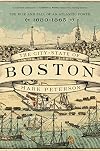
The City-State of Boston: The Rise and Fall of an Atlantic Power, 1630–1865 (2019) 127 copies, 2 reviews
Tagged
Common Knowledge
There is no Common Knowledge data for this author yet. You can help.
Members
Reviews

The premise is that in the wake of the Civil War, the 'new' historians of that era, Parkman et al, smoothed over the reality of the earlier incarnation of Boston as an independent entity, essentially a a city-state, ruled by no one but themselves. The 'end' was begun when the New England states made their Faustian bargain with the Southern states in order to have the might and means to oust British rule. He argues that Boston and New England were not able at that time, to withstand the power show more of the southern states and the Constitution as first written by allowing slavery and the bizarre and fiendish three-fifths rule which gave the south a population advantage that gave them more power in Congress than the non-slave states.
Peterson examines this earlier independent incarnation of the City that as had roots reaching into the very first moment that the ships bearing the Puritans who would found Boston in 1630-- the Massachusetts Bay Company (not the Plymouth/Mayflower group) dropped anchor. Composed of Puritans, yes, but largely led by hard-headed practical men of the merchant and yeoman class, they had come far better prepared to survive the first hard years and chose the (almost) island they named Boston as their base.
From the beginning these colonists looked across the wide expanse of the Atlantic and inwardly calculated that they could, pretty much, talk nice, then do as they pleased. They also, in order to maintain that independence, would fend for themselves, not asking for help even when times were hard and even though they were oriented economically toward England and Europe (not having a population here to buy their products!).
Peterson builds on this idea, demonstrating the many ways, practical and intellectual, that Boston developed over nearly two hundred and fifty years, in some fundamental way never fully integrating into the United States until after the Civil War and the abolishment of slavery. The period leading up to the Civil War shows a Boston and surround, wracked by the tensions that the conflicting deeply embedded ideas of individual human value and liberty versus the great material wealth and power they had accrued through industrialization (itself dependent on the cotton growing in the south), the influx of Irish famine refugees and the moral agonies of obeying of the federally enacted Fugitive Slave Act.
This is a worthwhile read and a corrective for those interested in US history, especially of New England. ****1/2 show less
Peterson examines this earlier independent incarnation of the City that as had roots reaching into the very first moment that the ships bearing the Puritans who would found Boston in 1630-- the Massachusetts Bay Company (not the Plymouth/Mayflower group) dropped anchor. Composed of Puritans, yes, but largely led by hard-headed practical men of the merchant and yeoman class, they had come far better prepared to survive the first hard years and chose the (almost) island they named Boston as their base.
From the beginning these colonists looked across the wide expanse of the Atlantic and inwardly calculated that they could, pretty much, talk nice, then do as they pleased. They also, in order to maintain that independence, would fend for themselves, not asking for help even when times were hard and even though they were oriented economically toward England and Europe (not having a population here to buy their products!).
Peterson builds on this idea, demonstrating the many ways, practical and intellectual, that Boston developed over nearly two hundred and fifty years, in some fundamental way never fully integrating into the United States until after the Civil War and the abolishment of slavery. The period leading up to the Civil War shows a Boston and surround, wracked by the tensions that the conflicting deeply embedded ideas of individual human value and liberty versus the great material wealth and power they had accrued through industrialization (itself dependent on the cotton growing in the south), the influx of Irish famine refugees and the moral agonies of obeying of the federally enacted Fugitive Slave Act.
This is a worthwhile read and a corrective for those interested in US history, especially of New England. ****1/2 show less
I'm struggling with this review because the book is a very well written and deeply researched accomplishment, but it does assume that the reader has more than a basic level of knowledge of Boston and New England history, something that apparently I lack, although when I bought the book I didn't know that I was so ignorant. To its credit it is full of the twists and turns of history that put Boston front and center to the American Revolution, and the Civil War, and the history of the US in show more general. But it also includes some really deep dives into the details and some of the personalities, which at times was too much for this reader. I wish I could give it 3.5 for that reason but that is not an option. If you want a very thorough history of the place and times, this is it and I would still very much recommend it. That it's not always light reading would be the caveat I will leave you with. show less
Lists
Awards

Statistics
- Works
- 7
- Members
- 133
- Popularity
- #152,659
- Rating
- 4.6
- Reviews
- 2
- ISBNs
- 47
- Languages
- 1