
Ruby Lal
Author of Empress: The Astonishing Reign of Nur Jahan
About the Author
Ruby Lal is an acclaimed historian of India and a professor of South Asian History at Emory University. She is the author of Coming of Age in Nineteenth-Century India: The Girl-Child and the Art of Playfulness and Domesticity and Power in the Early Mughal World. She divides her time between Atlanta show more and Delhi. show less
Works by Ruby Lal
Tagged
Common Knowledge
Members
Reviews
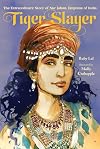
On the one hand, the highs in this book are very high indeed -- the sheer beauty of the layout and the illustrations; the subject matter -- Nur is a fascinating woman; the delight in a person whose rise is directly tied to her kindness, intelligence and abilities; the loveliness of getting to read in depth about Mughal culture. For an intensely historical biography, it's everything you could want.
On the other hand, it's on the dry end of the spectrum. You have to want to read history, you show more have to want to know all the political details, you have to have a pretty high vocabulary. An invaluable resource if you want to write a paper. And it's dispiriting to know that someone can be so extraordinary and be mostly erased because of gender. show less
On the other hand, it's on the dry end of the spectrum. You have to want to read history, you show more have to want to know all the political details, you have to have a pretty high vocabulary. An invaluable resource if you want to write a paper. And it's dispiriting to know that someone can be so extraordinary and be mostly erased because of gender. show less
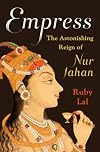
I first encountered Nur Jahan, a seventeenth-century Mughal empress, in historical novels, which either portrayed her as a romantic figure or as a female villain who usurped male power. This biography dispels some these myths and presents a more balanced and nuanced woman, albeit still an incredible woman. The author opens this book with a scene drawn from historical sources of Nur Jahan carrying a musket and killing a tiger while her emperor and husband watches at her side. It's a scene show more which marks Nur Jahan as a powerful woman and one who came close to fully embodying the role of a monarch. Furthermore, Nur Jahan's journey to becoming the powerful wife of a Mughal emperor is fascinating and tied to the story of her family, which remained influential even after her fall from power. The insights offered in this book peaked my curiosity, and I hope to discover more about Nur Jahan and the other woman of her era. show less
Thank you so much to Netgalley and W. W. Norton for the advance copy. As always, everything I share below is 100% my own.
'Tiger Slayer' by Ruby Lal is a nonfiction biography of the only woman to ever rule the Mughal Empire, Empress Nur Jahan. Defying societal and political expectations, after marrying her second husband, Mughal emperor Jahangir, she rose up in the ranks eventually taking the reins and practically running the empire behind the scenes. So much so that, as is always the case, show more she was resented by many in the emperor's court, including his son, the crowned prince Shah Jahan.
The book takes the readers through her story from birth as her Persian noble family relocated to India, with Nur being born on the journey, through her first marriage and eventually her second marriage. Her rise to the top is a fascinating story especially when one considers all the obstacles that she would face, not only as a woman, but the emperor's twentieth legal wife.
Unfortunately, while I learned a lot from the book and enjoyed it, I found the narrative style was too dry and clunky. Sentences at times felt a bit chopped or abrupt. And while I am usually a big fan of background information and tangents, as I find they help me see the bigger picture and understand the figures in question, in this case, I found myself often confused and a bit lost.
I can't help but wonder if the target audience, as this book is listed for middle-grade readers, might find the book overwhelming. While the book does introduce some of the less familiar terms and words, there were many that I felt weren't covered. I also wonder if perhaps some of the more nuanced cultural and religious details might be missed or lead to misunderstandings. For example, while Nur was a Muslim and we see her beliefs and influences throughout the text, there was at least one time when we know she (or her husband) prayed to Allah (the name of God among Muslims and Arab Christians), followed by conversation about the gods (who I assumed to be the Hindu Gods but I consider myself ignorant about the Mughal empire so please anyone feel free to correct me) but we didn't learn much more about this. I feel that to a young reader with no prior knowledge, they might find themselves potentially confusing the two religions. The interplay and coexistence of the beliefs is fascinating and worth the exploration and I wish this was explained more.
That being said, the illustrations are absolutely gorgeous. Every time I came across one, I had to pause and take in all the details. I mean, you can even see it in the cover! They really brought a lot of the key scenes to life and were absolutely vivid and beautiful.
I appreciate the passion going into the book, and I personally learned a lot from it as an adult, but I do think that younger readers would benefit best from it by co-reading this with an adult that can help them understand the bigger picture and introduce them to the intricate details and rich culture. show less
'Tiger Slayer' by Ruby Lal is a nonfiction biography of the only woman to ever rule the Mughal Empire, Empress Nur Jahan. Defying societal and political expectations, after marrying her second husband, Mughal emperor Jahangir, she rose up in the ranks eventually taking the reins and practically running the empire behind the scenes. So much so that, as is always the case, show more she was resented by many in the emperor's court, including his son, the crowned prince Shah Jahan.
The book takes the readers through her story from birth as her Persian noble family relocated to India, with Nur being born on the journey, through her first marriage and eventually her second marriage. Her rise to the top is a fascinating story especially when one considers all the obstacles that she would face, not only as a woman, but the emperor's twentieth legal wife.
Unfortunately, while I learned a lot from the book and enjoyed it, I found the narrative style was too dry and clunky. Sentences at times felt a bit chopped or abrupt. And while I am usually a big fan of background information and tangents, as I find they help me see the bigger picture and understand the figures in question, in this case, I found myself often confused and a bit lost.
I can't help but wonder if the target audience, as this book is listed for middle-grade readers, might find the book overwhelming. While the book does introduce some of the less familiar terms and words, there were many that I felt weren't covered. I also wonder if perhaps some of the more nuanced cultural and religious details might be missed or lead to misunderstandings. For example, while Nur was a Muslim and we see her beliefs and influences throughout the text, there was at least one time when we know she (or her husband) prayed to Allah (the name of God among Muslims and Arab Christians), followed by conversation about the gods (who I assumed to be the Hindu Gods but I consider myself ignorant about the Mughal empire so please anyone feel free to correct me) but we didn't learn much more about this. I feel that to a young reader with no prior knowledge, they might find themselves potentially confusing the two religions. The interplay and coexistence of the beliefs is fascinating and worth the exploration and I wish this was explained more.
That being said, the illustrations are absolutely gorgeous. Every time I came across one, I had to pause and take in all the details. I mean, you can even see it in the cover! They really brought a lot of the key scenes to life and were absolutely vivid and beautiful.
I appreciate the passion going into the book, and I personally learned a lot from it as an adult, but I do think that younger readers would benefit best from it by co-reading this with an adult that can help them understand the bigger picture and introduce them to the intricate details and rich culture. show less
Domesticity and Power in the Early Mughal World (Cambridge Studies in Islamic Civilization) by Ruby Lal
Ruby Lal writes against received histories of "the harem," which portray it as a timeless, universal, den of eroticism entirely separate from the public world of politics. Her work is part of a larger feminist historiographical critique of the "public/private" dichotomy. In her book she examines the changes in the domestic world of the Mughals from the first peripatetic Emperor Babur to the establishment of a much more stable empire with Emperor Akbar. She shows that even when the harem show more comes to be institutionalized in Akbar's reign, which brings with it a much greater degree of invisibility of women, women continue to be active in the so-called public sphere. In particular she discusses the power wielded by Hamideh Banu Begum, Akbar's mother,and the Royal Women's Hajj organized by Gulbedan Banu Begum, his aunt. She argues that these women should not be marginalized as "exceptional" but rather that the represent the powerful roles occupied by elder royal women. show less
Awards


You May Also Like
Associated Authors
Statistics
- Works
- 6
- Members
- 237
- Popularity
- #95,613
- Rating
- 3.7
- Reviews
- 7
- ISBNs
- 26