
Celia Laskey
Author of Under the Rainbow
About the Author
Image credit: via author's website
Works by Celia Laskey
Tagged
Common Knowledge
- Gender
- female
- Education
- University of New Mexico [MFA]
- Places of residence
- Los Angeles, USA
- Associated Place (for map)
- Los Angeles, USA
Members
Reviews
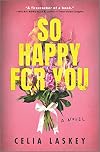
This was all over the place. Fittingly, different people advertised it as different things. Some people insisted it was a dark comedy. Others said it was a thriller. Yet others said it was a mainstream comedy. It was none of the above. This book is dedicated to everyone who's been a bridesmaid, and then the novel has the story and themes it did. I was disgusted. It's not a revenge fantasy towards bridezillas, which may have been what the author was going for and what I admittedly wanted. show more This is a mean-spirited, hateful collection of pages that mocks thrillers and fatal attraction stories. I like thrillers and fatal attraction stories! That is not in this book. The book is mostly just mean-spirited social commentary. The thriller stuff amounts to Big Lipped Alligator Moments: they come right the fuck out of nowhere, have little to no bearing on the rest of the book, and when they're done, no one ever speaks of them again. Credit to Lindsay Ellis for the term and description.
There's no foreshadowing. No beat-for-beat stuff that is essential to a good thriller. Even the bride's unhinged behavior follows no pattern. The bridal rituals mean nothing and are just there for shock value. The kidnapping thing was indeed a real practice in the 1600s in Europe, and Russia in the 1700s. The best man was there to help with the kidnapping, and the reason wedding trains were so long was so the men could step on them and prevent the bride from leaving easily. Here, it's played for laughs. I was horrified.
It's not funny, makes no sense, doesn't work as a thriller or fatal attraction, and the narrator is a stuffy, judgmental woman who sees herself as above it all because until really recently, gay people couldn't get married in the USA. And -I- am a stuffy, judgmental, Queer person. She does acknowledge that marrying for romance is super recent, and here it's reverted back to its original use as a business deal or political arrangement. But somehow it's not really, because both adults negotiate rather than their fathers? Um...author, this doesn't work. There's a variety of gross-out scenes and activities, which makes me think the author knew she couldn't write scary stuff well. Sometimes people will use gross-out maneuvers and shock humor instead of the horror they're trying to write.
Abortions and women's rights are demolished in this narrative, and I read this the day Roe got struck down. I was so sad when the news hit. IT DIDN'T WORK WELL, AUTHOR. YOU SUCK. I was shaken every time references to it appeared on the page, because the author simply sneezed it at her audience as a shorthand for "things are so awful", but it DOESN'T FIT HERE. It all could really have been taken out and the book would have actually improved. Just do more world-building about women and their weddings, and bizarre social expectations for something that's a huge party where you dress in fancy costumes, exchange expensive trinkets, and promise lifelong commitment. While a few days ago, were celebrating all things sexual to express your lifelong commitment. Bachelor/ette parties are so weird. Weddings and their rituals are not a marriage, and do not acknowledge it as so. They don't acknowledge it's a partnership. Write a book about -that-, and have it be better. I might try to find a better author who focuses on it differently than here.
Don't waste your time reading this. show less
There's no foreshadowing. No beat-for-beat stuff that is essential to a good thriller. Even the bride's unhinged behavior follows no pattern. The bridal rituals mean nothing and are just there for shock value. The kidnapping thing was indeed a real practice in the 1600s in Europe, and Russia in the 1700s. The best man was there to help with the kidnapping, and the reason wedding trains were so long was so the men could step on them and prevent the bride from leaving easily. Here, it's played for laughs. I was horrified.
It's not funny, makes no sense, doesn't work as a thriller or fatal attraction, and the narrator is a stuffy, judgmental woman who sees herself as above it all because until really recently, gay people couldn't get married in the USA. And -I- am a stuffy, judgmental, Queer person. She does acknowledge that marrying for romance is super recent, and here it's reverted back to its original use as a business deal or political arrangement. But somehow it's not really, because both adults negotiate rather than their fathers? Um...author, this doesn't work. There's a variety of gross-out scenes and activities, which makes me think the author knew she couldn't write scary stuff well. Sometimes people will use gross-out maneuvers and shock humor instead of the horror they're trying to write.
Abortions and women's rights are demolished in this narrative, and I read this the day Roe got struck down. I was so sad when the news hit. IT DIDN'T WORK WELL, AUTHOR. YOU SUCK. I was shaken every time references to it appeared on the page, because the author simply sneezed it at her audience as a shorthand for "things are so awful", but it DOESN'T FIT HERE. It all could really have been taken out and the book would have actually improved. Just do more world-building about women and their weddings, and bizarre social expectations for something that's a huge party where you dress in fancy costumes, exchange expensive trinkets, and promise lifelong commitment. While a few days ago, were celebrating all things sexual to express your lifelong commitment. Bachelor/ette parties are so weird. Weddings and their rituals are not a marriage, and do not acknowledge it as so. They don't acknowledge it's a partnership. Write a book about -that-, and have it be better. I might try to find a better author who focuses on it differently than here.
Don't waste your time reading this. show less
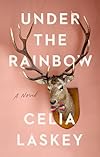
"A novel." Says so right there on the cover. I'm not convinced. This is a collection of linked short stories, and even that is being generous; they're more like vignettes.
The background for these character sketches: An LGBT rights organization called Acceptance Across America has determined, through some combination of polling and analysis of social media posts, that Big Burr, Kansas, is "the most homophobic town in America." On the theory that people who actually know gay people are less show more likely to be homophobic, AAA sends a 15-person task force to live in Big Burr for two years.
This is pretty much nonsense on every level, of course. What changes minds about gay folks is learning that someone you already care about is gay; random strangers showing up with a cheerful "Hello, bigots! I'm a gay person! Get to know me!" is not going to have the desired effect.
Laskey gives us a dozen chapters set during the two-year experiment, each focused on a different person, some Big Burr residents and some task force members. A POV character from one chapter might show up briefly in the background of some other chapter, but no one gets a full-length plot. Everyone gets one momentary glimpse into their lives, then it's on to the next. Laskey mostly avoids the worst of the bigotry; her characters are usually either task force members or Big Burr residents who find that the arrival of AAA is causing them to examine their own unresolved sexual identities.
When she does attempt a chapter from one of the most hostile residents, it's the least successful in the book. Laskey is unable either to demonstrate or to generate any empathy for that point of view. I suppose that's not surprising; I would find it hard to live in that mindset at all, much less attempt to make the character a sympathetic one. But Laskey doesn't even come close. Christine is a cartoon villain, only a mustache away from Snidely Whiplash.
So we don't get any characters we can follow for the length of the book, and the ostensible plot never takes flight, which it really can't when it's built around so foolishly conceived a scheme. Hearts and minds are overwhelmingly not changed; the AAA leaves Big Burr having made only a few superficial changes (the high school now has one all-gender restroom! Hurrah!).
Laskey's intentions are good, and one or two of her vignettes carry some emotional force. A Big Burr man who can no longer ignore his own attraction to men is the most moving character in the book; he's also the only character to whom Laskey returns for a second chapter, in her "ten years later" epilogue. But like the social experiment at the center of the book, Under the Rainbow fizzles out without much happening. show less
The background for these character sketches: An LGBT rights organization called Acceptance Across America has determined, through some combination of polling and analysis of social media posts, that Big Burr, Kansas, is "the most homophobic town in America." On the theory that people who actually know gay people are less show more likely to be homophobic, AAA sends a 15-person task force to live in Big Burr for two years.
This is pretty much nonsense on every level, of course. What changes minds about gay folks is learning that someone you already care about is gay; random strangers showing up with a cheerful "Hello, bigots! I'm a gay person! Get to know me!" is not going to have the desired effect.
Laskey gives us a dozen chapters set during the two-year experiment, each focused on a different person, some Big Burr residents and some task force members. A POV character from one chapter might show up briefly in the background of some other chapter, but no one gets a full-length plot. Everyone gets one momentary glimpse into their lives, then it's on to the next. Laskey mostly avoids the worst of the bigotry; her characters are usually either task force members or Big Burr residents who find that the arrival of AAA is causing them to examine their own unresolved sexual identities.
When she does attempt a chapter from one of the most hostile residents, it's the least successful in the book. Laskey is unable either to demonstrate or to generate any empathy for that point of view. I suppose that's not surprising; I would find it hard to live in that mindset at all, much less attempt to make the character a sympathetic one. But Laskey doesn't even come close. Christine is a cartoon villain, only a mustache away from Snidely Whiplash.
So we don't get any characters we can follow for the length of the book, and the ostensible plot never takes flight, which it really can't when it's built around so foolishly conceived a scheme. Hearts and minds are overwhelmingly not changed; the AAA leaves Big Burr having made only a few superficial changes (the high school now has one all-gender restroom! Hurrah!).
Laskey's intentions are good, and one or two of her vignettes carry some emotional force. A Big Burr man who can no longer ignore his own attraction to men is the most moving character in the book; he's also the only character to whom Laskey returns for a second chapter, in her "ten years later" epilogue. But like the social experiment at the center of the book, Under the Rainbow fizzles out without much happening. show less
When Big Burr, Kansas, is named the "most homophobic town in America," a taskforce from a well-meaning nonprofit locates there for two years to try to change hearts and minds. This is a series of loosely connected stories about various members of the taskforce and residents of Big Burr during those two years. Each of the stories is told from a different person's perspective in first-person present tense and could stand on its own. Each is about a person who's keeping something from show more themselves or others, sometimes having to do with being gay, sometimes about other things. A surprising number of the stories are about motherhood. I warmed up to this slowly, and I found some of the stories to be a bit ham-handed, but in the end, I really liked it. It helps that Laskey treats all her characters, even the homophobes, as real people. show less
I loved this book so much! I saw it at the library and was hooked by the premise, and the more I read the more I fell in love with it. It's one I've already added to my personal library.
Having grown up in a small town like Big Burr, I am quite familiar with the resistant-to-change attitudes that some people possess. In many of the chapters there are moments of violence and homophobia, and I was equal parts angered and saddened. There were several characters who I grew attached to while show more reading and I was sad when their chapter ended, because I wanted to read more. Although it was a nice surprise to see that in some chapters there would be a mention/update of a certain character. Without spoiling anything, there is an epilogue and I liked how it was uplifting and not saccharine.
The author has a true gift for writing complex and yet relatable characters, as well as having sharp dialogue. I am looking forward to reading her next book. show less
Having grown up in a small town like Big Burr, I am quite familiar with the resistant-to-change attitudes that some people possess. In many of the chapters there are moments of violence and homophobia, and I was equal parts angered and saddened. There were several characters who I grew attached to while show more reading and I was sad when their chapter ended, because I wanted to read more. Although it was a nice surprise to see that in some chapters there would be a mention/update of a certain character. Without spoiling anything, there is an epilogue and I liked how it was uplifting and not saccharine.
The author has a true gift for writing complex and yet relatable characters, as well as having sharp dialogue. I am looking forward to reading her next book. show less
Lists
Awards


You May Also Like


Associated Authors
Statistics
- Works
- 3
- Members
- 299
- Popularity
- #78,482
- Rating
- 3.6
- Reviews
- 13
- ISBNs
- 22