
Nina LaCour
Author of We Are Okay
About the Author
Image credit: Sara Crowe Literary Agent
Series
Works by Nina LaCour
The Apartment House on Poppy Hill: Book 1 (Apartment House on Poppy Hill, 1) (2023) 60 copies, 5 reviews
The End of Love [novelette] — Author — 1 copy
¿Estamos okey? Un verano para recordar / We Are Okay. A Summer to Remember (BEST YOUNG ADULT) (Spanish Edition) (2023) 1 copy
Ocean Beach 1 copy
SNEAK PEEK: We Are Okay 1 copy
Associated Works
Our Stories, Our Voices: 21 YA Authors Get Real About Injustice, Empowerment, and Growing Up Female in America (2018) — Contributor — 168 copies, 1 review
Dear Heartbreak: YA Authors and Teens on the Dark Side of Love (2018) — Contributor — 69 copies, 1 review
Tagged
Common Knowledge
- Birthdate
- 20th Century
- Gender
- female
- Agent
- Sara Crowe
- Nationality
- USA
- Birthplace
- San Francisco, California, USA
- Associated Place (for map)
- California, USA
Members
Reviews

Sara Foster and Emily Dubois are two people that go through hell and back just for their broken pieces to come back fitting into each other's just right. We follow Sara and Emily from childhood in their separate journeys to adulthood. We watch the circumstances that fall into place, forcing Sara to run away at just sixteen and Emily to seclude herself while reaching out to others, causing the chain of events that land them right in front of each other.
I say watch because that is precisely show more what it feels like. We are watching these two girls grow up and go through horrible traumas caused by other traumas, and we're right there with them. When Sara makes a decision she thinks is for the best but hurts everyone, including herself, we sit with ourselves and think, why would our little Sara do that? The little Sara we watched marvel in the woods at the colors? The dual perspective gives us this experience; to feel the characters' emotions while also being on the side while we grow to care about them. I found myself thinking about how these girls must feel throughout the day as if they were real people still experiencing life when I closed the book. Of course, the nature of this book created anxiety, but it also developed a fondness I don't get to feel daily. It felt nice to care so deeply about someone the way I did with these characters.
This could have been the perfect book. The only reason it wasn't was because of the romance. It could have been fine, but how it was done felt so different from the rest of the story. We are following Sara and Emily as they go through everything; we were not told through conversations in a couple pages what their life has looked like. But the romance happened so fast, in comparison. The second they looked at each other, they were infatuated and in love. It didn't make sense with the people they were and their other decisions. This could have been not as bad, but the ending revolved around this flimsy romance. After caring about them for the entire book, not having a chance to fall in love with their love, the ending should've resonated with what was given to readers.
I'm going to use this to start my other point on why I loved this book. As a reader, you feel so much disappointment reading this. I'm aware those two sentences make no sense so allow me to explain. The story of trauma after trauma and then having to live an everyday life afterward was amazingly realistic. The defeat the characters feel is what you feel. If the characters are betrayed, you go through the day with a pit in your stomach. The baffled emotion after seeing how Sara decides to get out of the circumstances is precisely how she feels about making that choice. It's another reason this book feels so intimate to read. You are getting a real story where the twists and turns are not for you to feel better but for what would actually happen.
This is really important to understand going into this book. I saw a lot of reviews saying they didn't like this book because of Sara's or Emily's decisions, but those decisions made sense with what they went through. So, caution going into this: this book is not to make you feel good; it is to make you feel.
I went into this book with zero expectations. I only read it because I said I would and bought it. I was pleasantly surprised with the results when I finished, but not precisely pleasant, considering I did not want it to end and found myself upset that it did. I wouldn't recommend this to everyone because of the subject matter. But if you read the trigger warnings and are okay after, read this book. It was beautiful yet ugly: both in the most exposed way. show less
I say watch because that is precisely show more what it feels like. We are watching these two girls grow up and go through horrible traumas caused by other traumas, and we're right there with them. When Sara makes a decision she thinks is for the best but hurts everyone, including herself, we sit with ourselves and think, why would our little Sara do that? The little Sara we watched marvel in the woods at the colors? The dual perspective gives us this experience; to feel the characters' emotions while also being on the side while we grow to care about them. I found myself thinking about how these girls must feel throughout the day as if they were real people still experiencing life when I closed the book. Of course, the nature of this book created anxiety, but it also developed a fondness I don't get to feel daily. It felt nice to care so deeply about someone the way I did with these characters.
This could have been the perfect book. The only reason it wasn't was because of the romance. It could have been fine, but how it was done felt so different from the rest of the story. We are following Sara and Emily as they go through everything; we were not told through conversations in a couple pages what their life has looked like. But the romance happened so fast, in comparison. The second they looked at each other, they were infatuated and in love. It didn't make sense with the people they were and their other decisions. This could have been not as bad, but the ending revolved around this flimsy romance. After caring about them for the entire book, not having a chance to fall in love with their love, the ending should've resonated with what was given to readers.
I'm going to use this to start my other point on why I loved this book. As a reader, you feel so much disappointment reading this. I'm aware those two sentences make no sense so allow me to explain. The story of trauma after trauma and then having to live an everyday life afterward was amazingly realistic. The defeat the characters feel is what you feel. If the characters are betrayed, you go through the day with a pit in your stomach. The baffled emotion after seeing how Sara decides to get out of the circumstances is precisely how she feels about making that choice. It's another reason this book feels so intimate to read. You are getting a real story where the twists and turns are not for you to feel better but for what would actually happen.
This is really important to understand going into this book. I saw a lot of reviews saying they didn't like this book because of Sara's or Emily's decisions, but those decisions made sense with what they went through. So, caution going into this: this book is not to make you feel good; it is to make you feel.
I went into this book with zero expectations. I only read it because I said I would and bought it. I was pleasantly surprised with the results when I finished, but not precisely pleasant, considering I did not want it to end and found myself upset that it did. I wouldn't recommend this to everyone because of the subject matter. But if you read the trigger warnings and are okay after, read this book. It was beautiful yet ugly: both in the most exposed way. show less
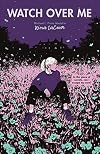
In her new novel, Watch Over Me, Nina LaCour has written a haunting, strange, and beautiful story about facing your fear and learning to love. Having aged out of the foster system after graduating from high school, Mila takes a job on a mysterious remote farm where she encounters ghosts--both internal and external. At times it is hard to tell what is real, what is imagined, and what is past, but that is what makes the book pretty extraordinary. At times reading almost like poetry, Watch Over show more Me represents YA at its best, and I highly recommend it. show less

I've read this author's work before, so I knew going into this book what kind of writing style to expect. This author knows how to draw characters with such depth and flaws to overcome. She brings out all the emotions in me every time--joyfulness, anger, outrage, sadness, peacefulness, and more.
I enjoyed the slower, atmospheric pace of this novel, that kept me guessing and surprised me with outcomes I never saw coming. I'm not a believer in ghosts, but this novel made me question that belief show more and held me inside a world that dealing with past pains and wrongs done to you can be solved by facing your personal ghosts and not running away.
I loved the found family and the tender care of the adults on the farm as well as how the supporting characters simply accepted Mila, flaws, pain, and all. show less
I enjoyed the slower, atmospheric pace of this novel, that kept me guessing and surprised me with outcomes I never saw coming. I'm not a believer in ghosts, but this novel made me question that belief show more and held me inside a world that dealing with past pains and wrongs done to you can be solved by facing your personal ghosts and not running away.
I loved the found family and the tender care of the adults on the farm as well as how the supporting characters simply accepted Mila, flaws, pain, and all. show less
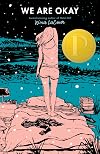
I feel like writing this review is dangerous, because it seems like everyone loves this novel (it even won a Printz award), but wow … did I really, really not like it.
Content warnings:
- ableism! (the main reason for this is spoilery, but I’ll explain it below)
- drowning
- the Inuit slur
Representation:
- the main character (Marin) is a wlw
- her ex (Mabel) is bi
- Mabel and her family are latine
We Are Okay is a plotless novel (the genre, not my opinion) about a girl running to escape her show more grief. After her “gramps” dies, Marin goes to live in her college dorms early without telling anyone, cutting off contact with everyone she knew from her old life, and tries to make a fresh start. But when her ex and best friend, Mabel, comes to visit her over Christmas break, she’s forced to confront the reasons that made her run.
Plotless novels are ones in which characters are the driving force, not plot - there’s really no plot to speak of. They’re more “slice of life” stories, or books with the focus being on character tension rather than plot, or even “picaresque novels,” which are simply series of vignettes. We Are Okay explores a couple days of Marin's grief along with flashbacks that led up to Gramp’s death.
I don’t have a problem with the fact that it’s a plotless novel, that characters enter into the story only to never appear again, or that kind of pointless things are described in great detail, like peeing or characters brushing their teeth. I don’t have a problem with them, but I’m not interested in how they’re written, either, done in a way that screams, “I’m being deep! Can you tell?” like every time Marin compares her situation to something that happens in her favorite classic novel.
But most of all, and honestly everything else pales in comparison to this, is the ableism. I am so, SO surprised that no one has mentioned this (or maybe I haven’t looked thoroughly enough), but the entire twist (and the entire story, then) is only made possible at all because of ableist tropes! It would be impossible to write this without it. There’s a mystery building throughout the novel: why did Marin run away without telling anyone after her Gramps died? It’s not just because of grief. Something in her grandpa’s room scared her. And of course later it’s discovered that Marin’s grandpa suffered from grief so strongly he was unable to move past Marin’s mother’s death. He had created a museum-like shrine of her in his bedroom closet and wrote letters to her, to which he replied to himself as Marin’s mother.
Now, if this had been handled differently, if Marin had processed this and had maybe been taught that this kind of mental illness (aka mental illnesses beyond depression or anxiety) wasn’t something scary, I would feel differently. But till the end she maintained that Gramps had failed her, that she didn’t know him at all, that he wasn’t even a person, etc. She didn’t sympathize with him in any way, even though she suffered greatly from grief and depression herself. And while the ending was immensely satisfying when she finally got a connection to her mother she'd been missing her entire life, it just doesn't make up for everything else.
Maybe that's also because this isn’t the only instance of ableism in the book (though it is the worst and the biggest). At one point, Marin had lived in a motel that had seen better days, and she tells her friend about all the mentally ill people she had come across there like they're zoo animals, the “howling woman” being the most notable. Worse, Mabel compares herself to Jane Eyre, and this woman as Mr. Rochester’s First wife: “The fact of her was scary enough, but the fact of me, in an identical room, just as alone as she was, that was the worst part. There was only a wall between us, and it was so thin it was almost nothing. Jane, too, was once locked up in a room with a ghost. It was terrifying …”
Combined with what we now know of Gramps, it doesn’t paint a great picture.
All in all I don’t think Nina LaCour is someone whose writing I enjoy. I suspected it with her other novel, Everything Leads To You, and now I know for sure. show less
Content warnings:
- ableism! (the main reason for this is spoilery, but I’ll explain it below)
- drowning
- the Inuit slur
Representation:
- the main character (Marin) is a wlw
- her ex (Mabel) is bi
- Mabel and her family are latine
We Are Okay is a plotless novel (the genre, not my opinion) about a girl running to escape her show more grief. After her “gramps” dies, Marin goes to live in her college dorms early without telling anyone, cutting off contact with everyone she knew from her old life, and tries to make a fresh start. But when her ex and best friend, Mabel, comes to visit her over Christmas break, she’s forced to confront the reasons that made her run.
Plotless novels are ones in which characters are the driving force, not plot - there’s really no plot to speak of. They’re more “slice of life” stories, or books with the focus being on character tension rather than plot, or even “picaresque novels,” which are simply series of vignettes. We Are Okay explores a couple days of Marin's grief along with flashbacks that led up to Gramp’s death.
I don’t have a problem with the fact that it’s a plotless novel, that characters enter into the story only to never appear again, or that kind of pointless things are described in great detail, like peeing or characters brushing their teeth. I don’t have a problem with them, but I’m not interested in how they’re written, either, done in a way that screams, “I’m being deep! Can you tell?” like every time Marin compares her situation to something that happens in her favorite classic novel.
But most of all, and honestly everything else pales in comparison to this, is the ableism. I am so, SO surprised that no one has mentioned this (or maybe I haven’t looked thoroughly enough), but the entire twist (and the entire story, then) is only made possible at all because of ableist tropes! It would be impossible to write this without it. There’s a mystery building throughout the novel: why did Marin run away without telling anyone after her Gramps died? It’s not just because of grief. Something in her grandpa’s room scared her. And of course later it’s discovered that
Now, if this had been handled differently, if Marin had processed this and had maybe been taught that this kind of mental illness (aka mental illnesses beyond depression or anxiety) wasn’t something scary, I would feel differently. But till the end she maintained that Gramps had failed her, that she didn’t know him at all, that he wasn’t even a person, etc. She didn’t sympathize with him in any way, even though she suffered greatly from grief and depression herself. And while the ending was immensely satisfying when she finally got a connection to her mother she'd been missing her entire life, it just doesn't make up for everything else.
Maybe that's also because this isn’t the only instance of ableism in the book (though it is the worst and the biggest). At one point, Marin had lived in a motel that had seen better days, and she tells her friend about all the mentally ill people she had come across there like they're zoo animals, the “howling woman” being the most notable. Worse, Mabel compares herself to Jane Eyre, and this woman as Mr. Rochester’s First wife: “The fact of her was scary enough, but the fact of me, in an identical room, just as alone as she was, that was the worst part. There was only a wall between us, and it was so thin it was almost nothing. Jane, too, was once locked up in a room with a ghost. It was terrifying …”
Combined with what we now know of Gramps, it doesn’t paint a great picture.
All in all I don’t think Nina LaCour is someone whose writing I enjoy. I suspected it with her other novel, Everything Leads To You, and now I know for sure. show less
Lists
Awards


You May Also Like


Associated Authors
Statistics
- Works
- 22
- Also by
- 6
- Members
- 6,519
- Popularity
- #3,766
- Rating
- 3.9
- Reviews
- 320
- ISBNs
- 141
- Languages
- 10
- Favorited
- 2
