
Adam Silvera
Author of They Both Die at the End
About the Author
Series
Works by Adam Silvera
Death-Cast 2-Book Hardcover Box Set: The First to Die at the End, They Both Die at the End (2022) 37 copies
They Both Die at the End • What If It's Us • History Is All You Left Me • More Happy Than Not (2021) 2 copies
Associated Works
(Don't) Call Me Crazy: 33 Voices Start the Conversation about Mental Health (2018) — Contributor — 317 copies, 1 review
Tagged
Common Knowledge
- Birthdate
- 1990-06-07
- Gender
- male
- Nationality
- USA
- Birthplace
- New York, New York, USA
- Map Location
- New York, USA
Members
Discussions
More happy than not vs More happy than not [deluxe edition] in Combiners! (November 2021)
Reviews
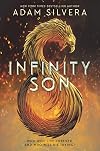
Oh. My. I mean, I love all of Adam Silvera's books, so I knew it was a safe bet I'd like this one, but wow. I loved the switching perspectives; frequently, I find single perspective fiction much more angsty and painful than I do mixed perspectives, just because of the way an unreliable narrator shares their suffering with the reader, but the drama and pain was palpable here even while we knew what all the characters were feeling. I really felt the inner conflicts of almost every character, show more and it was immersive to experience that.
The ending...I knew there was a gut punch coming, and I thought I knew what it was going to be, but I was wrong, and when I read the last few paragraphs, my jaw literally dropped. (Thank God for masks; I was working at the polls as an election official, and even masked, the other people working with me could tell my mind had just been blown.) I was STUNNED, and now I'll be suffering until Infinity Reaper drops in March 2021. Thanks, Adam... show less
The ending...I knew there was a gut punch coming, and I thought I knew what it was going to be, but I was wrong, and when I read the last few paragraphs, my jaw literally dropped. (Thank God for masks; I was working at the polls as an election official, and even masked, the other people working with me could tell my mind had just been blown.) I was STUNNED, and now I'll be suffering until Infinity Reaper drops in March 2021. Thanks, Adam... show less

You know a book is going to be good when you're crying on the first page.
This book is absolutely, stunningly beautiful. It is also incredibly sad. I really don't know what to say about it, because I loved everything. The book delivered everything I wanted it to and more. What I thought would happen, happened, but it happened very differently than I expected it to. The secrets that cloud the text are revealed at precisely the right moments, and once you know everything, it's very easy to show more piece all the pieces together.
One of my favourite parts of this novel is the absence of Theo's voice (which is very much intentional and a brilliant move on the author's voice). Everything we see is through the lens of grief, and it clouds our own judgement, just as it clouds those grieving. I love how real everything feels, and how the characters come right off the page. I love how you, like Griffin and Jackson, are left with questions of "what if?" and what could have been. These questions have no answers, and cannot have answers. You can dream, you can wish, but as our protagonist learns, eventually, you have to go on.
Beautiful, beautiful, beautiful. I can safely say that History Is All You Left Me is one of my favourite novels, and it's going to stay with me for a very long time. show less
This book is absolutely, stunningly beautiful. It is also incredibly sad. I really don't know what to say about it, because I loved everything. The book delivered everything I wanted it to and more. What I thought would happen, happened, but it happened very differently than I expected it to. The secrets that cloud the text are revealed at precisely the right moments, and once you know everything, it's very easy to show more piece all the pieces together.
One of my favourite parts of this novel is the absence of Theo's voice (which is very much intentional and a brilliant move on the author's voice). Everything we see is through the lens of grief, and it clouds our own judgement, just as it clouds those grieving. I love how real everything feels, and how the characters come right off the page. I love how you, like Griffin and Jackson, are left with questions of "what if?" and what could have been. These questions have no answers, and cannot have answers. You can dream, you can wish, but as our protagonist learns, eventually, you have to go on.
Beautiful, beautiful, beautiful. I can safely say that History Is All You Left Me is one of my favourite novels, and it's going to stay with me for a very long time. show less
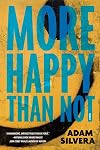
In this slightly-altnerative world, the drug Leteo promises to erase bad memories. Aaron is trying to be happy but is dogged with sad feelings and bad memories. His father has just committed suicide, one of his friends has been gunned down, and he has other secrets he's trying to repress. Surrounded by a posse of childhood friends, a steadfast girlfriend, and a wide city (Brooklyn? the Bronx?) to explore, Aaron does manage to have some fun. In his wanderings, he meets Thomas whose show more philosophical questions and intense listening make for a new kind of friend. But trouble appears when Aaron tries to change their relationship. All of this makes Aaron a perfect candidate for the Leteo procedure... but is he? Great, authentic voice with lots of natural humor, this book alternates in tone and was, at times, hard to swallow. Also, imho, way too long. Still, this will speak to LGBTQ youth and anyone who is tortured with "bad" thoughts. show less

Shy and cautious Mateo and rough-around-the-edges Rufus are very different teenage boys, but they have one thing in common. They each got a phone call this morning between midnight and 1am from DeathCast, a service that lets people know that they are going to die today. Fate (in this case, an app algorithm) brings the two of them together, and they spend their last day on earth pushing each other to do the things they never thought they could. This is their last chance.
I was really expecting show more to love this book, because everyone else seems to, but I did not enjoy it at all. The general concept - two boys know they are going to die today and become friends (and maybe more) - is a great idea, but the framework built to support it is a nonsensical Swiss cheese world. My problems are endless:
- On a character level, Mateo doesn't want to tell his best friend Lidia that he is going to die because her fiance died last year and she didn't get to say goodbye to him. So Mateo won't let her say goodbye to him either?
- More generally, If everyone who gets called is going to die before midnight, how do timezones work? If you get the call on the west coast of the US and then fly west across the international date line, do you drop dead immediately?
- Police officers spend a significant amount of time trying to prevent Deckers from killing themselves by doing crazy stunts ... why?? If they're going to die anyway why not let them die on their own terms?
- A minor character decides to commit suicide, despite knowing that she did not get a call this morning (what??) but then changes her mind when she sees the main characters laughing and having fun.
- It's mentioned that the government briefly considered lowering the drinking age to 18yo for Deckers, but decided against it because they might get alcohol poisoning or get in a car accident. What???
- All of the Deckers, from main characters to unnamed, spend tons of time trying not to die. To the point where they refuse to get on an elevator because they might die (don't get me started on how you're actually much more likely to die taking the stairs).
- And the biggest problem - the whole concept of the book is that knowing you are going to die would change your behavior. That seems like a good idea when it's just the main characters, but how could that possibly work when every single person knows they're going to die and thus changes their behavior? For example, if a person was going to die in a car crash on their way to work (a very common death), and they found out they were going to die, they probably would not go to work that day, which means they would not be on the highway at morning rush hour and would not get in a car accident.
None of this makes any sense. It was very hard for me to focus on Rufus and Mateo's relationship and character growth when everything around them is so stupid. What kept me going through most of the book was the hope that the boys would rise up and expose their half-baked dystopia, but no such luck.
I did like that the book was told from dozens of points of view, some of them very minor characters. However, there were 3 completely unrelated minor characters named Delilah, Deirdre, and Dahlia and I had to go back and re-read almost half the book to figure out if they were the same person or not.
Everyone else seems to love this book, and I'm just very confused. show less
I was really expecting show more to love this book, because everyone else seems to, but I did not enjoy it at all. The general concept - two boys know they are going to die today and become friends (and maybe more) - is a great idea, but the framework built to support it is a nonsensical Swiss cheese world. My problems are endless:
- On a character level, Mateo doesn't want to tell his best friend Lidia that he is going to die because her fiance died last year and she didn't get to say goodbye to him. So Mateo won't let her say goodbye to him either?
- More generally, If everyone who gets called is going to die before midnight, how do timezones work? If you get the call on the west coast of the US and then fly west across the international date line, do you drop dead immediately?
- Police officers spend a significant amount of time trying to prevent Deckers from killing themselves by doing crazy stunts ... why?? If they're going to die anyway why not let them die on their own terms?
- A minor character decides to commit suicide, despite knowing that she did not get a call this morning (what??) but then changes her mind when she sees the main characters laughing and having fun.
- It's mentioned that the government briefly considered lowering the drinking age to 18yo for Deckers, but decided against it because they might get alcohol poisoning or get in a car accident. What???
- All of the Deckers, from main characters to unnamed, spend tons of time trying not to die. To the point where they refuse to get on an elevator because they might die (don't get me started on how you're actually much more likely to die taking the stairs).
- And the biggest problem - the whole concept of the book is that knowing you are going to die would change your behavior. That seems like a good idea when it's just the main characters, but how could that possibly work when every single person knows they're going to die and thus changes their behavior? For example, if a person was going to die in a car crash on their way to work (a very common death), and they found out they were going to die, they probably would not go to work that day, which means they would not be on the highway at morning rush hour and would not get in a car accident.
None of this makes any sense. It was very hard for me to focus on Rufus and Mateo's relationship and character growth when everything around them is so stupid. What kept me going through most of the book was the hope that the boys would rise up and expose their half-baked dystopia, but no such luck.
I did like that the book was told from dozens of points of view, some of them very minor characters. However, there were 3 completely unrelated minor characters named Delilah, Deirdre, and Dahlia and I had to go back and re-read almost half the book to figure out if they were the same person or not.
Everyone else seems to love this book, and I'm just very confused. show less
Lists
Awards


You May Also Like


Associated Authors
Statistics
- Works
- 17
- Also by
- 3
- Members
- 18,981
- Popularity
- #1,152
- Rating
- 3.9
- Reviews
- 438
- ISBNs
- 306
- Languages
- 20
- Favorited
- 6