
Gregory Hill (1)
Author of East of Denver
For other authors named Gregory Hill, see the disambiguation page.
About the Author
Image credit: Gregory Hill photo by Maureen Hearty
Series
Works by Gregory Hill
Tagged
Common Knowledge
There is no Common Knowledge data for this author yet. You can help.
Members
Reviews

“My best course of action is to find a comfortable place to sit and watch things unfold.”
—“Zebra Skin Shirt” Gregory Hill, 128
That’s truly the best course of action with this book. Building up expectations is a waste of time with the way Hill writes: even when not much is happening (or a lot is happening but incredibly slowly) the next thing is never expected. This is what carries the book along. Even though it’s set up with a quest in mind, the revelations our good narrator show more Narwhal comes across on his temporal trek change his direction literally and figuratively quite a few times.
Narwhal Slotterfield as many have said is a referee by trade and by calling, by personality as much as by occupation. In the course of the book his obstacles are mainly those of a timely fashion, and so the book has the ring of a character exercise. Put your character in an elevator, or in a bathroom of a small diner, or all alone in the middle of the eastern Colorado prairie. Now, what does he do? What does he think? What does he stack on top of each other in a cheerleader formation? It all has to do with how he thinks the world works, and we get to hear most of it.
If his reflections and turns of phrase (Hill’s? Narwhal’s?) were not so novel, this book would not soar the way it does. The way he relates to Vero, his dear fiancée, is downright disturbing at times in its binary simplicity, and because we only see the events through his eyes, we never quite get a good fully four dimensional look at her. (We get the time dimension quite liberally, so it’s the third direction of her personality we’re missing.)
“She’s a foundation of truth. She digs me and all my officiantatious nonsense. She’s the one thing in the world that wouldn’t benefit from my adjudication. I would not change a thing about her.” That quote is from page 31 but it’s a decent example of his worshipful view, which allows his relationship to be an anchor for him at the same time it ties Vero down.
The way he puts one word in front of another is glorious:
“Revenge is a dish and I’m famished.” (49)
“I can alter lives, bring down government, heal the sick, disarm nuclear bombs. Hell, I could change a car tire in less time than it takes a normal human to blink. Somebody hire me for a pit crew pronto.” (123)
“Hot damn, Gretel, we’ve got our crumbs back.” (234)
But it’s unfair to do this, because each of these serve their better purpose in the flow of the narrative, each surprises with its own twist. Narwhal’s mental narrative is a little faster getting from one point to another as well, which is why perhaps it seems so unnaturally natural for him to be the guide through a timeline none of us know.
And this brings us to the contentious end: the unification (one can only suppose) of the whole trilogy this book ends. It turned a bit reminiscent of [b:Beyond the Horizon|23310201|Beyond the Horizon|Ryan Ireland|https://i.gr-assets.com/images/S/compressed.photo.goodreads.com/books/1415678172l/23310201._SY75_.jpg|42295700] in terms of how it holds on to the reader and how much anyone knows. I didn’t mind it as much as everyone else seems to; Hill spends the whole book giving and grabbing right back different ideas for reality, so the spontaneity of the ending doesn’t bother me. Of course it all wraps back around to certain scenes which seemed dropped into the middle of his narrative! Of course it brings in a few completely new themes and problems! Of course neither he nor we really understand! And that’s how it is and that’s how it ends which, when you think about it, isn’t really that different from how it progressed all along. show less
—“Zebra Skin Shirt” Gregory Hill, 128
That’s truly the best course of action with this book. Building up expectations is a waste of time with the way Hill writes: even when not much is happening (or a lot is happening but incredibly slowly) the next thing is never expected. This is what carries the book along. Even though it’s set up with a quest in mind, the revelations our good narrator show more Narwhal comes across on his temporal trek change his direction literally and figuratively quite a few times.
Narwhal Slotterfield as many have said is a referee by trade and by calling, by personality as much as by occupation. In the course of the book his obstacles are mainly those of a timely fashion, and so the book has the ring of a character exercise. Put your character in an elevator, or in a bathroom of a small diner, or all alone in the middle of the eastern Colorado prairie. Now, what does he do? What does he think? What does he stack on top of each other in a cheerleader formation? It all has to do with how he thinks the world works, and we get to hear most of it.
If his reflections and turns of phrase (Hill’s? Narwhal’s?) were not so novel, this book would not soar the way it does. The way he relates to Vero, his dear fiancée, is downright disturbing at times in its binary simplicity, and because we only see the events through his eyes, we never quite get a good fully four dimensional look at her. (We get the time dimension quite liberally, so it’s the third direction of her personality we’re missing.)
“She’s a foundation of truth. She digs me and all my officiantatious nonsense. She’s the one thing in the world that wouldn’t benefit from my adjudication. I would not change a thing about her.” That quote is from page 31 but it’s a decent example of his worshipful view, which allows his relationship to be an anchor for him at the same time it ties Vero down.
The way he puts one word in front of another is glorious:
“Revenge is a dish and I’m famished.” (49)
“I can alter lives, bring down government, heal the sick, disarm nuclear bombs. Hell, I could change a car tire in less time than it takes a normal human to blink. Somebody hire me for a pit crew pronto.” (123)
“Hot damn, Gretel, we’ve got our crumbs back.” (234)
But it’s unfair to do this, because each of these serve their better purpose in the flow of the narrative, each surprises with its own twist. Narwhal’s mental narrative is a little faster getting from one point to another as well, which is why perhaps it seems so unnaturally natural for him to be the guide through a timeline none of us know.
And this brings us to the contentious end: the unification (one can only suppose) of the whole trilogy this book ends. It turned a bit reminiscent of [b:Beyond the Horizon|23310201|Beyond the Horizon|Ryan Ireland|https://i.gr-assets.com/images/S/compressed.photo.goodreads.com/books/1415678172l/23310201._SY75_.jpg|42295700] in terms of how it holds on to the reader and how much anyone knows. I didn’t mind it as much as everyone else seems to; Hill spends the whole book giving and grabbing right back different ideas for reality, so the spontaneity of the ending doesn’t bother me. Of course it all wraps back around to certain scenes which seemed dropped into the middle of his narrative! Of course it brings in a few completely new themes and problems! Of course neither he nor we really understand! And that’s how it is and that’s how it ends which, when you think about it, isn’t really that different from how it progressed all along. show less
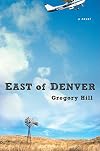
A son with a dead cat in tow comes to visit his father, who is suffering from early on-set dementia. And so it begins, getting slightly weirder and more lovable with each turned page. This book is the story of a family's demise that is filled with hope and optimism and the crazy belief that if you do nothing about a problem it simply doesn't exist. There is the cast of loser characters, led by Stacey (Shakespeare) Williams and his dad and rounded out with old school friends. And when I say show more losers, I say it lovingly. There is the farm, eroding around them, and the wonderful contraptions Shakey's dad made but took apart and can't put back together. All in all, quirkiness lurks at every turn.
* I received this book for free from Goodreads First Reads. show less
* I received this book for free from Goodreads First Reads. show less
I TOTALLY enjoyed this book. This is a sweet, dark, funny tale about a family with nowhere to go but down. 'Shakes' Williams has decided to return home to the farm he grew up on to bury the dead cat he had adopted as a stray. He finds his father Emmett a changed man, the house is a wreck and the dementia that began as a kind of cute forgetfulness a few years ago is in full blown form. Shakes realizes he has to stay and become his fathers full time caregiver. When he discovers that the local show more banker has cheated his father out of not only his airplane but his farm as well, he hatches a plan to rob the bank that is repossessing the family farm with several old high school friends he has reconnected with.
As dark as this story may sound there are wonderful moments of comedy, wit and love. The author uses a simplistic style of writing that I really felt rang true, yes - people really do talk this way. I can't recommend this book highly enough. A true American gem. show less
As dark as this story may sound there are wonderful moments of comedy, wit and love. The author uses a simplistic style of writing that I really felt rang true, yes - people really do talk this way. I can't recommend this book highly enough. A true American gem. show less
 This review was written for LibraryThing Early Reviewers.
Gregory Hill's East of Denver is full of quirky characters and dark humor. Shakespeare Williams returns for a visit to his home in rural Colorado and finds his father suffering from dementia, the farm falling apart, and the housekeeper dead in the bathroom. He moves back to take care of his father and the farm to the best of his ability, which isn't quite enough. Through reading about Shakespeare's escapades, the reader gets glimpses into the man his father used to be and feels moments of show more lightheartedness when father and son embark on crazy projects together.There is a darkness that pervades the novel, however, as the bank circles in with its foreclosure plans, Shakespeare's paraplegic high school friend reveals the misery of his life, and his overweight girlfriend becomes anorexic trying to change her life. There's alcohol, softball, gardening, and nature all combined to paint an unexpected picture of survival in small town Colorado. show less
This review was written for LibraryThing Early Reviewers.Lists
Awards

Statistics
- Works
- 4
- Members
- 110
- Popularity
- #176,728
- Rating
- 3.8
- Reviews
- 31
- ISBNs
- 36

